
 Yuyun Lusiyani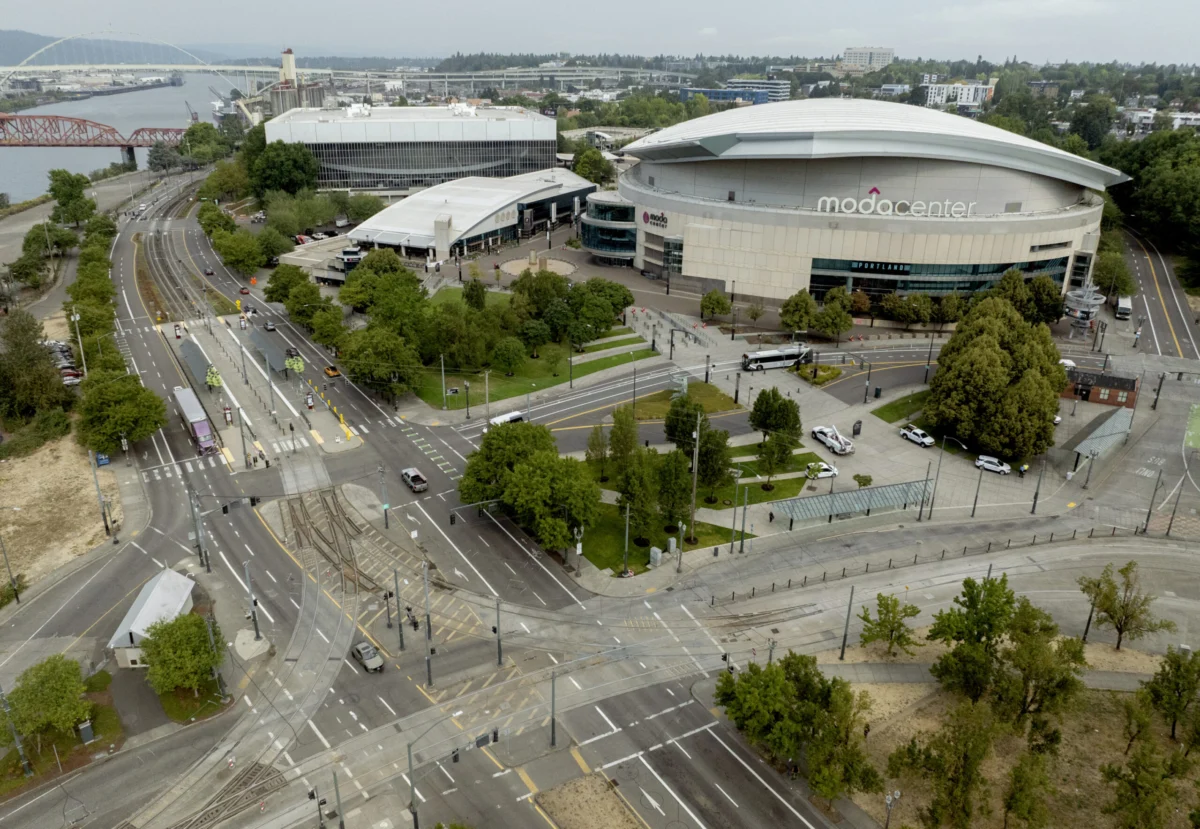
The Troubling Genesis of Wealth: Subprime Lending and Regulatory Scrutiny
Tom Dundon’s impending acquisition of the Portland Trail Blazers, expected to finalize on March 31, has cast a spotlight on his financial empire, largely built in the high-stakes world of subprime auto lending. His journey began with the founding of a subprime company, which he later sold to a Spanish firm in 2006. Dundon, however, retained a 10% stake and assumed the CEO role at the newly formed entity, Santander Consumer USA. This segment of the financial industry specializes in providing car loans to individuals with poor credit histories, often at significantly higher interest rates and less favorable terms than conventional loans. While proponents argue it offers car ownership opportunities to underserved populations, critics frequently point to the heightened risk of default and repossession for vulnerable borrowers.
The practices at Santander Consumer USA under Dundon’s leadership drew intense scrutiny from state regulators across the nation. In 2020, 33 states and the District of Columbia, including Oregon, reached a landmark $550 million settlement with Santander Consumer. The core of the complaint revolved around allegations of deceptive lending practices that often trapped consumers in unaffordable loans. Oregon officials, in their 2020 court complaint against the company, vividly described how many customers entered into loans under the "false pretense" of eventually owning a car, only for the onerous terms to "almost certainly" lead to default and repossession. This settlement, a significant sum in the realm of consumer protection, underscored the severe impact of these lending strategies on working families.
Unveiling Dundon’s Direct Influence on "Predatory" Practices
A joint investigation by Oregon Public Broadcasting (OPB) and ProPublica has now unearthed internal company documents, including emails and a slide presentation from the multistate investigation, that directly implicate Dundon in pushing for key practices that regulators later deemed problematic. These documents reveal that in January 2013, as CEO, Dundon initiated an "aggressive push" at Santander Consumer USA to waive "proof of income" (POI) requirements for car loan applicants.
On January 15, 2013, Dundon sent a concise but impactful email to two senior employees, Karthik Chandrasekhar and Steve Zemaitis, stating, "Lets do a test. I want to waive poi more often. t". This directive set in motion a policy shift designed to expedite loan approvals by removing a fundamental safeguard: verifying a borrower’s ability to repay. The company’s internal rationale, as later articulated, was to "build in pricing to cover the incremental risk," meaning that the increased risk from lending to potentially unqualified borrowers would be offset by charging higher interest rates and fees. This strategy effectively transferred the risk from the lender to the borrower, who would then face steeper financial burdens.
The implications of such a policy are profound. Proof of income requirements are a cornerstone of responsible lending, designed to protect both lenders and borrowers by ensuring that loans are affordable. Waiving these requirements, especially in the subprime market, dramatically increases the likelihood of borrowers taking on debt they cannot manage, leading to defaults, damaged credit, and the loss of their vehicles.

Internal Warnings and Alleged Disregard
The internal documents further reveal that Dundon’s push was not without internal resistance. Just six days after Dundon’s initial email, on January 21, 2013, Michele Rodgers, Santander Consumer’s chief risk and compliance officer, voiced significant concerns in an email to Zemaitis and other senior executives. Rodgers specifically highlighted potential violations of federal laws related to anti-money laundering and identity theft. Crucially, she also drew attention to impending federal regulations for home mortgages, which would soon mandate lenders to "determine the consumer’s ability to repay both the principal and the interest over the long term," implicitly suggesting a similar standard should apply to auto loans.
Despite these warnings, the plan to waive POI requirements proceeded. Records show that by January 30, 2013, Matt Fitzgerald, then executive vice president of sales and marketing, reported a conversation with Dundon where the CEO explicitly instructed marketing teams to "market (fax, e-mails, sale handout) the waiving of stips to all dealers." Fitzgerald’s email further suggested framing this as a benefit to dealers for their "good performance," implying that it would make closing deals "easier."
This rapid implementation, seemingly in defiance of internal compliance concerns, troubled external experts. Mark Williams, a former Federal Reserve regulator and finance professor at Boston University’s Questrom School of Business, reviewed the state’s summary of the correspondence and expressed dismay. "To say, ‘Sure, I’ll give you a loan and we don’t even care whether you make income or not,’ or, ‘You don’t even have to state your income,’ that’s counter to just sound banking practices," Williams asserted, emphasizing the foundational role of income verification in lending.
The internal slide presentation used by regulators in their investigation explicitly characterized Dundon as "ignoring this internal concern" from his company’s risk and compliance officer. Oregon’s 2020 legal complaint further alleged that Santander Consumer failed to exclude "problematic" dealers – those with a history of misstating incomes – from the new stated-income policy, leading to a "significant spike in the number of early payment defaults."
Official Responses and Political Implications
The revelations have prompted varied reactions from Oregon officials, highlighting the complex intersection of economic development, public accountability, and political expediency.
Oregon Attorney General Dan Rayfield, who assumed office in 2024 and is currently involved in an ongoing multistate investigation into another auto loan company, Exeter Finance (where Dundon is listed as an investor and former chairman), issued a strong statement regarding the waiver of proof of income. "Proof of income requirements exist for a reason – they protect borrowers from being sold loans they cannot afford. When those guardrails get waived, dealerships win in the short term, and consumers lose," Rayfield stated, underscoring the consumer protection aspect of his office’s mandate. He further added, "Working families put a lot on the line when they take out a loan, and they deserve lenders who treat them fairly and follow the law."

In contrast, Governor Tina Kotek’s office has remained largely silent on the specific implications of Dundon’s past. When asked about her awareness of the investigations into businesses connected to Dundon and whether it influenced her position on public funding for the Blazers, a spokesperson deferred to Kotek’s previous public remarks. "This is a great first step," Kotek told reporters, referring to the legislative approval of funding. "We’re going to get the best deal possible for Oregon, and the economic impact of keeping not only the Blazers but all the activity at Moda is really important for the state." Her emphasis remains on the economic benefits and the importance of retaining the team.
Senate President Rob Wagner, a key sponsor of the arena funding bill, also sidestepped questions about his awareness of Dundon’s business history. "The Oregon Legislature does not have a role in who owns the Trail Blazers," Wagner stated, asserting that the legislative goal was solely to support the arena’s renovation as an "economic and entertainment hub." This response, however, overlooks the ethical dilemma of directing substantial public funds to an entity whose leadership has a documented history of engaging in practices deemed "predatory" by the state itself.
State Senator Khanh Pham, a Portland Democrat, stands as a prominent critic of the deal. Pham, who cast one of only six "no" votes in the 30-person chamber, had previously expressed concerns about insufficient taxpayer protections in the deal. Upon learning of Dundon’s history through OPB and ProPublica’s inquiries, Pham stated, "This new information affirms that guardrails on public-private partnerships are important in all instances and especially this one." Her comments highlight a broader sentiment among some lawmakers and the public that the state should exercise greater scrutiny when allocating public funds to private ventures, especially those with controversial leadership.
The Arena Funding Debate: Public vs. Private Investment
The proposed $870 million public funding package for the 30-year-old Moda Center, home to the Blazers, represents a significant financial commitment from Oregon taxpayers. The state Legislature recently approved $365 million, which, combined with city and county money, pushes the total public backing far beyond the team’s initial request. This level of public investment for a private sports franchise’s facility has ignited a fierce debate about the appropriate role of government in supporting professional sports.
Historical precedent within Portland itself offers a contrasting model. When the Moda Center (then the Rose Garden) opened in 1995, then-owner Paul Allen secured $34.5 million from the city but financed the majority of the $262 million construction cost himself. More recently, other major sports markets have seen significant private contributions. Seattle’s Climate Pledge Arena, for instance, underwent a $1.15 billion renovation completed in 2021, entirely financed privately. Across the nation, at least 10 cities, including Atlanta, Phoenix, Jacksonville, and Cleveland, have seen arena renovations funded wholly or partially with private money over the past decade.
Intriguingly, Tom Dundon himself has demonstrated a willingness to invest private capital in arena deals elsewhere. In 2023, he committed $800 million over 20 years towards developing an entertainment district surrounding the arena for his NHL team, the Carolina Hurricanes, in Raleigh, North Carolina, with Raleigh contributing $300 million for the arena itself. This stark contrast between his approach in Raleigh and Portland – where his team’s consultant reportedly sought 100% public funding for the Moda Center renovation – raises questions about the negotiating tactics employed in Oregon.
Blazers lobbyists pushed hard for the public funding, arguing that the team’s future in Portland was at stake and that a departure would have a "devastating impact on the City’s national and international reputation" and "feed the ‘doom loop’ narrative" about downtown vacancies and crime. While Blazers President of Business Operations Dewayne Hankins stated that Dundon’s group never explicitly threatened to move, he acknowledged "rumblings" of interest from other cities and described the Blazers as "potentially portable" given their expiring lease. This tactic, often termed "stadium blackmail" or "threat of relocation," is a common leverage point used by sports franchises to secure public subsidies.

Ethical and Economic Implications for Taxpayers
The unfolding situation presents a significant ethical quandary for Oregon’s leaders. John Van Alst, a senior attorney at the National Consumer Law Center, strongly advised caution when negotiating with individuals whose businesses have been accused of violating consumer protection laws. "If they’re willing to violate those rules, I’d be concerned about doing business with them," Van Alst stated, highlighting the potential for a pattern of behavior that prioritizes profit over ethical conduct.
The decision to commit hundreds of millions in public funds to an arena for a team owned by someone with such a controversial financial history carries substantial risks for taxpayers. Beyond the direct financial outlay, there are concerns about the precedent being set, the message conveyed about corporate accountability, and the potential erosion of public trust. Critics argue that public funds could be better allocated to pressing social needs such as housing, education, or healthcare, rather than subsidizing a billionaire owner’s sports enterprise, especially one with a questionable ethical foundation.
Moreover, the Blazers’ lobbying efforts, framing the team’s departure as an existential threat to Portland’s economic recovery, warrant critical examination. While a professional sports team can certainly contribute to local pride and economic activity, the actual return on investment for large public stadium subsidies is often debated by economists. Many studies suggest that the economic benefits are frequently overstated, and the funds could yield greater returns if invested in other public services or infrastructure projects.
As the March 31 deadline for Dundon’s acquisition approaches, and with the city council expected to address arena funding this summer, the spotlight remains firmly on Oregon’s leaders. Mayor Keith Wilson, echoing Senate President Wagner, noted that "The City is not a decision maker in the process of approving franchise ownership changes; that authority lies exclusively with current team ownership and the NBA." However, as Van Alst pointed out, city leaders, unlike the vulnerable subprime borrowers, "have more resources to make good choices" and negotiate robust protections for taxpayers. The choice facing Oregon is not merely about keeping a basketball team but about the values the state upholds when partnering with private wealth.


 Jia Lissa
 Joko Widodo
 Eva Lovia

 Pevita Pearce