
 Yuyun Lusiyani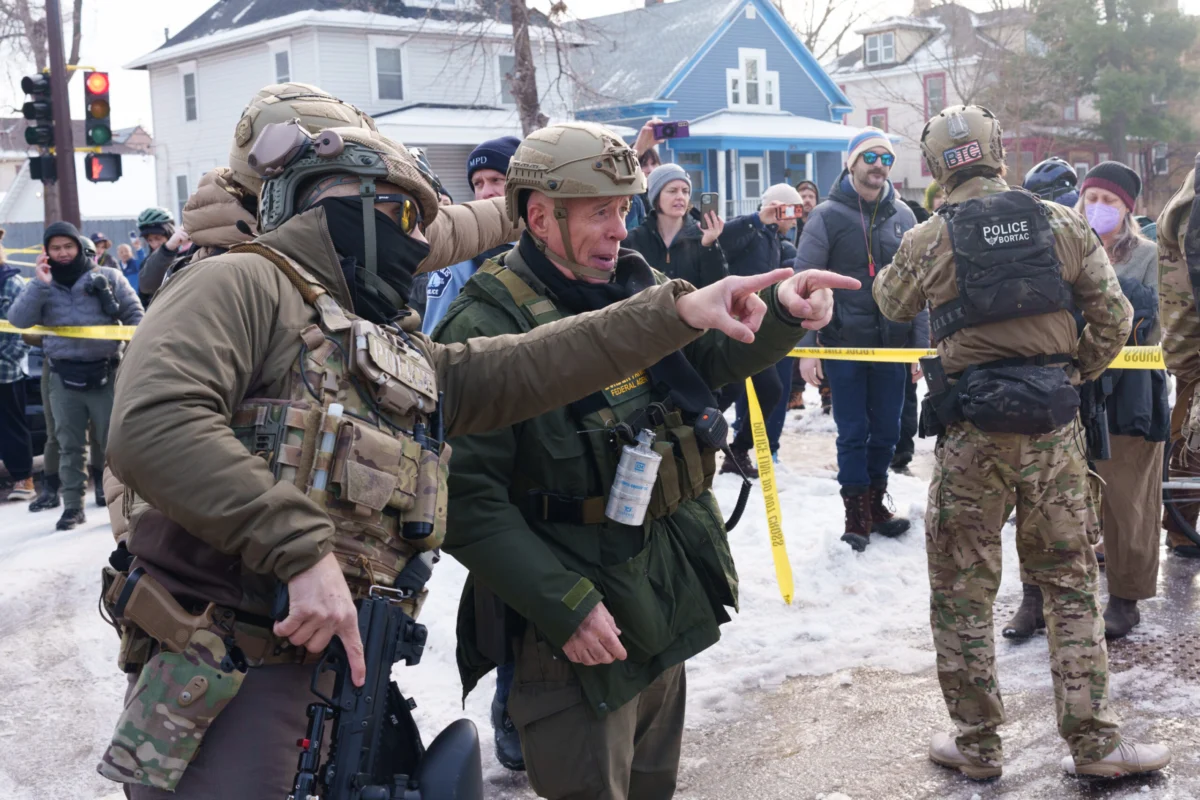
In a move described as "unprecedented in American history," prosecutors from Hennepin County and the state of Minnesota have filed a federal lawsuit against the U.S. Departments of Homeland Security (DHS) and Justice (DOJ). This landmark legal action seeks to compel the federal government to release crucial evidence pertaining to three separate shootings involving federal agents in Minnesota, two of which were fatal, amidst a broader federal immigration enforcement initiative known as "Operation Metro Surge." The lawsuit escalates a months-long standoff marked by federal recalcitrance and state demands for transparency and accountability.
The dispute stems from a series of incidents that began in early January, sparking outrage and calls for investigation from local communities and state authorities. The initial request from local law enforcement for a partnership with federal agencies to investigate these critical incidents, a common practice in past shootings involving federal agents, was met with steadfast refusal by the Trump administration. This non-cooperation forced Minnesota prosecutors to progressively "ratchet up their efforts," ultimately culminating in the extraordinary federal lawsuit.
A Chronology of Escalation and Refusal
The timeline of events highlights a pattern of federal disengagement that has deeply frustrated Minnesota officials:
- Early December [Year]: The Trump administration initiates "Operation Metro Surge," deploying federal agents, including those from Immigration and Customs Enforcement (ICE) and Customs and Border Protection (CBP), to increase immigration enforcement activities in several American cities, including Minneapolis. This operation was part of a broader federal push to escalate arrests and deportations, often drawing criticism for its aggressive tactics and perceived overreach.
- January 7 [Year]: An Immigration and Customs Enforcement (ICE) agent shoots and kills Renee Good, a 37-year-old mother of three who had recently moved to Minneapolis. The circumstances of her death immediately raised questions and prompted calls for a thorough investigation.
- A week after Good’s shooting: Julio Cesar Sosa-Celis, a Venezuelan immigrant, is wounded in another incident involving federal agents.
- January 24 [Year]: Alex Pretti is killed in a separate shooting incident involving federal agents.
- Following the Shootings: Local law enforcement officials, including the Minnesota Bureau of Criminal Apprehension (BCA), the state’s police agency tasked with investigating use-of-deadly-force cases, formally request a partnership with the federal government to investigate these incidents. This initial request was consistent with established protocols for inter-agency cooperation in such critical events.
- Federal Refusal: Despite initial agreements in the Good case to participate in a joint investigation with the BCA, federal officials subsequently reneged, publicly signaling their unwillingness to share evidence or cooperate.
- Escalation to Legal Letters: Minnesota prosecutors, led by Hennepin County Attorney Mary Moriarty, send a series of "strongly worded legal letters," known as Touhy letters, to the Departments of Homeland Security and Justice. These formal written requests demanded an extensive list of evidence related to the Good, Sosa-Celis, and Pretti shootings, including agents’ names, official reports, forensic evidence like guns fired, agent GPS data, and witness statements. A response was requested by February 17.
- February 13 [Year]: The FBI informs BCA investigators that it will not share investigative materials in the Alex Pretti case, as confirmed by BCA Superintendent Drew Evans. Evans reiterated the state’s requests for evidence in the Good and Sosa-Celis cases.
- Beyond the Deadline: More than a month after the February 17 deadline, the Trump administration has failed to turn over any of the requested materials. "There has been no cooperation from federal authorities," stated BCA spokesperson Michael Ernster.
- This Week [Year]: Hennepin County and the state of Minnesota file a federal lawsuit against DHS and DOJ, marking a significant escalation in the pursuit of accountability and transparency.
The Heart of the Dispute: Federal Immunity vs. State Sovereignty

Hennepin County Attorney Mary Moriarty, whose jurisdiction covers Minneapolis, characterized the lawsuit as "unprecedented in American history," underscoring the gravity of the federal government’s refusal. Minnesota Attorney General Keith Ellison echoed this sentiment, telling reporters, "The federal government has refused to cooperate with state law enforcement, which is unique, rare and simply cannot be tolerated. [We] can’t sit around and let them do it."
The federal government’s non-cooperation comes despite both the Minnesota Star Tribune and ProPublica independently identifying the officers involved in the Good and Pretti incidents. This refusal to even officially acknowledge the names of agents, let alone provide evidence, has transformed the case into a high-stakes "constitutional chicken" over states’ rights versus federal immunity. This battle has significant implications for how federal agents can be held criminally accountable by state authorities, particularly in the context of increased federal deployments and immigration enforcement operations.
The Victims and Allegations of Misconduct
The initial focus of the legal battle is on the three individuals affected by the shootings:
- Renee Good: A 37-year-old mother of three, fatally shot by an ICE agent. While a Department of Homeland Security spokesperson has defended the shooting as an act of self-defense, the lack of shared evidence prevents state investigators from independently verifying this claim.
- Julio Cesar Sosa-Celis: A Venezuelan immigrant who was wounded. In a rare partial acknowledgment, a DHS spokesperson indicated that federal officials found officers made "false statements" after Sosa-Celis’s shooting. However, the agency did not commit to cooperating with local authorities or a potential court ruling.
- Alex Pretti: Killed on January 24. The FBI’s refusal to share investigative materials in this case further highlights the federal blockade.
Beyond these three shootings, Moriarty’s office has initiated criminal investigations into 14 additional cases of potentially unlawful behavior by federal agents during Operation Metro Surge. These allegations range from excessive force to other forms of misconduct. One notable incident in early January reportedly involved agents using force on staff and students on the grounds of a high school.
Prosecutors are also investigating Gregory Bovino, the outgoing Border Patrol commander who played a leading role in the immigration surges into several American cities. Bovino was captured on video "lobbing green-smoke canisters" into crowds at a park in Minneapolis. A DHS spokesperson defended his actions at the time, stating Bovino and other agents were responding to a "hostile crowd," but the incident remains under state scrutiny as part of the broader inquiry into federal agent conduct.

Legal Hurdles and the Supremacy Clause
The path forward for Minnesota prosecutors is fraught with legal and procedural challenges, even if the lawsuit compels the federal government to release evidence. Legal experts anticipate a protracted battle, potentially lasting years.
A primary hurdle would be overcoming the federal government’s likely defense based on the Constitution’s Supremacy Clause. This rarely invoked legal doctrine (Article VI, Clause 2) protects federal officers from state prosecutions if they are acting lawfully and within the scope of their duties. Proving that agents did not qualify for this immunity would be the "first test" for prosecutors, and failing to do so would likely terminate the case.
Alicia Bannon, director of the judiciary program at the nonprofit Brennan Center for Justice, notes that the U.S. Supreme Court has not taken up a case involving Supremacy Clause immunity in over 100 years, leading to varied interpretations by lower court judges. Jill Hasday, a constitutional law professor at the University of Minnesota, states that there is "no easy answer" on whether Minnesota can bypass such a defense, adding that "the odds are stacked against it."
Logistical Obstacles and Political Realities
Beyond the complex constitutional arguments, prosecutors face significant logistical challenges:

- Leadership Change: Hennepin County Attorney Mary Moriarty, who has been spearheading these investigations, has announced she will not seek reelection and will leave office at the end of the year. This means the incoming county attorney, to be elected in November, could inherit these highly sensitive and politically charged prosecutions, potentially impacting their continuity and vigor.
- Unknown Locations and Extradition: Prosecutors currently do not know the whereabouts of the agents involved in the shootings. If charges are filed, Minnesota may need to seek their extradition, potentially from a state that might be politically aligned with the former Trump administration and reluctant to cooperate. Ilya Somin, a law professor at George Mason University in Virginia, described the answer to federal or other states’ cooperation in extradition as "sort of iffy," citing a recent example where California rejected Louisiana’s extradition request for a doctor charged with illegally mailing abortion medication, citing its own protective laws.
- Federal Defiance: Even if Minnesota wins the lawsuit and a judge orders the federal government to comply, there is no guarantee they will. As Timothy Johnson, a political science and law professor at the University of Minnesota, questioned, "The question then becomes, even if Hennepin County or Minneapolis wins the suit, will they comply then? And the answer is probably no." Should the Trump administration defy a judge’s order, prosecutors could potentially appeal to the U.S. Supreme Court, making the ultimate outcome "anyone’s guess."
Broader Implications for Federal-State Relations
This unprecedented legal challenge underscores a fundamental tension in American federalism, particularly concerning the oversight of federal law enforcement actions within state jurisdictions. Moriarty emphasized the critical importance of local investigation and public transparency, stating, "There has to be an investigation anytime a federal agent or a state agent takes the life of a person in our community… You don’t know, but that’s why you do the investigation. You are transparent with the results of that investigation, and you are public with your transparency about the decision and how you got there.”
The outcome of this lawsuit and the subsequent legal battles will be closely watched by state prosecutors nationwide, as it could set a critical precedent for holding federal agents accountable for alleged misconduct, particularly during periods of heightened federal enforcement. The case highlights the delicate balance between federal authority and state sovereignty, and its resolution will undoubtedly shape the future landscape of intergovernmental legal relations in the United States. The Departments of Homeland Security and Justice have not yet responded to the lawsuit, leaving the nation to anticipate the next chapter in this historic standoff.


 Joko Widodo
 Eva Lovia
 Pevita Pearce
 admin
admin
 Lina Irawan
 Jia Lissa