
 Pevita Pearce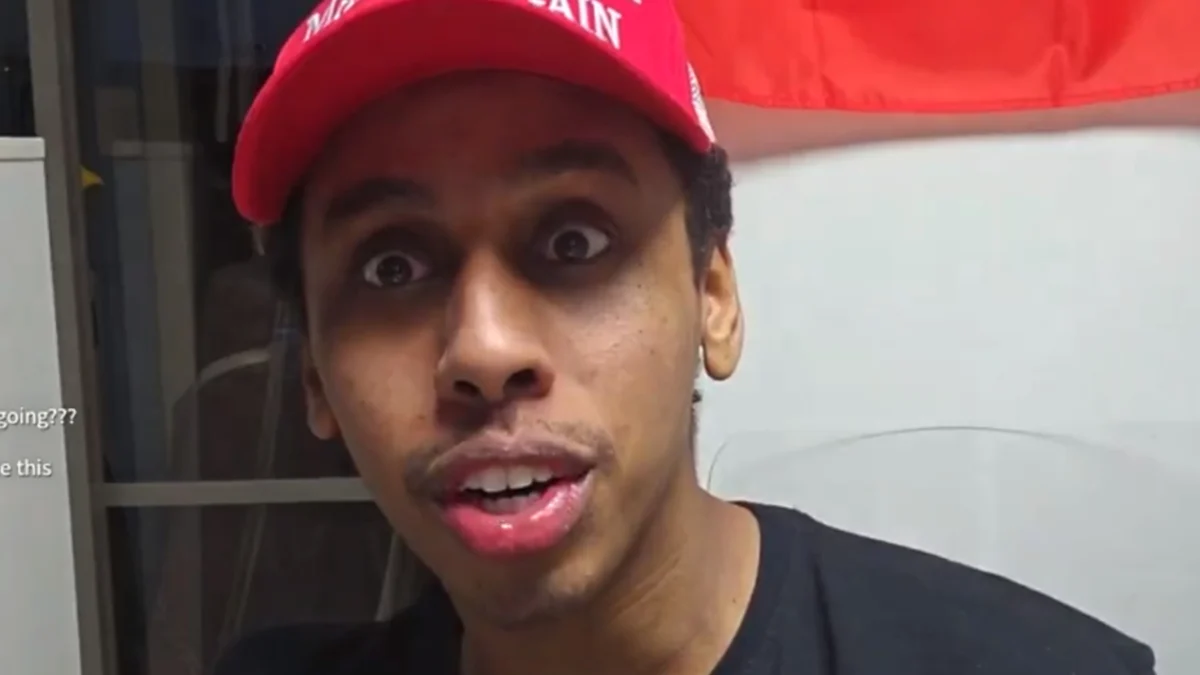
The South Korean judiciary has delivered a definitive conclusion to the highly publicized legal proceedings involving Ramsey Khalid Ismael, known internationally as the provocative live-streamer Johnny Somali. On April 14, a South Korean judge sentenced Ismael to a term in a specialized labor prison, effectively ending a months-long saga of public outrage, diplomatic tension, and vigilante justice that captured the attention of both domestic and international media. The verdict marks a significant moment in the intersection of digital content creation and international law, as South Korean authorities signal a zero-tolerance policy toward foreign nationals who engage in disruptive or exploitative behavior for online engagement.
The sentencing follows a trial that has been described as one of the most thoroughly documented influencer-related legal battles in recent memory. Ismael was found guilty of all charges brought against him, most notably including the production and distribution of deepfake content—a charge he had vigorously contested throughout the proceedings. According to legal observers and experts monitoring the case, Ismael’s transition from a standard correctional facility to a labor-oriented prison entails the loss of digital privileges, including the permanent confiscation of his mobile devices, and the formal designation of "offender status" within the Korean penal system.
The Chronology of a Controversial Campaign
Ramsey Khalid Ismael’s arrival in South Korea in 2024 followed a pattern of behavior established during previous excursions to Japan and Israel. In both instances, Ismael had been detained or deported following stunts designed to provoke local populations and garner "clout" on streaming platforms. However, his actions in South Korea quickly escalated beyond mere public nuisance, touching upon deep-seated historical traumas and national sensitivities.
The catalyst for the national outcry occurred when Ismael filmed himself dancing inappropriately and kissing the Statue of Peace, a memorial located in Seoul that honors the "comfort women"—victims of sexual slavery by Japanese imperial forces during World War II. In South Korea, the Statue of Peace is considered a sacred symbol of national suffering and resilience. Ismael’s perceived desecration of the monument sparked a firestorm of criticism that reached the highest levels of government, with members of the South Korean Parliament publicly condemning his actions and calling for swift legal retribution.
As the controversy intensified, Ismael became the target of domestic vigilante groups. Local residents and rival Korean streamers organized efforts to track his movements in real-time, leading to several physical altercations. In one widely circulated incident, a former South Korean Navy SEAL turned content creator physically confronted Ismael, an act for which the former soldier received significant public support and had his subsequent legal fines covered by American content creator Donut Operator. These incidents underscored a growing sentiment of "spawn camping"—a term borrowed from gaming culture to describe the relentless pursuit of Ismael by those seeking to hold him accountable outside the courtroom.
Legal Proceedings and the Deepfake Controversy
The legal case against Ismael was built on a series of documented incidents, including the obstruction of business at a 7-Eleven convenience store, disrupting public transportation, and broadcasting North Korean propaganda in public spaces. However, the most severe legal peril arose from charges related to the creation and sharing of deepfake videos.

South Korea has recently implemented some of the world’s most stringent laws regarding deepfake technology, following a national crisis involving non-consensual digital pornography. In court, Ismael pleaded guilty to several counts of obstruction of business and violations of the Minor Offenses Act but maintained his innocence regarding the deepfake charges. His defense strategy involved a comparison to a local Korean streamer, "Bongbong," whom Ismael claimed had shared similar content without facing prosecution. This line of argument reportedly drew the ire of the presiding judge, who viewed the comparison as an attempt to undermine the fairness of the South Korean legal system.
The prosecution had originally recommended a three-year sentence with hard labor, citing Ismael’s lack of remorse and the calculated nature of his provocations. In a last-minute attempt to secure leniency, Ismael’s mother filed a formal petition with the court, requesting mercy for her son. Ismael himself eventually offered an apology during his final appearances, attributing his behavior to the influence of alcohol and a lack of understanding regarding South Korean law. He argued that his actions, while controversial, would not have constituted criminal offenses in the United States, a defense that ultimately failed to sway the court.
Supporting Data: The Rising Tide of Nuisance Streaming
The sentencing of Johnny Somali occurs against a backdrop of increasing global scrutiny regarding "IRL" (In Real Life) streaming. Platforms like Kick and YouTube have struggled to moderate creators who prioritize high-risk, high-reward content that often borders on or crosses into criminal activity.
Statistical data from South Korean law enforcement suggests a rise in "nuisance-related" crimes committed by foreign visitors seeking viral fame. The "Obstruction of Business" charge (Gyeommu Banghae) in South Korea is particularly broad, allowing authorities to prosecute individuals who interfere with the normal operations of shops, restaurants, or public services through noise, harassment, or physical presence. Ismael’s case is seen as a bellwether for how the country intends to manage the influx of "clout-chasing" tourists.
Furthermore, South Korea’s aggressive stance on deepfakes is reflected in recent legislative updates. In late 2024, the South Korean National Assembly passed amendments to the Act on Special Cases Concerning the Punishment, etc. of Sexual Crimes, which significantly increased the penalties for those involved in the production of deepfake pornography, even if the intent was not for commercial gain. By including deepfake charges in Ismael’s conviction, the court has signaled that foreign nationals are equally subject to these specialized protections.
Official Responses and Diplomatic Implications
While the United States Department of State typically does not comment on the specific sentencing of private citizens abroad, the case has highlighted the complexities of consular assistance when a citizen’s actions involve cultural desecration. Official South Korean government spokespeople have emphasized that the verdict reflects the nation’s commitment to public order and the protection of its historical symbols.
Legal analysts, such as the YouTuber Legal Mindset, who provided consistent updates on the trial, noted that Ismael’s behavior during the early stages of the trial—including arriving late, hungover, and wearing a "Make America Great Again" hat—likely damaged his standing with the court. In South Korean judicial culture, a sincere show of remorse and "Hwae-gae" (repentance) is often a prerequisite for leniency. Ismael’s initial defiance was interpreted as a lack of respect for the sovereignty of the South Korean legal system.

Broader Impact and Industry Implications
The incarceration of Johnny Somali serves as a stark warning to the global streaming community. He is not the first high-profile creator to face international legal consequences. Recently, the streamer Vitaly spent nearly 300 days in a Philippine detention center following a series of aggressive public stunts before being deported to Russia. Similarly, American streamer Jack Doherty faces potential prison time in Florida following a reckless driving incident caught on camera.
The trend suggests a shift in the legal landscape where "content creation" is no longer viewed as a shield against criminal liability. For South Korea, the Ismael trial was about more than one individual; it was about asserting the boundaries of acceptable behavior for visitors. The decision to send Ismael to a labor prison—a facility designed to emphasize rehabilitation through disciplined work—is a calculated move to ensure the punishment fits the disruptive nature of the crime.
As the "IRL" streaming genre continues to evolve, platforms are facing increased pressure to implement "geofencing" or stricter moderation for creators traveling to countries with sensitive cultural or legal environments. The Johnny Somali saga demonstrates that while the digital world may be borderless, the physical world remains governed by local laws that are increasingly prepared to prosecute those who treat foreign cultures as mere backdrops for digital entertainment.
Analysis of Future Precedents
The precedent set by this trial will likely influence how South Korea handles future cases of digital harassment. The "Johnny Somali Law," a term colloquially used by some Korean netizens, refers to the demand for stricter visa regulations and swifter deportation processes for individuals with a history of public disturbance.
In the long term, Ismael’s conviction for deepfakes may be the most enduring part of his legal legacy in Korea. By successfully prosecuting a foreigner for digital forgery under these specific laws, the South Korean government has demonstrated the reach of its cyber-crime legislation. For Ismael, the transition from a life of digital notoriety to the anonymity of a labor prison represents a total collapse of the "influencer" persona under the weight of real-world judicial consequences.
The case concludes a chapter of intense social friction in Seoul, providing a sense of closure to the residents and victims who were targeted by Ismael’s streams. As he begins his sentence, the digital community is left to reckon with the reality that the pursuit of "views" has very real, and sometimes very permanent, costs.




 Yuyun Lusiyani
 Joko Widodo
 Eva Lovia
 admin
admin
 Lina Irawan