Pevita Pearce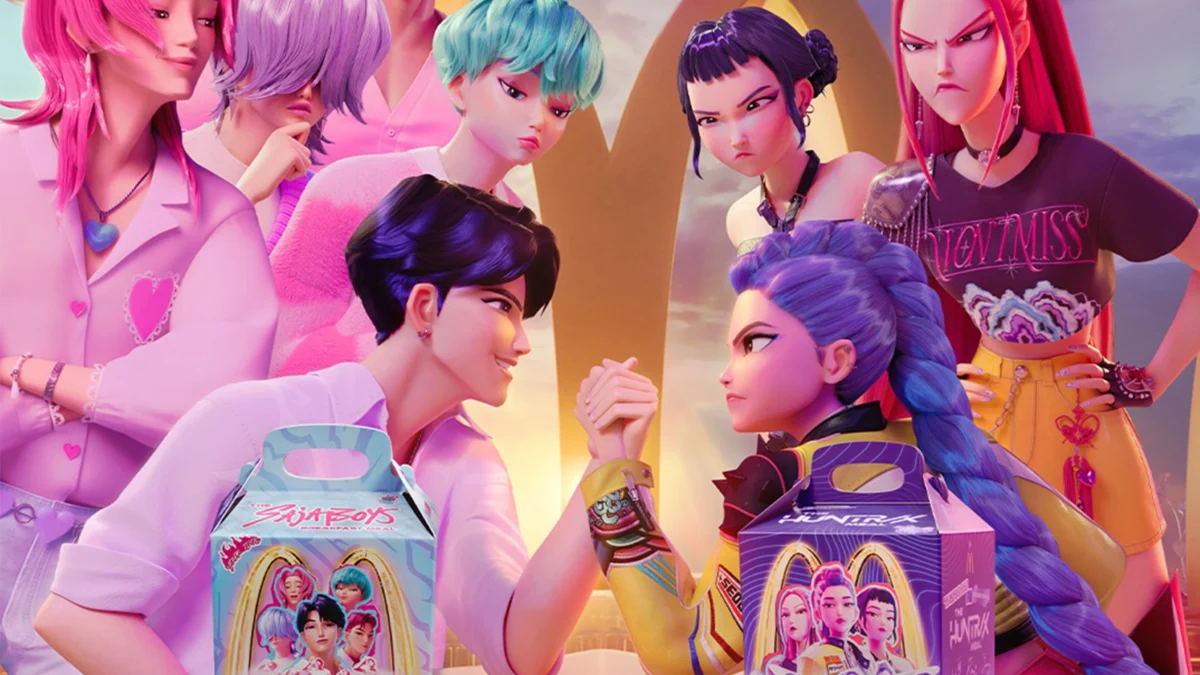
The intersection of global fast-food retail and specialized entertainment fandom has reached a new peak as McDonald’s senior leadership officially addressed the overwhelming success and subsequent supply challenges of its latest partnership. Guillaume Huin, the Senior Marketing Director for McDonald’s, issued a public statement via social media on April 14, 2026, regarding the "KPop Demon Hunters" (KPDH) campaign. The collaboration, launched in partnership with Netflix to promote the animated feature of the same name, has seen its promotional materials—specifically collectible photocards—become high-value assets on secondary auction sites, leading to localized shortages across the United States.
The KPop Demon Hunters campaign, which debuted in March 2026, was designed to tap into the fervent "stan culture" associated with both the K-pop music genre and modern animation. The promotion featured two distinct meal offerings: a breakfast combo themed after the "Saja Boys" and a lunch/dinner combo centered on the "HUNTR/X" group. Central to the appeal of these meals was the inclusion of exclusive photocards, a staple of K-pop merchandising that McDonald’s has successfully leveraged in the past. However, the scale of the current demand has exceeded internal projections, prompting a rare direct acknowledgement from the corporate marketing suite regarding the "reseller" economy that has sprung up around the promotion.
The Mechanics of the KPop Demon Hunters Promotion
To understand the current market frenzy, one must look at the structure of the KPDH campaign. McDonald’s and Netflix developed a tiered rewards system that gamified the dining experience. Each meal came with a sealed pack containing a photocard featuring one of the characters from the KPop Demon Hunters film. These cards were not distributed equally; instead, they were produced with varying levels of rarity, ranging from "Common" to "Ultra-Rare" holographic variants.
The "Saja Boys" breakfast meal included cards featuring the members of the fictional group in casual, morning-themed aesthetics, while the "HUNTR/X" lunch meal featured more aggressive, action-oriented designs. This dual-meal strategy encouraged multiple visits per day from collectors aiming to complete a full set. According to industry analysts, this "blind-box" mechanic is a proven driver of repeat business, but it also creates a vacuum that professional resellers are quick to fill.
By early April, just weeks after the launch, the scarcity of certain cards led to a surge in activity on platforms such as eBay and Mercari. Sets of the photocards are currently being listed for prices hovering around $100, while individual "Ultra-Rare" variants have seen "Buy It Now" prices exceeding $200. This secondary market has caused significant frustration among the core fanbase, many of whom have reported arriving at local McDonald’s locations only to find that promotional stock has been entirely depleted.
Official Response from McDonald’s Leadership
Guillaume Huin’s statement on April 14 served as both a confirmation of the campaign’s success and a "cheeky" call-out to the individuals profiting from the limited supply. Huin acknowledged that while many fans have been able to participate, the speed at which inventory vanished in certain regions was a direct result of the cards’ popularity on resale sites.
"We’ve seen some posts about the meal being sold out in some restaurants," Huin noted in his public communication. "It is true we have sold out faster than planned in some areas in the US due to its success (and to the fact the cards seem to be very popular on EBAY…)." Despite the shortages, Huin reassured the public that the campaign is not yet over, stating that many locations still possess stock and that the campaign would run through its scheduled conclusion.
Beyond addressing the logistics, Huin provided a rare look into the creative process behind the cards, which has added a layer of "lore" to the collectibles. He specifically highlighted the "Rumi with demon patterns" card, which features a design of the character surrounded by "broken glass." Huin revealed that the design was a deliberate "Easter egg" for fans of the film’s soundtrack, referencing the lyrics: "I broke into a million pieces and I can’t go back, but now I’m seeing all the beauty in the broken glass." This level of detail has only served to increase the perceived value of the cards among dedicated enthusiasts.

The "Derpy Card" and Digital Integration
A unique aspect of the KPDH campaign that has contributed to its longevity is the inclusion of the "Derpy" cards. Initially perceived by some customers as a printing error or a low-value "common" card, these stylized, humorous depictions of the characters have been revealed to hold significant utility.
Huin confirmed that on April 26, 2026, holders of these "Derpy" cards from both the HUNTR/X and Saja Boys meals will be granted exclusive digital access to a special event. This "Battle for the Fans" finale is expected to be a video event featuring a special performance from the vocal talent behind the Netflix film. By linking a physical collectible to a digital "ticket" or "access pass," McDonald’s has effectively integrated the physical and digital realms of the "KPop Demon Hunters" universe, a move that aligns with broader trends in "Phygital" marketing.
A Growing Trend in High-Stakes Fast Food Collaborations
The KPDH phenomenon is not an isolated incident but rather the latest in a series of high-profile collaborations that have transformed fast-food packaging into high-value collectibles. The "reseller economy" has become a standard feature of these launches.
For comparison, a recent collaboration between Popeyes and the anime franchise One Piece saw similar market behavior. The "Luffy-themed Bento Boxes" offered by Popeyes were quickly snatched up by collectors and listed on secondary markets for hundreds of dollars. Similarly, the 2021 McDonald’s "BTS Meal" saw empty packaging being sold on eBay for significant sums, demonstrating that for many consumers, the value lies in the branding and the "limited edition" nature of the product rather than the food itself.
Marketing experts suggest that these collaborations serve a dual purpose. For the fast-food chain, it drives immediate foot traffic and app downloads. For the entertainment partner (in this case, Netflix), it provides a massive, tangible presence in the daily lives of millions of consumers, serving as a weeks-long advertisement for their streaming content.
Chronology of the KPop Demon Hunters Campaign
The timeline of the KPDH collaboration highlights a meticulously planned rollout that maximized consumer anticipation:
- February 2026: Teasers appear on McDonald’s social media channels featuring silhouettes of the HUNTR/X and Saja Boys members.
- March 4, 2026: The campaign officially launches nationwide in the U.S.
- March 15, 2026: First reports of "Ultra-Rare" cards appear on social media, sparking a "gold rush" among collectors.
- March 28, 2026: Secondary market prices for complete sets hit the $100 mark.
- April 10, 2026: Widespread reports of stock depletion in major metropolitan areas like New York, Los Angeles, and Chicago.
- April 14, 2026: Senior Marketing Director Guillaume Huin addresses the shortages and the eBay reseller market.
- April 26, 2026 (Scheduled): The "Derpy Card" exclusive digital event is set to take place, concluding the narrative arc of the collaboration.
Implications for Future Brand Strategy
The success of the KPDH meal, despite the logistical strain of resellers, suggests that McDonald’s will likely continue to lean into specialized IP (Intellectual Property) collaborations. The data gathered from this campaign—ranging from the peak hours of "card hunting" to the geographical hotspots of reseller activity—will undoubtedly inform future supply chain decisions.
However, the "reseller problem" presents a challenge for brand sentiment. When genuine fans are priced out of a promotion by automated "scalpers" or professional resellers who buy stock in bulk, it can lead to negative brand associations. Some industry insiders suggest that future promotions may require a "one per customer" limit or a verification process through the McDonald’s app to ensure that collectibles reach their intended audience.
For now, the KPop Demon Hunters collaboration stands as a testament to the power of fandom in the 2020s. By combining the collectible nature of K-pop culture with the global reach of McDonald’s and the narrative weight of Netflix, the campaign has created a cultural moment that extends far beyond the drive-thru window. As the April 26 finale approaches, the focus shifts from the secondary market back to the content itself, as fans prepare to use their "Derpy" cards to witness the conclusion of the "Battle for the Fans."



 Jia Lissa
 Yuyun Lusiyani
 Joko Widodo
 Eva Lovia