
 Jia Lissa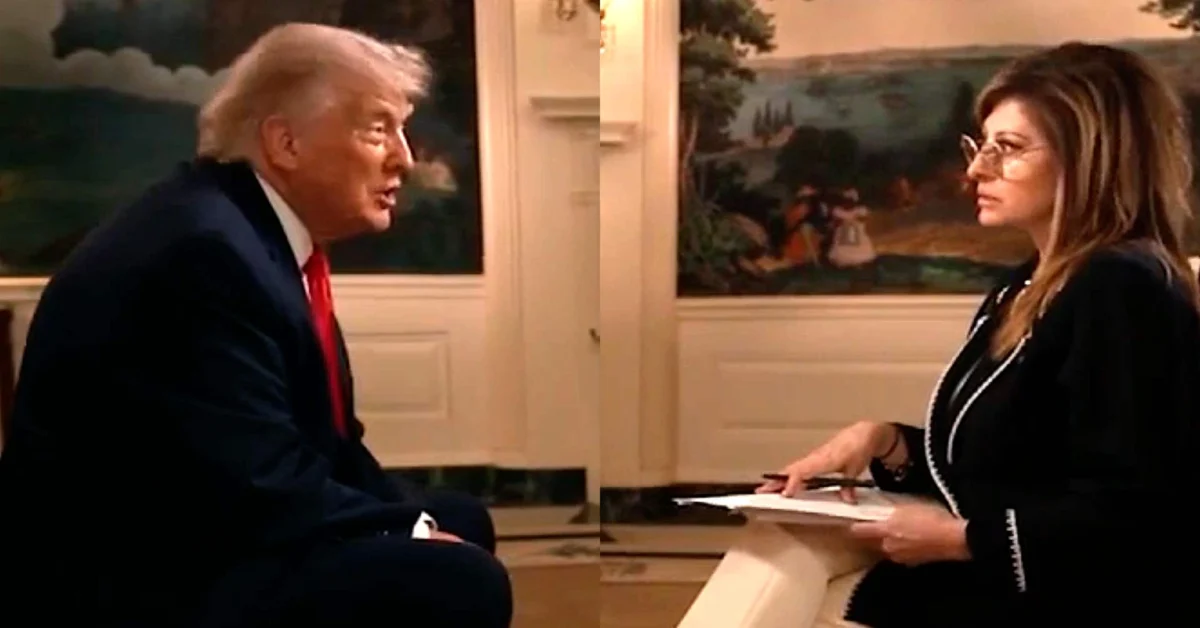
In a Wednesday morning appearance on the Fox Business Network program "Mornings with Maria," President Donald Trump offered a blunt and unexpected explanation for his noticeably raspy voice, attributing his vocal strain to aggressive diplomatic exchanges with Iranian officials. The interview, conducted by anchor Maria Bartiromo, touched on a wide range of topics, including international trade and national security, but it was the President’s candid admission regarding his communication style with Tehran that captured immediate public attention. When questioned by Bartiromo if his hoarseness was a result of prolonged negotiations with China, the President shifted the focus to the Middle East, claiming that he had spent the day "screaming at Iranians" to ensure his administration’s positions were understood.
The exchange began as a discussion on the complexities of securing trade agreements with the Chinese government. President Trump detailed his personal involvement in the process, claiming that while many advisors and business leaders believed a deal was impossible, his direct intervention with President Xi Jinping facilitated a breakthrough. However, as the interview progressed, Bartiromo noted the President’s audible vocal fatigue. "Have you been negotiating a lot all day? I mean, is that why your voice is hoarse?" she inquired. The President responded by stating, "I’ve been screaming at Iranians all day, yes. A little bit of a laryngitis because of my scream. I’ve been screaming at the Iranians." When Bartiromo sought clarification on whether he was referring to the Iranian leadership, Trump doubled down on the assertion, stating that such a forceful approach was a necessity of his "business" style. "You know why? Because that’s the only thing they understand," he added. "They don’t understand being nice. They understand the way I have to do business. I treat all people differently."
Historical Context of Presidential Vocal Health and Public Perception
This is not the first instance where President Trump’s vocal health has become a subject of media scrutiny or where he has used such physical symptoms to highlight his perceived work ethic. In November of the previous year, the President addressed similar questions regarding a hoarse voice by claiming he had "blown his stack" while shouting at subordinates and trade representatives over stalled negotiations. At that time, he told reporters that his frustration stemmed from "stupid" decisions regarding trade policy and that his vocal strain was a direct byproduct of "straightening it out."
Medical experts note that vocal hoarseness, or laryngitis, in high-profile public figures is often the result of "vocal abuse," which includes prolonged speaking, shouting, or speaking at a high volume without proper breath support. For a President whose schedule frequently includes multi-hour rallies, intensive briefing sessions, and frequent telephone diplomacy, vocal strain is a recurring occupational hazard. However, the President’s decision to frame this physical condition as a badge of diplomatic combat is a unique characteristic of his communicative strategy. By attributing a physical ailment to "screaming" at foreign adversaries, the President reinforces a narrative of a tireless negotiator who utilizes personal intensity as a tool of statecraft.
The Geopolitical Landscape: U.S.-Iran Relations and "Maximum Pressure"
The President’s comments regarding Iran come at a time of heightened tension between Washington and Tehran. Since the United States’ withdrawal from the Joint Comprehensive Plan of Action (JCPOA) in 2018, the administration has pursued a policy of "Maximum Pressure." This strategy involves the imposition of stringent economic sanctions designed to cripple the Iranian economy and force the leadership back to the negotiating table to discuss a more comprehensive deal that includes restrictions on ballistic missile development and regional "malign activities."
Supporting data from the U.S. Department of the Treasury indicates that hundreds of Iranian entities, including the Islamic Revolutionary Guard Corps (IRGC), the Central Bank of Iran, and various shipping and oil companies, have been targeted by sanctions. These measures have significantly impacted Iran’s oil exports, which dropped from roughly 2.5 million barrels per day in early 2018 to less than 500,000 barrels per day in subsequent years. The economic contraction in Iran, characterized by high inflation and a devalued currency, has created a volatile environment where diplomatic channels are often strained or non-existent.
The President’s claim of "screaming" at Iranians suggests a level of direct, perhaps informal, communication that stands in stark contrast to traditional diplomatic protocols. While official channels often involve the Swiss Embassy (which acts as the U.S. protective power in Tehran) or intermediary nations like Oman or France, the President’s remarks imply a more personal and confrontational engagement.
Chronology of Recent Diplomatic Friction
To understand the weight of the President’s statements, it is necessary to examine the timeline of U.S.-Iran friction leading up to the interview:
- Withdrawal from JCPOA: The U.S. officially exits the nuclear deal, citing its "fundamental flaws" and the need for a broader agreement.
- Designation of the IRGC: The U.S. designates the Islamic Revolutionary Guard Corps as a Foreign Terrorist Organization, the first time a part of another government was so labeled.
- Maritime Incidents: A series of attacks on oil tankers in the Gulf of Oman and the Persian Gulf are attributed by the U.S. and its allies to Iranian forces, a claim Tehran denies.
- Downing of U.S. Drone: Iran shoots down a U.S. Global Hawk surveillance drone, leading to a near-military strike by the U.S. that was aborted at the last minute by the President.
- Sanctions Escalation: The administration continues to layer sanctions on the Iranian Supreme Leader’s office and the Foreign Ministry, further narrowing the avenues for traditional diplomacy.
Against this backdrop, the President’s assertion that he has been "screaming" at Iranian representatives reflects a broader strategy of rhetorical escalation. In his view, the "niceties" of international relations have failed to yield results, necessitating a more pugnacious approach.
Comparative Analysis: The China Trade Negotiations
During the same interview, the President contrasted his approach to Iran with his recent dealings with China. He described a scenario where President Xi Jinping initially maintained a "hard no" regarding certain trade concessions. According to Trump, it was only after American business leaders invested billions and he personally "called up President Xi" that the deal moved forward.
The "Phase One" trade deal with China, which involved commitments from Beijing to purchase billions of dollars in American agricultural products and energy exports, served as the President’s primary example of successful high-stakes negotiation. Data from the Office of the United States Trade Representative (USTR) highlights that the deal aimed to address structural issues such as intellectual property protection and forced technology transfer. By juxtaposing the "hard" negotiations with China against the "screaming" sessions with Iran, the President suggested a spectrum of diplomatic tactics: transactional and firm for trade partners, but visceral and aggressive for perceived security threats.
Official Responses and International Reaction
While the White House Press Office did not immediately issue a formal statement clarifying the specific nature of the "screaming" sessions, the comments sparked a predictable range of reactions. Supporters of the administration viewed the President’s remarks as a sign of strength and a refreshing departure from what they characterize as the "appeasement" policies of previous administrations. They argue that Iran’s leadership only responds to clear demonstrations of resolve and that the President’s bluntness is a necessary component of deterrence.
Conversely, critics and veteran diplomats expressed concern over the potential fallout of such rhetoric. Analysts in the foreign policy community noted that "screaming" is rarely a productive component of high-level diplomacy, particularly with a culture like Iran’s, which places a high value on "dignity" and "respect" in international dealings. Former State Department officials suggested that such public admissions could embolden hardliners within the Iranian government, who use American hostility to justify their own aggressive postures and internal crackdowns.
In Tehran, the reaction—conveyed through state-aligned media outlets—typically characterizes such American rhetoric as "psychological warfare." Iranian officials have historically maintained that they will not negotiate under the pressure of sanctions or "bullying," asserting that any dialogue must be based on mutual respect and the lifting of economic "terrorism."
Broader Implications for U.S. Foreign Policy
The President’s interview on Fox Business highlights a fundamental shift in American executive communication. The use of "Mornings with Maria" as a platform to discuss sensitive national security interactions demonstrates the administration’s preference for direct-to-audience communication over formal press briefings.
From an analytical perspective, the "screaming" anecdote serves several functions:
- Domestic Signaling: It reassures the President’s base that he is actively fighting for American interests and is not intimidated by foreign adversaries.
- Strategic Ambiguity: By not specifying who exactly he was "screaming" at, the President maintains a level of unpredictability that is a hallmark of his "Madman Theory" of diplomacy—a concept where an actor appears irrational to make their threats more credible.
- Humanizing the Effort: Attributing physical laryngitis to his work creates a narrative of personal sacrifice, portraying the President as someone who literally loses his voice in service to the country.
However, the long-term efficacy of this approach remains a subject of intense debate among political scientists. While it may project strength domestically, the impact on international stability is less certain. The "Maximum Pressure" campaign has undoubtedly strained Iran’s resources, but it has yet to produce a new, comprehensive treaty.
Conclusion: The "Business" of Diplomacy
President Trump’s remarks to Maria Bartiromo provide a vivid window into his philosophy of international relations. By treating diplomacy as a "business" where different players require different treatments—ranging from firm phone calls with President Xi to "screaming" matches with Iranian leadership—he has redefined the role of the American President on the world stage. Whether this vocal strain is a temporary byproduct of a busy week or a symbol of a more profound shift in global engagement, it remains a defining characteristic of the current administration’s approach to the world’s most intractable conflicts. As the U.S. continues to navigate the complexities of the Middle East and global trade, the President’s voice, hoarse or otherwise, will continue to be the primary instrument of American policy.

 Yuyun Lusiyani
 Joko Widodo
 Pevita Pearce
 admin
admin
