
 Jia Lissa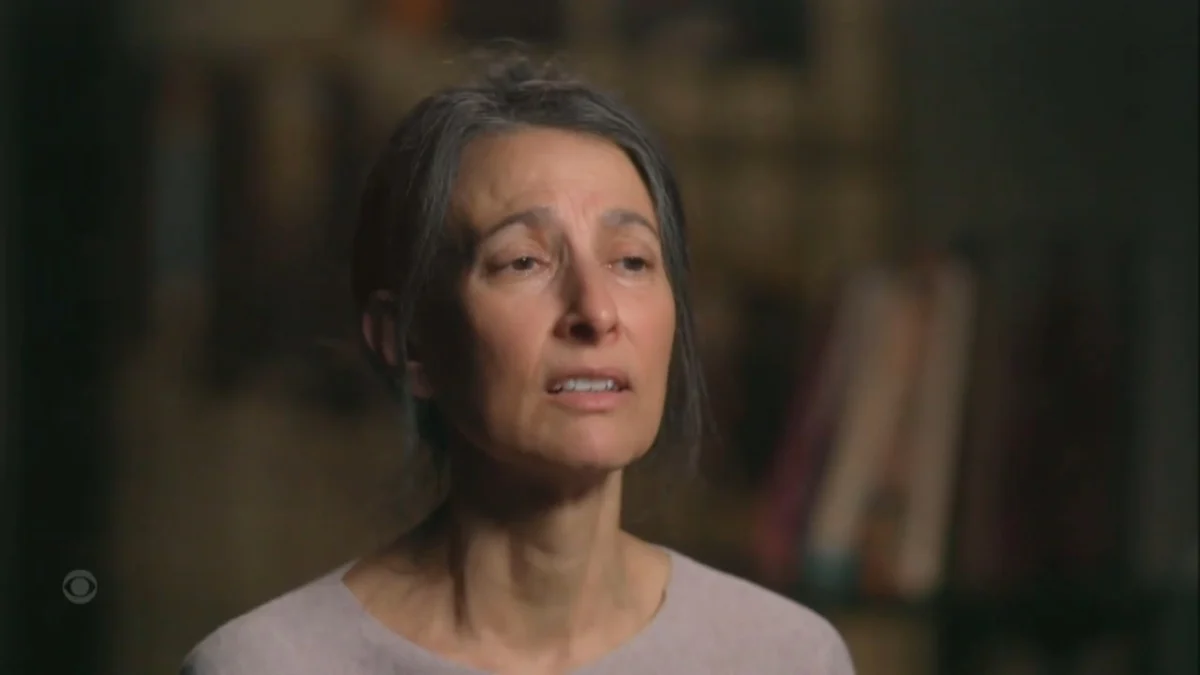
In a poignant and deeply personal interview broadcast on CBS’s 60 Minutes, Rachel Goldberg-Polin, the mother of the late American-Israeli hostage Hersh Goldberg-Polin, shared the harrowing details of her 330-day struggle to save her son. Hersh, a 23-year-old California native who moved to Israel as a child, became a global symbol of the hostage crisis following his abduction by Hamas from the Nova Music Festival on October 7, 2023. His death, confirmed in late August 2024 after his body was recovered from a tunnel in Rafah, sent shockwaves through the international community and intensified the domestic political pressure within Israel regarding the fate of the remaining captives.
During the interview with correspondent Anderson Cooper, Goldberg-Polin articulated a paradox of grief that has resonated with many following the conflict. She described the nearly 11 months of her son’s captivity—a period marked by the knowledge of his severe injuries and the uncertainty of his conditions—as the "good part" simply because he was still alive. Her reflections underscored the psychological toll on the families of the 251 people taken hostage during the initial Hamas-led attack, which resulted in the deaths of approximately 1,200 people and ignited a devastating war in the Gaza Strip.
The Events of October 7 and the Abduction of Hersh Goldberg-Polin
The ordeal for the Goldberg-Polin family began in the early hours of October 7, 2023, during the Sukkot holiday. Hersh had been attending the Nova Music Festival, an outdoor trance music event held near Kibbutz Re’im, just a few miles from the Gaza border. When Hamas militants breached the border fence and began a systematic massacre of festival-goers, Hersh and several others sought refuge in a small roadside bomb shelter.
The events inside that shelter have become a testament to both tragedy and heroism. According to eyewitness accounts and subsequent investigations, Hersh’s close friend, Aner Elyakim Shapira, stood at the entrance of the bunker and managed to catch and throw back at least seven grenades tossed inside by militants. Shapira was eventually killed when a subsequent grenade exploded. During the assault, Hersh’s left arm was blown off from the elbow down.
Anderson Cooper, during the 60 Minutes segment, recalled the moment he first encountered footage of the abduction—a video that showed a bloodied Hersh being loaded into the back of a pickup truck, his mangled arm visible. Cooper had the difficult task of informing Rachel and her husband, Jonathan Polin, of the existence of this footage in late 2023. Rachel expressed her gratitude for the "human way" Cooper delivered the news, noting that the video provided the family with the first confirmation that Hersh had survived the initial explosion and was capable of walking under his own power.
A Timeline of Advocacy and Uncertainty
Following the abduction, Rachel Goldberg-Polin and Jonathan Polin became the most prominent faces of the international campaign to free the hostages. Their advocacy took them from the halls of the United Nations in New York and Geneva to the White House and the Vatican. Rachel was known for wearing a piece of masking tape on her shirt every day, marked with a number representing the days since Hersh’s abduction—a visual tally of the passage of time and the urgency of the crisis.
The family’s timeline of advocacy included several critical milestones:
- October 2023: Initial reports and the discovery of the abduction video.
- November 2023: A week-long ceasefire saw the release of 105 hostages, primarily women and children, but Hersh remained in captivity.
- April 2024: Hamas released a "proof-of-life" video featuring Hersh. In the video, he appeared thin and was missing his lower left arm, but he spoke directly to his family, providing a brief moment of hope.
- August 2024: Rachel and other families traveled to the Gaza border, using high-powered loudspeakers to broadcast messages of love to their children held in the tunnels below. "Hersh! It’s Mama!" she had cried out.
Unbeknownst to the family at the time, the day of that border visit coincided with the final hours of Hersh’s life. According to the Israel Defense Forces (IDF), Hersh and five other hostages—Eden Yerushalmi, Ori Danino, Alex Lobanov, Carmel Gat, and Almog Sarusi—were executed by their captors shortly before Israeli troops reached their location in a tunnel beneath Rafah. Forensic reports indicated that Hersh had been shot six times at close range.
Supporting Data on the Hostage Crisis and Dual Nationals
Hersh Goldberg-Polin was one of several American citizens caught in the crosshairs of the October 7 attacks. At the time of the 60 Minutes interview, the status of the remaining hostages continues to be a central point of contention in ceasefire negotiations between Israel and Hamas, mediated by the United States, Qatar, and Egypt.
As of late 2024, data from the Israeli Prime Minister’s Office and the Hostage and Missing Families Forum indicates:
- Total Hostages Taken: 251.
- Hostages Released or Rescued: 117 (including those released during the November 2023 pause and several rescued in military operations).
- Confirmed Deceased in Captivity: At least 35, though some estimates suggest the number could be higher.
- American Status: Seven U.S. citizens remain unaccounted for, with at least three confirmed dead, including Hersh Goldberg-Polin.
The death of Hersh, a dual citizen, brought the conflict home for many Americans and placed significant pressure on the Biden-Harris administration to secure a deal. In the aftermath of the discovery of the bodies, President Joe Biden issued a statement expressing that he was "devastated and outraged," describing Hersh as a "courageous" young man who had "endured the unimaginable."
Official Responses and Domestic Implications in Israel
The recovery of the six bodies in late August sparked the largest domestic protests in Israel since the start of the war. Hundreds of thousands of Israelis took to the streets of Tel Aviv and Jerusalem, accusing Prime Minister Benjamin Netanyahu’s government of prioritizing military objectives—specifically the control of the Philadelphi Corridor—over the lives of the hostages.
The Hostage and Missing Families Forum released a statement following the 60 Minutes interview, echoing Rachel Goldberg-Polin’s sentiment that the failure to bring the hostages home alive is a collective failure of the state. The forum argued that a "deal was on the table" and that the delay in signing a ceasefire agreement directly led to the execution of the six captives.
Hamas, through its military wing, the Al-Qassam Brigades, issued a chilling statement following the Rafah incident, claiming they had issued "new instructions" to guards on how to handle hostages if Israeli forces approached. This policy of execution has complicated military rescue efforts, shifting the focus back toward diplomatic solutions.
Analysis of the Broader Impact and Human Cost
The interview on 60 Minutes highlighted the profound "failure" Rachel Goldberg-Polin felt despite her tireless efforts. Her admission to Anderson Cooper that she felt she had failed her son reflects the immense burden placed on the families of victims during a geopolitical crisis.
From a journalistic perspective, the Goldberg-Polin case illustrates several critical themes of the current Middle East conflict:
- The Weaponization of Hostages: The use of proof-of-life videos and the strategic execution of captives have been employed as psychological warfare, aimed at fracturing Israeli society and pressuring the government.
- The Role of International Media: The Goldberg-Polins utilized global media platforms to ensure their son remained a person rather than a statistic. This humanization was vital in maintaining international focus on the hostage issue amidst the broader humanitarian crisis in Gaza.
- The Limits of Diplomacy: Despite the involvement of the world’s highest-ranking officials, the inability to bridge the gap between "total victory" and a "hostage deal" has resulted in irreversible loss.
Rachel Goldberg-Polin’s story concludes on a note of enduring grief. She told Cooper that she now faces the rest of her life without a "piece of her," questioning how to navigate a world that feels fundamentally broken. Her story serves as a stark reminder of the human cost that persists long after the cameras turn away and the news cycle moves on. As of the time of this report, the fate of the remaining 101 hostages remains the central, unresolved tragedy of a war that has reshaped the landscape of the Middle East.

 Yuyun Lusiyani
 Joko Widodo
 Pevita Pearce
 admin
admin
