
 admin
admin
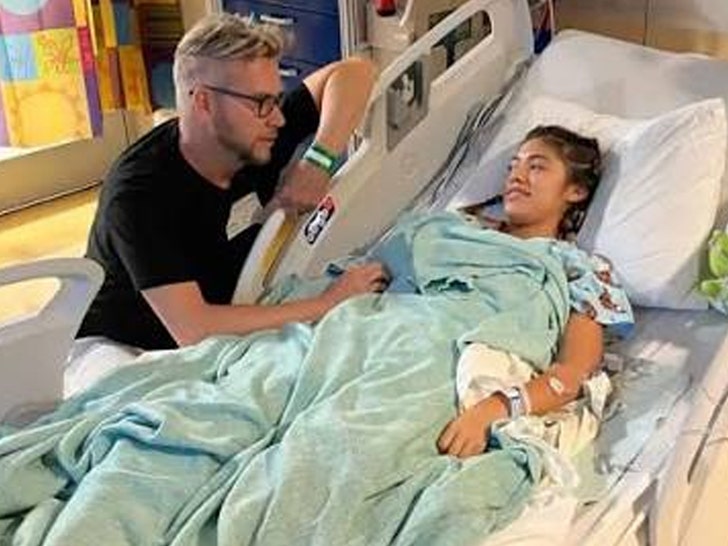
The Department of Homeland Security (DHS) and other relevant U.S. officials are facing an urgent public appeal from the immigration attorney representing Armando Niedermeier-Rubio, a prominent figure from TLC’s ’90 Day Fiancé.’ The plea seeks emergency assistance to facilitate Armando’s immediate reunion with his husband, Kenny Niedermeier, and their daughter, Hannah, who is currently receiving critical care in the Intensive Care Unit (ICU) of a Phoenix hospital. This desperate situation underscores the profound human toll of complex immigration processes, particularly when compounded by life-threatening medical emergencies.
An Urgent Call for Compassion and Expedited Review
Kelsey Zubkoff, Armando’s immigration attorney, confirmed to TMZ on July 16, 2026, that her client is seeking an expedited review of his pending spousal visa application. Beyond the standard visa process, the legal team is also exploring avenues such as emergency humanitarian parole or other lawful temporary relief. These requests are being directed to the Department of Homeland Security, the appropriate U.S. Embassy or consulate, and any other agency with the authority to intervene given the extraordinary medical circumstances. The core of the request is not to circumvent established legal frameworks but to implore authorities to apply discretion and compassion within the existing laws to allow a family to be together during an unimaginable crisis.
Armando’s husband, Kenny Niedermeier, is a U.S. citizen, and their daughter, Hannah, holds lawful permanent resident status. Hannah’s critical condition in a Phoenix ICU makes her eligibility for comprehensive medical care paramount, and her family believes that her father’s presence is vital for her emotional and psychological well-being during this harrowing ordeal. The family’s plea emphasizes that they are "not asking to bypass the law—they are asking for compassion, urgency, and consideration of every lawful avenue available during an extremely serious family emergency." This statement directly addresses potential criticisms and aims to frame their request as a legitimate appeal for humanitarian consideration within the bounds of U.S. immigration policy.
The Unfolding Crisis: A Timeline of Desperation

The Niedermeier-Rubio family’s crisis began to unfold earlier this week, escalating rapidly into the current urgent situation.
- July 15, 2026 – Hannah’s Medical Emergency: Hannah suffered a severe brain bleed, the cause of which remains unknown to doctors. Given the gravity of her condition, she required immediate, specialized medical attention.
- July 15, 2026 – Airlift to Phoenix: Due to the severity of her condition and the availability of advanced medical facilities, Hannah was airlifted from Mexico to a hospital in Phoenix, Arizona. This decision highlighted the critical nature of her health crisis and the need for specialized neurological care.
- July 15, 2026 – Armando Denied Entry: As TMZ previously reported, Armando attempted to cross the U.S.-Mexico border to be with his daughter. However, he was reportedly turned away, preventing him from reaching Hannah’s bedside. The exact reasons for his denial at the border have not been fully disclosed, but it is understood to be related to his current immigration status while awaiting his spousal visa. This denial created an immediate and agonizing separation for the family.
- July 15, 2026 – Kenny Rushes to Phoenix: Simultaneously, Kenny Niedermeier, who was in Ohio, immediately rushed to Phoenix to be with Hannah, leaving Armando alone in Mexico and unable to join his family.
- July 16, 2026 – Public Plea Issued: With Hannah in the ICU, undergoing extensive testing to determine the cause of the bleeding, and Armando still unable to enter the U.S., his attorney, Kelsey Zubkoff, issued a public plea to DHS and other officials for emergency intervention. This plea marks the family’s official and public attempt to leverage legal and humanitarian channels to reunite.
The emotional toll on the family has been immense. Armando tearfully shared updates, revealing the agonizing uncertainty surrounding Hannah’s condition and the frustration of being physically separated from her during her most vulnerable moments. The absence of a clear diagnosis for the brain bleed only adds to the family’s distress, making Armando’s presence even more crucial for their collective emotional support.
Background of the Niedermeier-Rubio Family and Their Immigration Journey
Armando Niedermeier-Rubio and Kenny Niedermeier became household names through their appearances on TLC’s ’90 Day Fiancé: The Other Way.’ Their journey captivated audiences as Kenny, a U.S. citizen, moved from Florida to Mexico to be with Armando and Hannah, Armando’s daughter from a previous marriage. Their love story, which culminated in marriage in Mexico, has been celebrated for its authenticity and for breaking barriers within the franchise as one of its first same-sex male couples.
Hannah, Armando’s daughter, has been an integral part of their story, endearing herself to viewers with her bright personality and her bond with both Armando and Kenny. Her lawful permanent resident status in the U.S. grants her significant rights and privileges, including access to U.S. healthcare, which is why her airlift to Phoenix was a critical step in her medical treatment.
Armando is currently pursuing the lawful spousal visa process to immigrate to the United States. This typically involves several stages, including the filing of an I-130 Petition for Alien Relative by Kenny (the U.S. citizen spouse), followed by processing through the National Visa Center (NVC) and ultimately an interview at a U.S. Embassy or Consulate in Mexico. This process, while legitimate, can often be lengthy, sometimes taking many months or even over a year, depending on various factors including caseloads, administrative processing times, and security checks.
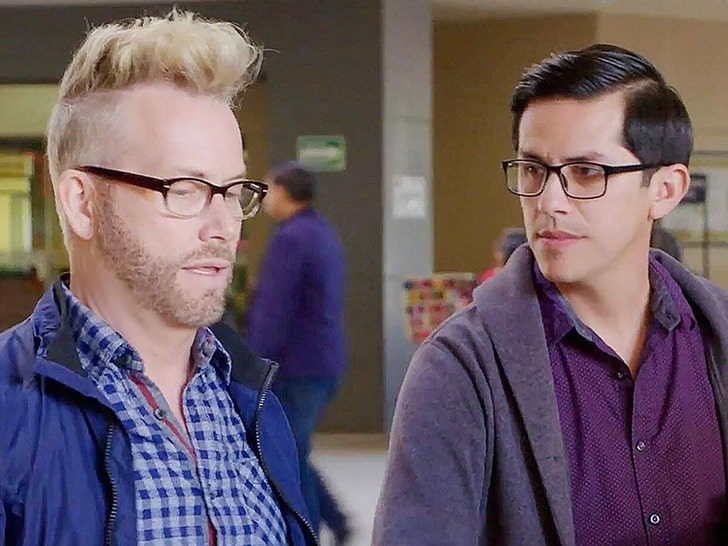
Attorney Zubkoff has also taken the opportunity to address and firmly refute "misinformation circulating online" suggesting that Armando had overstayed an authorized period of admission in the United States. This clarification is crucial, as any unauthorized stay could significantly complicate his immigration case and eligibility for certain forms of relief. By asserting that Armando did not overstay, his legal team emphasizes that he is following established legal procedures, thereby strengthening their argument for compassionate consideration.
Navigating the Labyrinth of U.S. Immigration Law: Spousal Visas and Humanitarian Parole
The U.S. immigration system, while designed to regulate entry and residency, also contains provisions for exceptional circumstances, which the Niedermeier-Rubio family is now desperately seeking to invoke.
Spousal Visas (IR1/CR1):
For U.S. citizens sponsoring their foreign spouses, the primary immigration pathway is through an Immediate Relative (IR) visa, specifically the IR1 or CR1 category. This process is initiated by the U.S. citizen spouse filing Form I-130, Petition for Alien Relative, with U.S. Citizenship and Immigration Services (USCIS). Once approved, the petition moves to the National Visa Center (NVC) for further processing, including fee payments, submission of civil documents, and financial support affidavits. Finally, the foreign spouse attends an interview at a U.S. Embassy or Consulate in their home country. If approved, they receive an immigrant visa to enter the U.S. as a lawful permanent resident. The entire process, from filing the I-130 to visa issuance, can take anywhere from 10 to 18 months or even longer, depending on the specific consulate and individual case complexities. The family’s request for "expedited review" aims to drastically shorten this timeline due to the emergency.
Humanitarian Parole:
This is an extraordinary measure that allows individuals who are otherwise inadmissible to the United States to temporarily enter the country for urgent humanitarian reasons or for a significant public benefit. It is granted on a case-by-case basis and is entirely discretionary. The criteria for humanitarian parole are stringent, generally requiring compelling evidence of a genuine emergency that cannot be resolved through existing visa channels or other immigration pathways. Examples of humanitarian reasons include critical medical conditions, severe family emergencies, or to attend to dying relatives.
In Hannah’s case, her critical condition as a lawful permanent resident, coupled with her father’s inability to be present due to immigration processing delays, presents a strong argument for "urgent humanitarian reasons." If granted, humanitarian parole would allow Armando to enter the U.S. for a temporary period, typically a year, during which he could be with his family. It is not a permanent solution but would offer immediate relief. The family’s attorney is likely submitting a detailed application to USCIS, outlining Hannah’s medical emergency, providing medical documentation, and explaining why Armando’s presence is essential and why the standard visa process is insufficient given the urgency.
Department of Homeland Security (DHS) Authority:
DHS, through its various agencies like USCIS (responsible for processing petitions and humanitarian parole requests) and Customs and Border Protection (CBP, responsible for border entry), has the ultimate authority to make decisions on these matters. The plea is directed at DHS because these agencies are the gatekeepers of U.S. immigration policy and hold the discretion to grant exceptions in dire circumstances. U.S. Embassies and Consulates also play a critical role in visa processing and can sometimes facilitate expedited interviews if directed by relevant U.S. authorities or in cases of extreme emergency.
Broader Implications and the Human Face of Immigration
The Niedermeier-Rubio family’s predicament shines a spotlight on the often-impersonal nature of immigration systems and the profound human impact of bureaucratic delays. Their story resonates with countless binational families who navigate similar complexities, albeit often without the public platform of a reality television show. While laws and procedures are necessary for orderly immigration, cases like Armando’s highlight the tension between strict adherence to rules and the need for humanitarian flexibility.
Immigration legal experts often note that while humanitarian parole is a challenging pathway, cases involving immediate medical emergencies, particularly those affecting U.S. citizens or lawful permanent residents, can sometimes meet the stringent criteria. The public attention generated by ’90 Day Fiancé’ stars can, at times, draw greater scrutiny to such cases, potentially influencing the speed of review, though agencies maintain that decisions are based solely on legal merits.
The outcome of Armando’s plea could have significant implications. If granted, it would offer immediate solace to a family in distress and serve as a powerful example of the system’s capacity for compassion. If denied, it would underscore the rigidities within the immigration framework, leaving a family to cope with a medical emergency while physically separated. The public’s reaction, fueled by empathy for Hannah’s condition and the family’s struggle, could also exert informal pressure on officials.
This situation also brings to the forefront the challenges faced by many binational couples, even those pursuing legal immigration paths. The waiting periods, the strict requirements, and the often-unpredictable timelines can create immense stress, especially when unexpected life events like a critical illness arise. Armando and Kenny’s story, once again, illustrates that behind the statistics and legal jargon are real families enduring profound emotional and logistical hurdles.
As Hannah fights for her life in a Phoenix ICU, her family, both physically present and tragically separated, holds onto hope for a swift and compassionate resolution. The legal appeal by Kelsey Zubkoff is not just a procedural step; it is a desperate cry for empathy, urging the U.S. government to recognize the extraordinary circumstances and allow a father to be by his daughter’s side during her most critical hour. The world watches, hoping that the principles of humanity will prevail in the face of bureaucratic complexities.


 Yuyun Lusiyani
 Joko Widodo
 Eva Lovia
 Pevita Pearce

 Lina Irawan