
 Amara Maple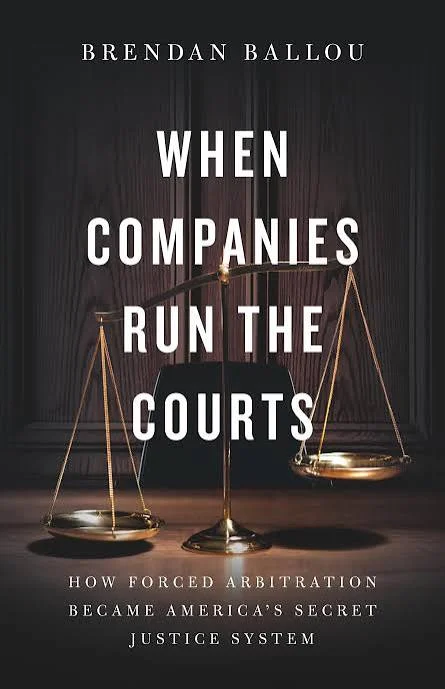
America operates a parallel, often concealed, justice system where the principles of transparency, impartiality, and public accountability are systematically undermined. This hidden framework, known as forced arbitration, governs an ever-growing array of disputes between powerful corporations and ordinary citizens, from employees and consumers to victims of negligence. Decisions within this system are rendered in secret, by arbitrators whose remuneration often depends on the very corporations they adjudicate. The outcomes are overwhelmingly unfavorable to individuals, with no recourse for appeal to traditional courts, effectively trapping claimants in a cycle of injustice.
This pervasive system is often unknowingly agreed to through commonplace actions, such as signing up for a streaming service, accepting a job offer, or agreeing to terms and conditions online. These “click-to-accept” contracts of adhesion strip individuals of their constitutional right to a jury trial and access to public courts. Through its inherent secrecy and the financial incentives influencing arbitrators, forced arbitration has become a powerful tool allowing companies to evade accountability, banks to deceive customers with impunity, and even predatory actors to operate beyond the reach of conventional law. It is a primary reason why powerful entities frequently appear to operate above the law, creating a significant imbalance in the American legal landscape.
Exposing the Hidden System: Brendan Ballou’s Definitive Account
Brendan Ballou, a former federal prosecutor and CEO of the Public Integrity Project, has meticulously documented this clandestine system in his new exposé, When Companies Run the Courts: How Forced Arbitration Became America’s Secret Justice System (PublicAffairs, 2026). Ballou’s work serves as a critical examination of how the legal system has been systematically reshaped to favor corporate interests over those of the average American.
In a recent interview, Ballou articulated his motivation for writing the book: "I wanted to explain how our legal system favors big companies over regular people. I wanted to tell that story through this specific issue of forced arbitration. I felt that if I could do that, I could explain how the legal system can bend toward the very powerful." His research reveals a stark reality: the volume of arbitration cases handled by major providers, in some years, now surpasses the total number of civil cases filed in the entire federal court system, and by some measures, even the broader civil court system. This numerical disparity, however, merely scratches the surface of the issue. Ballou emphasizes that the true problem lies in how forced arbitration fundamentally suppresses legitimate claims, making them financially prohibitive and inherently unfair, thereby "killing cases entirely" that should otherwise proceed.
The Genesis of Forced Arbitration: A Historical Overview
The widespread adoption of forced arbitration agreements traces its origins to the 1980s, a period characterized by a powerful narrative of a "litigation explosion" in the United States. This narrative, widely propagated by corporate interests and conservative legal minds, posited that an unchecked wave of frivolous lawsuits was crippling American businesses and stifling economic growth. However, as Ballou and other legal scholars contend, the empirical evidence supporting this "litigation explosion" was, and remains, tenuous. Data suggests that litigation rates in the U.S. were largely consistent with those in other developed nations, indicating that the narrative was more a strategic construct than a factual representation.
Despite the questionable statistical basis, this powerful narrative spurred a concerted effort, primarily led by conservative judges, to redirect consumers and employees away from traditional court systems. Forced arbitration emerged as the primary mechanism for achieving this goal. A pivotal development was the reinterpretation of existing laws by the Supreme Court to validate legally binding arbitration agreements, particularly those embedded within "contracts of adhesion"—the ubiquitous "click to accept" terms that individuals routinely encounter and accept without detailed scrutiny.
Further exacerbating the issue, the Supreme Court subsequently reinterpreted laws to permit individuals to be forced into individual arbitration, effectively eliminating the possibility of class-action lawsuits or similar collective proceedings within arbitration. This legal shift was monumental. Previously, individuals with small but collectively significant claims—such as a company defrauding numerous customers of a few hundred dollars each—could join a class action, making litigation economically viable. With individual arbitration mandated, each person would have to pursue their claim independently, rendering most such cases economically unfeasible for all but the most severe and costly harms. This judicial trajectory, Ballou asserts, has transformed arbitration into a pervasive force far beyond its original legislative intent.
Key Legal Milestones and Judicial Interpretations
The expansion of forced arbitration has been significantly shaped by a series of landmark Supreme Court decisions, which progressively upheld and broadened the enforceability of arbitration clauses:
- 1991: Gilmer v. Interstate/Johnson Lane Corp. This case marked a crucial turning point, establishing that statutory claims, such as those under the Age Discrimination in Employment Act, could be subject to compulsory arbitration. This decision signaled the Court’s willingness to extend arbitration beyond commercial disputes to employment matters.
- 2001: Circuit City Stores, Inc. v. Adams The Court ruled that the Federal Arbitration Act (FAA), which generally mandates the enforcement of arbitration agreements, applied to nearly all employment contracts, effectively closing a loophole that many believed excluded workers from forced arbitration.
- 2011: AT&T Mobility v. Concepcion This highly influential decision found that the FAA preempts state laws that prohibit the enforcement of class-action waivers in arbitration agreements. This ruling effectively blessed the widespread practice of companies requiring customers to waive their right to join class actions, severely limiting collective legal recourse.
- 2013: American Express Co. v. Italian Colors Restaurant The Court further solidified the enforceability of class-action waivers, even when the cost of individual arbitration would exceed the potential recovery, effectively making it impossible for small businesses to pursue claims against large corporations.
- 2018: Epic Systems Corp. v. Lewis The Supreme Court ruled that employers can require employees to sign away their right to pursue class or collective actions in court or arbitration, further cementing individual arbitration as the dominant mode of dispute resolution in employment.
These decisions collectively illustrate a consistent judicial inclination to interpret the FAA broadly, prioritizing the enforcement of arbitration agreements—even those deemed unconscionable or fundamentally unfair by critics—over traditional notions of access to justice and consumer/employee protection.
Personal Tragedies and the Erosion of Justice
Ballou’s book humanizes the systemic issue by recounting harrowing individual experiences trapped within this hidden system. One such case involves Jeffrey Piccolo, whose wife tragically died from an allergic reaction at Disney World after receiving repeated assurances from a restaurant that her meal was safe. When Piccolo sought to sue Disney for wrongful death, the corporation attempted to compel him into arbitration. Their argument? Piccolo had unknowingly signed an arbitration agreement years earlier when subscribing to Disney Plus, a streaming service.
This incident starkly illustrates the overreach of forced arbitration, where a casual agreement for entertainment can dictate the venue for a wrongful death claim. Disney’s move sparked national outrage and overwhelmingly negative publicity, eventually prompting the company to withdraw its arbitration demand and allow the case to proceed in traditional litigation. While Disney’s retreat offered a rare glimpse of justice for Piccolo, it underscores the fragility of individual rights when pitted against corporate power within the arbitration framework.
Another chilling example cited by Ballou is the case of Jane Doe, a cruise ship worker who was allegedly raped by a colleague. Despite the severity of the alleged sexual assault, Jane Doe was compelled into arbitration, with the added burden of having to pursue her case in the Philippines due to the terms of her employment contract. The outcome of her case, like countless others, remains unknown, swallowed by the veil of secrecy that defines forced arbitration. These cases are not anomalies; they represent the sharp end of a systemic problem where individuals facing profound harm are shunted into a system designed to protect corporate interests rather than ensure impartial justice.
The Secrecy and Bias of the Arbitration System
A cornerstone criticism of forced arbitration is its profound lack of transparency. Arbitration proceedings are typically private, closed to the public and the media. Unlike court cases, written decisions are rarely published, meaning there is no public record of rulings or their underlying rationale. Furthermore, confidentiality clauses often prevent parties from discussing the outcome of their arbitration, effectively silencing victims and shielding corporations from public scrutiny. This "secret form of justice" prevents the accumulation of public knowledge about corporate misconduct, hindering regulators, policymakers, and the public from identifying patterns of abuse or systemic failures.
The inherent bias within the system is also a significant concern. Unlike impartial judges in public courts, arbitrators are often selected from a limited pool, and their services are paid for by the corporations that are frequently repeat clients. This financial relationship creates a powerful incentive for arbitrators to rule in favor of the corporate party, consciously or unconsciously. Data supports this concern: while consumers succeed in small claims courts up to 90 percent of the time, the success rate for individuals in forced arbitration against corporations plummets to a mere 20 to 30 percent. This stark disparity highlights the systemic disadvantage faced by individuals.
Broader Implications and Corporate Accountability
The pervasive nature of forced arbitration has far-reaching implications beyond individual cases. It fundamentally undermines corporate accountability and public safety. When companies can resolve disputes in secret, without public oversight or the threat of class action lawsuits, they face reduced pressure to adhere to ethical standards, comply with regulations, or improve their practices. This can lead to a "chilling effect" where legitimate claims are never brought, allowing misconduct to persist unchecked.
Consider the potential impact on industries where public safety is paramount, such as healthcare, manufacturing, or transportation. If victims of negligence or defective products are routinely shunted into secret arbitration, patterns of harm may never emerge, preventing necessary regulatory intervention or product recalls. This not only harms individuals but also poses a broader risk to public welfare.
Moreover, forced arbitration agreements often dictate the location of the arbitration, potentially forcing claimants to travel across states or even internationally, incurring prohibitive costs that further deter them from pursuing their claims. As Ballou notes, a dispute with a Subway shop in Montana once led to arbitration in Connecticut, and the Jane Doe case compelled arbitration in the Philippines. Such arrangements, upheld by the Supreme Court, create significant logistical and financial barriers, effectively denying access to justice for many.
Constitutional Challenges and the Road Ahead
Despite numerous constitutional challenges, the Supreme Court has consistently affirmed that individuals can contractually waive their right to a jury trial and access to public courts. The conservative majority on the Court has been resolute in enforcing arbitration agreements, often prioritizing contractual freedom over concerns about fairness or access to justice. While critics argue that these "contracts of adhesion" lack true consent and are inherently unbalanced, the Court has maintained that such agreements, even if unconscionable, must be enforced according to their terms.
The fight against forced arbitration continues on legislative fronts. Advocates for consumer and labor rights have pushed for federal legislation, such as the Forced Arbitration Injustice Repeal (FAIR) Act, which aims to prohibit mandatory pre-dispute arbitration agreements in employment, consumer, antitrust, and civil rights disputes. While such efforts face significant opposition from powerful corporate lobbies, they represent a growing recognition of the profound societal cost of a justice system increasingly privatized and hidden from public view.
Brendan Ballou’s When Companies Run the Courts serves as a crucial wake-up call, urging a national conversation about the principles of justice, fairness, and accountability in an era where corporate power increasingly shapes the legal landscape. The book underscores that unless this hidden system is brought into the light and fundamentally reformed, the promise of equal justice under the law will remain an elusive ideal for millions of Americans. The future of corporate accountability and individual rights in the United States hinges on addressing the pervasive and often insidious reach of forced arbitration.



 Yuyun Lusiyani
 Joko Widodo
 Eva Lovia
 Pevita Pearce
 admin
admin
 Lina Irawan