
 Amara Maple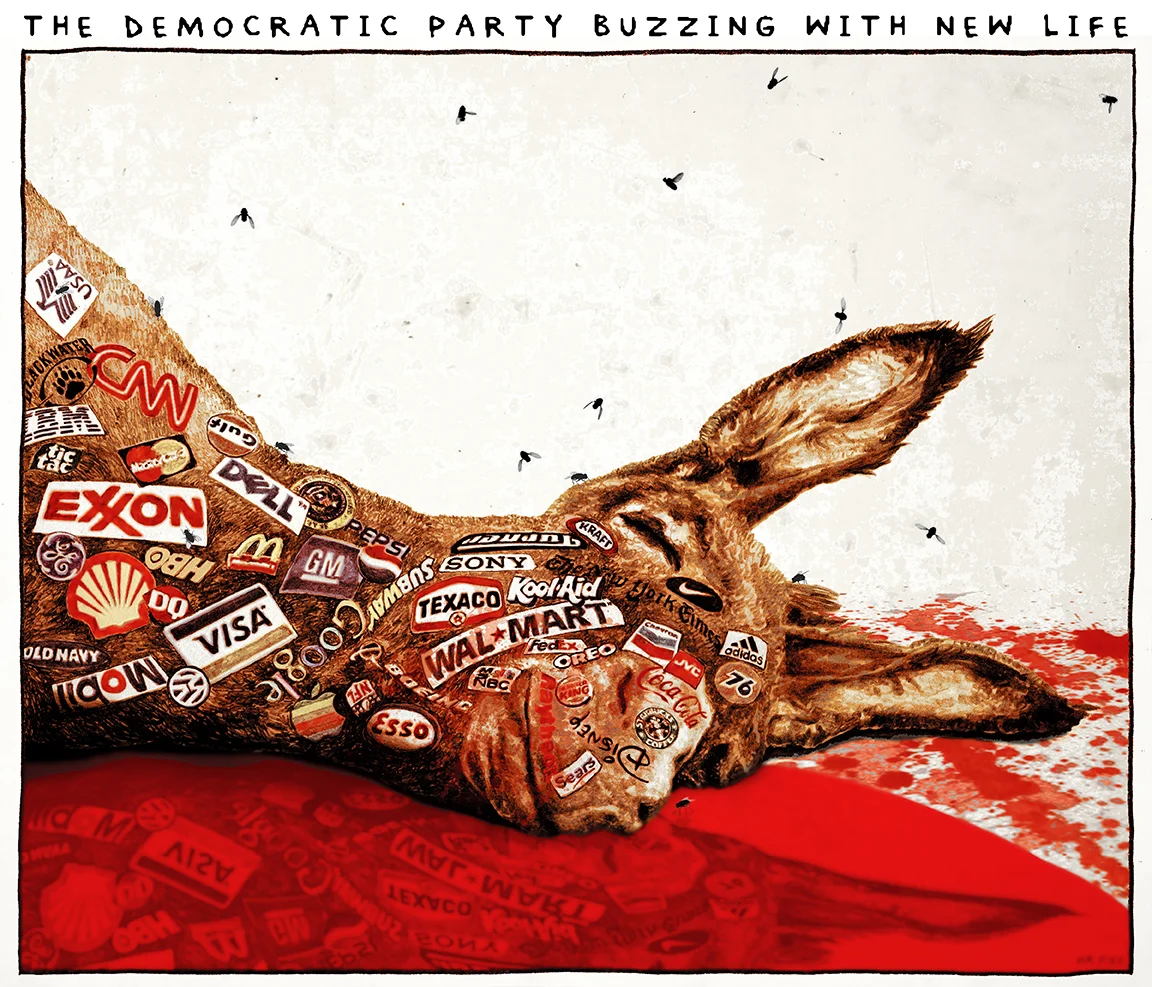
The landscape of American healthcare advocacy, particularly within the single-payer movement, is experiencing a significant ideological schism, epitomized by the recent emergence of National Single Payer. This new organization, co-founded by Dr. Ana Malinow, a retired pediatrician and former president of the venerable Physicians for a National Health Program (PNHP), signals a growing impatience with incremental reforms and a demand for a more radical, politically unaligned approach to achieving universal healthcare. At the heart of this divergence lies not only differing strategies for systemic change but also a stark contrast in willingness to engage with broader geopolitical and human rights issues, notably the ongoing conflict in Gaza.
The Genesis of a Divide: PNHP and National Single Payer
In 2007, Ana Malinow stood at the helm of Physicians for a National Health Program (PNHP), then and now widely regarded as the nation’s premier public interest group advocating for a single-payer national health insurance system, commonly known as "Medicare for All." PNHP, founded in 1987, has long served as a leading voice among medical professionals, tirelessly working to educate the public and policymakers on the benefits of a system where a single public or quasi-public agency organizes healthcare financing, leaving the delivery of care largely in private hands. Their advocacy has been instrumental in keeping the single-payer concept alive in American political discourse, often providing detailed analyses and proposals for transitioning to such a system.
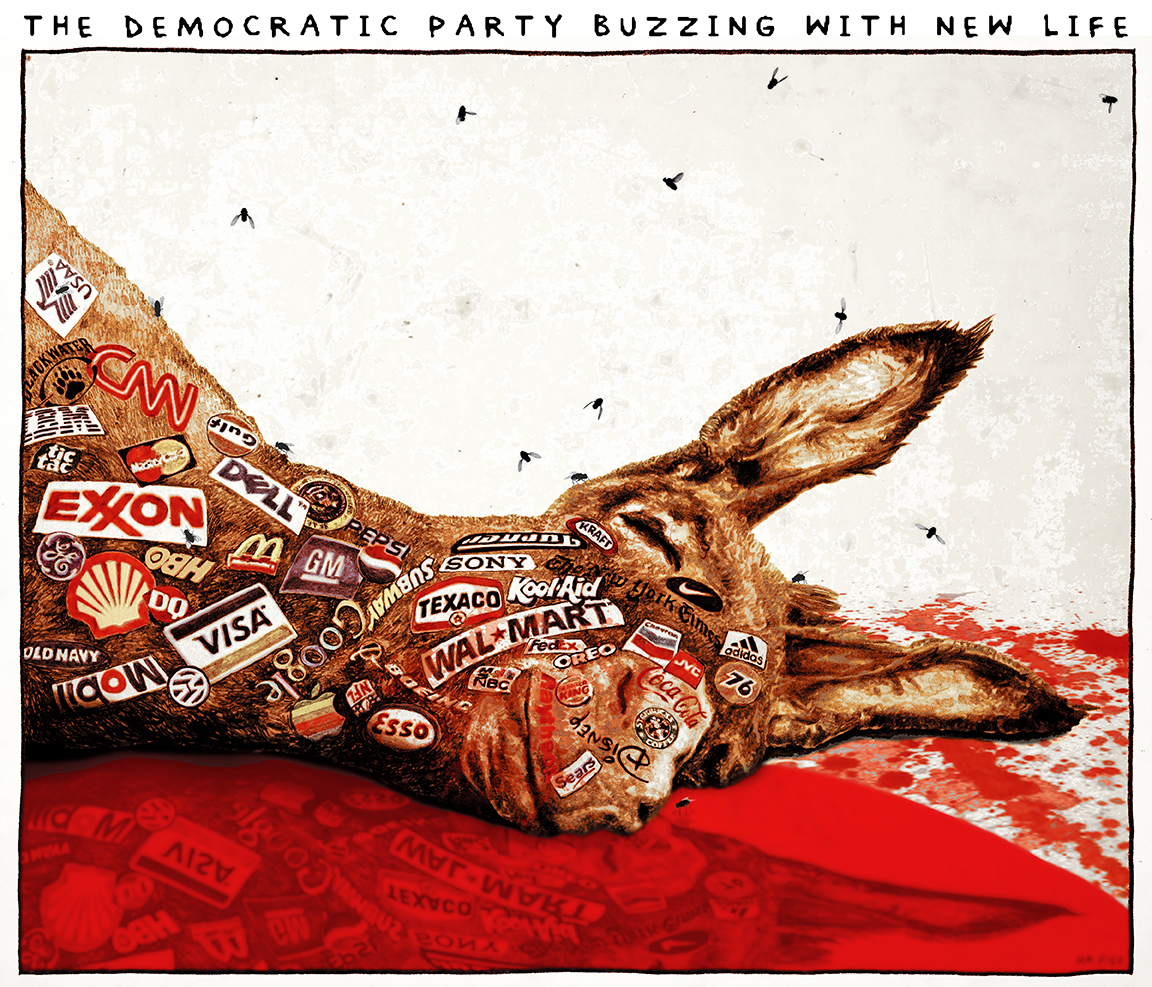
However, in the years following her presidency, Malinow observed what she perceived as a critical stagnation and a problematic alignment within the movement. This led her, a couple of years ago, to co-found a separate entity: National Single Payer. While both organizations share the fundamental goal of establishing a single-payer healthcare system in the United States, their operational philosophies and strategic priorities diverge sharply. The primary distinction, as Malinow highlights, is PNHP’s tight alignment with the Democratic Party, a relationship that National Single Payer explicitly seeks to avoid.
This strategic difference reflects a broader debate within progressive movements: whether to work within existing political structures, leveraging relationships with sympathetic parties, or to maintain strict independence to push for more transformative change, even at the risk of political isolation. PNHP has historically collaborated closely with Democratic lawmakers who champion single-payer legislation, providing expert testimony and policy frameworks. National Single Payer, conversely, views this alignment as a potential impediment to achieving truly comprehensive reform, arguing that dependence on a political party can lead to compromises and a watering down of core objectives.
Political Alignments and Strategic Divergences
The relationship between PNHP and the Democratic Party has been a defining feature of the single-payer advocacy landscape for decades. While the Democratic Party platform has increasingly acknowledged the need for healthcare reform, its embrace of single-payer has often been tempered by political realities and the influence of various stakeholders, including the powerful private insurance and pharmaceutical industries. Critics, including Malinow, argue that this alignment has led to a situation where Democrats may introduce single-payer bills—such as HR 3069, the current Medicare for All Act—but fail to mobilize sufficiently around them, effectively using them as symbolic gestures rather than serious legislative priorities.
Malinow describes these legislative proposals from Democrats as "half-measures" and "off-ramps" designed to preserve private insurance dominance while creating an illusion of reform. She points to initiatives like Senator Ron Wyden’s efforts to lower health insurance costs and Wendell Potter’s "Medicare by Choice" proposal (which allows individuals to enroll in traditional Medicare regardless of age) as examples. These, she contends, are merely reruns of the "public option" debate that emerged during the crafting of the Affordable Care Act (ACA), a policy that ultimately strengthened the role of private insurers rather than dismantling it. The ACA, passed in 2010, significantly expanded health insurance coverage but maintained the employer-sponsored and private insurance market, leading many single-payer advocates to view it as an insufficient, incremental step that diverted attention from more fundamental reform for over a decade.
National Single Payer, in contrast, champions a more unyielding stance. Its core principle is that healthcare is a human right, must be free, not for profit, and achieved through national legislation, explicitly rejecting state-by-state efforts often embraced by some PNHP chapters. This rejection stems from the belief that a patchwork of state-level single-payer systems would perpetuate inequalities and fall short of the comprehensive, universal coverage required. The organization advocates for a complete overhaul, believing that a profit-driven system cannot be repaired with incremental fixes, a conclusion drawn from "a century of failed attempts."
Moral Courage and Geopolitical Stands
Beyond strategic differences in domestic policy, a crucial point of divergence, and indeed a catalyst for National Single Payer’s distinct identity, is its willingness to take unequivocal stances on international human rights issues. This was starkly illustrated by its response to the conflict in Gaza. In a recent email, Malinow lauded an article published by Corporate Crime Reporter, titled "Genocide the Non Profit Industrial Complex and the Democratic Party," for "calling out organizations which have lacked the moral courage to speak out against the genocide in Gaza."
Malinow specifically criticizes PNHP for its silence on the issue, stating that while many still belong to PNHP (if only marginally), National Single Payer "strongly condemned the genocide early on." She highlights her own article published in Counterpunch in August 2024, titled "Finding the Moral Courage to Recognize a Genocide," which exposed the "lack of moral courage among medical professional organizations, which were staying silent, and thus complicit, in the genocide."
National Single Payer’s commitment to these issues extends beyond Gaza. In November 2023, the organization published a statement denouncing the Israeli targeting of hospitals in Gaza and U.S. complicity. While this stance did lead to some internal backlash and member departures, it also garnered significant praise. Since then, National Single Payer has published statements on Iran and Venezuela, and in 2024, led a delegation to Cuba to deliver medicine and learn about the Cuban healthcare system. The organization is also a signatory to "Doctors Against Genocide" and the "Sanctions Kill" campaign.
This proactive engagement with global issues reflects National Single Payer’s broader ideological framework, which connects the "violence of this medical industrial complex to the broader machinery of empire." Malinow articulates this by stating, "The same political system willing to fund wars, sanctions, occupation and genocide, also accepts this mass suffering in the United States. Violence abroad and austerity at home are part of the same ideological structure." She argues that as the U.S. government "pours trillions into the military industrial complex that devastates public healthcare systems abroad," it simultaneously "destroys healthcare, dignity and life expectancy right here in the United States." For National Single Payer, connecting these dots is essential, as healthcare can only truly become a human right when society confronts the profit-driven system that thrives on human suffering, both domestically and internationally.
Beyond Insurance: Reforming Healthcare Delivery
A critical aspect of National Single Payer’s vision, distinguishing it even further, is its deep critique of the current legislative proposals for Medicare for All, specifically concerning the healthcare delivery system. While acknowledging the importance of bills like HR 3069, which would establish a national health insurance program, eliminate private insurance companies, and enable Medicare to negotiate drug prices, Malinow points out a significant flaw: "it does not call for the conversion from for profit to not for profit status of the hospitals for example. It does not put the screws on not for profit health systems."
This omission means that the healthcare delivery part would largely remain in private hands. This allows for the continued dominance of entities like Optum (a UnitedHealthcare subsidiary controlling 90,000 doctors), private equity firms running emergency rooms, and investor-owned corporations operating dialysis centers, hospice companies, and nursing home facilities. Such a system, Malinow argues, would merely become a "public subsidy of this medical industrial complex," where public funds flow into privately owned, profit-driven healthcare providers.
Malinow harkens back to earlier legislation, such as HR 676, introduced by former Congressman John Conyers, which did call for the conversion of the delivery system to not-for-profit status. This kind of provision, she suggests, could transform the U.S. system into something akin to the UK’s National Health Service (NHS), where hospitals are government-owned, and doctors and health professionals are government employees. She cites the work of Steffie Woolhandler and David Himmelstein, prominent PNHP co-founders, whose article "Medicare for All is Not Enough" argued that healthcare facilities should be community-owned.
The challenge, as Malinow acknowledges, is that even "not-for-profit" hospitals in the current U.S. system often behave like their for-profit counterparts, driven by incentives within a market-based structure. This underscores National Single Payer’s belief that a fundamental shift in ownership and operational philosophy, moving away from all forms of profit in healthcare delivery, is essential.
The ‘Off-Ramps’ and Incrementalism Debate
Malinow’s critique extends directly to the strategies of prominent Democratic figures like Senator Bernie Sanders and Representative Pramila Jayapal, who champion Medicare for All legislation. If she were in Congress, Malinow asserts, she would collaborate with National Single Payer to significantly improve the existing legislation. Her proposed changes include:
- Mandating the transition of all for-profit healthcare facilities to not-for-profit status.
- Implementing a "just transition" plan for workers in the private health insurance industry who would lose their jobs.
- Shortening the proposed transition time for Medicare for All, arguing that two or four years, as Sanders proposes, is too long.
- Eliminating the inclusion of a public option, which she views as a distraction and a compromise.
- Ensuring progressive tax funding for the system.
Furthermore, Malinow emphasizes the need for active advocacy once a bill is introduced. She would insist that co-sponsors do more than simply sign onto a bill; they should hold town halls, advocate vigorously for it, and utilize tools like "special order speeches" to maintain public and legislative focus. This contrasts sharply with what she perceives as the Democratic Party’s tendency to divert attention from genuine single-payer, using "off-ramps" that are "designed to preserve private insurance dominance while creating the illusion of reform."
The "Medicare by Choice" proposal, for example, is seen as a dangerous "rerun of the public option," which is often structured in a way that allows the private option to succeed and the public option to fail. Malinow warns that these proposals are "off-ramps for candidates in 2028 who don’t want to push for Medicare for All" and are "guaranteed to set the Medicare for All movement back another fifteen years, just like the Affordable Care Act did." This reflects a deep-seated concern that incrementalism, while seemingly pragmatic, ultimately delays or derails the transformative change required.
A Call to Action: Declaring Independence
To counter these perceived diversions and consolidate a more uncompromising movement, National Single Payer has launched a campaign called "The Declaration of Independence from the Medical-Industrial Complex," timed to coincide with the nation’s 250th anniversary of the Declaration of Independence. This campaign directly challenges the intertwining of profit motives with healthcare delivery and echoes the historical spirit of revolutionary change.
The campaign’s manifesto asserts, "We believe that it is time for the people to rise up, organize, take control of the healthcare system, and run it in the interest of the public instead of in the interest of profit. It’s time for comprehensive, universal, national Medicare for All, free from profit." This statement underscores their belief that the current healthcare system, much like the military-industrial complex, functions as a "profit driven machine… enriching corporations as people suffer."
This "Declaration" is not just a symbolic gesture; it represents National Single Payer’s strategy to galvanize public support by framing healthcare reform as a fundamental fight for democratic control over essential services. It calls for a movement that is "uncompromising" and capable of "confronting the medical industrial complex directly," resisting political distractions and incremental proposals that undermine the ultimate goal.
Challenges and the Path Forward
The emergence of National Single Payer, and the ideological split it represents, highlights the significant challenges facing the single-payer movement in the United States. While both PNHP and National Single Payer share the overarching goal of universal healthcare, their differing approaches to political engagement, the scope of reform, and the integration of broader human rights issues present a complex dynamic.
On one hand, PNHP’s long-standing relationship with Democratic lawmakers has provided a crucial conduit for single-payer ideas into mainstream political discourse. On the other hand, National Single Payer argues that this very alignment has led to concessions and a lack of genuine momentum for transformative change. The "backlash" Malinow faced for National Single Payer’s stance on Gaza underscores the difficulty advocacy groups encounter when venturing into politically charged international issues, even when framed as moral imperatives connected to systemic violence.
The debate over the scope of "Medicare for All" legislation—whether it should only cover financing or also mandate the conversion of delivery systems to not-for-profit—is critical. If current proposals merely provide public funding for privately owned, profit-driven healthcare providers, it raises questions about whether true universal access and cost control can be achieved. Healthcare in the U.S. is notoriously expensive, with per capita spending significantly higher than in other developed nations, often without superior health outcomes. The average American family spends thousands annually on premiums, deductibles, and out-of-pocket costs, while medical debt remains a leading cause of bankruptcy. A single-payer system is often presented as a solution to these woes, but its effectiveness hinges on its design and implementation.
As the U.S. approaches future election cycles, the debate over healthcare will undoubtedly intensify. National Single Payer’s call for an offensive now, to seize a "window of opportunity" before politicians and the "non-profit industrial complex" derail the movement again, reflects a sense of urgency. The organization’s commitment to connecting domestic healthcare struggles with global justice issues, while potentially alienating some, aims to build a more expansive and ideologically consistent movement.
Ultimately, the deepening fissure within the single-payer advocacy landscape reflects a fundamental tension between pragmatic incrementalism and revolutionary idealism. Whether this division strengthens or weakens the overall push for universal healthcare in the United States remains to be seen, but it undeniably signals a pivotal moment for a movement grappling with its identity, strategy, and moral compass in a complex political environment.




 Jia Lissa
 Yuyun Lusiyani
 Joko Widodo
 Eva Lovia

 Pevita Pearce