
 Yuyun Lusiyani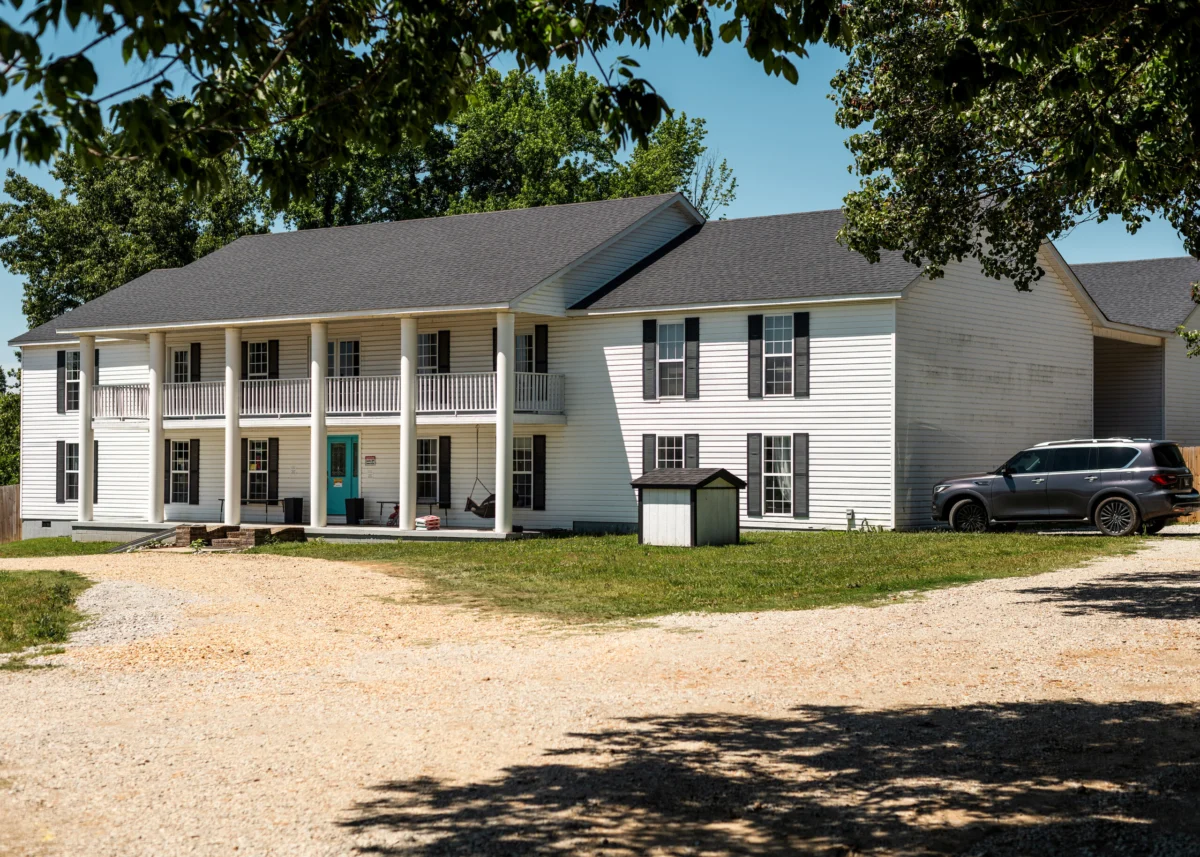
A shocking incident at a private school in Jonesboro, Arkansas, has cast a harsh light on the rapidly expanding and largely unregulated landscape of private and microschool education in the state. Mary “Tracy” Morrison, owner of The Delta Institute for the Developing Brain, orchestrated and encouraged a nearly 40-minute assault on a 13-year-old boy by his classmates, an event captured on video and leading to criminal charges and widespread scrutiny. This disturbing episode, occurring in April 2025, has ignited a fervent debate about the accountability and oversight of schools receiving public funds through Arkansas’s Education Freedom Account (EFA) program, a cornerstone of Governor Sarah Huckabee Sanders’ educational reforms.
The Delta Institute, located in a former colonial house just outside Jonesboro, was founded in 2024, capitalizing on the state’s new EFA program. This initiative, part of the Arkansas LEARNS Act of 2023, allowed families to use public money for private school tuition, spurring a rapid proliferation of new educational institutions. In 2023, Arkansas had approximately 100 private schools; by 2025, that number had surged to about 220, not including an additional 100 or so microschools that were previously untracked and unfunded publicly. However, this boom in school choice has been accompanied by a striking absence of regulatory oversight, with the state imposing minimal requirements that largely bypass curriculum, teacher qualifications, and student safety protocols.
A “Group Discussion” Turns Violent
The chilling incident unfolded when Mary “Tracy” Morrison gathered 19 middle school students in a circle on the floor, singling out a skinny 13-year-old boy in a cartoon Mario shirt. Morrison, known to parents as “Dr. Tracy” despite lacking a licensed educator background and misrepresenting her doctorate in occupational therapy as also encompassing cognitive neuroscience, initiated what she termed a “group discussion.” She asked students to raise their hands if the boy had ever been mean to them, then proceeded to verbally assault him, labeling him a liar and encouraging classmates to voice their dislikes.
Her verbal abuse escalated into physical violence. Morrison knelt inches from the boy, swatted him on the head and neck, and commanded him to keep his arms down when he attempted to flinch or block her blows. The situation worsened dramatically when she invited other students to “come over here and put your hands on him, however you want.” A boy eagerly volunteered, eliciting cheers and applause from his peers. This student then looped his arm around the victim’s neck and choked him, an act Morrison rewarded with a high-five. Other students joined in, taking turns slapping, pinching, and punching the cowering boy. Morrison herself picked up a plastic cylinder, resembling a pipe, and repeatedly struck him while continuing to call him a liar. The brutal attack lasted for nearly 40 minutes, culminating with Morrison forcing the traumatized boy to apologize to his classmates. Three other school employees were present but failed to intervene. The entire ordeal was captured on video, later becoming crucial evidence.

The Unheeded Warnings and Regulatory Gaps
The April 2025 assault was not an isolated incident, nor was it the first time concerns had been raised about Morrison’s methods. Just three weeks prior, Renee Johns, a mother whose children, Jacob and Addison, attended the Delta Institute, had reported abuse to the Craighead County Sheriff’s Office. Johns had moved her family an hour away to enroll her autistic son, Jacob, and his sister, Addison, in the school, believing Morrison’s self-proclaimed expertise in autism and ADHD. However, Jacob was not receiving the promised therapy and both children were falling behind academically. Johns was particularly disturbed by a video Morrison had sent her, showing Jacob and two other boys scrubbing floors and walls as punishment, with Morrison berating them in a drill sergeant-like manner, threatening them with "biggest trouble."
Earlier police and child-welfare records also detailed an incident where a student allegedly fled the school, jumping out a window barefoot, after Morrison sprayed him with water and held his legs down. Teacher and counselor Ashley Williams, who later saw the video of the April 2025 assault, had already filed a detailed report with welfare authorities based on student accounts of Morrison’s "circle time," stating, "This is not the first time abuse like this has happened." She also reported Morrison taping two children together by their arms months earlier. Further investigations by Detective David Bailey uncovered allegations of "waterboarding" a child, cutting another’s hair as punishment, and the use of a wooden paddle named "Fred."
Despite these alarming reports and the state’s stated commitment to student safety and financial accountability, the Arkansas Department of Education (ADE) demonstrated a pattern of limited intervention. State Schools Secretary Jacob Oliva had promised “accountability for the schools that participate” in the EFA program. However, the department’s oversight role primarily focused on finances, with powers limited to random financial audits, mandating tuition reporting, and requiring schools to administer tests of their choosing—without any mandate to report individual student scores to the state or parents. The state only required private schools to conduct fire drills, keep immunization records, and have an American flag. There were no requirements for curriculum review, background checks for criminal history (only fingerprinting), or monitoring of educational quality.
The State’s Response and the Reinstatement of Funds
The day news broke about Morrison’s arrest, the ADE temporarily suspended EFA payments to the Delta Institute. At that time, nearly half of the school’s students were using the EFA program, and the school had already collected over $300,000 in taxpayer funds. However, the state’s intervention proved to be brief and seemingly superficial. There are no records of a visit or an investigation by the state Department of Education to the Delta Institute. When pressed by ProPublica reporters, state officials declined to confirm a site visit, stating only that complaints “often result in a site visit” and that they had “addressed the Developing Brain’s suspension.”

Just two days after the suspension, public money began flowing to the Delta Institute again. An assistant education commissioner overseeing the EFA program claimed to be convinced that the school had implemented "appropriate safeguards," citing Morrison’s resignation as head of the school and the formation of a new school board. This swift reinstatement, without apparent in-depth investigation, raised serious questions about the state’s commitment to thorough oversight.
The Delta Institute was not the only school where concerns were seemingly dismissed or lightly addressed. Homestead Academy, a Christian-based microschool near Hot Springs, also faced a temporary funding suspension after a series of complaints from parents and a former teacher. Concerns included unsupervised children, insufficient academic instruction, and the school resembling a daycare. One parent even directly appealed to Secretary Oliva, questioning the lack of “stronger regulations and accountability measures for EFA-funded programs.” While Oliva responded by promising an immediate review and the state temporarily suspended funding, a "brief visit" by ADE employees, observing only 10-15 minutes of instruction, led to the eventual reinstatement of funds after the owner provided documentation and received letters of support. The parent who initially contacted Oliva was unaware that funding had been restored until informed by a reporter, expressing dismay: “This has to be happening with other microschools. That upsets me for the children of Arkansas.”
Legal Proceedings and Controversial Outcomes
Following the April 2025 incident, Morrison was charged with 11 felony counts of permitting child abuse and other related crimes. Three other employees also faced charges. The prosecutor, Sonia Hagood, described the scene as a "makeshift ‘Fight Club.’" Yet, the legal outcomes proved to be contentious. Charges were dismissed for two employees deemed less culpable. Kathrine Lipscomb, an Arkansas-licensed teacher who was present, agreed to a pre-trial diversion program, serving six months of probation, 40 hours of community service with disabled children, and anger management classes to avoid a conviction. Notably, Lipscomb is now the director of education at the school, which has since been rebranded as North Star Academy.
Morrison herself pleaded guilty and received a sentence of 30 days in jail, 120 days of house arrest, and five years of probation. She surrendered her occupational therapy license and agreed not to work with children professionally during her probation. However, the perceived leniency of the sentence drew criticism. The prosecutor justified the plea deal by explaining the difficulty under Arkansas law of proving "substantial physical harm" to a jury for a conviction on permitting abuse to a minor, citing a recent case where a jury declined to convict due to lack of "serious physical injury." Morrison also received preferential treatment, choosing to serve her jail time in a newer facility with a private cell and her house arrest on her boyfriend’s Missouri ranch, where she could ride horses.
During her incarceration, Morrison remained actively involved with the school’s administration, as revealed by over 500 recorded jail calls obtained by ProPublica. She frequently discussed school finances, including ensuring EFA money continued to flow, and gave to-do lists to new board members and employees. She dismissed the victim’s mother as "evil" for reporting the incident and, in a call with a documentary filmmaker interested in the school’s story, described the abuse as a "restorative" technique to teach children respect. She claimed her actions were never about "Go hit him" and suggested the concept was too "sophisticated" for prosecutors to understand. Both the prosecutor and detective confirmed Morrison refused to be interviewed during the investigation.

Lingering Trauma and Calls for Systemic Reform
The fallout from the Delta Institute scandal highlights the severe consequences of inadequate oversight in publicly funded private school programs. Detective David Bailey expressed his frustration: “I think she should be prevented from teaching anywhere in the United States of America and having children around if she’s going to try to influence them the way she did. If we can’t protect our kids, who can we protect?”
Despite Morrison’s conviction and probation, state law does not prevent her from still owning Delta or another private school and benefiting from public funding. State records continue to list her family business as the owner of the Delta Institute property, and she remains the registered agent for a private school at the same address, now operating as North Star Academy. While Kathrine Lipscomb asserts Morrison has “zero involvement” currently, the school aims to serve 35 students in the upcoming year.
For the victims, the trauma endures. Renee Johns reported that her son, Jacob, has become increasingly aggressive, using martial arts moves taught at the school to punch holes in walls and lash out. Her daughter, Addison, returned to public school but was so far behind she had to repeat third grade. “School is for helping, not for hurting,” 10-year-old Addison told a reporter. Johns expressed profound regret, stating that parents like her were "sold lies" and "honestly thought we were doing the best for our children."
The broader implications for Arkansas’s education system are significant. The EFA program is projected to serve nearly 55,000 students this upcoming school year, costing taxpayers approximately $310 million annually. Yet, the vast majority of participants were already in private school or homeschooled, with only 12% transferring from public schools. Critics like State Senator Bryan King, a Republican, voted against the LEARNS Act due to concerns about financial responsibility, accountability, and transparency, proposing legislation for standardized testing and performance-tied funding, which ultimately failed. Bill Kopsky of the Arkansas Public Policy Panel lamented the rise of "pop-up, subprime private schools that have almost no regulation," arguing that public money necessitates public standards and accountability.
As of late March, new complaints continue to be filed with the Education Department, including a fresh request to investigate The Delta Institute for the Developing Brain, now North Star Academy. The state’s continued refusal to comment on active investigations leaves parents and the public questioning whether lessons have been learned and if genuine safeguards will be implemented to prevent future tragedies. The Delta Institute scandal stands as a stark reminder of the critical need for robust oversight when public funds are directed to private entities, especially when the well-being and education of vulnerable children are at stake.



 Joko Widodo
 Eva Lovia
 Pevita Pearce
 admin
admin
 Lina Irawan