
 Ana Megawati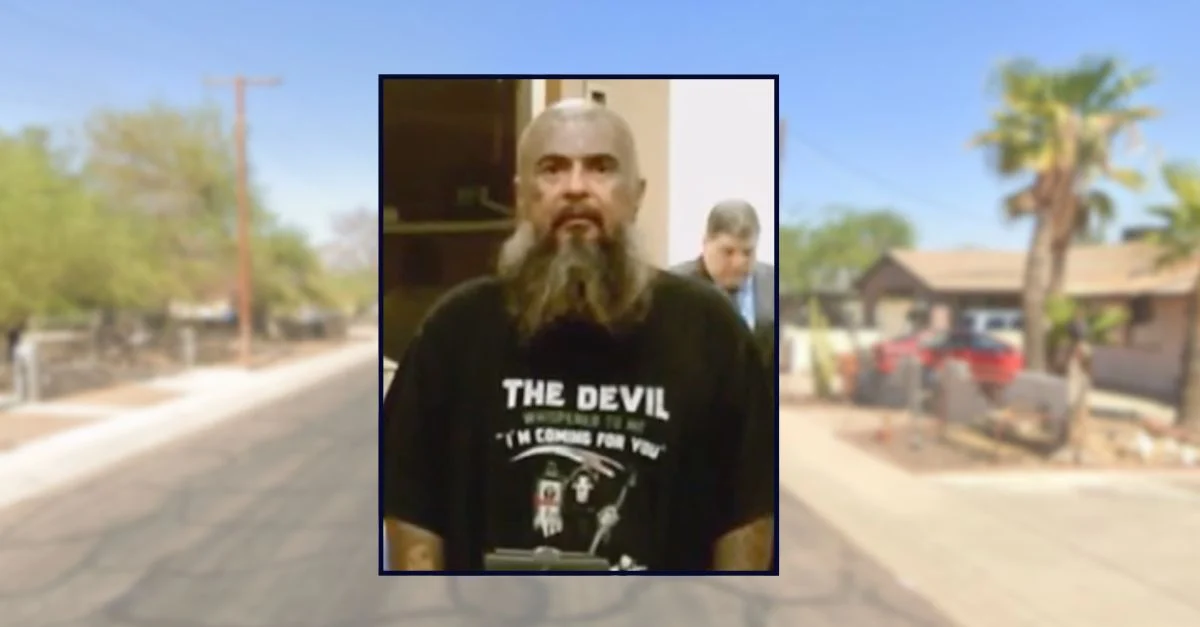
Michael Rodriguez, a 48-year-old resident of El Mirage, Arizona, finds himself at the center of a grim investigation, facing charges including second-degree murder, abandonment or concealment of a dead body, and a probation violation following the death of his father, Salvador Ortiz Rivera Jr. The discovery of Rivera’s decomposing body, hidden beneath a piece of wood inside a vehicle repair pit within a carport, has sent shockwaves through the quiet suburban community, revealing a deeply troubled familial relationship culminating in a tragic end. The El Mirage Police Department, leading the inquiry, detailed the harrowing sequence of events that brought this case to light, beginning with an unexpected tip-off to a state trooper.
The Discovery in El Mirage: A Suburb Unsettled
El Mirage, a city of approximately 36,000 residents situated roughly 25 miles northwest of Phoenix in Maricopa County, typically maintains a tranquil atmosphere. Once an agricultural hub, it has steadily transformed into a residential suburb, attracting families and individuals seeking a quieter lifestyle outside the bustling state capital. Incidents of severe violent crime, particularly those involving parricide, are rare and deeply unsettling in such communities, challenging residents’ sense of security and highlighting underlying social complexities. The discovery of Salvador Ortiz Rivera Jr.’s body at a residence on North Luna Street has cast a somber shadow over this otherwise peaceful locale, prompting a thorough investigation by local law enforcement and state authorities.
The investigation began to unfold on a Wednesday when a state trooper received a pivotal tip from a man he encountered at a QuikTrip gas station. According to court documents obtained by Phoenix-based independent TV station KTVK and local CBS affiliate KPHO, collectively known as Arizona’s Family, the tipster recounted a disturbing experience. He stated that Michael Rodriguez had instructed him to visit Rivera’s house and take whatever he desired. However, upon entering the residence to survey the personal property, the man made a horrifying discovery: Rivera was dead. Disturbed by the sight, he chose not to take anything and left the premises. This initial encounter at the gas station proved to be the crucial first thread in unraveling the mystery surrounding Rivera’s death.
A Gruesome Timeline: From Discovery to Confession
The full chronology of events, pieced together by investigators, paints a chilling picture of alleged familial violence and a calculated attempt to conceal the crime.
The Weekend Before (Saturday or Sunday): The tipster informed investigators that he had last seen Salvador Ortiz Rivera Jr. alive sometime during the preceding weekend, either Saturday or Sunday. This timeframe suggests that Rivera’s death occurred several days before his body was discovered, allowing for decomposition.
Early Week (Undetermined Day): The underlying incident — the alleged murder of Salvador Ortiz Rivera Jr. by his son, Michael Rodriguez — is believed to have taken place sometime earlier in the week at the North Luna Street residence. Police reports indicate a violent altercation.
Early Wednesday Morning: A Failed Attempt at Concealment and Theft: The tipster’s involvement did not end with his initial discovery. In the early hours of Wednesday, Rodriguez reportedly arrived at the tipster’s house with another man. The trio then traveled to Rivera’s home. The stated purpose of this visit was to retrieve the deceased man’s wallet, as Rodriguez allegedly believed his father had $5,000 in a bank account. However, the tipster reportedly found himself unable to go through with taking the wallet from the dead man’s body. He later informed Rodriguez that the wallet was gone, presumably to avoid participation in the macabre act.
Wednesday Morning: The Conscience Speaks: Haunted by what he had witnessed and the subsequent attempt to involve him in the aftermath, the tipster went to a QuikTrip gas station. It was there, wrestling with his conscience, that he encountered the state trooper and decided to relay the horrifying details, initiating the official investigation.
Wednesday Afternoon: Law Enforcement Arrives: Acting on the crucial tip, authorities from the El Mirage Police Department descended upon Rivera’s home. Their search led them to a "carport-type structure" on the property. There, hidden beneath a plywood cover within a concrete-lined vehicle repair pit, they made the grim discovery of Salvador Ortiz Rivera Jr.’s decomposing body. The scene revealed further disturbing details: the victim had a plastic bag placed over his head and bore marks consistent with strangulation, indicating a violent and personal attack.
Wednesday Evening: The Confrontation and Alleged Admissions: Following the discovery, law enforcement proceeded to Michael Rodriguez’s residence, located just a few blocks away from his father’s home. When questioned by officers, Rodriguez allegedly admitted to a long-standing "beef" and various issues with his father. He reportedly stated, "He responded that he was not like his dad; he stated that he was good and that his dad put him in prison for not minding his business at the compound." Rodriguez claimed to have spent six years in prison, attributing this incarceration to his father’s actions. He further alleged that his father drank constantly, leading to an argument where Rivera called him "crazy." Rodriguez then claimed he "lost it," blacked out during the subsequent fight, and woke to find his father dead. His immediate thought, he allegedly told police, was, "I need somehow to get rid of the body." As the questioning continued, Rodriguez reportedly admitted to hitting Rivera in the head with a bar and subsequently disposing of both the weapon and the shoes he was wearing during the incident.
The Legal Framework: Charges and Implications
Michael Rodriguez faces a series of grave charges, each carrying significant legal ramifications under Arizona law.
Second-Degree Murder (Arizona Revised Statutes § 13-1104): This charge implies that Rodriguez allegedly caused his father’s death with an intentional state of mind, but without premeditation, or with extreme indifference to human life. Unlike first-degree murder, which requires prior calculation and design, second-degree murder often arises from sudden quarrels or intense emotional outbursts. In Arizona, a conviction for second-degree murder carries a potential sentence ranging from 10 to 25 years in state prison, with minimum sentences often applicable depending on the specifics of the case and any prior convictions. The prosecution will need to demonstrate Rodriguez’s intent to kill or his reckless disregard for his father’s life, rather than a planned, deliberate act.
Abandonment or Concealment of a Dead Body (Arizona Revised Statutes § 13-2924): This felony charge addresses the actions taken by Rodriguez after his father’s death. Concealing a body, especially in a manner designed to evade detection or hinder identification, is a serious offense. This charge is typically added when a defendant attempts to obstruct justice or shows a profound disrespect for human remains. A conviction for this offense can result in additional years in prison, further compounding the potential sentence for murder. The deliberate hiding of Rivera’s body under plywood in a pit strongly supports this charge.
Probation Violation: Rodriguez’s statement about having spent six years in prison, combined with the probation violation charge, indicates a history within the criminal justice system. A new felony charge, particularly one as severe as murder, almost invariably leads to the revocation of probation. If probation is revoked, Rodriguez could be compelled to serve the remainder of the sentence from his previous conviction, in addition to any new penalties imposed for the current charges. This aspect of the case underscores a pattern of conflict and legal entanglement in Rodriguez’s life.
Currently, Michael Rodriguez is being held in the Maricopa County Jail on a $2 million bond, reflecting the severity of the charges, the perceived flight risk, and the potential danger he poses to the community.
A Father’s Legacy and a Son’s Unapologetic Stance
During his arraignment, Michael Rodriguez made a series of startling and explicit statements to the court, revealing his lack of remorse and his perception of his deceased father. He spoke at length, seemingly accusing his father of gang affiliations and painting a picture of him as a dangerous individual. "You know who my dad is?" Rodriguez reportedly asked the court. "La Familia. That’s who he is. That’s who he was. A bad dude. A bad man. I had to stop him."
These statements are highly significant. While the claims of Salvador Ortiz Rivera Jr.’s alleged gang affiliations with "La Familia" remain unverified by law enforcement and have not been confirmed by independent sources, Rodriguez’s words suggest a perceived justification for his actions. Such declarations in open court can influence public perception and may be used by the prosecution to illustrate Rodriguez’s state of mind, his lack of remorse, and potentially a motive rooted in a long-standing, volatile relationship. They also highlight the complex and often tragic dynamics that can exist within families, particularly when combined with a history of conflict, incarceration, and substance abuse as suggested by Rodriguez’s earlier admissions to police.
The Broader Implications of Familial Violence
The case of Michael Rodriguez and Salvador Ortiz Rivera Jr. serves as a stark reminder of the devastating impact of familial violence, specifically parricide. While statistically rare compared to other forms of homicide, the act of killing one’s parent is among the most profound societal taboos. Research into parricide often points to several recurring themes, including:
- Long-standing Conflict and Abuse: Many cases involve a history of physical, emotional, or psychological abuse within the family, where tensions escalate over years, sometimes decades.
- Mental Health Issues: Perpetrators of parricide often struggle with severe mental health conditions, which can impair judgment, increase aggression, and distort perceptions of reality.
- Substance Abuse: Alcohol and drug abuse by either the perpetrator or the victim can exacerbate existing conflicts and contribute to violent outbursts.
- Financial Disputes: Money-related disagreements can sometimes become a catalyst for extreme violence within families.
It is crucial to note that these are general observations about parricide and not specific diagnoses or conclusions regarding Michael Rodriguez’s individual motivations or mental state, which will be subjects of the ongoing legal process. However, the confluence of Rodriguez’s alleged statements about his father’s drinking, past imprisonment attributed to his father, and the "beef" between them aligns with some of these broader patterns seen in cases of severe familial conflict.
For the community of El Mirage, this incident underscores the potential for hidden turmoil even in seemingly peaceful neighborhoods. Such crimes can erode the sense of security and trust, prompting introspection about social support systems and intervention for at-risk individuals and families.
The Path Ahead: Legal Proceedings and the Quest for Justice
The legal journey for Michael Rodriguez is just beginning. The next steps will involve a preliminary hearing or a grand jury proceeding to determine if there is sufficient evidence to formally proceed with a trial. The prosecution, led by the Maricopa County Attorney’s Office, will meticulously gather and present evidence, including forensic findings from the crime scene, Rodriguez’s alleged admissions, and the crucial testimony of the tipster. The defense will have the opportunity to challenge the evidence, question the voluntariness of any confessions, and explore potential defenses such as self-defense or diminished capacity, especially given Rodriguez’s claim of "blacking out."
The $2 million bond reflects the serious nature of the charges and the court’s assessment of the flight risk and potential danger to the community. Maricopa County’s legal system is one of the busiest in the nation, and such high-profile cases often draw significant attention and resources.
As the justice system moves forward, the focus will remain on uncovering the full truth behind the death of Salvador Ortiz Rivera Jr. and ensuring accountability for the alleged actions of Michael Rodriguez. The tragic events in El Mirage serve as a stark reminder of the devastating consequences when familial bonds fracture under the weight of conflict, resentment, and violence, leaving a community grappling with profound loss and disturbing questions.

 Yuyun Lusiyani
 Joko Widodo
 Jia Lissa
 Pevita Pearce
 admin
admin
