
 Yuyun Lusiyani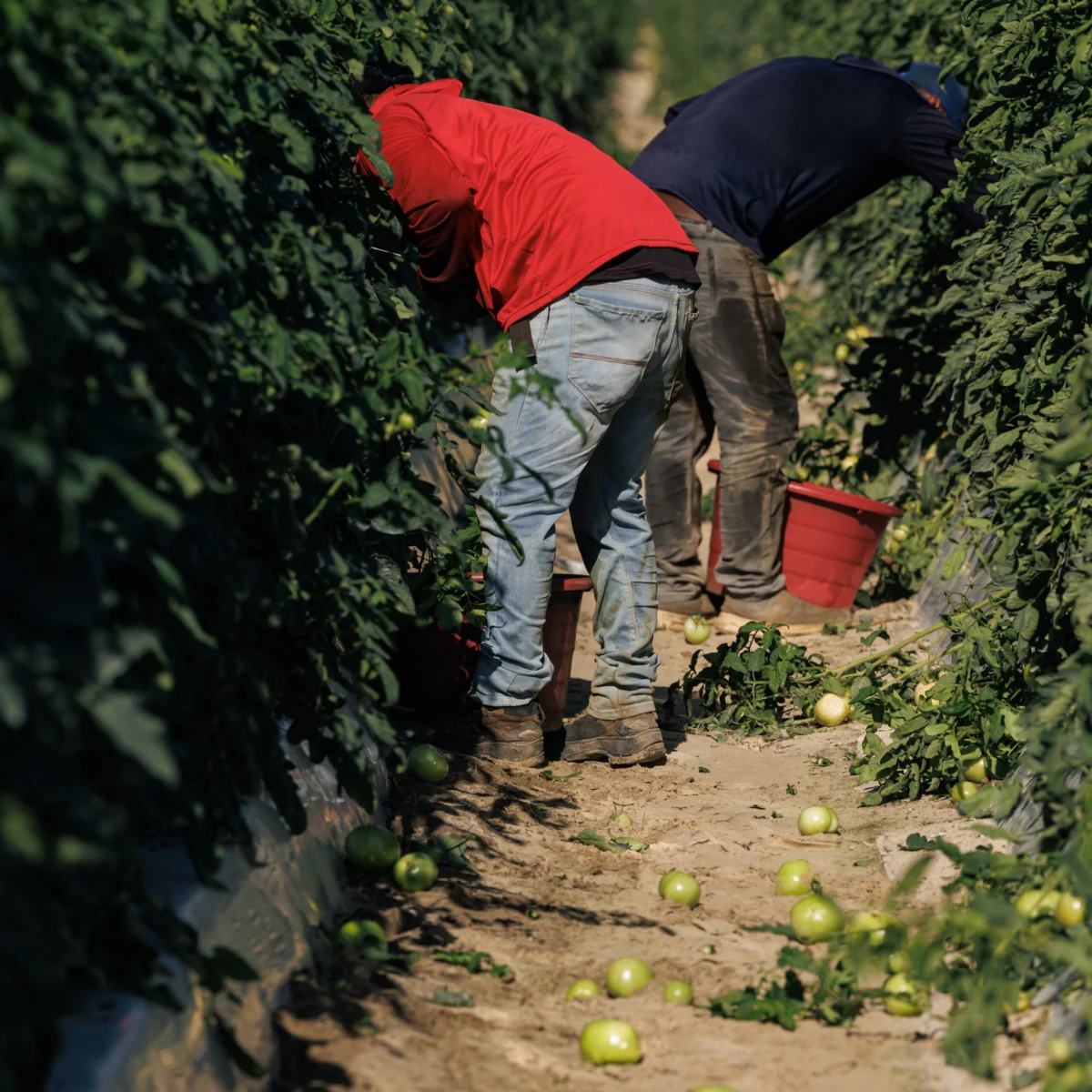
For the past year, my reporting has pulled back the curtain on the harrowing experiences of farmworkers who have legally entered the U.S. from Mexico and Central America, only to become victims of egregious crimes. The stories of stolen wages, threats at gunpoint, and a woman held captive, raped, and nearly killed have resonated deeply, creating an unsettling disconnect between the documented abuses and the everyday act of grocery shopping. This persistent unease became a personal quest: to determine if the very fruits and vegetables I purchase could be tainted by the injustices I’ve spent months investigating.
The challenge is particularly acute with blueberries, a fruit widely cultivated in my home state of Georgia, an epicenter of the very abuses I tracked. During countless hours spent traversing the rural South for my investigations, the stark reality of how little consumers know about the origins of their food became undeniable. This cognitive dissonance, felt keenly every time I reached for a pint of berries in my refrigerator, spurred a determination to probe the opaque supply chains that deliver food to American tables. The central question became: could sufficient journalistic diligence reveal whether my blueberries originated from farms with a history of worker mistreatment?

The Opaque Journey from Farm to Shelf
Federal regulations currently impose no requirement on blueberry brands to disclose information about the specific farms from which they source their produce on packaging. This regulatory void necessitates an extensive, time-consuming investigation for anyone attempting to trace the provenance of their food. My journey began in the aisles of local grocery stores, meticulously photographing blueberry pint labels. These labels, while sometimes indicating the state of origin or the city of distribution, consistently omitted the crucial detail of the farm itself.
Further complicating the pursuit of transparency is the common industry practice of multi-sourcing. To meet the relentless consumer demand and maintain competitive pricing, brands typically procure berries from numerous farms, consolidating them under a single brand label. This aggregation significantly obscures the origin, making it exceedingly difficult for consumers to ascertain if their purchase contributes, however indirectly, to a system where workers are exploited.

Despite these systemic hurdles, my investigation successfully traced one specific brand’s blueberries from a grocery store shelf back to an individual farm. While the brand remains unnamed due to the systemic nature of the problem rather than its unique culpability, the findings were stark. The farm in question had engaged a labor contractor who was implicated in one of the largest labor trafficking prosecutions in American history. This discovery underscored the very problem I sought to expose: the hidden connections between everyday consumer goods and profound human suffering.
Unmasking "Operation Blooming Onion" and the H-2A System
The case linked to the traced blueberries, widely known as "Operation Blooming Onion," brought to light a horrific saga of exploitation. This federal indictment revealed that thousands of foreign farmworkers, brought to the U.S. under the H-2A temporary agricultural worker visa program, were illegally charged exorbitant fees by labor contractors. These workers were then subjected to conditions prosecutors described as modern-day slavery, often forced to toil for little to no pay. The abuses ranged from physical violence and sexual assault to debt bondage and deprivation of food and water, all occurring within the agricultural heartland of the United States. The investigation detailed how workers were held in deplorable conditions, their passports confiscated, and their movements restricted, painting a grim picture of systemic human rights violations.

"Operation Blooming Onion" was not an isolated incident but rather a high-profile example within a broader pattern of farmworker abuse facilitated by the H-2A visa program and its reliance on labor contractors. The H-2A program, designed to address seasonal labor shortages in U.S. agriculture, allows employers to bring foreign nationals to the United States to fill temporary agricultural jobs. While intended to be a regulated pathway, its structure often creates vulnerabilities. Farmers, many of whom are English speakers, frequently rely on labor contractors to recruit, transport, and manage a non-English-speaking workforce. This outsourcing, while seemingly practical, inadvertently creates a layer of insulation for farmers, potentially shielding them from direct responsibility for, or even awareness of, the abuses committed by their contractors.
Despite explicit government requirements for contractors to ensure worker safety and fair wages, labor regulators have a documented history of failing to enforce these protections adequately. This regulatory oversight, coupled with the complex, multi-tiered nature of the agricultural labor supply chain, perpetuates a fertile ground for exploitation. The lack of accountability allows unscrupulous contractors to operate with impunity, trapping vulnerable workers in cycles of debt and forced labor, undermining the very premise of a legal guest worker program.
The Fair Food Program: A Beacon of Hope Amidst Opacity

In the face of such pervasive issues, experts specializing in farm labor conditions and food supply chains point to the Fair Food Program (FFP) as a transformative model for preventing worker abuse. Developed through a unique partnership between farmworkers, growers, and corporate buyers, the FFP is lauded as the "gold standard" for ethical sourcing within agriculture.
The program operates on a deceptively simple yet profoundly effective principle: participating supermarkets and other corporate food buyers commit to paying a fractional premium for produce—a few pennies per pound. This negligible increase in cost, often so small it does not translate into higher consumer prices, is channeled directly into ensuring better working conditions and protections for farmworkers. The FFP’s comprehensive approach includes:
- A Worker-Driven Code of Conduct: This code, developed and enforced with farmworker input, establishes clear standards for wages, working conditions, and freedom from abuse.
- Third-Party Monitoring and Audits: An independent organization conducts regular, unannounced audits of farms to ensure compliance with the code.
- A 24/7 Hotline: Workers have access to a confidential hotline to report violations without fear of retaliation.
- Market-Based Enforcement: Retailers agree to purchase only from FFP-participating farms, creating a strong economic incentive for growers to adhere to the program’s standards. If a farm fails to meet the standards, buyers can switch to compliant farms, pressuring non-compliant farms to improve.
The visual manifestation of the FFP’s success is a distinctive green sticker featuring a woman holding a basket of tomatoes. For consumers, this sticker provides a clear, unequivocal assurance that the produce they are buying comes from farms where workers are treated fairly and humanely. My own experience has shown that FFP-certified tomatoes rarely, if ever, carry a measurably higher price tag than their uncertified counterparts, demonstrating that ethical sourcing need not impose a significant financial burden on consumers.

Dozens of farms have embraced the FFP, and its efficacy in preventing abuse in the fields has been widely documented and praised. Studies and anecdotal evidence consistently show a dramatic reduction in abuses like wage theft, sexual harassment, and forced labor on participating farms. This success, however, highlights a significant gap: only a handful of small blueberry farms have currently joined the program. This limited participation means that for a fruit as popular and widely consumed as blueberries, the vast majority of consumer purchases remain outside the ethical assurances provided by the FFP.
Industry Resistance and the Path Forward
ProPublica’s extensive outreach during the reporting of this series—contacting more than 75 blueberry brands, grocery stores, fast-food chains, farmers, trade groups, and labor contractors—revealed a pervasive reluctance to engage with the issue of worker exploitation and supply chain transparency.

Only one brand, Dole, offered a statement. Dole affirmed its requirement for contract farmers to comply with labor laws to protect "worker welfare" and stated its internal capability to trace berries back to their source farms. Crucially, however, Dole also admitted that this vital information is not made available to consumers, perpetuating the very opacity that makes ethical sourcing so challenging.
The silence from other major players was deafening. Over 30 of America’s largest grocery and fast-food chains declined to answer questions about their participation in the Fair Food Program or plans for expanding their limited engagement. This collective silence underscores a significant disconnect between public statements on corporate social responsibility and tangible action to ensure ethical labor practices deep within their supply chains.
Trade groups, representing agricultural interests, also largely refused to discuss the reasons behind the low participation of farmers in the FFP. Some articulated opposition to regulatory efforts that mirror the FFP’s protections, arguing that such changes would "burden the whole industry for a few bad apples" who disregard worker rights. This perspective, however, overlooks the systemic nature of the problem and the documented evidence that a lack of robust oversight can enable widespread abuses, rather than just isolated incidents. It also suggests a resistance to internalizing the true costs of ethical labor, preferring instead to externalize them onto vulnerable workers.

The implications of this widespread resistance are profound. Without greater transparency and broader adoption of programs like the Fair Food Program, consumers remain largely powerless to make informed choices that align with their values. The current system, driven by cost efficiencies and an intricate web of outsourced labor, effectively insulates corporations from direct accountability for the human cost of their produce. This not only perpetuates the vulnerability of farmworkers but also erodes consumer trust in the food system.
Moving forward, systemic reform is imperative. This could involve new federal regulations mandating greater supply chain transparency, incentivizing participation in proven worker protection programs like the FFP, or fostering greater collaboration between growers, retailers, and labor advocates. The market, too, has a role to play; increased consumer demand for ethically sourced products could exert pressure on brands and retailers to adopt more responsible practices. Ultimately, ensuring that the fruits and vegetables gracing our tables are free from the stain of human suffering requires a concerted effort from all stakeholders—governments, corporations, and conscious consumers—to transform an opaque system into one defined by transparency, accountability, and dignity for all. Until such changes materialize, the maddening quest to find ethically sourced blueberries will continue to be a deeply personal and largely unfulfilled endeavor for many.



 Joko Widodo
 Eva Lovia
 Pevita Pearce
 admin
admin
 Lina Irawan