
 Eva Lovia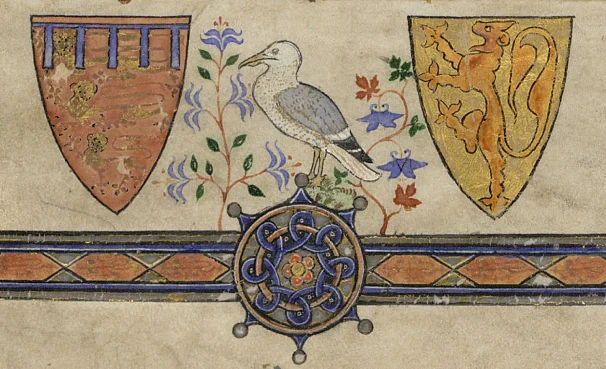
The tapestry of English royal history is woven with names that resonate through centuries, evoking images of coronations, parliaments, and enduring dynasties. Names like Elizabeth, George, William, and Victoria are inextricably linked to the very fabric of the nation’s monarchy. Yet, nestled within the annals of the Plantagenet era lies a name that, while steeped in regal potential, remains a poignant footnote: Alfonso. For over a decade, this distinctive moniker belonged to England’s heir apparent, a prince whose life, though tragically cut short, offered a compelling glimpse into the intricate political and dynastic currents of the late 13th century.
Born on November 24, 1273, Prince Alfonso was the third son of King Edward I of England and his first wife, Eleanor of Castile. His birth occurred at a time when the English crown was deeply entangled in continental European politics. The Plantagenet dynasty, to which Edward I belonged, held significant territorial interests in France, including the Duchy of Gascony in the southwest. This strategically vital region served as a crucial element of their power base and was a constant theatre for diplomatic maneuvering and military engagement. The royal couple, married for nearly twenty years, had already experienced the profound grief of losing several children in infancy, making the arrival of any healthy son a cause for cautious celebration.
Alfonso’s placement in the line of succession was initially second, following his elder brother, Henry. However, the choice of his name was, even at the time, considered unusual for an English royal. While familial naming traditions were common, the selection of "Alfonso" represented a deliberate nod to Queen Eleanor’s Castilian heritage and her influential family ties. He was named after his maternal half-brother, Alfonso X of Castile, a monarch known for his intellectual pursuits and his past claims to the Duchy of Gascony. This familial connection, underscored by a shared ambition for territorial control, suggests that Prince Alfonso’s christening was as much a diplomatic gesture as it was an expression of familial affection. The marriage of Eleanor into the English royal family had, in essence, diffused the Castilian claim to Gascony, and honoring her half-brother with the name of their heir likely served to subtly reinforce the enduring political and personal bonds between the two kingdoms.
The trajectory of Prince Alfonso’s life, and his claim to the throne, was dramatically altered within a year of his birth. In October 1274, his elder brother, Henry, succumbed to illness. This tragic event elevated the infant Alfonso to the position of heir apparent at the tender age of just eleven months. His status was further solidified when he was formally recognized as the Earl of Chester, a prestigious title often bestowed upon the heir to the English throne, though historical records do not definitively confirm its formal creation specifically for him.
A Regal Upbringing and the Shadow of a Forgotten Legacy
As was customary for royal children of the era, Prince Alfonso was raised in his own distinct household, overseen by appointed guardians and tutors. This practice allowed for the focused education and preparation of young royals for their future roles, while also freeing the monarch and queen to attend to the demanding affairs of state and diplomacy. King Edward I was an active and often absent monarch, frequently engaged in military campaigns abroad, most notably his crusade to the Holy Land. This meant that young Alfonso, like many royal children, did not spend extensive periods in the direct company of his parents.
Despite the physical distance, Prince Alfonso received a majestic education befitting his future station. The Plantagenet court placed a high value on learning and chivalry, and it can be inferred that his upbringing would have encompassed classical studies, religious instruction, chivalric training, and the principles of governance. As he grew, hopes for his succession to the throne began to solidify. His father, King Edward I, a formidable ruler known as "Edward Longshanks" and "the Hammer of the Scots," likely saw in his son the potential to continue the Plantagenet legacy and maintain the kingdom’s burgeoning power.
The anticipation of Prince Alfonso’s reign was further underscored by the arrangements for his betrothal. His father meticulously planned a marriage alliance with Margaret, the daughter of Floris V, Count of Holland. This union would have forged crucial political and economic ties between England and the strategically important County of Holland, further strengthening England’s influence in Northern Europe. As part of the preparations for this significant royal wedding, a magnificent gift was commissioned: the Alphonso Psalter. This exquisitely illuminated manuscript, a testament to the artistic and devotional practices of the time, is a tangible relic of a royal future that would never materialize. The Psalter, now housed in the British Library, stands as a poignant reminder of the hopes and dreams invested in the young prince.
A Life Cut Short and the Unforeseen Succession
The robust health that had sustained Prince Alfonso through his formative years, and fueled the aspirations for his future reign, ultimately proved fragile. On August 19, 1284, at the age of ten, Prince Alfonso succumbed to illness at Windsor Castle. His untimely death marked a profound personal tragedy for King Edward I and Queen Eleanor, and a significant political setback for the Plantagenet dynasty. He was laid to rest at Westminster Abbey, a prestigious burial site reserved for English monarchs and their immediate families. However, the exact location of his tomb has been lost to the passage of time, further contributing to the ephemeral nature of his royal presence.
The timing of Prince Alfonso’s death was particularly poignant. Just months prior, his parents had welcomed another son, Prince Edward, born on April 25, 1284. This younger brother would eventually inherit the throne that Alfonso had held as heir apparent for over a decade. The future King Edward II, however, would prove to be a monarch whose reign was plagued by military defeats, political instability, and ultimately, his deposition. His overthrow, orchestrated by his estranged wife, Isabella of France, and her lover, Roger Mortimer, stands as a stark contrast to the promising trajectory that had been envisioned for Prince Alfonso.
A Name Etched in the Stars and the Sands of Time
Prince Alfonso’s singular position in English royal history ensures that his name, though absent from the list of reigning monarchs, carries a unique distinction. Had he ascended to the throne, the name Alfonso might have become a recurring motif in English royal nomenclature, akin to the enduring popularity of George or Henry. Instead, his name is more prominently associated with a long line of Spanish monarchs, a lineage from which his mother, Queen Eleanor, hailed.
Beyond his familial and dynastic connections, Prince Alfonso shares his name with a more cosmic legacy. His uncle, Alfonso X of Castile, the namesake who had once harbored ambitions for Gascony, was a patron of the sciences and a keen astronomer. His extensive work in astronomy and astrology was so influential that, in recognition of his contributions, sections of the Moon were posthumously named the Alfonsine Craters in the 20th century. This celestial designation, a distant echo of a royal legacy, mirrors the story of Prince Alfonso himself – a promising figure in history whose earthly reign was ultimately denied, leaving behind only the whispers of what might have been.
The story of Prince Alfonso serves as a powerful reminder of the inherent uncertainties and unpredictable nature of royal succession. It highlights the intricate interplay of birthright, political expediency, and the capricious hand of fate that shaped the destinies of individuals and nations alike. While his name may not be etched in the grand narratives of English kings and queens, Prince Alfonso remains a significant, albeit often overlooked, figure in the complex saga of the Plantagenet dynasty, a prince whose brief life as heir apparent left an indelible, if melancholic, mark on the historical record. His unfulfilled destiny, symbolized by the unfinished wedding and the lost tomb, continues to resonate as a testament to the transient nature of power and the enduring power of historical "what-ifs."




 Yuyun Lusiyani
 Joko Widodo
 Pevita Pearce
 admin
admin
 Lina Irawan