
 Yuyun Lusiyani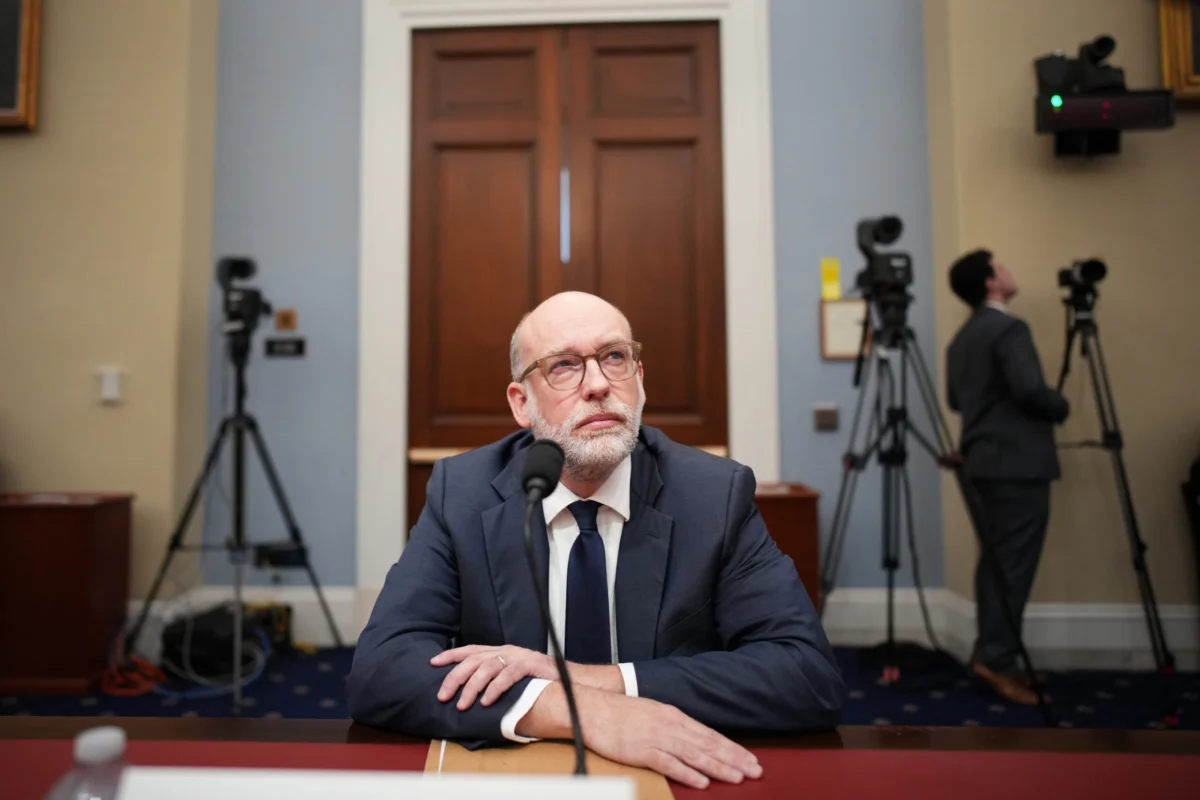
For decades, physicists wrestled with a fundamental mystery of the universe: why certain particles, like the protons that form atoms, possess mass, while particles of light do not. This enigmatic question was not merely academic; its answer was understood to be crucial for comprehending the very origins of planets, galaxies, and life itself. The leading theoretical framework, developed in the 1960s, posited that particles acquired mass through interaction with an invisible, pervasive energy field, later dubbed the Higgs field. However, proving its existence remained an elusive goal, demanding an unprecedented scale of scientific endeavor.
The Quest for the "God Particle": A Triumph of Global Cooperation
The monumental challenge of validating the Higgs field theory necessitated one of the most ambitious international collaborations in scientific history. Beginning in the late 20th century, thousands of scientists from dozens of countries, including nations often considered adversaries on the geopolitical stage, worked side by side. The United States played a pivotal role, contributing approximately a quarter of the workforce and hundreds of millions of taxpayer dollars to the effort. This sustained global investment culminated in 2012 with the detection of the elusive particle associated with the Higgs field – the Higgs boson, often referred to as the "God particle." This groundbreaking discovery, made at the European Organization for Nuclear Research (CERN) in Geneva, Switzerland, unequivocally confirmed the half-century-old Higgs field theory. Its significance was immediately recognized, leading to the Nobel Prize in Physics in 2013 for two of the theoretical physicists, Peter Higgs and François Englert, who had independently proposed the mechanism.
CERN itself was established in the aftermath of World War II, founded on the principle that international scientific cooperation could transcend political divides and foster peace. This ethos proved essential for the Higgs boson project, which involved designing and constructing the Large Hadron Collider (LHC), the world’s most powerful particle accelerator. The LHC, a 27-kilometer underground ring, required specialized components and expertise from across the globe. For instance, engineers from India tested superconducting magnets, while Russian scientists repurposed spent artillery shells from World War II to source brass for particle detectors. The U.S. national labs alone invested $531 million into the collider’s construction and related services, alongside grants to individual researchers through agencies like the National Science Foundation (NSF). This collaborative model, built on meritocratic peer review and sustained funding, allowed for long-term projects, the development of specialized equipment, and commitments to a vast network of institutions and personnel.
A Looming Threat: The Proposed Rule on Federal Financial Assistance
However, the very system that made such a monumental achievement possible is now under threat. A new rule proposed by the Trump administration, titled "Regulation for Federal Financial Assistance," could drastically reshape the landscape of scientific research and broader federal grant programs in the United States. This proposal, spearheaded by the Office of Management and Budget (OMB) – a powerful, yet little-known, White House division that guides federal spending – would grant political appointees across dozens of federal agencies significant discretion over how grants are awarded, managed, and terminated. Crucially, these appointees would not be required to possess any scientific expertise or knowledge of the subjects pertaining to the grants they oversee.
Furthermore, the rule introduces severe restrictions on international collaboration, prohibiting researchers from using federal funds to "support certain foreign collaborations involving covered foreign countries or covered foreign entities." While limited exceptions exist, such as those mandated by federal statute or deemed not to pose a national security risk by an agency head, the ambiguity surrounding the definition of "covered countries" and the enforcement mechanism has raised serious concerns. An OMB spokesperson did not provide a list of such countries or clarify enforcement details when queried by ProPublica.
Immediate Backlash from the Scientific Community
The scientific community has reacted with alarm. David W. Miller, a University of Chicago physics professor who was one of nearly 2,000 U.S. scientists involved in the Higgs boson discovery, immediately filed an objection with the federal government upon learning of the proposal. "These experiments take decades to build and require sustained, cooperative international investment," Miller wrote in his public comment. He warned of dire consequences: "The experiments will continue, without American leadership. … The United States will not just fall behind. It will step aside." Miller, whose own career was shaped by government investments in research and education, highlighted that his technician role at CERN and his doctoral research at Stanford were both funded by the National Science Foundation, underscoring the vital role of stable, merit-based funding.
Miller’s concern is echoed by thousands of scientists who have submitted public comments, warning that the rule, as written, would severely curtail critical work in areas ranging from pediatric cancer research and maternal health improvement to fundamental scientific inquiry. The existing U.S. system for funding science is world-renowned precisely because it entrusts funding decisions to subject-matter experts who select grantees through a rigorous, merit-based peer-review process, minimizing political interference. Physicists vet proposals from other physicists, and oncologists review those of other oncologists. This system ensures that the most promising ideas, irrespective of political affiliation or geography, receive sustained funding over multiple years, allowing researchers to build teams, design and acquire equipment, and make long-term commitments crucial for complex projects and even patient treatments.

The Architect of the Policy and Its Stated Rationale
The proposed rule is a signature initiative of Russell Vought, the director of the Office of Management and Budget, who has publicly stated his goal of expanding presidential control over federal spending. Vought has put this philosophy into practice previously, notably by helping to dismantle parts of the U.S. Agency for International Development and, controversially, by blocking funds already allocated by Congress. Last year, his decision to cancel 284 Department of Energy grants drew renewed criticism after an agency lawyer admitted in court records that the terminations were "based solely on the political identity of the grant recipient’s state"—effectively targeting "blue states."
The OMB defends the proposed rule by asserting it is necessary to prevent waste, fraud, and ideological bias in federal spending. An OMB spokesperson told ProPublica that the "proposed rule will ensure spending is aligned with current law, Executive Orders, and agency priorities" and is "fundamentally about accountability to the American people and ensuring that taxpayer dollars are spent wisely." The spokesperson added that it "will not disrupt major scientific research or supplant the peer review process—any claims to the contrary are based on spurious assumptions."
The Heritage Foundation, a conservative think tank whose work the OMB cites, has praised the proposed changes, arguing that empowering political appointees provides "adult supervision" to ensure taxpayer dollars fund activities aligned with voters’ preferences. The rule itself repeatedly cites "woke" funding decisions under President Joe Biden’s administration as a primary reason for reform, claiming that "Federal grants were politicized by the last administration to promote a far-left DEI agenda," referring to diversity, equity, and inclusion initiatives. A 2024 report from Senate Republicans, based on keyword searches for terms like "women," "diversify," and "Hispanic culture," claimed $2 billion in NSF grants were supporting "radical political perspectives." However, ProPublica’s reporting revealed that many of these projects simply referenced existing social inequities or involved unrelated terms flagged by the committee’s broad methodology, such as a study on the evolution of mint plants.
Challenging the Premise: Fraud and "Woke" Spending
Critics argue that the proposed changes are designed to address problems that are either exaggerated or do not warrant such a drastic overhaul. While fraud in federal science funding does exist, it is relatively rare. The National Science Foundation’s Office of Inspector General, for example, has recovered approximately $54 million from fraud cases involving universities, nonprofits, and small businesses over the past decade. This averages to $5.4 million annually—a tiny fraction of the billions of dollars the NSF distributes in grants each year.
Moreover, the assertion of widespread "woke" politicization is contested. Many of the grants flagged by the Senate Republicans, as highlighted by ProPublica, were simply basic research projects or initiatives aimed at addressing documented disparities. The proposed rule’s prohibition on DEI initiatives appears to directly conflict with existing federal statutes, such as one directing the National Science Foundation to broaden "participation of underrepresented populations," particularly women, Black, and Hispanic researchers, in science, technology, engineering, and math fields. While physics funding has historically been less targeted than grants related to health disparities, racial inequities, or LGBTQ+ communities, even some grants designed to support early-career physicists from underrepresented backgrounds have reportedly been terminated under previous administrations.
Broader Ripple Effects: Beyond Scientific Research
The implications of this rule extend far beyond the realm of scientific research. It would encompass at least hundreds of billions of dollars in federal grants annually, touching virtually every sector of American life. This includes critical programs like food stamp benefits, housing assistance, small business loans, and funding for the arts. Many cities, states, and nonprofit organizations heavily rely on these federal grants for their annual budgets and to deliver essential services. Representatives of domestic violence organizations, museums, and the attorneys general of 22 states are among the diverse array of groups that have formally objected to the rule, underscoring its broad and potentially devastating impact.
Historical Context and the Future of Global Science
The proposed limits on international partnerships also fly in the face of centuries of scientific practice. Chris Llewellyn Smith, a former CERN director and emeritus professor of physics at the University of Oxford, notes that the Royal Society of London, a scientific academy founded in the 1600s, appointed a foreign secretary to correspond with scientists from other countries nearly 60 years before the British government established a foreign secretary to oversee international relations. This historical precedent highlights the deeply ingrained nature of cross-border scientific collaboration.

Today, more than 60 nations contributed to the Higgs boson discovery, with ongoing upgrades to the LHC still involving contributions from countries like China (special magnets), Italy (crystals), and Pakistan (cast-iron shielding). The Trump administration has already restricted researchers from collaborating with scientists from countries like China, and the vagueness of "covered foreign entities" could easily ensnare other nations. Given President Trump’s history of publicly feuding with leaders from traditional U.S. allies such as the United Kingdom, Germany, and Canada, the potential for arbitrary inclusion on a restricted list is a significant concern.
Llewellyn Smith warns that if the U.S. retreats due to limits on working with foreign scientists, it "could jeopardize the whole future of high-energy physics." The collaborative atmosphere at CERN has already been degraded by global conflict; after Russia invaded Ukraine in 2022, CERN’s governing body voted to ban scientists affiliated with Russian labs, impacting careers and depriving CERN of valuable contributions to future experiments. A U.S. withdrawal would further isolate the global scientific community.
The Unpredictable Returns of Basic Research
While the abstract nature of particle physics might seem distant to many Americans, the technological developments required for such research frequently lead to unexpected, transformative discoveries. A CERN engineer pioneered the touch screen in the 1970s while developing research instrumentation. The World Wide Web itself was invented by a scientist at CERN seeking to facilitate data sharing between different institutions. Even smaller particle accelerators find practical applications in manufacturing and cancer therapies.
The practical applications of fundamental research often take generations to surface, as exemplified by GPS technology, which underpins modern navigation. GPS relies on century-old equations formulated by Albert Einstein. As David Miller observes, "I guarantee you that Einstein wasn’t thinking about your ability to find Starbucks this morning when he wrote down the special theory of relativity and the general theory of relativity." Restricting basic research, therefore, risks stifling unforeseen future innovations that drive economic growth and societal advancement.
Legal Challenges and Political Pathways
Legal experts, such as Kali Murray, a law professor at Marquette University specializing in administrative and intellectual property law, question the OMB’s authority to impose such a broad solution. Murray describes the proposal as a "hall of famer move by Russ Vought" to expand the power of his office, noting that it allows the OMB to override existing congressional statutes governing agency spending. The final rule will almost certainly be subject to litigation, though lawsuits cannot be filed until the final text is published. Any changes through the courts could take years, as could the formal rulemaking process required for a future presidential administration to undo the policy.
Therefore, immediate pressure from congressional leaders, particularly Republicans, may be the most viable path to compel the OMB to make serious revisions before the final version of the rule is released this fall. Democrats in Congress have already registered their strong opposition. Notably, Republican Senator Susan Collins of Maine has also sent a letter to Vought, urging the OMB to withdraw parts of the rule that "would unduly burden scientific and biomedical research and small communities." Senator Collins specifically criticized the provision allowing political appointees to review grant proposals, arguing it would undermine the fundamental goal of awarding funds "based on scientific merit and value, rather than political ideology."
The stakes are immense. The proposed rule represents a fundamental departure from the principles that have underpinned American scientific leadership and international collaboration for decades. As David Miller articulated, "The United States built the greatest scientific enterprise in human history on a simple idea: fund the best ideas, chosen by the best experts, and get out of the way. This proposed rule dismantles that principle entirely, and it does so in ways that will cause immediate, concrete, and in many cases irreversible harm to American science." The coming months will determine whether the U.S. continues its trajectory as a global leader in innovation or chooses to "step aside" from the cutting edge of discovery.




 Joko Widodo
 Eva Lovia
 Pevita Pearce
 admin
admin
 Lina Irawan