
 Lina Irawan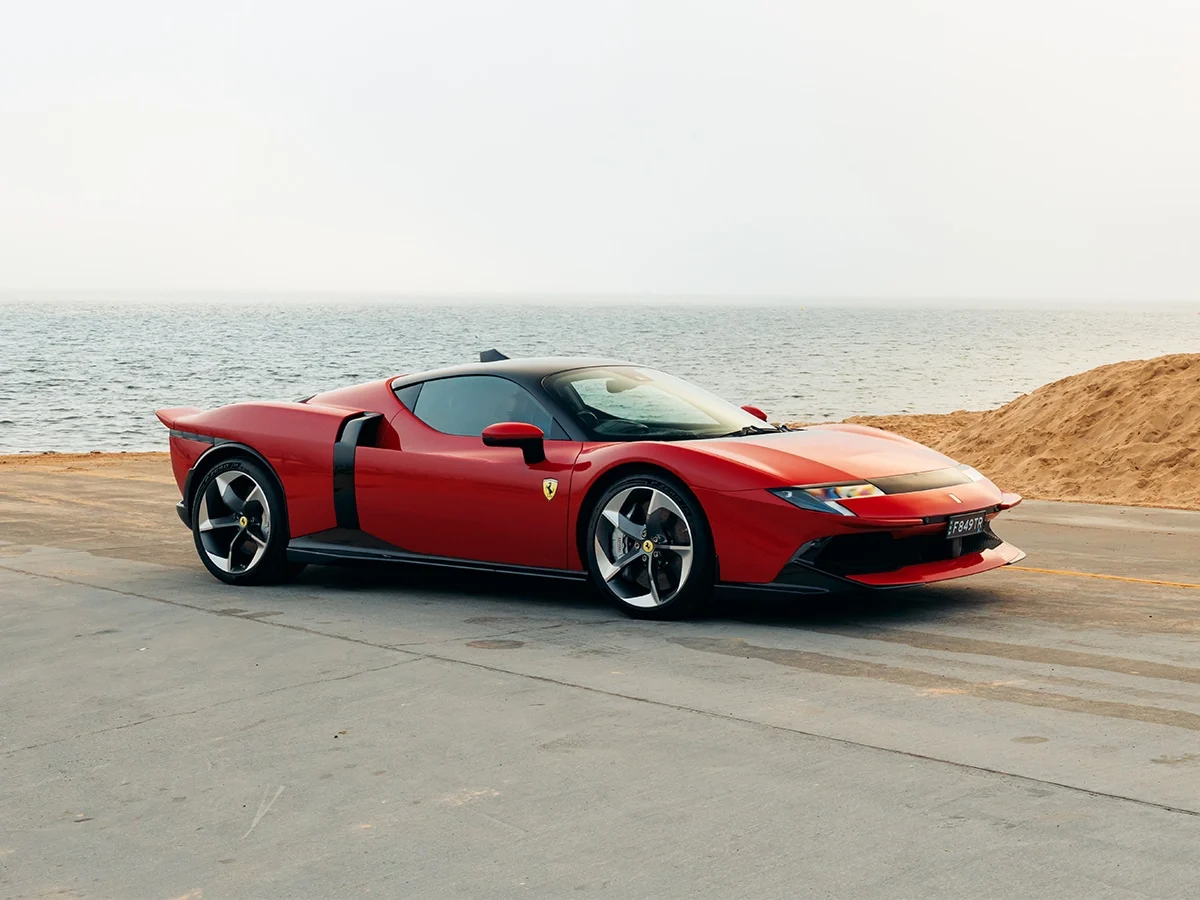
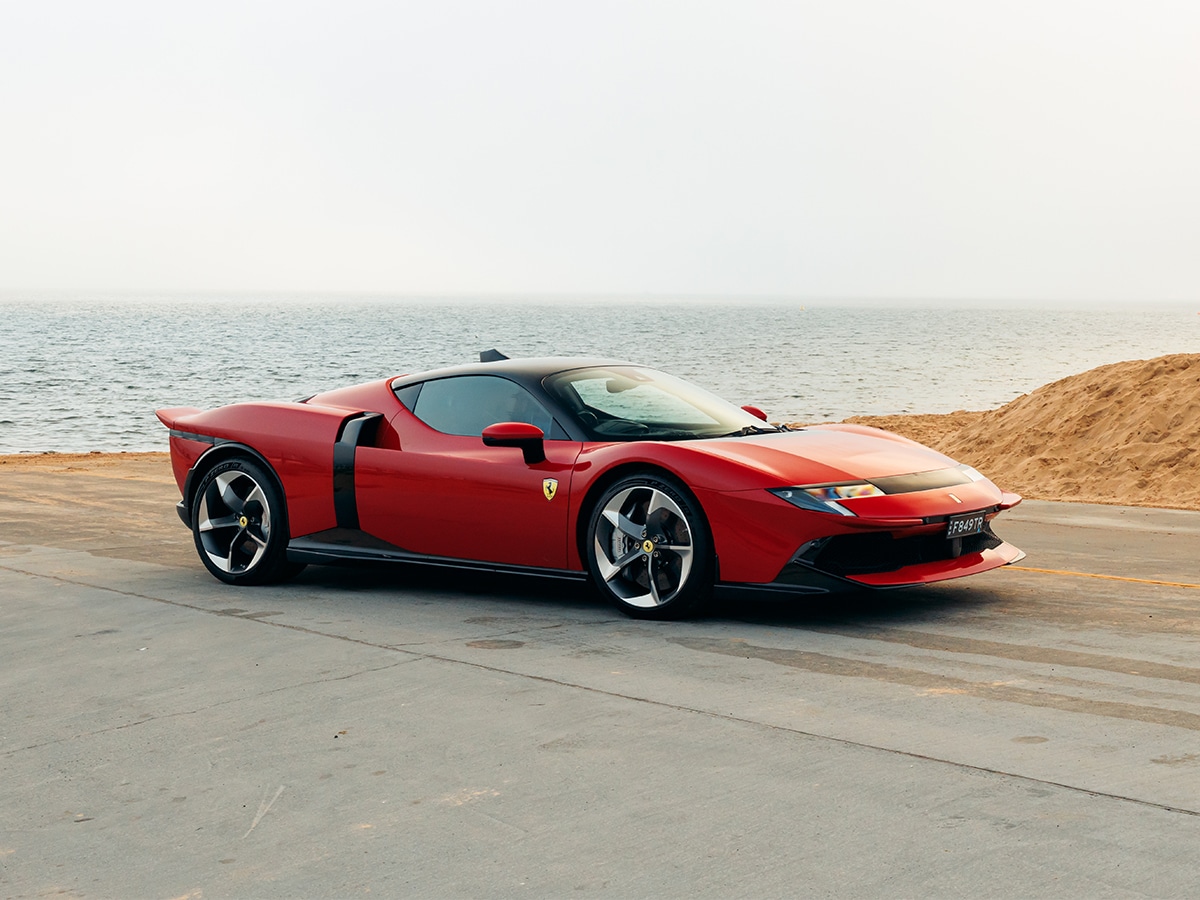
Ferrari has officially unveiled the 2026 849 Testarossa, a mid-rear plug-in hybrid electric vehicle (PHEV) that succeeds the SF90 Stradale as the brand’s flagship series-production supercar. Representing a significant leap in both raw performance and digital integration, the 849 Testarossa arrives with a combined output of 1,050 CV (772 kW), making it the most powerful road-going production car in the history of the Maranello-based manufacturer. With an Australian list price starting at AUD$932,648 before on-road costs, the vehicle is positioned to compete directly with the Lamborghini Revuelto and the next generation of electrified hyper-performance machinery.
The introduction of the 849 Testarossa marks a strategic pivot for Ferrari. While the industry has trended toward high-horsepower "digital appliances" that critics argue lack mechanical soul, Ferrari engineers have focused on reconciling extreme electrification with the visceral feedback synonymous with the brand. This development comes more than a decade after the "Holy Trinity"—the Ferrari LaFerrari, Porsche 918 Spyder, and McLaren P1—first introduced hybrid technology to the upper echelons of the automotive market.
Technical Specifications and Powertrain Architecture
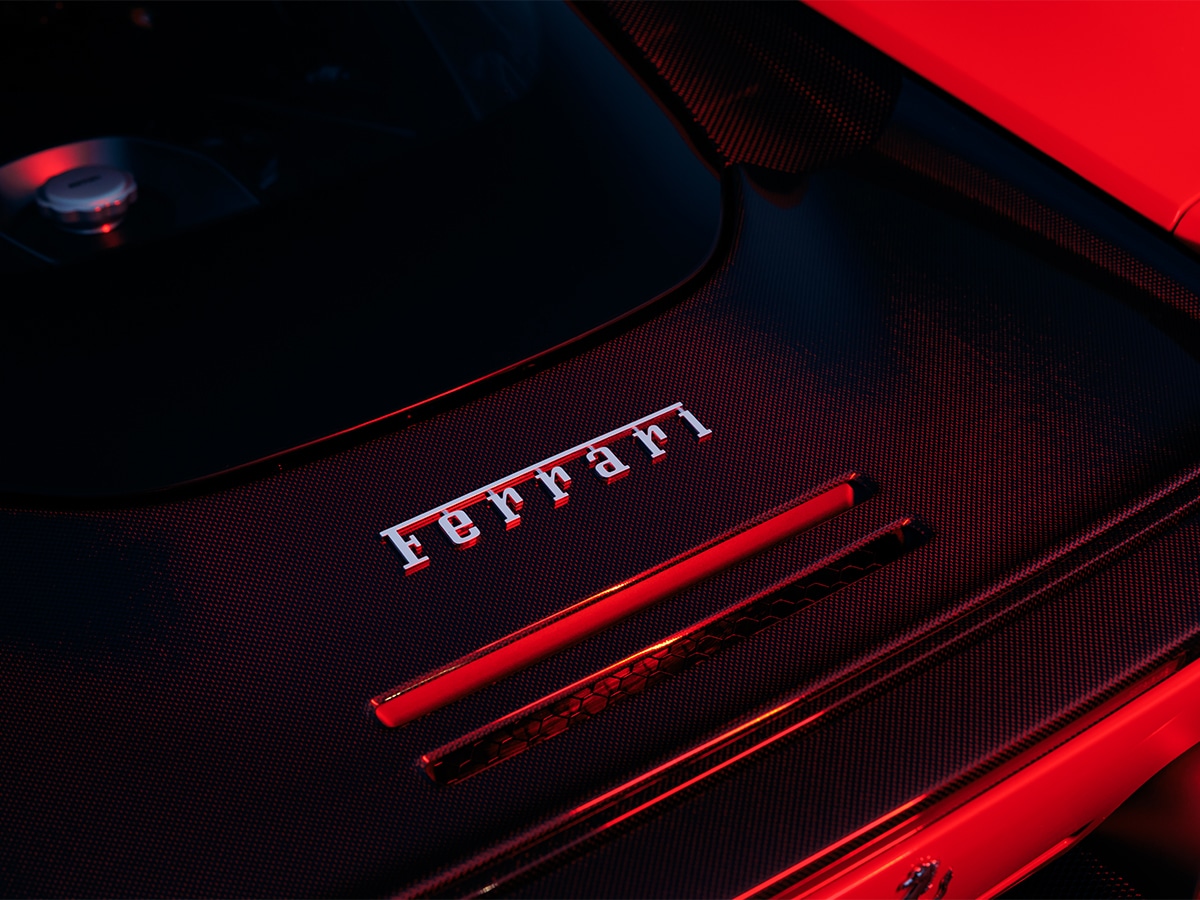
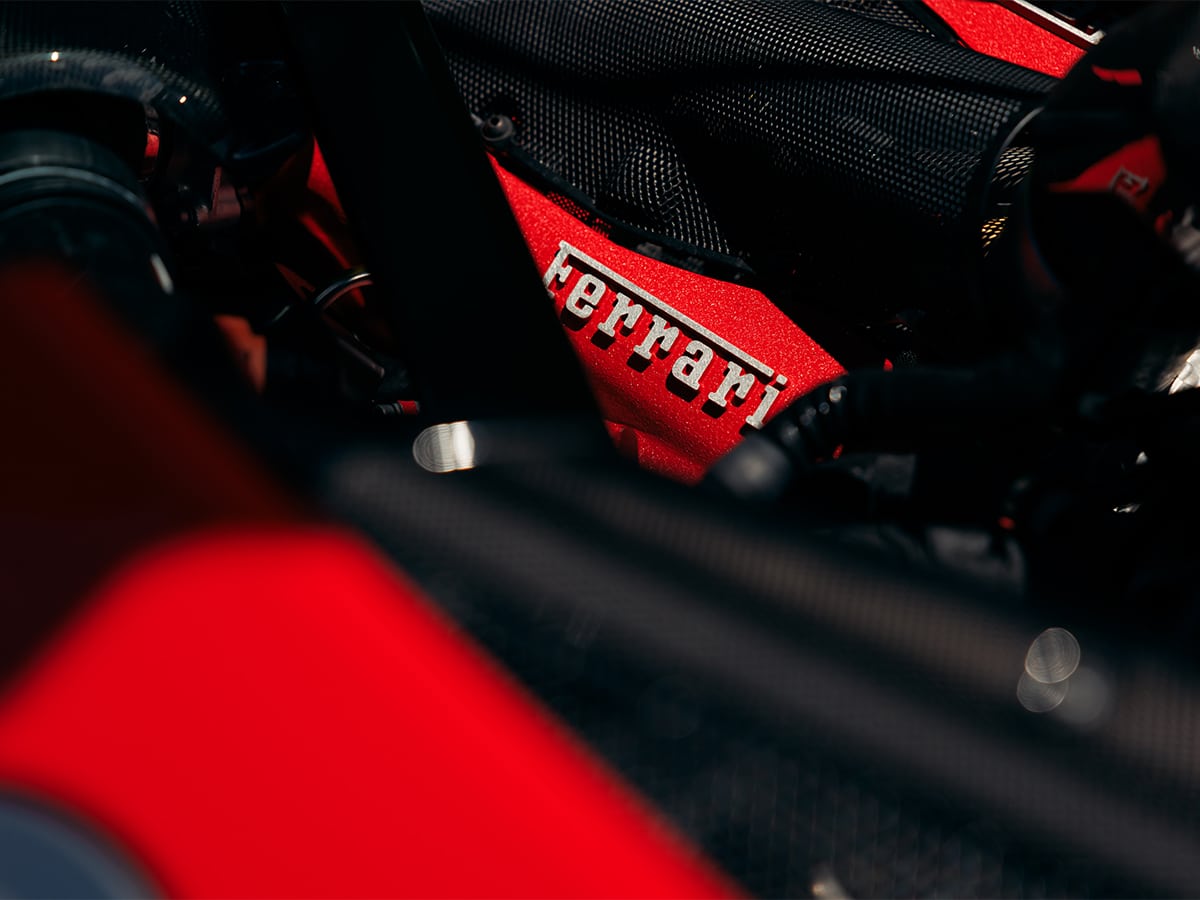
At the heart of the 849 Testarossa is a heavily revised iteration of the F154FC 4.0-litre twin-turbo V8 engine. Standing alone, the internal combustion engine (ICE) produces 830 CV at 7,500 rpm and 842 Nm of torque at 6,500 rpm. This results in a specific power output of 208 CV per litre, a benchmark figure for forced-induction V8 engines.

To achieve these metrics, Ferrari utilized engineering solutions derived from its racing programs. The engine features larger turbochargers equipped with low-friction bearings sourced from the F80 flagship, alongside a turbine heat shield inspired by the 296 GT3. Cooling efficiency has been enhanced through an F80-derived intercooler with a 19 per cent larger surface area. Furthermore, the 849 Testarossa addresses environmental concerns through the use of recycled aluminium secondary alloy castings, which reportedly reduce engine production emissions by 80 per cent.
The ICE is augmented by three electric motors that contribute an additional 220 CV. Two motors are located on the front axle, providing independent torque vectoring (RAC-e), while a third, Formula 1-derived MGU-K motor, is positioned between the engine and the eight-speed dual-clutch transmission at the rear. Energy is stored in a 7.45 kWh lithium-ion battery, which allows for a silent electric-only range of approximately 25 kilometres.
Performance Metrics and Dynamic Systems
The 849 Testarossa’s performance data places it in the elite tier of modern hypercars. The vehicle accelerates from 0 to 100 km/h in under 2.3 seconds and reaches 200 km/h in just 6.35 seconds. Its top speed is rated in excess of 330 km/h.
Beyond straight-line speed, Ferrari has introduced the FIVE (Ferrari Integrated Vehicle Estimator) system. This "digital twin" technology utilizes 6D chassis sensors to estimate real-time vehicle speed and yaw angles with unprecedented accuracy—error margins are cited at less than 1 km/h and 1 degree, respectively. This data is fed into the electronic differential (eDiff), traction control, and front-axle torque vectoring systems to optimize grip before the driver perceives a loss of traction.
The braking system has also seen a total overhaul. Previous hybrid supercars often struggled with the transition between regenerative braking and physical friction. The 849 Testarossa utilizes an ABS Evo controller that coordinates the front RAC-e motors and rear MGU-K with 410mm front and 372mm rear discs. The result is a stopping distance of 100 to 0 km/h in 28.5 metres, achieved with a pedal feel that mimics traditional hydraulic systems.
Design Philosophy and Aerodynamic Innovation
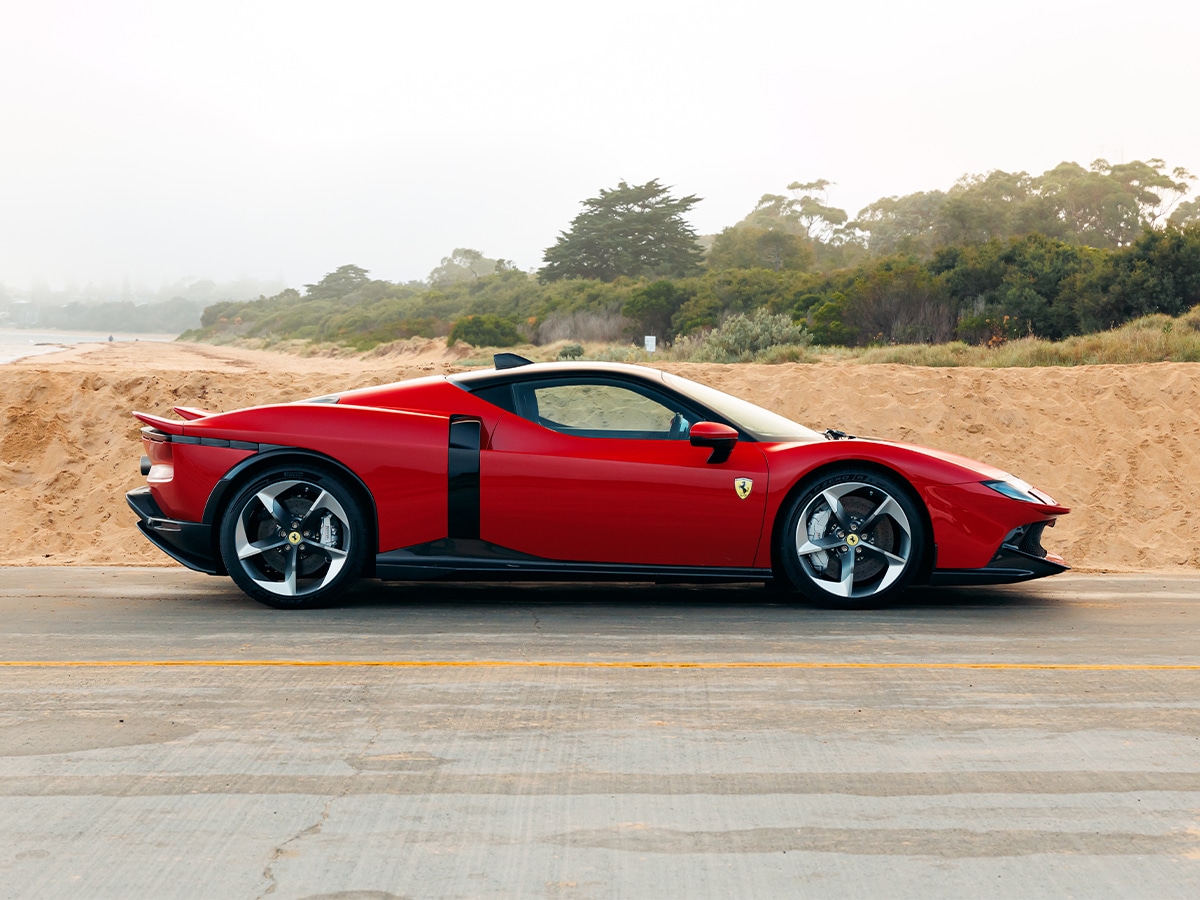
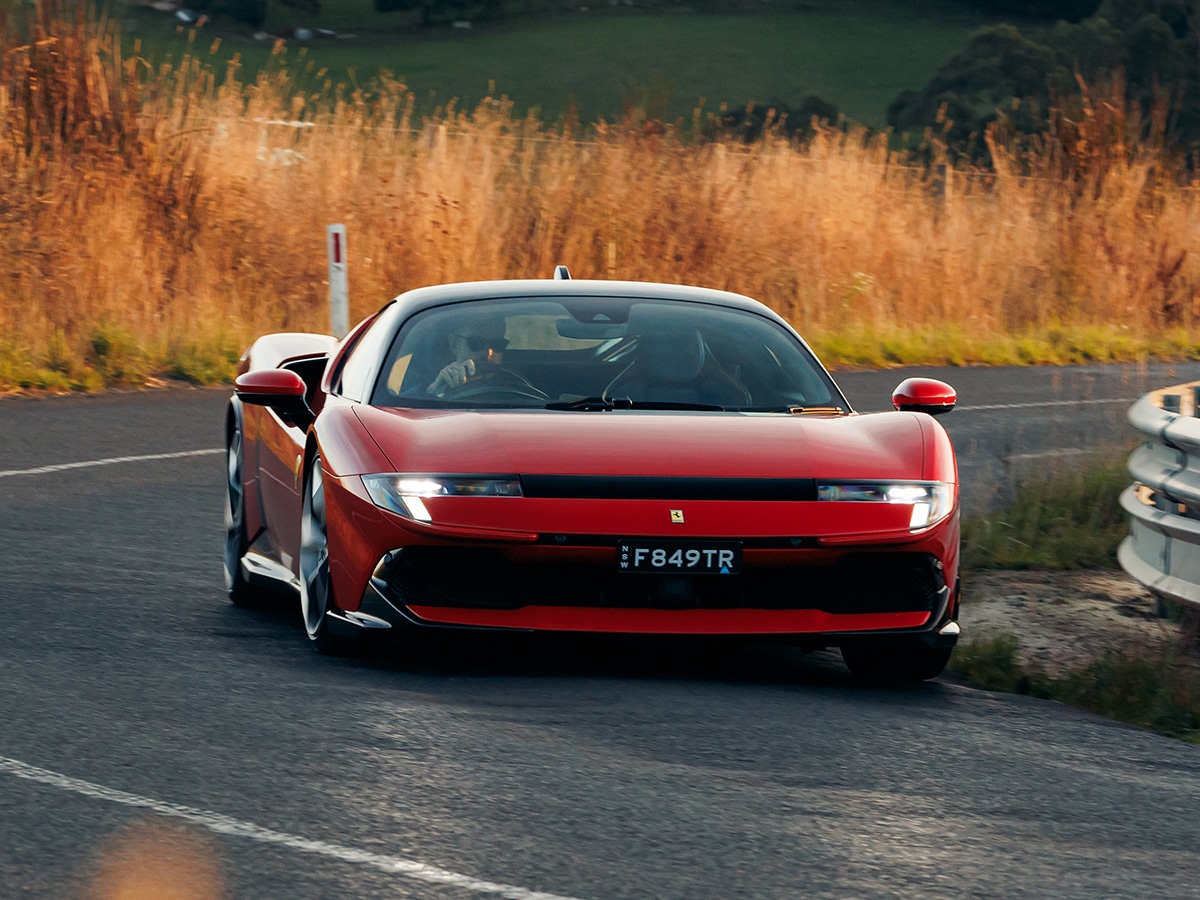
Directed by Flavio Manzoni and the Ferrari Styling Centre, the aesthetic of the 849 Testarossa draws heavy inspiration from 1970s Sports Prototypes, specifically the 512 S and 512 M. The car features a cab-forward silhouette, measuring 4,718mm in length and 2,304mm in width.
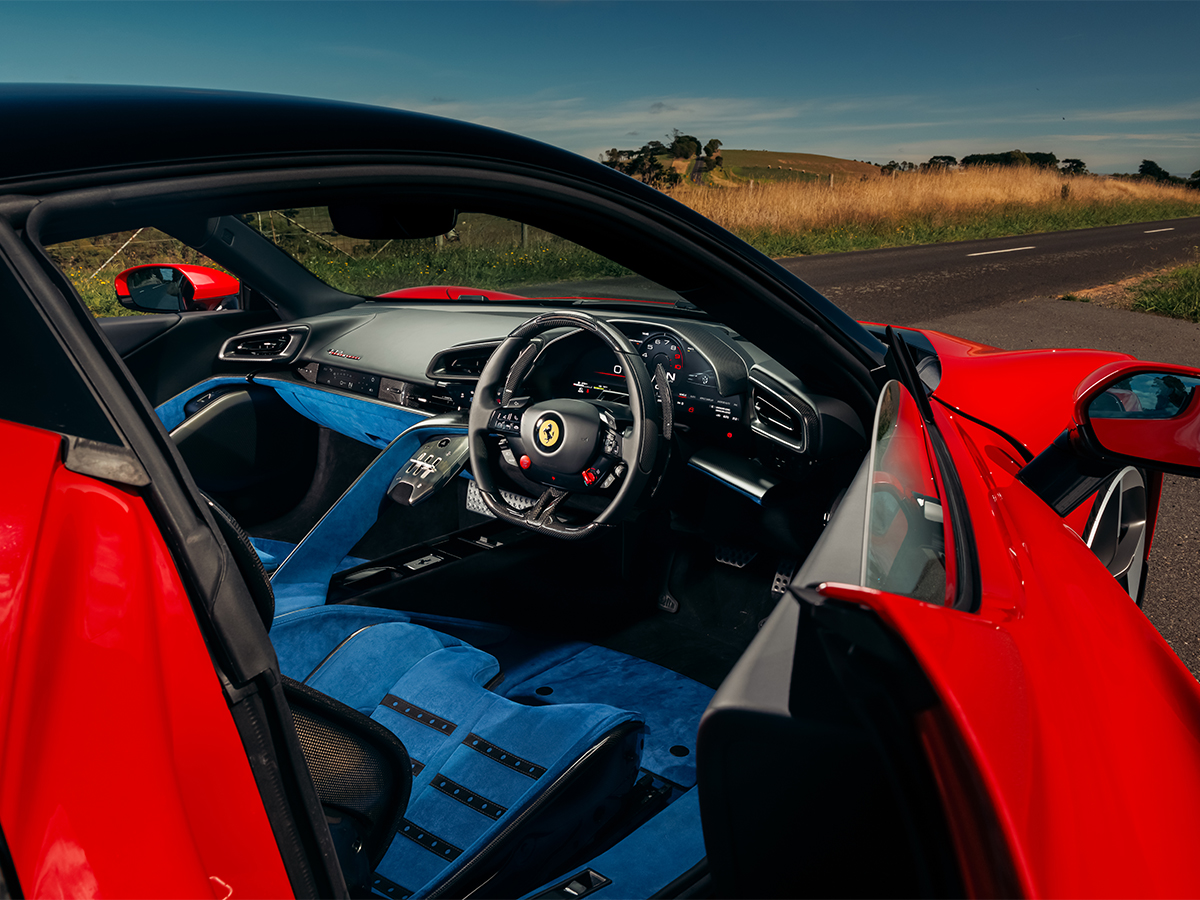
Aerodynamics play a critical role in the vehicle’s stability. The door panels are sculpted from a single aluminium moulding to create deep ducts that channel air into side intercoolers, increasing airflow by 30 per cent. At the front, a square bumper and large splitter generate significant downforce, while the underfloor features three pairs of cascading vortex generators.
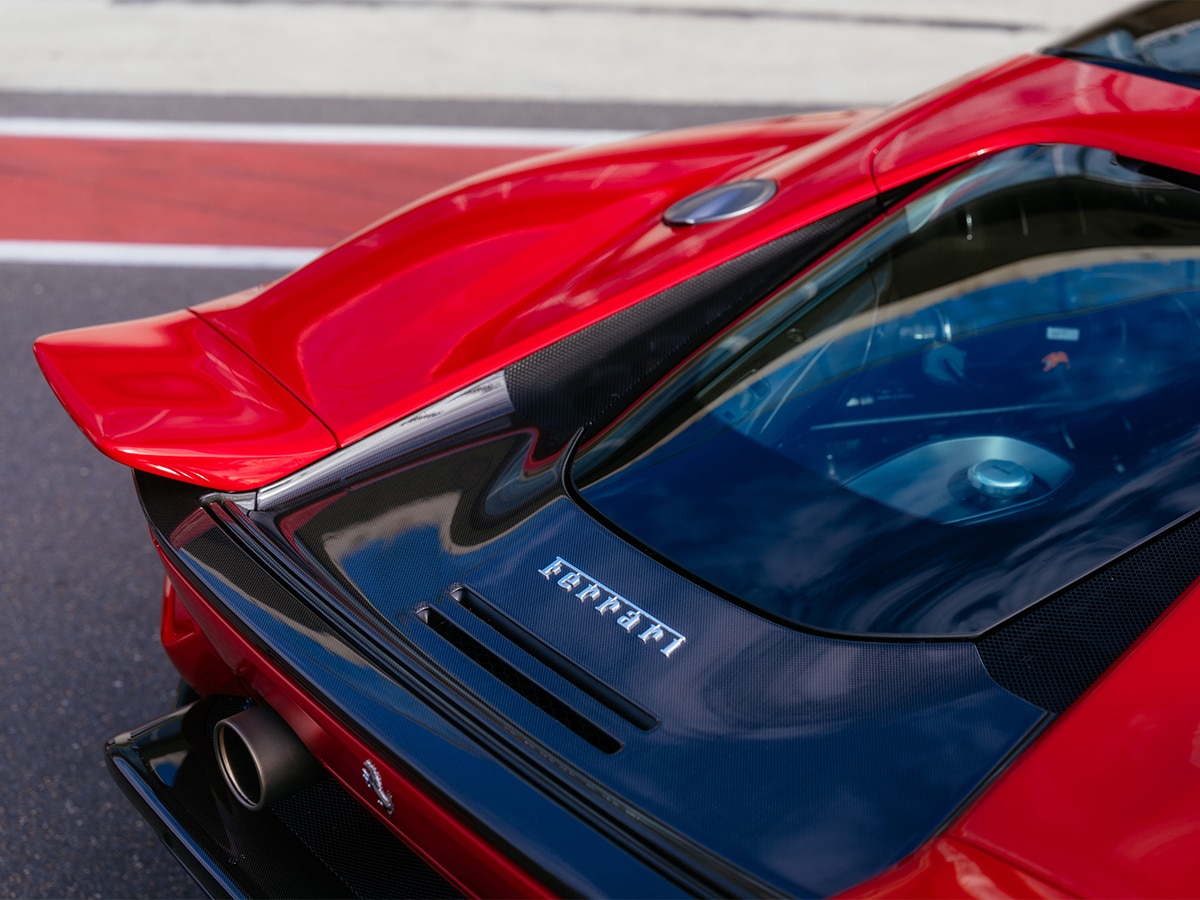
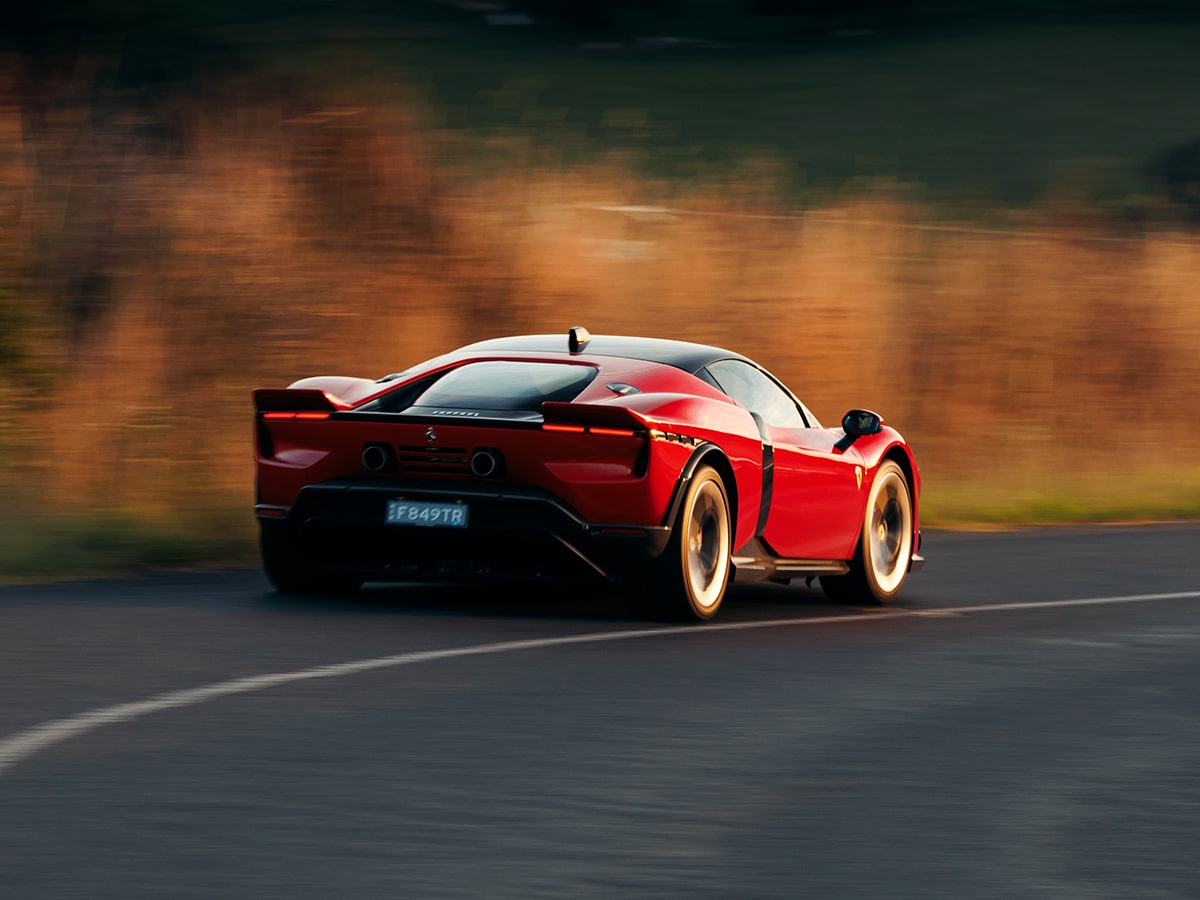
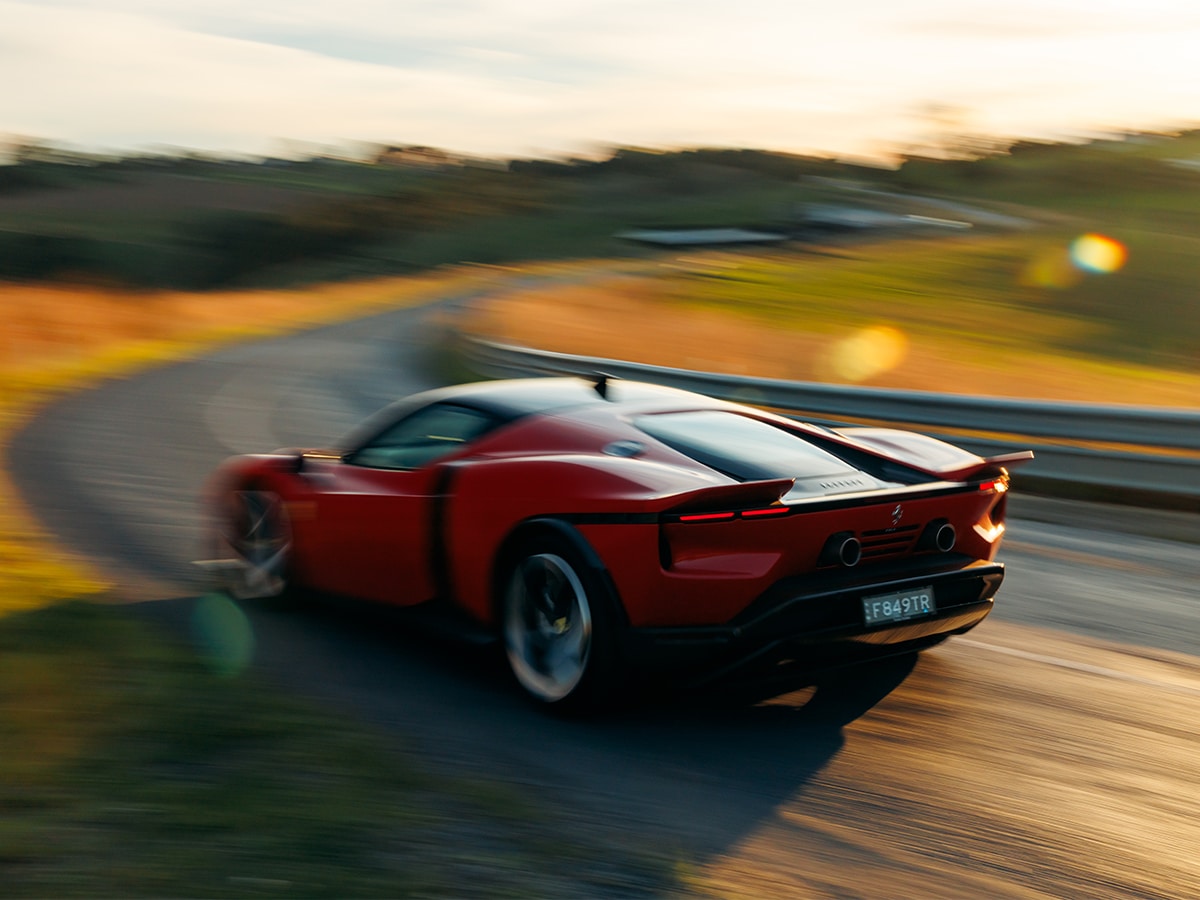
At the rear, the "twin-tail" architecture houses an active spoiler that toggles between Low Drag and High Downforce modes. In its most aggressive setting, the system generates 100kg of load at 250 km/h, contributing to a total vehicle downforce of 415kg. This ensures the 1,570kg (dry weight) machine remains planted during high-speed cornering maneuvers.
Interior Evolution: A Return to Tactile Controls
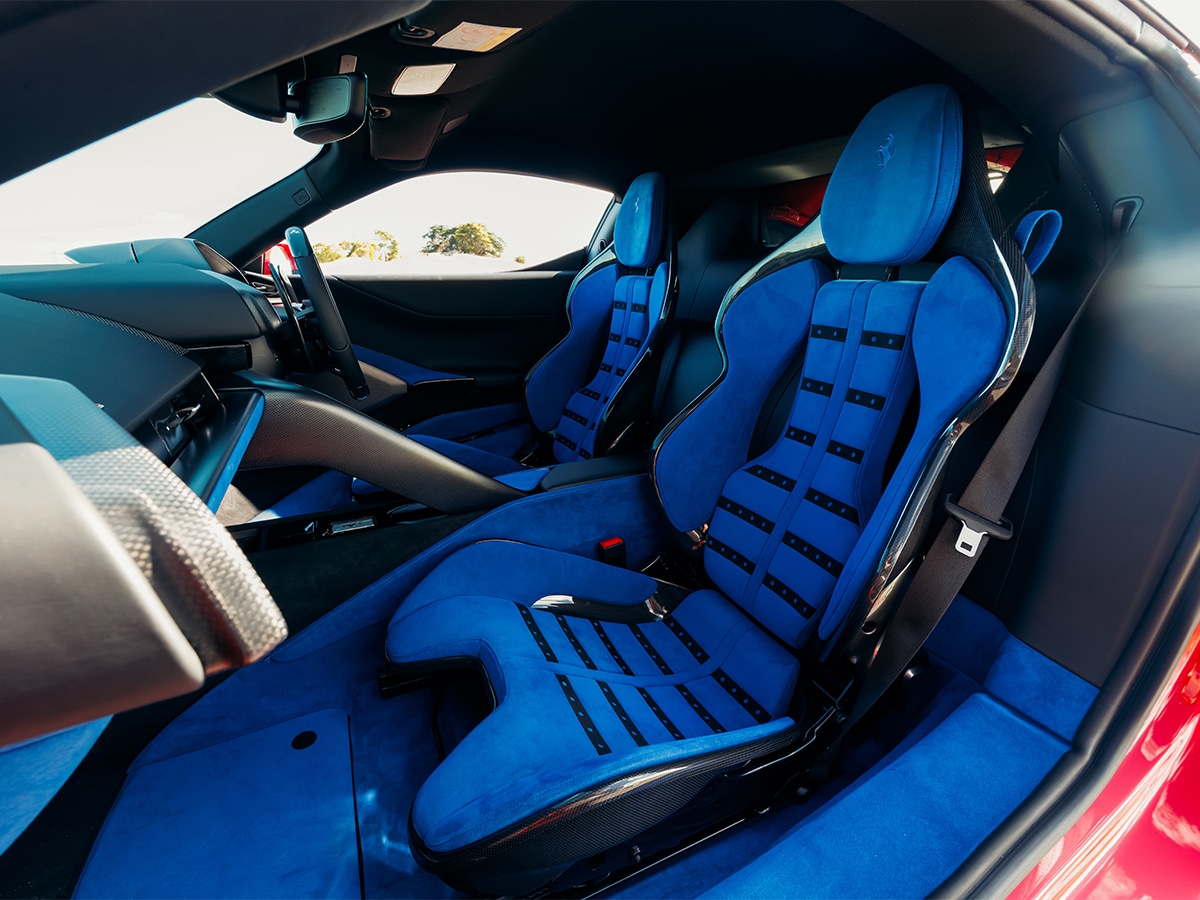
One of the most notable changes in the 849 Testarossa is Ferrari’s departure from the industry-wide reliance on touch-capacitive interfaces. Following feedback from owners regarding the lack of tactile feedback in the SF90 and 296 GTB, Ferrari has reintroduced physical, mechanical switchgear to the steering wheel.
The iconic red "Engine Start" button is once again a physical click-action switch. This sits alongside the digital eManettino selector, which offers four driving modes:
- eDrive: Pure electric operation for urban environments.
- Hybrid: The default setting, balancing efficiency and power.
- Performance: Keeps the V8 engaged to maintain battery levels.
- Qualify: Unlocks the maximum 1,050 CV output for track use.
The cockpit architecture is characterized by a floating dashboard and high-quality materials, including carbon fibre and Alcantara. A passenger-side display screen remains an option, while the central tunnel features a metal gear-change gate that pays homage to Ferrari’s classic manual transmissions.
Assetto Fiorano: The Track-Focused Variant
For clients seeking a more aggressive setup, Ferrari offers the Assetto Fiorano package. This specification reduces the vehicle’s weight by 30kg through several key modifications:
- Carbon Fibre Wheels: 20-inch rims that significantly reduce unsprung mass.
- Titanium Components: Including suspension springs and fasteners.
- Fixed Rear Wings: Replacing the active spoiler with twin fixed wings that triple vertical downforce.
- Multimatic Dampers: Stiffer, single-rate shock absorbers optimized for circuit use.
- Tubular Seats: Lightweight Alcantara racing seats that save 18kg on their own.
Notably, for the first time on an Assetto Fiorano model, buyers can choose to retain the semi-active Magneride suspension, allowing for the inclusion of the front-axle lifter—a necessity for navigating real-world inclines.
Market Positioning and Broader Impact
The 849 Testarossa enters a market defined by increasingly stringent European emissions regulations. While the V8 engine has been muffled in many contemporary supercars due to particulate filters and noise mandates, Ferrari has attempted to circumvent this by extending the Inconel exhaust manifold and increasing its duct diameter by 20 per cent. This engineering choice is designed to restore the "combustion timbre" that enthusiasts felt was missing from earlier hybrid models.
The pricing structure reflects the car’s technological complexity:
- 849 Testarossa Coupe: From AUD $932,648
- 849 Testarossa Spider: From AUD $1,015,589
These figures represent a significant premium over the outgoing SF90 Stradale, which was priced at approximately AUD $846,888. However, the 849 Testarossa’s performance figures now overlap with the "Hypercar" category, traditionally reserved for limited-run vehicles like the LaFerrari.
Chronology and Availability
The development of the 849 Testarossa followed a four-year cycle after the launch of the SF90 Stradale. While the design was finalized before the "Testarossa" name was officially revived for the project, the branding serves to link Ferrari’s futuristic hybrid path with its historic V12 past.
Australian deliveries are scheduled to begin in the first half of 2025. Ferrari Australia has indicated that allocations for the first year of production are already heavily oversubscribed, a common occurrence for flagship releases from Maranello.
Conclusion and Industry Implications
The 2026 Ferrari 849 Testarossa is more than a mere iteration of the hybrid supercar; it is a statement of intent. By combining 1,050 CV with a return to tactile ergonomics and a focus on exhaust acoustics, Ferrari is attempting to prove that the transition to electrification does not require the sacrifice of emotional engagement.
As the automotive industry moves closer to the Euro 7 emissions standard, the 849 Testarossa likely represents one of the final chapters for the high-revving, non-restricted V8 engine in a series-production format. For the fortunate few with an allocation, it offers a glimpse into a future where digital precision and mechanical soul coexist. For the rest of the industry, it sets a formidable new benchmark for what a flagship supercar must achieve in the mid-2020s.


 Yuyun Lusiyani
 Joko Widodo
 Eva Lovia
 Pevita Pearce
 admin
admin