
 Pevita Pearce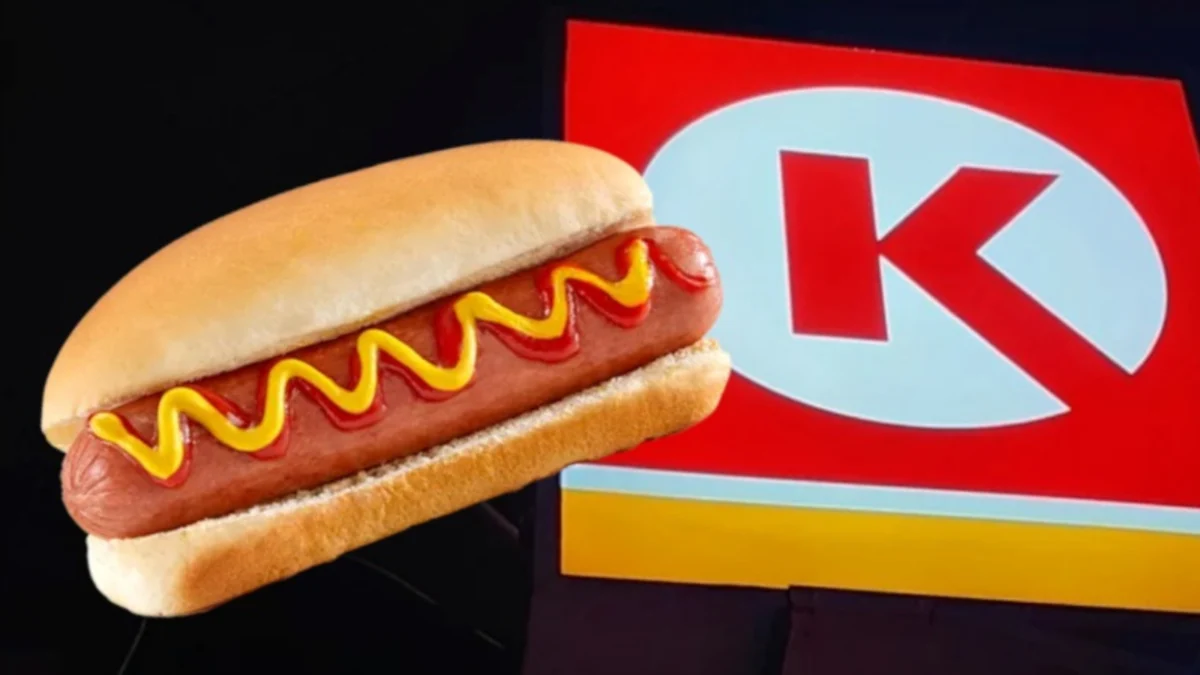
The intersection of retail automation and artificial intelligence reached a surreal milestone this week when a Circle K customer was presented with a checkout total that exceeded the gross domestic product of several small nations. While attempting to purchase a simple hot dog and a few bottles of Gatorade, the shopper encountered a malfunction in the store’s AI-powered self-checkout system that added a staggering $8.5 billion donation to the American Red Cross to the final bill. The incident, documented and shared on social media, has sparked a wider conversation regarding the reliability of "frictionless" retail technology and the potential pitfalls of automated point-of-sale systems that lack sufficient human oversight or input validation.
The shopper, who detailed the experience on Reddit, explained that they had entered a Circle K location where traditional manned registers had been largely supplanted by AI-powered kiosks. Despite having witnessed the machines erroneously add items to previous orders—such as lighters or food items that were not present on the scanning platform—the customer opted to use the kiosk because the sole employee on duty was occupied with other tasks. The resulting transaction screen showed the intended purchases alongside an "American Red Cross Donation" line item totaling $8,500,000,000.00. While the customer found humor in the absurdity of the request, the event highlights significant technical vulnerabilities in the rollout of automated retail solutions.
The Mechanics of Mashgin: How Circle K’s AI Checkout Operates
To understand how such a massive error could occur, it is necessary to examine the specific technology Circle K has deployed globally. In 2022, Alimentation Couche-Tard, the parent company of Circle K, announced a massive partnership with Mashgin, a California-based company specializing in "touchless" checkout systems. The rollout aimed to install over 10,000 Mashgin kiosks across 7,000 stores in the United States, Canada, and Europe.
Unlike traditional self-checkout lanes that rely on barcode scanners and weight-sensitive scales, Mashgin’s system utilizes a series of high-resolution cameras and computer vision algorithms. When a customer places their items on the kiosk’s platform, the AI identifies the products based on their shape, size, and visual characteristics. According to company specifications, the system can recognize multiple items simultaneously, allowing for a transaction time of roughly ten seconds—approximately eight times faster than traditional scanning methods.
However, computer vision is not infallible. The "spatial AI" used by these machines can be confused by shadows, overlapping items, or environmental factors. In the case of the $8.5 billion donation, the error likely did not stem from the visual recognition of the hot dog itself, but rather from a failure in the software’s logic or user interface (UI) handling.

A Technical Post-Mortem: AI Error or UI Oversight?
While the initial headline suggests an "AI glitch," industry analysts and observers on social media have pointed toward a more mundane, yet equally problematic, explanation: a failure in input validation. One prominent theory suggests that the kiosk may have prompted the user for a rewards phone number or a membership ID. If the system was inadvertently stuck on a "donation amount" screen, and the user entered a ten-digit phone number, the software may have interpreted that string of digits as a monetary value.
For instance, a standard American phone number beginning with the area code 850 would translate to an $8.5 billion figure if the software failed to cap the maximum allowable donation or verify the input type. This points to a critical flaw in the User Experience (UX) design of the kiosk. Professional retail software typically includes "sanity checks"—logic gates that prevent a transaction from exceeding a reasonable threshold without manager intervention. The fact that an $8.5 billion charge could even reach the final payment screen suggests a lack of robust safeguards in the Mashgin-Circle K integration.
The Broader Context of Retail Automation Frustrations
The Circle K incident is not an isolated case of technology-induced friction in the service industry. As retailers look to cut labor costs and increase throughput, the rapid adoption of kiosks has led to a phenomenon often described as "automation fatigue."
Recently, other major chains have faced scrutiny for their implementation of automated systems. Popeyes Louisiana Kitchen made headlines when its self-service kiosks began prompting customers for tips, a move that drew sharp criticism from diners who argued that tipping is a reward for human service, not a subsidy for automated hardware. Similarly, Amazon’s "Just Walk Out" technology, which was marketed as a purely AI-driven experience, was revealed to rely on a significant backend of human reviewers in India who manually verified transactions that the AI could not process accurately.
In contrast, some legacy brands have leaned into human-centric models to maintain customer loyalty. Costco Wholesale has become a cultural touchstone for its refusal to raise the price of its $1.50 hot dog combo, a price point maintained through traditional high-volume retail strategies rather than aggressive AI implementation. The juxtaposition of a $1.50 hot dog at Costco versus an $8.5 billion hot dog "request" at Circle K underscores the varying philosophies currently competing in the global marketplace.
Corporate Strategy and the Drive for Frictionless Commerce
For Alimentation Couche-Tard, the move toward AI checkouts is a cornerstone of their long-term growth strategy. In corporate filings, the company has emphasized the need to modernize the convenience store experience to cater to younger, tech-savvy demographics. By reducing the time spent at the register, Circle K hopes to increase "basket size," as customers are more likely to make impulse purchases if they know they won’t be stuck in a long line.

The Mashgin kiosks are also a response to the ongoing labor shortage in the service sector. By automating the checkout process, stores can operate with fewer staff members on the floor, or redirect those employees to food preparation and maintenance. However, as the $8.5 billion glitch demonstrates, when the technology fails, the burden of resolution still falls on the human workforce. The Reddit user noted that the store employee was "astonished" by the screen, and while the situation was resolved with a laugh, a less observant customer—or a system that automatically processed a saved digital wallet—could have faced a financial nightmare.
Potential Legal and Financial Implications
The financial implications of such a glitch, had the transaction been attempted, are profound. Most consumer credit cards and debit accounts have daily limits that would automatically reject an $8.5 billion charge. However, the event raises questions about the liability of software providers and retailers. If a glitch were to charge a customer an extra $85.00 or $850.00—amounts that might actually clear a high-limit credit card—the process of reversing the charge and dealing with overdraft fees or interest could be a significant burden for the consumer.
Under the Electronic Fund Transfer Act (EFTA) and various consumer protection laws, retailers are generally required to provide accurate billing. However, the "terms and conditions" often agreed to when using self-service kiosks sometimes include clauses that limit the retailer’s liability for software errors. As AI becomes more integrated into the point-of-sale, legal experts suggest that new frameworks may be needed to ensure that "computer error" is not used as a shield against corporate accountability.
Conclusion: The Future of the "Smart" Store
The $8.5 billion hot dog incident serves as a cautionary tale for the retail industry. While AI and computer vision offer the promise of unparalleled efficiency, they are not a substitute for thoughtful system design and human-centric fail-safes. The goal of "frictionless" commerce is to remove barriers to purchase, but as this case shows, a lack of oversight can create the ultimate friction: a multi-billion-dollar barrier to a simple snack.
As Circle K continues its global rollout of the Mashgin system, the company will likely need to address these "edge cases" to maintain public trust. For the time being, the incident remains a viral reminder that while AI can recognize a hot dog, it still lacks the common sense to know that no hot dog is worth $8.5 billion—even if it’s for a good cause. Moving forward, the success of retail automation will depend not just on how fast a machine can scan an item, but on how effectively it can prevent the absurd from becoming the reality of the customer experience.




 Yuyun Lusiyani
 Joko Widodo
 Eva Lovia
 admin
admin
 Lina Irawan