
 Pevita Pearce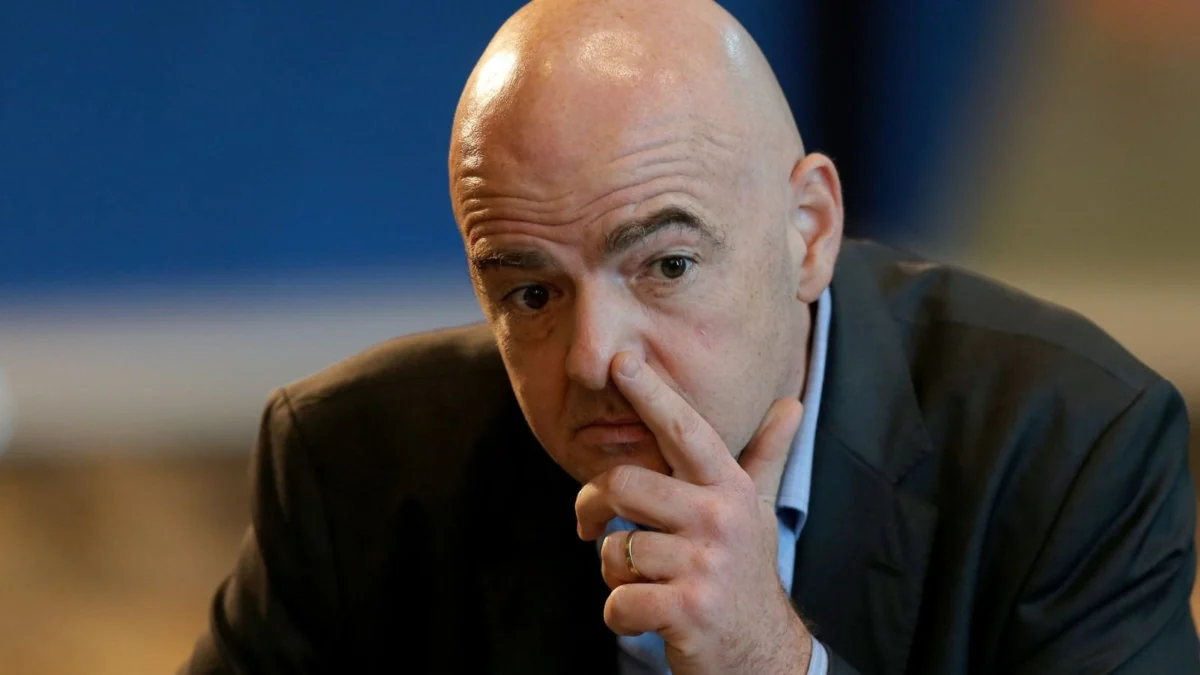
The governing body of world football, FIFA, has officially scrapped a highly contentious proposal to sell a minority stake in the FIFA World Cup to private equity investors, marking a significant retreat for President Gianni Infantino. The decision follows an unprecedented wave of opposition from the sport’s most powerful regional confederations, which had threatened a total boycott of the tournament and all FIFA-sanctioned competitions. The collapse of the $4.2 billion deal represents one of the most substantial challenges to Infantino’s leadership since he took office in 2016, highlighting a deepening rift between the global governing body and its member associations over the commercialization of international football.
The Rise and Fall of FIFA Forward Enterprise
The centerpiece of the abandoned strategy was the creation of a commercial subsidiary titled "FIFA Forward Enterprise." This entity was designed to manage the commercial rights of the FIFA World Cup, the organization’s most lucrative asset. Under the plan championed by Gianni Infantino, FIFA sought to sell up to a 20% stake in this new subsidiary to outside private equity firms. The move was intended to raise an immediate capital injection of approximately $4.2 billion, valuing the entirety of the World Cup’s commercial operations at a staggering $20 billion.
Infantino argued that the capital would be used to "strengthen FIFA Member Associations" and support the growth of the sport in developing nations where financial infrastructure remains precarious. However, the proposal was met with immediate skepticism regarding the long-term implications of allowing private investors to hold a stake in a tournament that has historically been viewed as a public and cultural trust rather than a purely commercial product.
The tension reached a breaking point when the Union of European Football Associations (UEFA) spearheaded a movement to block the deal. UEFA’s 55 member nations, including footballing powerhouses like Germany, France, England, and Italy, voted unanimously to withdraw from the World Cup if the private equity plan proceeded. This "nuclear option" would have effectively rendered the tournament unviable, as European teams traditionally provide the bulk of the event’s viewership and commercial appeal.
A Unified Global Front: The Mechanics of the Boycott
The resistance to the "FIFA Forward Enterprise" was not limited to Europe. Shortly after UEFA’s declaration, the Confederation of North, Central America and Caribbean Association Football (CONCACAF), representing 41 member nations, and the Asian Football Confederation (AFC), representing 47 nations, joined the opposition. This created a unified front of 143 member associations across three continents, representing the vast majority of the World Cup’s commercial and competitive weight.
The primary concern cited by these confederations was the erosion of independence. UEFA officials argued that the World Cup "cannot be treated as an investment product" subject to the quarterly demands and profit-maximization strategies of private equity firms. There were also fears that a 20% stake would give investors undue influence over tournament scheduling, host selection, and the expansion of the competition, potentially prioritizing revenue over player welfare and sporting integrity.
Chronology of the Crisis
The timeline of the proposal’s collapse illustrates a rapid escalation of tensions within the halls of football governance:
- Early 2026: Reports emerge regarding FIFA’s internal discussions with private equity groups to monetize the World Cup’s commercial rights through a new subsidiary.
- May 2026: UEFA holds an emergency meeting in which member nations express "grave concerns" over the lack of transparency regarding the "FIFA Forward Enterprise" project.
- June 2026: CONCACAF and the AFC issue a joint statement aligning with UEFA, citing a lack of consultation with the regional bodies that provide the players and infrastructure for FIFA events.
- July 15, 2026: UEFA formally announces that its members will boycott the next World Cup cycle if the minority stake sale is ratified.
- July 31, 2026: FIFA President Gianni Infantino releases a statement through FIFA Media acknowledging the "divisions" caused by the project and confirming its withdrawal.
- August 1, 2026: UEFA and other confederations welcome the reversal but issue a scathing critique of FIFA’s leadership, calling for a total overhaul of the organization’s financial transparency.
Financial Context and Supporting Data
The push for private equity investment was particularly controversial given FIFA’s existing financial health. According to FIFA’s own financial reports, the organization’s reserves stood at over $5 billion following the 2022-2026 cycle. Critics, including UEFA leadership, pointed out that these funds remained largely unutilized for the direct benefit of the game, making the pursuit of an additional $4.2 billion from private investors appear unnecessary.
Furthermore, the projected revenue for the 2026 World Cup—the first to feature an expanded 48-team format—was already expected to break records, with estimates exceeding $11 billion in total turnover. The decision to seek private equity was seen by many analysts not as a financial necessity, but as a strategic move to centralize commercial power within the FIFA President’s office, bypassing the traditional oversight of the regional confederations.
The proposed $20 billion valuation of the commercial subsidiary also raised eyebrows. While the World Cup is the world’s most-watched sporting event, the entry of private equity into football has seen mixed results elsewhere. For instance, CVC Capital Partners’ investments in Spain’s La Liga and France’s Ligue 1 provided immediate cash infusions but required leagues to surrender a percentage of broadcasting revenue for the next half-century—a trade-off that many FIFA members were unwilling to accept for the world’s premier international tournament.
Official Responses and the Rhetoric of "Trust"
In his statement confirming the project’s cancellation, Gianni Infantino attempted to frame the retreat as an act of listening. "Having listened carefully to all the views, it has become clear that the project has created divisions of a nature that, regardless of the level of support, are no longer in the interest of the objective set out in the first place," Infantino stated. He emphasized that his goal remained the "unification and improvement" of global football, particularly in underserved regions.
UEFA’s response was significantly more confrontational. In a public statement, the European governing body remarked, "The current FIFA leadership has not only lost UEFA’s confidence but also that of many other members of the football family." They characterized the proposal as a "shabby, back room, opaque deal" that contradicted the very promises Infantino made when he was first elected.
UEFA specifically recalled Infantino’s 2016 campaign rhetoric, where he told member associations that "the money of FIFA is your money" and pledged a new era of transparency following the corruption scandals of the Sepp Blatter era. The statement from UEFA suggested that by attempting to sell off a portion of the World Cup without broad consensus, Infantino had fundamentally breached the trust of the global football community.
Broader Implications and the Road to 2027
The fallout from the failed private equity deal is expected to have long-lasting consequences for the governance of international football. The unified front presented by UEFA, CONCACAF, and the AFC demonstrates a shift in the balance of power, proving that the regional confederations can successfully veto FIFA’s commercial ambitions when they act in concert.
This defeat arrives at a precarious time for Infantino. The next FIFA presidential election is scheduled for March 2027. While he has previously enjoyed a lack of serious opposition, this incident has galvanized his critics. Fan groups, political figures in various member nations, and several heads of national associations have begun calling for his resignation, arguing that the "FIFA Forward Enterprise" was an attempt to "sell the soul of the game."
Moreover, the confederations have indicated they will no longer wait for FIFA to lead on financial reform. UEFA has announced plans to work with other continental bodies to propose a new, more transparent mechanism for distributing FIFA’s $5 billion reserves through the existing FIFA Forward programme. This move aims to ensure that funds reach developing nations without the involvement of private equity firms or the surrender of commercial stakes.
Conclusion: A Victory for the Status Quo?
While the withdrawal of the plan is being hailed as a "victory for the game" by UEFA, it also leaves a vacuum in FIFA’s long-term commercial strategy. The organization must now find a way to fund its ambitious global development goals without alienating its most important stakeholders.
The "private equity era" of sports investment continues to grow in club football and other sports like Formula 1 and tennis, but for now, the FIFA World Cup remains an outlier—a property deemed too culturally significant to be carved up by institutional investors. As the dust settles on this $4.2 billion collapse, the focus shifts to the 2027 elections and whether the current FIFA leadership can bridge the massive trust gap that this proposal has widened. The task of rebuilding a cohesive global football community may prove far more difficult than the task of raising billions in capital.




 Yuyun Lusiyani
 Joko Widodo
 Eva Lovia
 admin
admin
 Lina Irawan