
 Amara Maple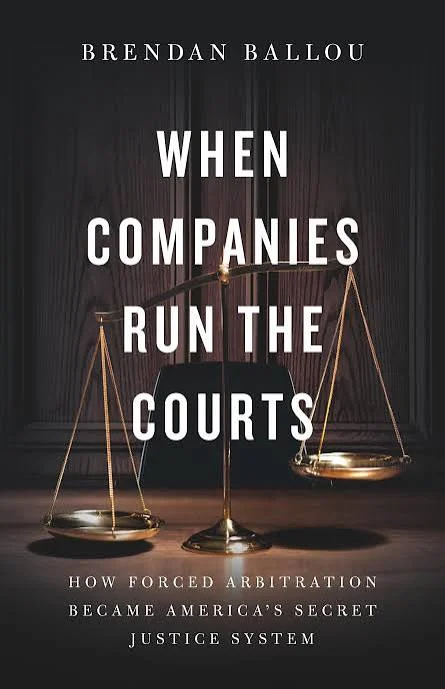
America grapples with a deeply entrenched, yet largely unseen, parallel legal system that increasingly dictates the rights and recourse of its citizens: forced arbitration. This opaque framework, where legal disputes are resolved in secrecy by arbitrators often paid by the very corporations being challenged, represents a significant departure from traditional public courts. A new exposé by Brendan Ballou, a former federal prosecutor and CEO of the Public Integrity Project, titled When Companies Run the Courts: How Forced Arbitration Became America’s Secret Justice System (PublicAffairs, 2026), meticulously dissects this hidden justice mechanism, revealing its profound implications for workers, consumers, and the broader fabric of American jurisprudence.
The Mechanics of a Hidden System
At its core, forced arbitration operates outside the traditional public court system, fundamentally altering how disputes between individuals and powerful entities are adjudicated. When consumers sign up for a streaming service, or employees accept a job offer, they often unknowingly agree to an arbitration clause buried within lengthy terms of service or employment contracts. These "click-to-accept" agreements, legally termed "contracts of adhesion," strip individuals of their right to sue in court, participate in class-action lawsuits, or even appeal an unfavorable decision to a higher judicial body. Instead, they are funneled into private arbitration panels where the rules of evidence and procedure can be significantly different from those in public courts.
One of the most concerning aspects highlighted by Ballou is the inherent conflict of interest within this system. Arbitrators, unlike publicly appointed judges, are typically paid for by the corporations that are party to the dispute. This financial relationship raises serious questions about impartiality and fairness, as repeat corporate clients can influence the selection of arbitrators, potentially favoring those perceived as more sympathetic to corporate interests. The lack of public oversight, coupled with this financial dynamic, creates an environment where, as Ballou asserts, workers and consumers overwhelmingly lose, often without understanding the mechanisms stacked against them.
A Historical Trajectory: From Litigation Crisis to Corporate Control
The widespread adoption of forced arbitration is not a sudden phenomenon but the culmination of a deliberate, decades-long effort. Ballou traces its origins back to the 1980s, a period characterized by a pervasive narrative of a "litigation explosion" in the United States. This narrative, widely propagated by powerful corporate interests, suggested that America was drowning in a wave of frivolous lawsuits that threatened to bankrupt companies and stifle economic growth. However, Ballou challenges this premise, noting that empirical evidence does not consistently support the existence of such an explosion, and litigation rates in the U.S. generally align with those in other developed nations.
Despite the questionable factual basis, this narrative proved incredibly potent, fueling a concerted effort to push consumers and employees out of the public court system. Conservative judges played a pivotal role in this shift, particularly through the reinterpretation of existing laws by the Supreme Court. A crucial turning point was the Court’s decision to uphold the enforceability of arbitration agreements, even when they were embedded in take-it-or-leave-it contracts that individuals had little power to negotiate.
Further solidifying corporate control, the Supreme Court reinterpreted laws to allow companies to mandate individual arbitration, effectively banning class-action lawsuits or similar collective proceedings in arbitration. This change had monumental consequences. Prior to this, individuals harmed by corporate misconduct — for instance, consumers collectively defrauded of small amounts by a bank, or workers experiencing systemic wage theft — could pool their resources and bring a class action, making litigation economically viable. With individual arbitration, each person must pursue their case separately. As Ballou points out, this renders most claims "fundamentally unaffordable" for all but the most severe and costly harms, effectively "killing cases entirely" that would otherwise be legitimate and successful in a public forum.
Eclipsing the Public Courts: Scale and Scope
The impact of forced arbitration is not merely theoretical; it is quantitative and far-reaching. Ballou’s research indicates that, by some measures, the number of arbitration cases filed before large arbitration providers in certain years actually exceeds the number of civil cases in the entire federal court system, and sometimes even the entire civil court system itself. This staggering statistic underscores the extent to which this parallel system has permeated American justice, quietly replacing traditional public avenues for redress.
The prevalence of forced arbitration clauses is equally alarming. Ballou reveals that approximately 80% of Fortune 500 companies utilize forced arbitration agreements with their customers and employees. This means that a vast segment of the American population – an estimated 60 million private employees alone – have their employment governed by such agreements, effectively signing away their right to a jury trial for workplace disputes, harassment claims, or wrongful termination. This pervasive application ensures that whether one is signing up for a new phone plan, accepting a delivery service’s terms, or starting a new job, the likelihood of being bound by a forced arbitration clause is exceptionally high, often without explicit awareness.
Real-World Consequences: Stories of Disenfranchisement
The abstract legalities of forced arbitration translate into deeply personal and often devastating consequences for individuals seeking justice. Ballou illustrates this through compelling case studies, bringing the systemic issues to a human scale.
One particularly striking example is the case of Jeffrey Piccolo. While visiting Disney World with his wife, who had severe allergies, they received repeated assurances from a restaurant that a particular meal was safe. Tragically, it was not, and Mrs. Piccolo suffered an anaphylactic shock and died. When Mr. Piccolo sought to sue Disney for wrongful death, the corporation attempted to compel him into arbitration. Their argument? Mr. Piccolo had unknowingly signed an arbitration agreement years earlier when subscribing to Disney Plus, their streaming service. This shocking attempt to apply a streaming service’s terms to a wrongful death claim arising from an entirely separate incident at a theme park highlights the expansive and often absurd reach of forced arbitration clauses. While Disney eventually retreated from this position due to overwhelming national public backlash, the incident served as a stark demonstration of how far corporations are willing to push these agreements, and how a seemingly innocuous "click-to-accept" can have unforeseen and devastating ramifications.
Another harrowing account Ballou shares is that of "Jane Doe," a worker on a cruise ship who was allegedly raped by a coworker. Despite the gravity of the alleged crime, she was compelled to arbitrate her sexual assault case, not in a public court, but in the Philippines, due to a forced arbitration agreement embedded in her employment contract. The geographical distance and the legal complexities of pursuing such a sensitive case in a foreign jurisdiction, under a secretive process, represent monumental barriers to justice. The outcome of Jane Doe’s case remains unknown, a common characteristic of these hidden proceedings.
The Veil of Secrecy and Eroded Rights
The secrecy inherent in forced arbitration is one of its most troubling features. Unlike public court proceedings, which are generally open to the public and produce publicly accessible records, arbitration operates largely in the shadows. Ballou details how arbitration proceedings are typically closed-door affairs, with no public access. Written decisions are rarely published, meaning there is no public record of how arbitrators rule or the reasoning behind their decisions. Furthermore, parties are often bound by confidentiality agreements, preventing them from discussing the results of the arbitration. This literal "secret form of justice" has profound implications for accountability. When corporate misconduct is resolved behind closed doors, patterns of harmful behavior remain concealed, preventing public scrutiny, regulatory intervention, and the accumulation of legal precedents that could inform future cases or legislative action.
Beyond secrecy, forced arbitration directly challenges fundamental constitutional rights, most notably the Seventh Amendment right to a jury trial in civil cases. While constitutional challenges have been mounted against forced arbitration, they have largely been unsuccessful. The Supreme Court has consistently ruled that individuals can "contract away" their right to a jury trial, viewing arbitration agreements as enforceable contracts, regardless of their often unconscionable nature. This judicial stance, particularly championed by conservative justices, has solidified the legality of forced arbitration, even when individuals have no real bargaining power to refuse such terms. This interpretation effectively prioritizes contractual freedom, even in highly imbalanced power dynamics, over the constitutional right to seek justice in a public court before a jury of one’s peers.
The Imbalance of Justice: Outcomes and Access
The structural imbalances within forced arbitration translate directly into vastly different outcomes for individuals compared to public small claims courts. Ballou highlights a stark disparity: in small claims courts, where individuals can represent themselves and present their cases before an impartial judge, consumers win up to 90% of the time. In contrast, within forced arbitration, the win rate for individuals plummets to a mere 20% to 30%. This dramatic difference underscores the systemic advantage afforded to corporations within the arbitration framework, largely attributable to their repeat-player status and their role in funding the arbitration services.
Access to justice is further hampered by geographical barriers and prohibitive costs. Arbitration clauses often dictate not only that a dispute must be arbitrated but also where. Ballou cites cases where individuals with grievances against local firms are forced to arbitrate their cases in distant major cities or even other countries. For instance, a dispute with a Subway shop in Montana once led to arbitration being compelled in Connecticut. Similarly, the Jane Doe cruise ship case forced arbitration in the Philippines. Such arrangements impose immense financial and logistical burdens on individuals, making it prohibitively expensive and often impossible for them to participate effectively, thereby forcing them to abandon their claims. The Supreme Court has, in the past, deemed such arrangements permissible, further cementing the challenges faced by individuals.
The Broader Implications for American Justice
Brendan Ballou’s exposé paints a troubling picture of a legal landscape increasingly tilted in favor of the powerful. If companies and the very powerful often seem beyond the reach of the law, Ballou argues, it is precisely because they are, and forced arbitration is the primary mechanism enabling this impunity. This system allows companies to cheat their workers, deceive their customers, and enables predators to act with reduced fear of legal repercussions. By diverting disputes from public courts, forced arbitration undermines corporate accountability, reduces transparency, and erodes public trust in the justice system.
The book serves as a critical call to awareness, shedding light on a system that operates largely in the shadows but impacts millions of Americans daily. Understanding forced arbitration is essential for recognizing how the legal system, often perceived as a guarantor of fairness, can be manipulated to serve the interests of the powerful, bending "toward the very powerful" as Ballou describes. His work underscores the urgent need for a broader societal conversation about the principles of justice, access to courts, and the fundamental rights of individuals in an increasingly complex and corporatized world. As Ballou, through the Public Integrity Project, continues his work, his book stands as a significant contribution to the ongoing debate about ensuring equitable access to justice for all Americans.




 Yuyun Lusiyani
 Joko Widodo
 Eva Lovia
 Pevita Pearce
 admin
admin
 Lina Irawan