
 Amara Maple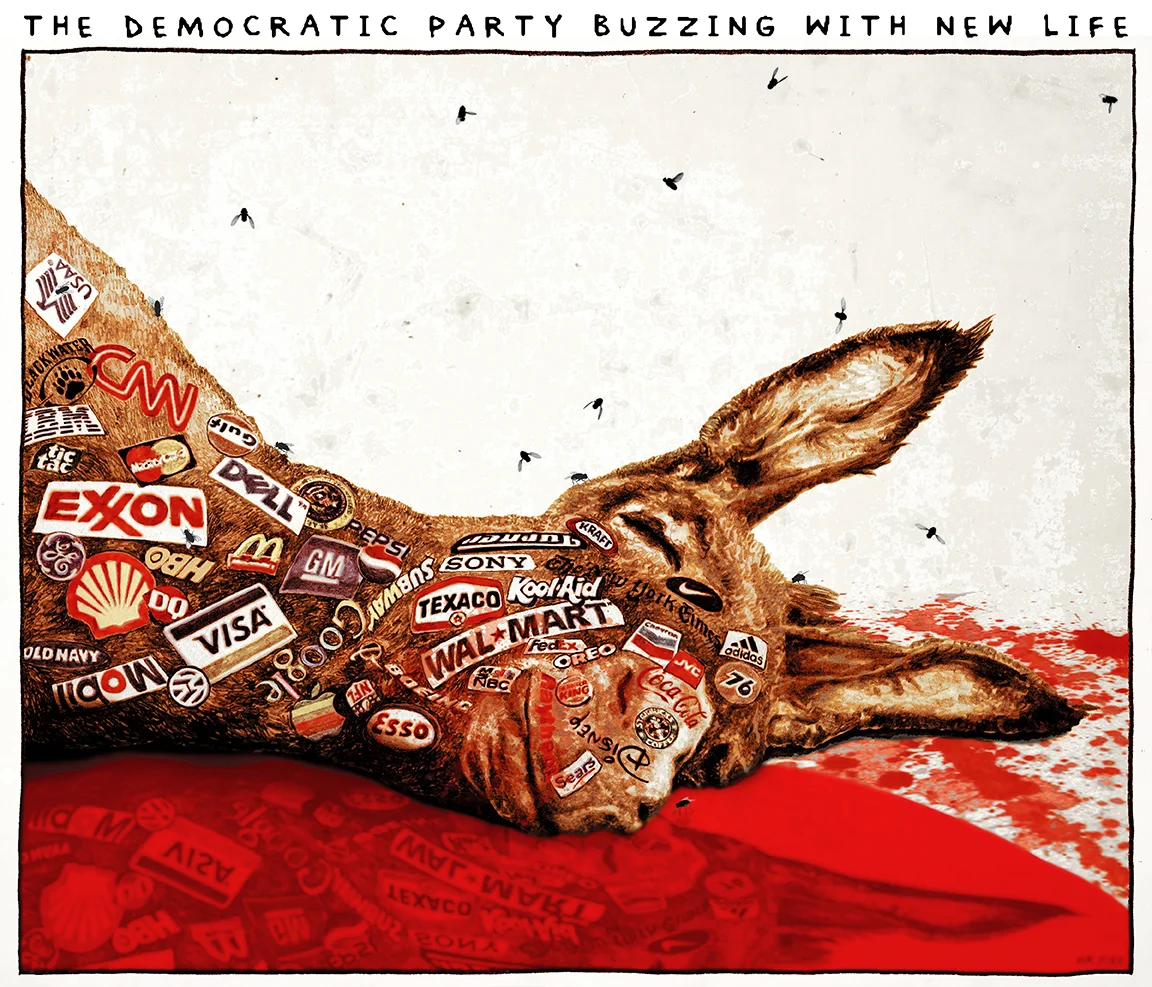
Ana Malinow, a prominent figure in the American single-payer healthcare advocacy landscape, has ignited a significant debate within the movement, highlighting a deepening ideological chasm over strategy, political alignment, and the fundamental scope of healthcare reform. A retired pediatrician who once led Physicians for a National Health Program (PNHP), the nation’s leading public interest group advocating for national health insurance in 2007, Malinow has since co-founded National Single Payer, a separate organization distinguished by its explicit political independence and an expansive definition of healthcare justice that connects domestic policy to global human rights. This divergence underscores a critical moment for the movement, as advocates grapple with incremental reforms versus a radical overhaul of the U.S. medical-industrial complex.
The Genesis of a Divide: PNHP vs. National Single Payer
For decades, Physicians for a National Health Program (PNHP) has been the intellectual and organizational backbone of the single-payer movement, largely comprised of medical professionals advocating for a Medicare-for-All system. Its work has involved extensive research, public education, and lobbying efforts, often engaging with sympathetic lawmakers, primarily within the Democratic Party. Ana Malinow’s presidency in 2007-2008 marked a period of heightened activity for PNHP, as the nation grappled with rising healthcare costs and debates leading up to the Affordable Care Act (ACA).
However, in recent years, Malinow, despite remaining a marginal member and advisor to PNHP, felt a growing imperative for a new, more uncompromising advocacy group. This led to the co-founding of National Single Payer (NSP) a couple of years ago. The core distinction, as articulated by Malinow, is stark: PNHP maintains a "tight alignment with the Democratic Party," whereas National Single Payer does not. This fundamental difference in political strategy and willingness to critique perceived allies has become a defining characteristic of NSP.
Malinow explained to Corporate Crime Reporter that while PNHP primarily comprises physicians and allied health professionals, National Single Payer aims to be a more inclusive, broad-based movement for "everyone — whether you are a health professional or not." This inclusivity extends to its core principles: "healthcare is a human right, must be free, not for profit and will be achieved through national legislation and not a state by state effort." This contrasts with PNHP’s more nuanced approach, which, while advocating for national single-payer, also supports and expends considerable effort on state-level single-payer initiatives, as seen with its Metro NYC and California chapters. This strategic difference highlights a tension between pursuing achievable, albeit fragmented, reforms and demanding a comprehensive, federally mandated system.
The Gaza Stance: A Defining Moment of "Moral Courage"
The most recent and perhaps most significant point of divergence between the two organizations, and indeed within the broader progressive advocacy landscape, centers on the ongoing conflict in Gaza. In a recent email to Corporate Crime Reporter, Malinow explicitly praised an article titled "Genocide the Non Profit Industrial Complex and the Democratic Party," stating, "It is important to call out organizations which have lacked the moral courage to speak out against the genocide in Gaza." She directly contrasted National Single Payer’s actions with PNHP’s national silence on the issue.
National Single Payer, in November 2023, issued a strong statement denouncing "the Israeli targeting of hospitals in Gaza and the U.S. complicity in the genocide." This firm stance, according to Malinow, garnered both "backlash" and "praise," indicating the polarizing nature of such an intervention. This action was followed by further statements on Iran and Venezuela, and in 2024, NSP led a delegation to Cuba to deliver medicine and study its healthcare system, signaling a broader engagement with international affairs and a critique of U.S. foreign policy. Malinow’s August 2024 article, "Finding the Moral Courage to Recognize a Genocide," further underscored her belief in the imperative for medical professional organizations to speak out against atrocities, arguing that silence equates to complicity.
This position reflects NSP’s conviction that "the violence of this medical industrial complex" is inextricably linked "to the broader machinery of empire." Malinow contends that "the same political system willing to fund wars, sanctions, occupation and genocide, also accepts this mass suffering in the United States. Violence abroad and austerity at home are part of the same ideological structure." For NSP, promoting healthcare as a human right necessitates connecting these dots, recognizing that a government pouring "trillions into the military industrial complex that devastates public healthcare systems abroad" simultaneously undermines healthcare, dignity, and life expectancy domestically. While the national PNHP organization has not issued a statement, several local chapters, including New York Metro PNHP and PNHP Bay Area, have indeed spoken out, indicating internal pressure and varying degrees of political engagement within the larger PNHP structure. However, the national body’s silence contrasts sharply with NSP’s proactive and unequivocal condemnation.
This explicit political stance, extending beyond domestic healthcare policy to international human rights and U.S. foreign policy, cost NSP some members who disagreed with the organization’s broadening mandate. However, for Malinow and NSP, it is a matter of principled consistency, arguing that "Healthcare will never become a human right until we the people confront this profit driven system that feeds on human suffering."
The "Declaration of Independence from the Medical-Industrial Complex"
Beyond the immediate political stances, National Single Payer is pushing for a more fundamental and expansive redefinition of single-payer healthcare, encapsulated in its campaign, "The Declaration of Independence from the Medical-Industrial Complex," launched to coincide with the nation’s 250th anniversary of the Declaration of Independence. This campaign goes significantly further than many existing Medicare for All proposals.
Malinow highlights a critical limitation in current legislative efforts, such as HR 3069, the prominent Medicare for All bill in Congress. While acknowledging its vital provisions — eliminating private insurance, negotiating drug prices, and providing comprehensive benefits — she points out a crucial omission: "unfortunately, it does not call for the conversion from for profit to not for profit status of the hospitals for example. It does not put the screws on not for profit health systems." This means that the healthcare delivery system remains largely in private hands, allowing entities like Optum (a UnitedHealthcare subsidiary) to control vast networks of doctors, private equity firms to run emergency rooms, and investor-owned corporations to dominate dialysis centers, hospices, and nursing homes.
Malinow argues that "when we talk about single payer, we are talking about the financing part of our healthcare system. It doesn’t address the delivery system. That’s why we think that the Medicare for All bills sitting in Congress need to be improved. Most importantly, they need to call for the conversion of the for profit delivery systems to not for profit." Without this fundamental shift, she asserts, a national single-payer financing system risks becoming "a public subsidy of this medical industrial complex," merely channeling public funds into a profit-driven private delivery structure.
This vision aligns more closely with a "national health service" model, similar to the United Kingdom’s National Health Service (NHS), where hospitals are government-owned and healthcare professionals are government employees. Historically, HR 676, a bill introduced by former Congressman John Conyers, did call for such a conversion. This more radical approach is championed by scholars like Steffie Woolhandler and David Himmelstein, who argued in "Medicare for All is Not Enough" that healthcare facilities should be owned by the communities they serve. This perspective directly addresses the paradox of "not for profit" hospitals in the U.S. that often behave like for-profit entities, driven by a system that "incentivizes that kind of profiteering."
For NSP, the goal is not merely to change how healthcare is paid for, but to fundamentally transform who controls and benefits from it. "We believe that it is time for the people to rise up, organize, take control of the healthcare system, and run it in the interest of the public instead of in the interest of profit. It’s time for comprehensive, universal, national Medicare for All, free from profit." This expansive definition positions NSP at the vanguard of a movement seeking not just universal access, but systemic economic justice within healthcare.
Critiquing "Off-Ramps" and Democratic Incrementalism
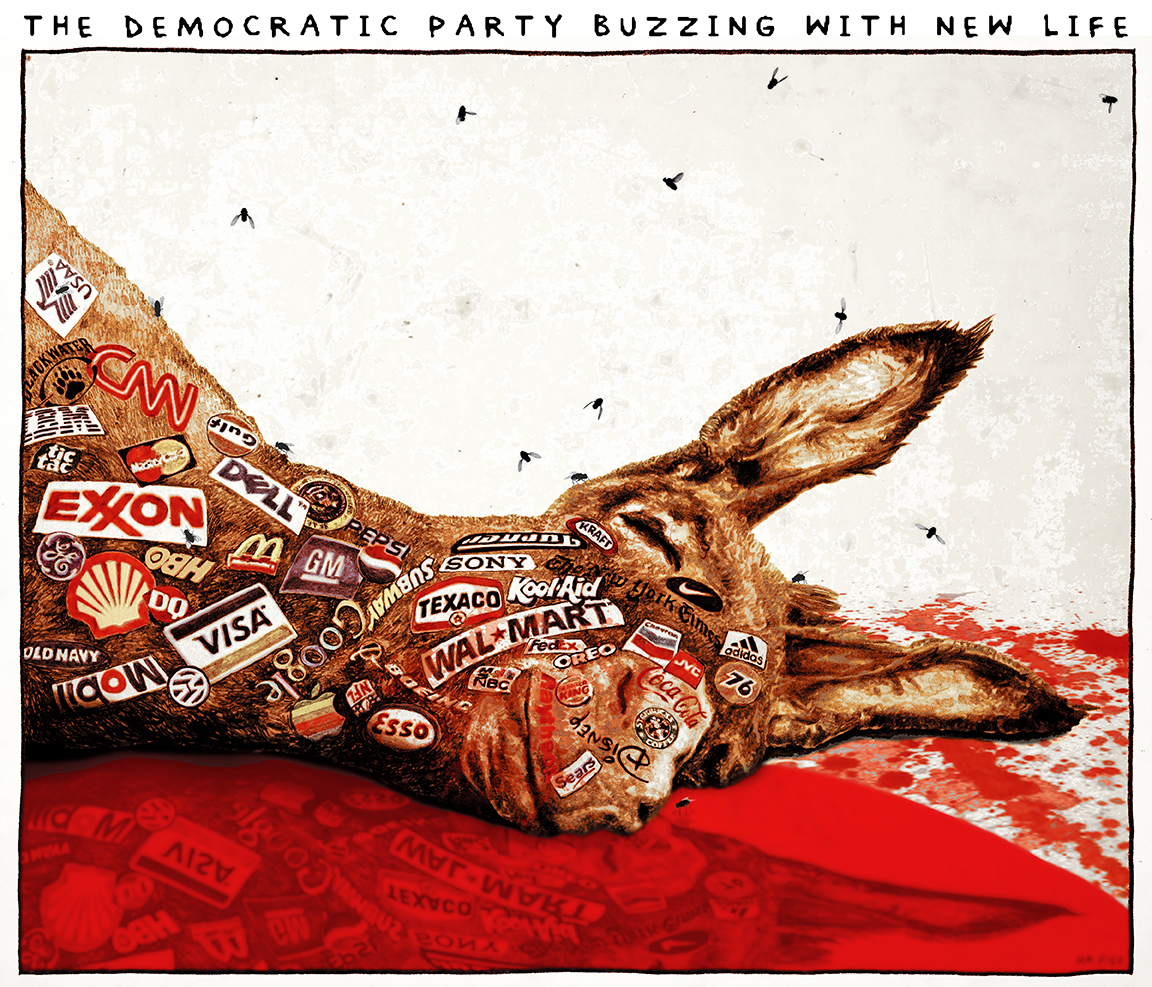
A core aspect of National Single Payer’s independent stance is its explicit critique of the Democratic Party’s approach to healthcare reform, which Malinow characterizes as offering "half-measures" and "meaningless proposals that prop up the Affordable Care Act and misleading schemes like Medicare by Choice." She sees these as "off-ramps" designed to "preserve private insurance dominance while creating the illusion of reform."
Malinow specifically targets proposals like Senator Ron Wyden’s efforts to lower health insurance costs through policy adjustments, and Wendell Potter’s "Medicare by Choice" from the Center for Health and Democracy. The latter, she argues, is "just a rerun of the public option," a concept long advocated by some Democrats but ultimately designed to coexist with, rather than replace, private insurance. "The rules are set up to make the private option succeed and the public option fail," Malinow contends. She views these as dangerous diversions that "are guaranteed to set the Medicare for All movement back another fifteen years, just like the Affordable Care Act did."
In her view, a "profit-driven system cannot be repaired with incremental fixes," a conclusion supported by "hard facts from a century of failed attempts." Instead, NSP advocates for an immediate, aggressive, and uncompromising push for genuine Medicare for All. If she were in Congress, Malinow stated she would collaborate with NSP to improve existing Medicare for All legislation by:
- Mandating the conversion of delivery systems to non-profit status.
- Ensuring a "just transition" for workers displaced from the private health insurance industry.
- Accelerating the implementation timeline, rejecting multi-year transitions.
- Excluding any public option, which she sees as a compromise that weakens the core goal.
- Including progressive tax funding mechanisms.
Furthermore, she would insist that congressional proponents of Medicare for All do more than just sign onto a bill. They must "hold hearings to draw attention to the issues," "hold town halls about it," and "advocate for it" through means like "special order speeches." This critique implicitly targets leading Democratic advocates like Senator Bernie Sanders and Representative Pramila Jayapal, suggesting their current efforts, while laudable, lack the necessary urgency, scope, and strategic force to overcome entrenched interests.
Broader Impact and the Future of Healthcare Advocacy
The emergence of National Single Payer, and Ana Malinow’s outspoken leadership, signals a growing impatience and ideological hardening within the single-payer movement. This is not merely a tactical disagreement but a fundamental debate over the movement’s identity, its relationship with political power, and the ultimate vision for healthcare in America.
The choice between aligning with a major political party, even one that nominally supports single-payer, and maintaining absolute independence carries significant implications. PNHP’s alignment with Democrats allows it to engage in traditional lobbying, provide expert testimony, and shape legislative language from within the political system. This pragmatic approach seeks to build consensus and incremental progress. However, as Malinow argues, it also risks co-optation, diluting the movement’s radical edge and accepting compromises that fall short of true systemic change.
National Single Payer, by contrast, positions itself as an external agitator, a moral compass willing to criticize all political actors and institutions that fail to meet its uncompromising standards. Its willingness to connect domestic healthcare struggles with international conflicts, and to demand a complete overhaul of the medical-industrial complex (including its delivery system), broadens the scope of its advocacy but potentially narrows its immediate political appeal. This strategy aims to build a grassroots movement capable of exerting overwhelming public pressure, rather than relying on legislative champions alone.
The debate also reflects a larger ideological tension within progressive movements: whether to push for radical transformation that risks alienating potential allies, or to work within existing structures for gradual reform. Malinow and NSP believe that "we cannot be distracted and we must seize this moment to build an uncompromising movement capable of confronting the medical industrial complex directly." This confrontational approach is intended to prevent the movement from being "derail[ed]…again" by politicians and the "non-profit industrial complex" itself, which they call out in their Declaration.
As the nation approaches the midterms and the 2028 general election, healthcare remains a perennial issue. The arguments put forth by National Single Payer force a re-evaluation of what "Medicare for All" truly means, challenging advocates and policymakers to consider not just universal coverage, but also the very structure of healthcare ownership and control. The rift highlighted by Ana Malinow underscores that for a segment of the movement, achieving healthcare as a human right demands not just a change in financing, but a declaration of independence from a profit-driven system that mirrors broader patterns of violence and exploitation, both at home and abroad.




 Yuyun Lusiyani
 Joko Widodo
 Eva Lovia
 Pevita Pearce
 admin
admin
 Lina Irawan