
 Pevita Pearce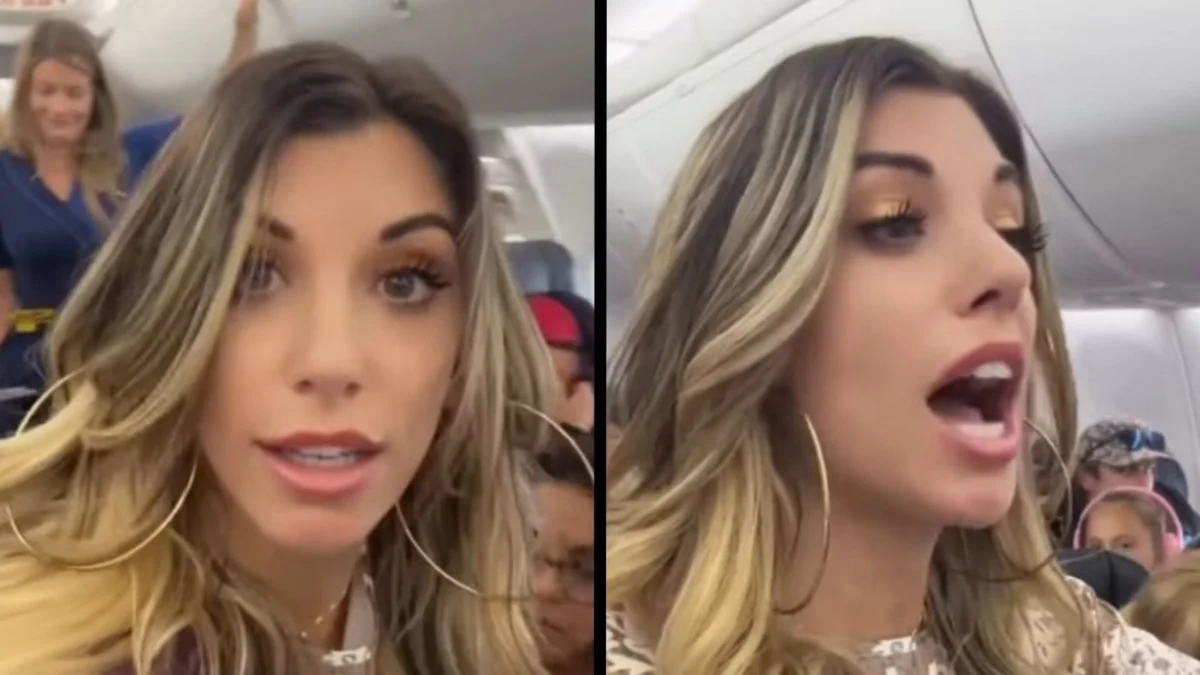
In a move that highlights the ongoing tension between individual expression and aviation safety protocols, Alaska Airlines has officially banned a prominent social media figure and evangelist following an incident at Orlando International Airport. Whitney Lynn, a TikToker known for sharing religious messages in public spaces, was removed from a flight bound for San Diego on July 30, 2024, after she began preaching to passengers during a pre-takeoff delay. The airline has since confirmed that Lynn is prohibited from flying with the carrier or its regional partners for the foreseeable future while a comprehensive internal investigation into the matter continues.
The incident occurred as Flight 1263 was stationed on the tarmac in Orlando, facing an unspecified departure delay. According to eyewitness accounts and video footage later uploaded by Lynn to her social media platforms, the evangelist stood up in the cabin to address the seated passengers. Attempting to provide comfort regarding the wait, Lynn spoke about divine timing and the potential for the delay to be a form of protection from unseen dangers. While Lynn characterized her message as "soft" and intended to be uplifting, the flight crew and several passengers reportedly viewed the unsanctioned address as a breach of cabin decorum and a potential safety concern.
Detailed Chronology of the July 30 Incident
The timeline of the event began during the boarding process at Orlando International Airport (MCO). Passengers had successfully boarded the aircraft, but the flight was soon hampered by a delay. During this period of inactivity, Whitney Lynn decided to utilize the captive audience to deliver a religious message. Standing in the aisle, she addressed the cabin, stating, "It’s kind of frustrating, right, this wait. But I want to tell you, God’s timing is perfect and God knows everything and maybe he’s sparing us from danger today."
Cabin crew members, tasked with maintaining order and ensuring that all passengers remain seated and compliant during ground operations, quickly intervened. Under Federal Aviation Administration (FAA) regulations, passengers are required to follow all crew member instructions, particularly during critical phases of ground movement or when a flight is under a delay that requires specific safety positioning.
Following her speech, Lynn was approached by Alaska Airlines staff and informed that her behavior was considered disruptive. Despite her assertions that she was merely praying and offering a positive message, she was requested to deplane. Local law enforcement officials were present as she exited the aircraft to facilitate a peaceful removal. In follow-up videos shared by Lynn, she is seen conversing with police officers and airline representatives on the jet bridge and in the terminal. During these exchanges, officials reiterated that the primary reason for her removal was the concern expressed by other passengers and the crew’s assessment that her behavior was interfering with the orderly operation of the flight.
Alaska Airlines’ Official Response and Safety Justification
In a formal statement addressing the incident, a spokesperson for Alaska Airlines emphasized that the decision to remove Lynn was rooted in safety and the comfort of the collective passenger manifest. "Our flight crew became increasingly concerned about a guest’s behavior on board the aircraft, which was also affecting other guests," the spokesperson noted. "The passenger was asked to deplane the aircraft for safety reasons."
The airline’s decision-making process is guided by its Contract of Carriage, a legal agreement between the passenger and the airline that outlines the conditions under which a person may be refused transport. Most major carriers, including Alaska Airlines, reserve the right to remove any individual whose conduct is deemed "disorderly, offensive, or abusive," or whose behavior "interferes with the crew’s ability to perform their duties."
Following the removal, Lynn received a formal notification from Alaska Airlines via email, informing her that she had been placed on a temporary ban. This ban extends not only to Alaska Airlines mainline flights but also to its sister carrier, Horizon Air, and any flights operated under the Alaska brand. The airline stated that the ban would remain in place for the "foreseeable future" as they conduct a thorough review of the incident. "We will reach out to you once again with a final decision," the airline told Lynn. "Thank you for your patience while we take the appropriate investigative steps."
The Legal and Regulatory Landscape of Passenger Conduct
The removal of Whitney Lynn occurs against a backdrop of strict federal oversight regarding passenger behavior. Since the COVID-19 pandemic, the FAA has maintained a "Zero Tolerance" policy toward unruly passengers. Under 49 U.S.C. § 41706 and § 46318, it is a federal offense to interfere with a crew member or to engage in behavior that threatens the safety of the aircraft or its occupants.
While Lynn’s actions did not involve physical violence or verbal abuse—common triggers for FAA intervention—airlines have broad discretion to manage "disruptive" behavior. In an aviation environment, any unauthorized standing or speaking that draws the attention of the entire cabin can be interpreted as a security risk, as it may mask other activities or prevent the crew from communicating essential safety information.
Legal analysts point out that while the First Amendment protects the right to free speech and religious expression in public forums, a commercial aircraft is a private environment operated by a private corporation. Consequently, the constitutional protections for free speech do not apply in the same manner as they would in a public park or a street corner. Passengers essentially waive certain expressive rights in exchange for transportation services when they agree to the airline’s terms of service.
Supporting Data: The Trend of Unruly Passenger Incidents
The incident involving Whitney Lynn is part of a broader statistical trend of passenger-related disruptions that have plagued the aviation industry over the last several years. According to FAA data, the number of unruly passenger reports spiked in 2021, reaching nearly 6,000 incidents. While that number has decreased significantly in 2023 and 2024, the rate of incidents remains higher than pre-pandemic levels.
Data suggests that delays—such as the one experienced by Flight 1263 in Orlando—are a primary catalyst for passenger friction. In 2023, the FAA recorded over 2,000 reports of unruly behavior, with approximately 20% of those leading to some form of enforcement action. Airlines have responded by increasing the frequency of permanent or long-term bans for passengers who violate safety protocols, as these bans serve as a deterrent and a means of protecting staff.
Furthermore, the rise of "influencer culture" has introduced a new variable into cabin management. There has been a documented increase in passengers performing "stunts" or creating content for social media platforms like TikTok and Instagram while in flight. Recent examples include an influencer who faced backlash for performing yoga in the middle of a narrow aisle, and another who was temporarily denied boarding due to attire that staff deemed inappropriate. These incidents often place crew members in the difficult position of having to balance customer service with the strict enforcement of safety regulations.
Impact on the Evangelist and Future Implications
Whitney Lynn, who identifies as a traveling evangelist, has been vocal about her commitment to her mission, stating that she attempts to preach on almost every flight she boards. She maintains that her intentions are purely altruistic and that she seeks to provide spiritual support to those who may be fearful of flying or stressed by travel delays. On her Instagram and TikTok profiles, she argued that her message was among the "softest" she had ever delivered and expressed surprise at the severity of the airline’s reaction.
However, the "foreseeable future" ban represents a significant hurdle for her ministry’s travel-heavy schedule. Being blacklisted by a major carrier often limits travel options, especially in regions where Alaska Airlines holds a significant market share. Moreover, information about banned passengers can sometimes be shared between carriers under specific security frameworks, although a universal "no-fly list" for unruly passengers is still a subject of legislative debate in Congress.
Broader Implications for the Aviation Industry
The resolution of this case will likely be watched closely by both civil liberties advocates and airline industry groups. It raises fundamental questions about where the line is drawn between personal religious practice and the operational requirements of a commercial flight. For Alaska Airlines, the priority remains the mitigation of risk and the prevention of any behavior that could escalate into a more significant security event.
As the airline continues its investigation, the focus will likely remain on whether Lynn’s actions specifically hindered the crew’s ability to manage the delay or if the reaction from other passengers created a "hostile" or "concerning" environment that necessitated intervention. For the broader traveling public, the incident serves as a reminder that the aircraft cabin is a highly regulated space where the authority of the captain and crew is absolute, and where the collective safety of the manifest takes precedence over individual expression.
The final decision by Alaska Airlines regarding Lynn’s permanent status on their flights will signal how the carrier intends to handle similar non-violent but disruptive behaviors in the future. As social media continues to encourage public performances for digital engagement, airlines are increasingly finding themselves as the arbiters of acceptable behavior in the skies.



 Yuyun Lusiyani
 Joko Widodo
 Eva Lovia
 admin
admin
 Lina Irawan