
 Pevita Pearce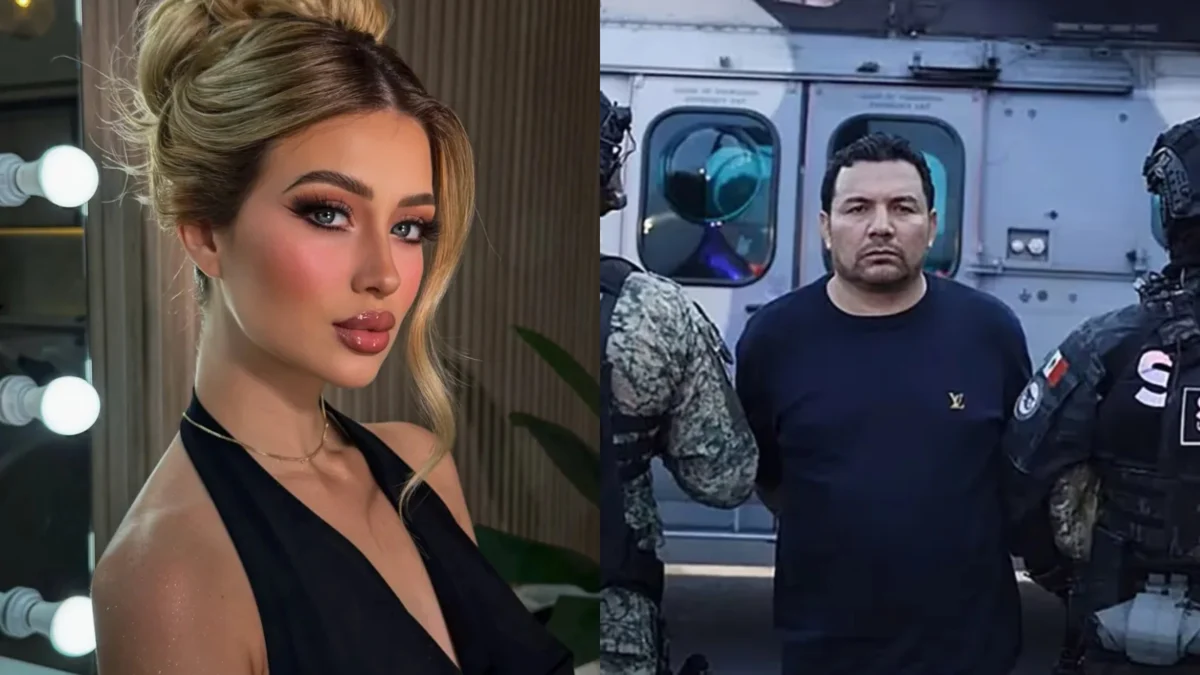
The Mexican federal government achieved a significant breakthrough in its ongoing campaign against organized crime following the successful apprehension of Ramón Ángel Álvarez Ayala, a high-ranking figure within the criminal underworld of Jalisco. Known by the alias “El R-1,” Álvarez Ayala was captured during a high-stakes federal operation conducted in Atotonilco El Alto, Jalisco, on July 30. His arrest marks a pivotal moment for law enforcement, as he is allegedly the leader of "Los Rs," a notorious and violent enforcement cell operating as a subsidiary of the Jalisco New Generation Cartel (CJNG). Beyond his standing in the cartel hierarchy, Álvarez Ayala is the primary suspect in coordinating a series of high-profile homicides that have shocked the nation, including the cold-blooded murder of 23-year-old TikTok influencer Valeria Márquez and the targeted assassination of a prominent municipal leader.
The operation to detain Álvarez Ayala was not without conflict. Reports from the Mexican Secretariat of Security and Citizen Protection indicate that federal forces encountered heavy resistance during the raid. Members of the suspect’s private security detail reportedly opened fire on the arriving officers, initiating a brief but intense skirmish. In the ensuing exchange, one of the alleged attackers was killed, while federal agents managed to neutralize the remaining threats and take "El R-1" into custody without further loss of life among the authorities. The precision of the operation reflects the heightened focus of the Mexican government on dismantling the leadership structures of the CJNG, which remains one of the most powerful and aggressive criminal organizations in the Western Hemisphere.
The Targeted Execution of Valeria Márquez
The charges against Álvarez Ayala are particularly harrowing due to the involvement of his immediate family and the public nature of the crimes. Central to the investigation is the May 2025 murder of Valeria Márquez, a popular social media personality known for her beauty and lifestyle content. Márquez was broadcasting live to thousands of viewers on TikTok from her beauty salon in Zapopan, Jalisco, when the unthinkable occurred. The broadcast captured the final moments of her life, providing a chilling record of a planned execution.
According to investigative reports, a man disguised as a delivery driver entered the salon while Márquez was interacting with her digital audience. In the minutes leading up to the attack, Márquez had expressed a sense of unease to her viewers, noting the presence of a suspicious delivery that she had not requested. "Maybe they were going to kill me or something," she remarked during the stream, a comment that would later prove to be a tragic foreshadowing. The gunman, after confirming her identity, produced a firearm and shot her multiple times at close range before fleeing the scene. The brutality of the act was further punctuated by a subsequent event: a man suspected of being the assassin returned to the murder scene to leave a bouquet of red roses and a cryptic note, a gesture often associated with the twisted "romance" and territorial marking of cartel-related violence.
Motive and the Involvement of the Cartel Boss’s Son
The investigation into Márquez’s death quickly pivoted from a random act of violence to a calculated "honor killing" orchestrated at the highest levels of the Los Rs cell. Mexican Public Security Secretary Omar García Harfuch revealed that the primary catalyst for the murder was a personal vendetta involving Álvarez Ayala’s son, Francisco. Francisco had previously been in a romantic relationship with Márquez, a union that reportedly ended in a bitter and public separation.
According to official statements, Francisco had subjected Márquez to a series of escalating threats following their breakup. When these intimidations failed to reconcile the relationship or silence her, Francisco allegedly petitioned his father, "El R-1," to use his criminal infrastructure to eliminate her. Under the direction of Álvarez Ayala, the Los Rs cell provided the logistics, surveillance, and personnel necessary to carry out the hit. While the elder Álvarez Ayala is now in custody, both Francisco and the gunman remain at large, with federal authorities launching a nationwide manhunt to bring them to justice.
The Assassination of Mayor Carlos Manzo
The criminal portfolio of Ramón Ángel Álvarez Ayala extends far beyond personal vendettas. He is also the prime suspect in the November 2025 assassination of Carlos Manzo, the Mayor of Uruapan. This killing was a direct assault on the Mexican state and highlighted the cartel’s willingness to use extreme violence to influence local governance and secure territorial control.
Investigators allege that Álvarez Ayala not only ordered the hit but also provided the financial resources to execute it. The assassination of Mayor Manzo was a sophisticated operation that signaled the CJNG’s dominance in the Michoacán-Jalisco corridor. By removing a public official who was perceived as an obstacle to the cartel’s interests, the Los Rs cell sought to consolidate its power over local commerce and illicit trafficking routes. The link between the Márquez murder and the Manzo assassination underscores the multifaceted threat posed by "El R-1," whose operations bridged the gap between domestic violence and political terrorism.

The Rise of Los Rs and the CJNG Influence
To understand the significance of Álvarez Ayala’s arrest, one must examine the role of Los Rs within the broader context of the Jalisco New Generation Cartel. The CJNG, led by Nemesio Oseguera Cervantes, better known as "El Mencho," has gained a reputation for its paramilitary-style tactics and its use of social media to project power. Los Rs serves as one of the cartel’s specialized "armed wings," tasked with carrying out high-value assassinations, managing local extortion rackets, and neutralizing rivals.
Under the leadership of "El R-1," Los Rs expanded its influence in the Los Altos region of Jalisco. This area is a critical transit point for both legal agricultural products and illegal narcotics. The arrest of Álvarez Ayala is expected to disrupt the command and control of this specific cell, though experts warn that the vacuum left by his detention could lead to a surge in internal power struggles or retaliatory strikes against local security forces.
A Growing Pattern of Violence Against Online Creators
The death of Valeria Márquez is not an isolated incident but rather part of a disturbing trend of violence targeting influencers, streamers, and digital activists across Latin America. As social media personalities gain significant public influence, they often find themselves in the crosshairs of organized crime, either through unwanted romantic associations, extortion attempts, or their own activism.
The context of this violence is broad:
- Sabrina Durán Montero: In 2023, the Chilean TikToker known as the “Narco Queen” was gunned down by masked assassins while on her way to a nail salon. Her death was attributed to her perceived associations with rival criminal factions.
- Alex Serna: In July 2025, the Mexican environmental influencer was found dead with signs of torture. Serna had been an outspoken critic of illegal logging and land seizure, activities often controlled by cartels.
- Honduran Teen Streamer: Also in July 2025, a 15-year-old TikToker was kidnapped and later found dead in trash bags, illustrating the vulnerability of even the youngest digital creators in regions plagued by gang violence.
The visibility that social media provides is a double-edged sword. While it allows individuals like Márquez to build businesses and connect with audiences, it also provides criminal organizations with real-time intelligence on their location and activities. The livestreamed nature of Márquez’s murder serves as a grim testament to the lack of safety for public figures in high-conflict zones.
Analysis of Implications and Legal Future
The arrest of Ramón Ángel Álvarez Ayala is a tactical victory for Secretary Omar García Harfuch and the administration. It demonstrates a commitment to pursuing cartel leaders who engage in high-profile violence that garners international attention. However, the legal road ahead remains complex. Prosecutors must now present a case that links "El R-1" directly to the orders given for both the Márquez and Manzo murders, likely relying on intercepted communications and testimony from within the Los Rs organization.
The security implications for the region are immediate. Jalisco remains the epicenter of the CJNG’s operations, and the state has seen some of the highest rates of disappearances and homicides in Mexico. The arrest of a figure like "El R-1" often triggers "narcobloqueos" (cartel-led road blocks) or urban skirmishes as the organization reacts to the loss of a leader. Federal forces remain on high alert in Atotonilco El Alto and surrounding municipalities to prevent a violent backlash.
Furthermore, the case highlights the intersection of gender-based violence (femicide) and organized crime. The murder of Valeria Márquez, motivated by a failed relationship with a cartel member’s son, illustrates how the machinery of organized crime is often co-opted for personal grievances, making women particularly vulnerable when they enter the social circles of the "narco-elite."
As the investigation continues, the focus remains on the capture of Francisco and the unidentified gunman. For the family of Valeria Márquez and the constituents of the late Mayor Carlos Manzo, the arrest of "El R-1" provides a glimmer of hope for justice, yet it serves as a stark reminder of the pervasive and lethal influence of cartels in modern Mexican life. The government’s ability to secure a conviction will be a critical test of the judicial system’s resilience against the intimidation and corruption that often accompany such high-stakes cases.




 Yuyun Lusiyani
 Joko Widodo
 Eva Lovia
 admin
admin
 Lina Irawan