
 Yuyun Lusiyani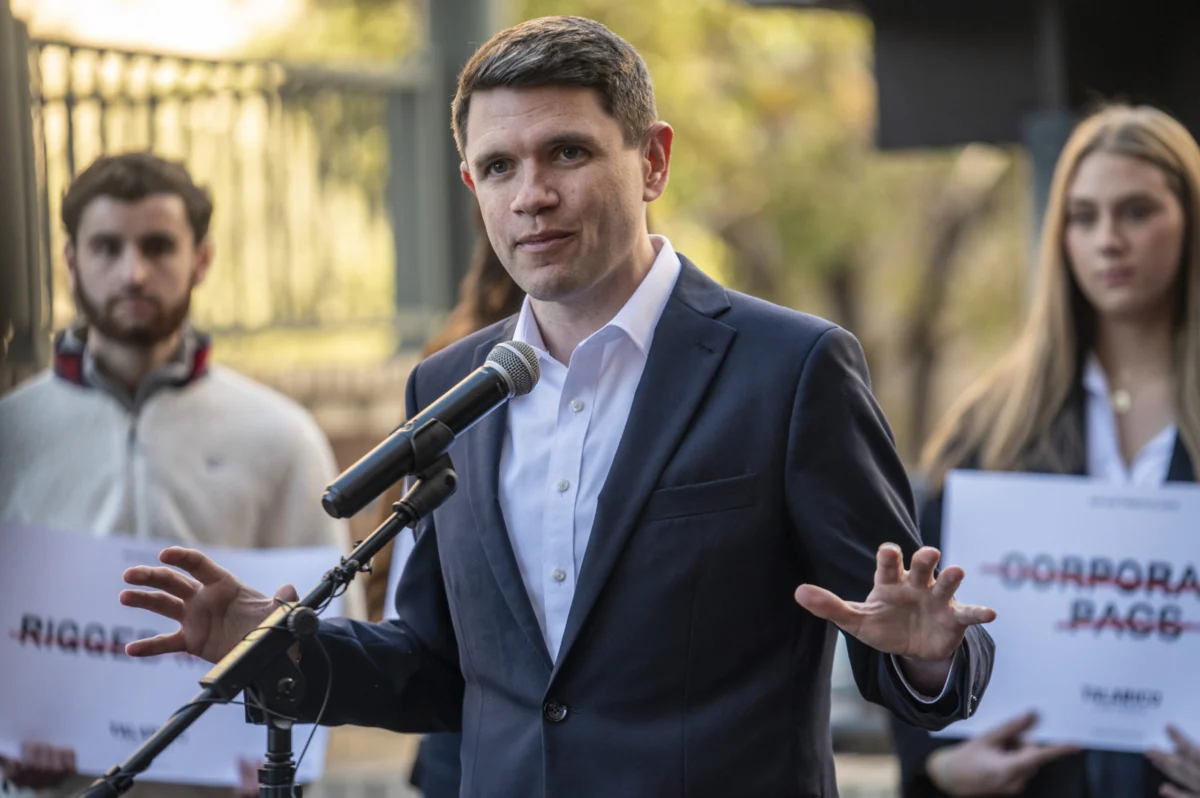
A significant political storm is brewing in Texas as Democratic State Representative James Talarico, a challenger for a U.S. Senate seat, has publicly accused incumbent Attorney General Ken Paxton of voter fraud, turning Paxton’s signature campaign issue directly against him. The allegations, rooted in an investigative report by ProPublica and The Texas Tribune, claim that Paxton illegally voted in at least six elections from an address where he no longer resided, a charge that carries profound irony given his aggressive pursuit of voter fraud cases across the state. This controversy not only casts a shadow over Paxton’s political future but also reignites long-standing debates about election integrity, government accountability, and the application of law to high-ranking officials.
The Genesis of the Allegations: An Investigative Report
The accusations against Attorney General Ken Paxton first gained widespread public attention following a detailed investigation published by ProPublica and The Texas Tribune. The joint report meticulously laid out the timeline and circumstances surrounding Paxton’s alleged voting irregularities. According to the investigation, Paxton moved out of the home he shared with his wife, State Senator Angela Paxton, in Collin County prior to 2024, a period marked by widely reported marital difficulties and the initiation of divorce proceedings. Despite this change in primary residence, Paxton allegedly continued to cast ballots using the Collin County address, which was no longer his primary domicile. This pattern of voting from a non-resident address reportedly spanned at least six different elections, including a pivotal March Republican primary.
Texas election law is explicit regarding voter residency. To legally vote in a specific precinct, an individual must be a resident of that precinct. While the law does allow for temporary absences—such as for college students or military personnel who intend to return to their primary residence—election lawyers and experts consulted by the news organizations stated that Paxton’s situation likely does not qualify for such an exception. Given the public nature and acrimonious details of his divorce, which suggest a permanent separation from the shared marital home, the legal argument that he intended to return to that address would be exceptionally difficult to sustain. These experts opined that Paxton’s actions, if proven, could constitute a violation of state election law.
Democratic Challenger Seizes on the Irony
State Representative James Talarico, who has declared his intention to challenge for a U.S. Senate seat, wasted no time in leveraging the allegations against his potential opponent. Speaking at a campaign event in Houston, Talarico directly confronted Paxton’s record on election integrity. "As our state’s attorney general, Ken Paxton has gone on a voter fraud witch hunt," Talarico declared, highlighting the perceived hypocrisy. "Turns out, he was committing voter fraud the whole time, voting illegally in six elections in a row from the wrong address." Talarico’s remarks underscored the central tenet of his attack: that Paxton, a self-proclaimed champion against voter fraud, has allegedly engaged in the very conduct he so zealously prosecutes in others.
The Democratic Party, both at the state and local levels, quickly amplified Talarico’s message. The Collin County Democratic Party, specifically, took formal action by filing a complaint with the Texas Secretary of State’s office. This complaint urged the state’s chief election officer to initiate a thorough investigation into Paxton’s voting practices. The filing of a formal complaint marks a critical procedural step, potentially triggering a state-level inquiry into the Attorney General’s conduct and escalating the political confrontation into a legal challenge.
Paxton’s Evasive Responses and Political Counter-Attacks
In the face of these escalating allegations, Attorney General Ken Paxton has adopted a strategy of stonewalling and deflection. He has consistently refused to directly address questions from news organizations regarding his voter registration and residency. During a rare news conference, which he convened primarily to tout the endorsement of nearly two dozen sheriffs, Paxton pointedly steered clear of the voter fraud accusations. When pressed by a political writer from The Dallas Morning News about why he voted in Collin County, Paxton shook his head, and a campaign aide quickly intervened, stating, "We’re just going to answer questions on law enforcement today." This incident vividly illustrated the campaign’s deliberate attempt to control the narrative and avoid the politically damaging topic.
Instead of engaging with the allegations, Paxton pivoted to attacking Talarico, labeling him as "soft on crime." Talarico promptly refuted this charge at his own news conference, asserting his legislative record of voting for billions of dollars in law enforcement funding. This exchange highlights the common tactic of diverting attention from inconvenient truths by launching counter-accusations, yet it did little to quell the mounting questions surrounding Paxton’s voting record. Both Paxton’s office and his campaign have maintained their silence, declining to respond to further inquiries from ProPublica, The Texas Tribune, or other media outlets regarding the voter fraud claims or Talarico’s comments.
A Pattern of Legal Scrutiny and Political Resilience
The current voter fraud allegations are not an isolated incident but rather the latest in a long series of legal and ethical challenges that have plagued Ken Paxton throughout his political career. For nearly a decade, Paxton has been under felony indictment for securities fraud, charges that date back to 2015 and remain unresolved. More recently, in 2023, he faced impeachment by the Texas House of Representatives on charges of bribery, corruption, and abuse of public trust, stemming from allegations made by former top aides who accused him of using his office to benefit a wealthy donor. Although the state Senate ultimately voted to acquit him, the impeachment proceedings laid bare a deeply troubling pattern of alleged misconduct and ethical breaches.
Political science professors have been quick to draw parallels between Paxton’s past and present troubles. Cal Jillson, a political science professor at Southern Methodist University, noted that the voter fraud allegations resonate with the public because they reinforce a long-standing perception among critics that Paxton has consistently used his office for personal gain and has a propensity for "playing fast and loose with a law you must be familiar with as attorney general." This history of legal challenges, even those he has managed to "slip out of," contributes to a public narrative that frames the current voter fraud accusations not as an anomaly, but as another manifestation of a pattern of behavior.
This established pattern of operating at the edge of or beyond legal boundaries is critical context for understanding the potential impact of the current allegations. Voters in Texas, even if only vaguely aware of the specifics of each case, are likely familiar with the general narrative of Paxton as a politician frequently embroiled in legal controversy. For a public official whose office is tasked with upholding the law, a consistent record of alleged legal transgressions, particularly those pertaining to the very integrity of the electoral process, can significantly erode public trust.
The Murky Path of Investigation: Conflicts of Interest and Slow-Walking Concerns
The complaint filed against Ken Paxton faces a complex and potentially challenging path forward. Texas state law mandates that the Secretary of State "promptly" refer complaints to the Attorney General’s office if there is "reasonable cause to suspect that criminal conduct occurred." This presents an immediate and significant conflict of interest: the Attorney General’s office would be tasked with investigating its own chief. The law makes no specific provision for such a scenario, raising questions about the impartiality and perceived fairness of any internal investigation.
Further complicating matters is the recent transition in the Secretary of State’s office. Jane Nelson, who was in office when the complaint was filed, concluded her term shortly thereafter. Governor Greg Abbott subsequently appointed Robert Howden, one of his senior advisers, as her replacement. While the Secretary of State’s office has stated that the complaint "remains under review by one of our staff attorneys," the change in leadership introduces a new dynamic and potential delays. The office has, thus far, continued to decline specific questions from reporters regarding the investigation.
Political observers like Jon Taylor, a political science professor at the University of Texas at San Antonio, have voiced concerns about the Republican-led state government’s apparent reluctance to aggressively pursue the investigation. Taylor suggests that the silence from state agencies could indicate an effort to "slow-walk" the inquiry, a stance that he argues is difficult to reconcile with the frequent rhetoric from Paxton and the Secretary of State’s office emphasizing the paramount importance of securing Texas elections. "You push the idea that you’re going to be really tough on election wrongdoing, and yet here you are with allegations in which you seem to be uninterested in pursuing," Taylor commented, calling the situation "rank hypocrisy."
The lack of clarity regarding whether the Attorney General’s office has officially received the complaint, or whether it would consider appointing a special prosecutor to ensure an independent investigation, only deepens these concerns. Without a clear commitment to an impartial process, the perception of a double standard—where ordinary citizens face swift prosecution for alleged voter fraud while high-ranking officials are seemingly shielded—could further undermine public confidence in Texas’s election system and its enforcement mechanisms.
Broader Implications for Texas Politics and Election Integrity
The allegations against Ken Paxton carry significant implications for the future of Texas politics, particularly concerning the U.S. Senate race and the broader discourse on election integrity. Should Paxton pursue a bid for the U.S. Senate, these voter fraud accusations would undoubtedly become a central theme for his opponents, both in a potential Republican primary and in the general election. Democrats, led by figures like Talarico, are poised to relentlessly highlight the perceived hypocrisy, aiming to paint Paxton as unfit for higher office due to his alleged disregard for the very laws he enforces.
The controversy also directly challenges the narrative aggressively promoted by Paxton and many other Texas Republicans regarding widespread voter fraud. For years, Paxton’s office has invested significant resources in investigating and prosecuting alleged voter irregularities, often citing it as a critical threat to democratic processes. The very low number of actual convictions for significant voter fraud, however, has often led critics to characterize these efforts as politically motivated "witch hunts" rather than substantive responses to widespread issues. Now, with the state’s chief law enforcement officer facing similar allegations, the entire premise of that narrative is called into question.
The credibility of Texas’s election integrity efforts could be severely undermined if the state government appears unwilling to thoroughly investigate allegations against one of its most powerful officials. This could fuel cynicism among voters and provide ammunition to those who argue that "election integrity" is selectively applied. The principle of equal justice under the law is paramount, and any perception that officials are exempt from the standards applied to citizens can have lasting negative effects on the public’s trust in governance.
Looking ahead, the resolution of the complaint against Paxton will be closely watched. Potential outcomes range from a dismissal of the complaint, a referral to a special prosecutor, or even the initiation of formal charges, depending on the findings of any investigation. The political fallout, regardless of the legal outcome, is likely to be substantial, influencing public opinion, shaping campaign strategies, and potentially altering the landscape of upcoming elections in Texas. The allegations against Ken Paxton serve as a potent reminder that in the volatile arena of Texas politics, the pursuit of power often intersects with the complexities of law and public trust.


 Joko Widodo
 Eva Lovia
 Pevita Pearce
 admin
admin
 Lina Irawan