
 Yuyun Lusiyani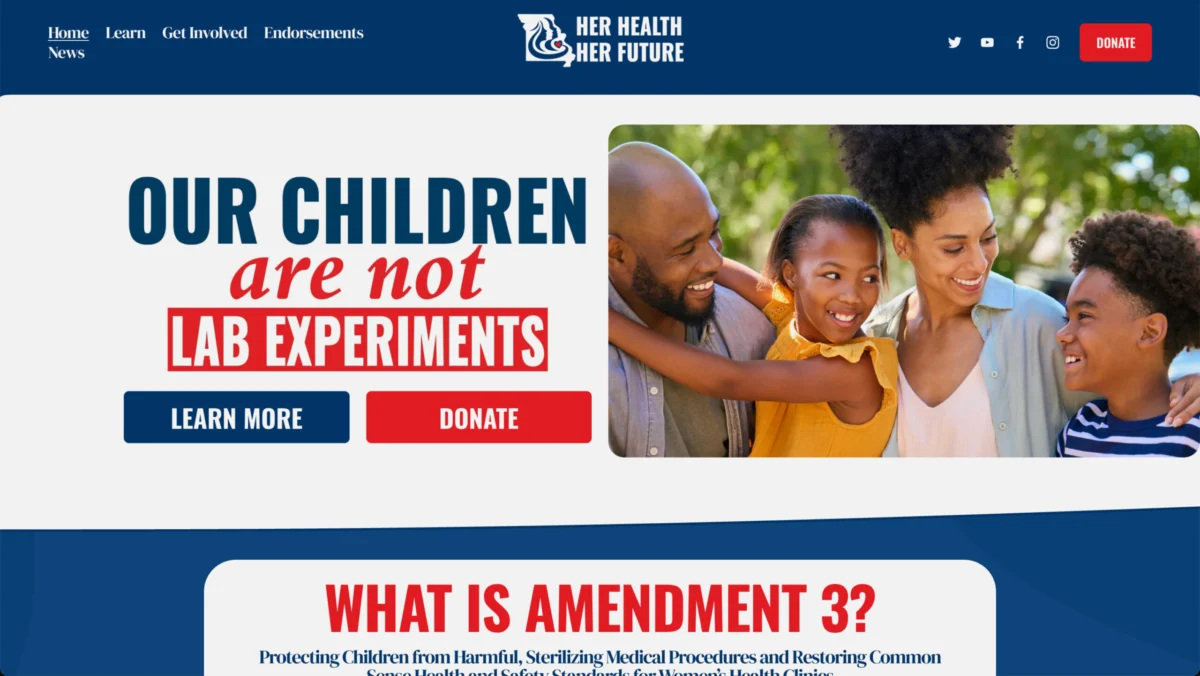
Two years after Missouri voters decisively enshrined reproductive rights in their state constitution, the Republican-dominated legislature and state officials are making a renewed and strategically bundled attempt to reverse that decision. The upcoming November ballot will feature a new measure, also designated Amendment 3, which seeks to restore a near-total abortion ban while simultaneously prohibiting gender transition care for minors, much of which is already restricted by state law. This move represents the latest chapter in a protracted battle between a powerful GOP supermajority and a populace that has repeatedly used the direct democracy of ballot initiatives to enact policies often opposed by their elected representatives.
The 2024 Precedent: Voters Affirm Reproductive Freedom
The national landscape of abortion access was fundamentally altered in June 2022 when the U.S. Supreme Court, in Dobbs v. Jackson Women’s Health Organization, overturned Roe v. Wade, eliminating the constitutional right to abortion. Missouri, like many conservative states, had a "trigger law" in place, which immediately activated a near-total ban on abortion, with only narrow exceptions for medical emergencies that threaten the pregnant person’s life, but not for rape or incest. This swift implementation plunged the state into a new era of restricted reproductive healthcare, effectively shuttering all but one abortion clinic in the state and severely limiting access for millions of residents.
In response to this legislative action, abortion rights advocates in Missouri launched an initiative petition campaign to bypass the legislature and put the question directly to the voters. This effort culminated in a ballot measure in 2024, also known as Amendment 3 at the time, designed to enshrine reproductive rights, including abortion access up to fetal viability, into the state constitution. The campaign faced fierce opposition, with opponents resorting to highly controversial tactics. They falsely claimed that the amendment would allow gender transition surgeries for minors, despite the language of the initiative clearly not supporting such an interpretation. These misleading narratives were widely disseminated in an attempt to sway public opinion and sow confusion among voters.
Despite these concerted efforts to misinform, Missouri voters ultimately approved the 2024 Amendment 3. The measure passed with a margin of 51.6% to 48.4%, a clear albeit narrow victory for reproductive rights proponents. This outcome overturned the near-total abortion ban that had been enacted by Missouri’s GOP-dominated legislature following the Dobbs decision. The 2024 vote was hailed as a significant triumph for direct democracy and a powerful testament to the will of the people in a state often perceived as deeply conservative. It demonstrated that even in a red state with a Republican supermajority, citizens could directly influence policy on contentious social issues when given the chance.
The New Offensive: November’s Amendment 3 and the "Ballot Candy" Strategy
Undeterred by their previous defeat, Republican leaders in Missouri have moved quickly to place a new amendment on the November ballot, confusingly also labeled Amendment 3. This new initiative is a stark attempt to roll back the reproductive rights affirmed by voters just two years prior. The core objective of this latest Amendment 3 is twofold: first, to restore Missouri’s abortion ban, albeit with slightly expanded limited exceptions for rape, incest, medical emergencies, and fetal anomalies; and second, to constitutionally prohibit gender transition care for minors.
Critics have swiftly dubbed the inclusion of gender transition care restrictions as "ballot candy" – a cynical tactic designed to make an otherwise unpopular proposal more palatable to voters. This strategy is particularly noteworthy because, as of August 2023, Missouri already has state laws in place that ban gender transition surgeries for minors and prohibit new prescriptions of puberty blockers and hormones for gender transition until August 2027. The proposed constitutional amendment would essentially codify these restrictions, making them permanent and more difficult to overturn in the future, removing the existing expiration date on some aspects of the ban.
The bundling of these two distinct issues – abortion rights and gender care for minors – is a key aspect of the proponents’ strategy. The scope and impact of the two provisions differ enormously. Repealing constitutionally protected reproductive rights would profoundly affect the healthcare options available to approximately 6.3 million people in Missouri, a broad swath of the state’s population. In contrast, restrictions on gender transition care, while deeply impactful for those affected, concern a relatively small number of minors receiving highly specialized medical treatment. This stark difference in scale suggests a deliberate effort to leverage public sentiment on one issue to achieve a desired outcome on another.
GOP’s Broader Struggle with Direct Democracy
For the Missouri GOP, the recurring need to re-litigate voter-approved policies has become a frustrating pattern, reminiscent of "Groundhog Day." Despite holding a supermajority in both chambers of the legislature and controlling every statewide office, Republican leaders have frequently found themselves at odds with the electorate when citizens bypass the legislative process through initiative petitions. This mechanism allows ordinary citizens, by gathering enough signatures, to place proposals directly on the ballot, often leading to outcomes that Republican leaders vociferously oppose.
Over the past decade, Missouri voters have leveraged this power to enact a series of progressive policies, consistently defying the legislative agenda of the Republican supermajority. These include expanding Medicaid, legalizing recreational marijuana, raising the minimum wage, and, most recently, restoring abortion rights. Each of these measures was passed by popular vote, often against the explicit wishes and campaigns funded by the state’s Republican establishment.
The disconnect between the legislative priorities and public sentiment reached a new level of electoral humiliation for Republican leaders just this month. Voters overwhelmingly rejected two significant legislative-backed proposals. More than 80% of voters rejected an attempt by the legislature to make it nearly impossible for citizens to amend the state constitution, a move widely seen as an effort to curb the power of initiative petitions. Furthermore, Governor Mike Kehoe’s plan to phase out the state income tax was met with even greater opposition, with more than 83% of voters casting a "no" vote.
Ken Warren, a professor emeritus of political science at Saint Louis University and associate director of the SLU/YouGov Poll, articulated this dynamic concisely, stating that Missouri Republicans have become "drunk with power." He elaborated, "Because they control everything, they think they can do what they want – and they can’t." This observation underscores the unique political landscape in Missouri, where a dominant political party frequently finds its agenda thwarted by the direct will of the people.
Campaign Tactics and Messaging: The Focus on Children
The campaign supporting the new Amendment 3, prominently featuring the political action committee "Her Health, Her Future," whose treasurer is Missouri first lady Claudia Kehoe, has adopted a highly emotive messaging strategy. Rather than explicitly stating that the amendment would repeal the constitutional right to abortion approved by Missourians two years ago, their messaging focuses almost exclusively on "protecting children." A new billboard in the St. Louis suburbs urges voters to "ban transgender surgeries for minors," sidestepping the abortion implications entirely.
The "Her Health, Her Future" website prominently declares, "OUR CHILDREN are not LAB EXPERIMENTS." It claims that Amendment 3 would shield children from "harmful, sterilizing medical procedures" and restore "common sense health and safety standards" for women’s health clinics. This language strategically frames the amendment as a protective measure for minors, appealing to parental concerns, while subtly linking it to "women’s health" without detailing the extent of abortion restrictions.
When ProPublica submitted requests for comment to the governor’s office, a spokesperson defended the amendment using much of this same language. The response emphasized protecting children from "sex-change procedures," safeguarding women, and restoring the state’s power to "regulate" abortion providers. Crucially, the spokesperson’s response did not acknowledge that Amendment 3 would repeal the constitutional reproductive rights Missourians approved in 2024 and replace them with an abortion ban that contains only limited exceptions. This deliberate omission reinforces the perception that proponents are attempting to obscure the amendment’s true impact on abortion access.

Claudia Kehoe herself, in a written endorsement posted on the PAC’s website, characterized the amendment as "a critical step toward strengthening our pro-life protections and safeguarding our state’s future." This statement, while aligned with the "pro-life" stance, also avoids direct mention of overturning a voter-approved constitutional right.
Republican Representative Brian Seitz, a Branson Republican who guided the amendment through the House, denied that supporters were attempting to trick voters. He argued that gender-affirming treatment is inherently a reproductive issue because some procedures could potentially affect a minor’s ability to have children later in life. Seitz also disputed the notion that Missourians knowingly approved abortion rights through fetal viability in 2024, contending that voters were primarily seeking exceptions for rape, incest, medical emergencies, and fetal anomalies, not what he termed "abortion on demand." He asserted that the new amendment better reflects the voters’ true intentions.
On the opposing side, a formidable coalition of groups under the banner "Stop the Ban" has mobilized to counter the Republican effort. They have raised over $5 million, including a substantial $1.25 million contribution from former New York City Mayor Michael Bloomberg, to educate voters on the full implications of the amendment and persuade them to reject it. State Senator Raychel Proudie, a Democrat from Ferguson, criticized the Republican approach, stating, "Republicans are always moving a goalpost to sort of get their way, and it is my hope that actual patriots are growing tired of it. You shouldn’t have to do this if what you’re planning is righteous and in the best interest of people." This highlights the frustration among opponents regarding what they perceive as a manipulative and undemocratic process.
The Controversial Battle Over Ballot Language
Adding another layer of complexity and controversy to this election cycle has been the fierce legal battle over the official ballot summary presented to voters. The initial summary drafted by lawmakers was widely criticized for being intentionally misleading. It failed to inform voters that the new Amendment 3 would repeal the reproductive rights they had approved just two years earlier. Instead, it focused on phrases like "guarantee access" to emergency care, "ensure women’s safety during abortions," and "protect children from gender transition." The summary also mentioned exceptions for rape and incest but omitted the crucial detail that these exceptions would apply only during the first 12 weeks of pregnancy.
Michael Wolff, a former chief justice of the Missouri Supreme Court who is advising the campaign against the amendment, characterized the original language as "intended to deceive people into thinking that they were going to protect women having abortions." He further asserted, "If you just flat-out tell them that you’re going to repeal nearly all of the protection for reproductive health, the people would vote no."
A judge initially ruled the legislature’s summary unfair and ordered it rewritten. Subsequently, Republican Secretary of State Denny Hoskins, a former state legislator who had introduced a measure that became part of the 2023 law restricting gender transition care and has publicly endorsed Amendment 3, submitted his revised language. However, a state appeals court found Hoskins’ language still failed to adequately explain the amendment’s true effects. The appeals court took the extraordinary step of rewriting the summary itself, ensuring that it would lead with the explicit fact that the measure would "repeal the 2024 voter-approved amendment providing reproductive healthcare rights, including abortion through fetal viability." This judicial intervention underscored the profound concern over transparency and voter education.
In an interview, Secretary Hoskins defended his initial choice to use the word "amend" rather than "repeal," arguing it was more accurate. When questioned about how his public endorsement of the new Amendment 3 aligned with his official duty to write neutral ballot language, Hoskins stated that his anti-abortion stance was well-known among Missouri voters. "I can’t all of a sudden erase my conservative views of the past 16 years in the Missouri Legislature," he remarked, highlighting the tension between personal conviction and official impartiality.
The intervention by the courts in Missouri’s ballot language is hardly an isolated incident. Over Hoskins’ first 1.5 years in office, courts have rejected or rewritten five ballot summaries from his office concerning various issues, including abortion, education, the initiative petition process, and a referendum on the state’s newly gerrymandered congressional map. Hoskins attributes these rulings to differences of opinion over what constitutes fair and accurate language, noting that appellate courts have sometimes rejected revisions made or approved by lower courts.
Beyond language disputes, Hoskins has also unilaterally blocked two other citizen-led measures from reaching the November ballot. He rejected a proposed constitutional amendment aimed at making it harder for lawmakers to alter measures approved by voters, deeming it unconstitutional. Additionally, he refused to certify a referendum on Missouri’s new congressional map, which was drawn at President Donald Trump’s urging to help Republicans gain another U.S. House seat, declaring that putting a congressional map to a public vote would be unconstitutional. While circuit court judges recently ruled in favor of Hoskins in both these cases, upholding his authority to block the amendment based on single-subject rules and affirming that congressional maps are not subject to state referendums, both decisions are expected to be appealed to the state Supreme Court on an expedited basis.
Hoskins staunchly disagreed with any suggestion that he and Republican leaders were defying the will of voters, emphasizing that they, too, had been elected officials. He criticized opponents of Amendment 3 as "liberal special interest groups" financed by "out-of-state sugar daddies" like Michael Bloomberg, attempting to frame the opposition as external and ideologically driven. State Senator Maggie Nurrenbern, a Kansas City Democrat, countered that Hoskins’ actions reflect a broader pattern of interfering with voters’ ability to use the ballot box to reject the Republican agenda. "That’s quite frankly what is maddening to me, is that politicians over and over again are trying to trick voters," she said, expressing deep concern for the integrity of the democratic process.
Public Opinion and Potential Outcome: A Test of Voter Awareness
Polling data suggests that the Republican strategy of bundling abortion restrictions with gender transition care bans could prove effective. A February survey of Missouri voters by the SLU/YouGov Poll revealed nuanced public opinion. While nearly 60% of voters supported legal abortion during the first eight weeks of pregnancy, there was significantly stronger opposition to gender transition care for minors, with 67% opposing gender transition medications and 73% opposing gender transition surgeries. Crucially, when presented with the new Amendment 3’s provisions together – combining an abortion ban with gender care restrictions – voters favored it 47% to 40%. This finding indicates that the inclusion of the gender care component appears to sway a critical segment of the electorate toward supporting the overall measure, even if they might otherwise favor some level of abortion access.
The narrow margin by which the original Amendment 3 passed in 2024 (51.6% to 48.4%) means that a relatively small shift in voter sentiment could reverse the outcome. A change of approximately 48,000 voters would have been enough to defeat the measure then. This highlights the precarious nature of the constitutional protection for abortion rights and the potential effectiveness of the current bundling strategy.
The upcoming November vote is thus not merely a referendum on abortion access or gender-affirming care. It is a critical test of voter awareness, the resilience of direct democracy in Missouri, and the public’s trust in the integrity of the ballot initiative process itself. The extensive efforts by proponents to frame the amendment around child protection, coupled with the judicial battles over transparent ballot language, underscore the high stakes involved.
Conclusion: A Referendum on Direct Democracy
The renewed attempt by Missouri’s Republican leadership to undo voter-approved abortion rights through a cleverly packaged ballot initiative represents a significant moment for the state’s political future. It encapsulates a broader conflict between a dominant legislative body and a citizenry determined to exert its will through direct democracy. The strategic bundling of abortion restrictions with gender transition care bans, the highly emotive campaign messaging, and the contentious legal battles over ballot language all converge to create an election environment fraught with complexity and potential for voter confusion.
The outcome of the November vote will have profound implications, not only for healthcare access in Missouri but also for the ongoing struggle over the balance of power between elected officials and the electorate. It will serve as a critical barometer of how effectively citizens can defend their constitutional rights against legislative and executive efforts to circumvent their expressed will. As Missourians head to the polls, they will face a choice that will ultimately define the future of reproductive freedom and the integrity of direct democracy in the Show-Me State.




 Joko Widodo
 Eva Lovia
 Pevita Pearce
 admin
admin
 Lina Irawan