
 Eva Lovia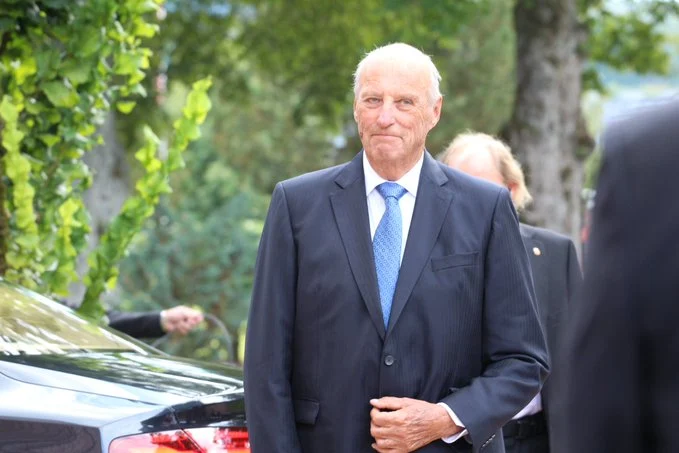
King Harald V of Norway continues to receive medical treatment at the National Hospital in Oslo, as confirmed by the Norwegian Royal House on Friday. The 89-year-old monarch was admitted following health complications related to his ongoing battle with haemolytic anaemia and concerns over side effects from his cortisone treatment, specifically fluid retention. This period of illness necessitates a temporary transfer of royal duties, with Crown Prince Haakon stepping in as Regent. The King’s hospitalization means he will miss a planned visit to Trøndelag, an engagement Queen Sonja will now undertake. This latest development underscores a period of increased responsibility for the Crown Prince, whose own family has also faced significant health challenges in recent months. A further health update on King Harald is anticipated within the coming week.
Royal Health Concerns and the King’s Condition
The prolonged hospitalization of King Harald marks a significant point in his reign, which has been characterized by a steady commitment to public service despite a series of health setbacks in recent years. The primary concern for the monarch’s medical team revolves around haemolytic anaemia, a serious condition where red blood cells are destroyed at a rate faster than they can be replenished. This condition can lead to profound fatigue, weakness, and shortness of breath, significantly impacting daily life and royal duties.
The decision to admit King Harald to the Rikshospitalet, Oslo’s university hospital renowned for its advanced medical facilities, stemmed from escalating concerns regarding the side effects of his cortisone therapy. Corticosteroids, while effective in managing inflammation and immune responses, can present a range of adverse effects, including fluid retention, which can exacerbate underlying cardiovascular or renal issues. The medical professionals’ proactive approach in admitting the King for further assessment and intensive care highlights the seriousness with which his condition is being managed.
This current health episode is not an isolated incident for King Harald. Over the past decade, the monarch has undergone several procedures and hospital stays. In 2003, he underwent surgery for prostate cancer, followed by a bladder cancer diagnosis in 2019. He also experienced a fall in 2020, leading to a temporary hospitalization. These recurring health issues have naturally led to increased reliance on the Crown Prince as Regent, a role Haakon has embraced with dedication.
A Timeline of Recent Royal Health and Duty
The current situation unfolds against a backdrop of significant health challenges faced by the Norwegian Royal Family. Understanding the chronology of events provides crucial context:
- Early 2020s: King Harald begins experiencing a series of health issues, including a fall and subsequent hospitalizations.
- Autumn 2020: The King is admitted to hospital for treatment related to haemolytic anaemia. Concerns arise over cortisone treatment side effects, leading to further admission for tests and care at Rikshospitalet. Crown Prince Haakon assumes duties as Regent. The initial sick leave is reported to be two weeks.
- Recent Months: Crown Princess Mette-Marit undergoes treatment for pulmonary fibrosis and a lung transplant, necessitating increased support from the Royal Family and further assuming of duties by Crown Prince Haakon.
- Present: King Harald remains hospitalized. His planned visit to Trøndelag is postponed and will be undertaken by Queen Sonja. Crown Prince Haakon continues as Regent. A further health update is expected within the week. Princess Ingrid Alexandra returns to Norway from her studies in Australia to be closer to her family.
This timeline illustrates a period of considerable strain on the Royal Family, demanding resilience and adaptability from its members. The consistent presence of Crown Prince Haakon in a regent capacity highlights the smooth succession planning and the established protocols for managing royal duties during periods of illness.
The Role of the Regent: Crown Prince Haakon’s Steadfast Support
With King Harald’s hospitalization, Crown Prince Haakon has once again assumed the constitutional duties of Regent. This role, while familiar to the Crown Prince, has seen its responsibilities expand significantly in recent years. As heir to the throne, Haakon is well-prepared for the responsibilities of head of state, regularly stepping in for his father during his absences or illnesses.
The Crown Prince’s capacity as Regent involves presiding over the Council of State, signing legislation, representing Norway at state events, and undertaking official visits both domestically and internationally. His steady hand has ensured continuity in governance and public representation for the Norwegian monarchy. This period of increased responsibility for Haakon is further compounded by the ongoing health journey of his wife, Crown Princess Mette-Marit. Her battle with pulmonary fibrosis, a chronic lung disease, and subsequent lung transplant, has been a deeply personal challenge for the couple and has required significant family support.
The increasing frequency of Haakon’s regent duties signifies a gradual transition within the monarchy, preparing the public and the Crown Prince himself for the eventual succession. His calm demeanor and dedication to his constitutional role have earned him widespread respect and confidence among the Norwegian populace.
Queen Sonja and Princess Ingrid Alexandra: Pillars of Support
While Crown Prince Haakon assumes the primary role of Regent, Queen Sonja continues to play a vital public role, demonstrating her unwavering commitment to the monarchy and the nation. Her decision to undertake the King’s planned visit to Trøndelag underscores her resilience and dedication. The Queen herself has also navigated personal health challenges in recent years, showcasing the fortitude of the Royal Family.
Furthermore, the return of Princess Ingrid Alexandra to Norway from her studies in Australia is a significant development. As the second in line to the throne, her presence closer to the family during this period of heightened concern is undoubtedly a source of comfort and strength. Her growing maturity and understanding of her future role are evident, and her proximity to her grandparents and father during this time will be invaluable. Princess Ingrid Alexandra’s education abroad, particularly at institutions like UWC Atlantic College and her subsequent studies, reflects a modern approach to royal upbringing, preparing her for a future as a constitutional monarch.
Broader Implications and Public Sentiment
The ongoing health concerns of King Harald and the increased responsibilities placed upon Crown Prince Haakon have several implications for the Norwegian monarchy. Firstly, it highlights the importance of robust succession planning and the readiness of the heir apparent to assume full responsibilities. Crown Prince Haakon’s consistent performance as Regent demonstrates the effectiveness of this system.
Secondly, it underscores the human element of royalty. While monarchs are public figures, they are also individuals facing personal health battles. The public’s enduring affection for King Harald, despite his health challenges, speaks to his long-standing service and his ability to connect with the Norwegian people. His reign, which began in 1991 following the passing of his father, King Olav V, has been marked by a commitment to modernizing the monarchy while upholding its traditions.
The Norwegian monarchy enjoys a high level of public trust and approval. Polls consistently show strong support for the institution. This period of health challenges, while concerning, is unlikely to significantly erode this public confidence, given the perceived competence and dedication of the Royal Family. Instead, it may foster a deeper sense of empathy and understanding towards the King and his family.
The Royal House’s commitment to providing timely updates on King Harald’s condition is crucial in managing public expectation and maintaining transparency. The anticipation of a further health bulletin within the week suggests that the medical team is closely monitoring the King’s progress and is prepared to communicate significant developments.
In conclusion, King Harald’s continued hospitalization is a testament to the ongoing challenges of managing complex health conditions at an advanced age. The Norwegian Royal Family, however, has demonstrated remarkable resilience and preparedness. With Crown Prince Haakon at the helm as Regent, supported by Queen Sonja and with the presence of Princess Ingrid Alexandra, the continuity of royal duties remains assured. This period, while undoubtedly demanding for the Royal Family, also serves to reinforce the stability and dedication that characterize the Norwegian monarchy.




 Yuyun Lusiyani
 Joko Widodo
 Pevita Pearce
 admin
admin
 Lina Irawan