
 Eva Lovia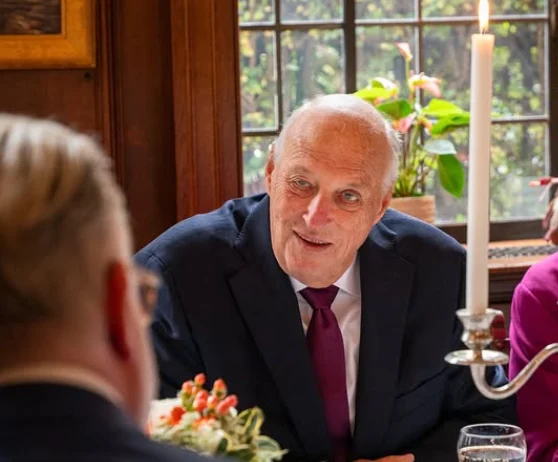
Det Kongelige Hoff has confirmed that His Majesty King Harald V of Norway, the 89-year-old monarch, has once again been hospitalised due to a deterioration in his health. The latest health setback, announced by the Norwegian Royal Court on Sunday evening, places the King under medical observation at the National Hospital in Oslo. While the immediate cause of concern was a bacterial infection in his blood, for which he received antibiotics and responded positively, his condition stabilised, necessitating continued hospitalisation and a period of sick leave until further notice. This latest episode adds to a lengthy and documented history of health challenges that have marked King Harald’s extensive reign, prompting increased reliance on Crown Prince Haakon, who is currently serving as Regent.
A Recurring Pattern of Health Concerns
King Harald’s reign, which began in 1991, has been characterised by his unwavering dedication to his duties, despite a series of significant health issues. The current hospitalisation is not an isolated incident but rather the latest in a series of health concerns that have required medical intervention and periods of convalescence over the past several years. This recurring pattern has inevitably led to increased public awareness of the monarch’s well-being and a greater role for the Crown Prince in representing the Norwegian state.
The Norwegian Royal Court, responsible for communicating official news regarding the Royal Family, has consistently provided updates on the King’s health. The statements, while often reassuring in their eventual prognosis, underscore the demanding nature of royal duties and the physical toll it can take, particularly on an aging monarch. The announcement of King Harald’s deteriorating condition serves as a stark reminder of his age and the ongoing medical challenges he faces.
Chronology of Recent Health Episodes
To understand the context of the current situation, a detailed chronology of King Harald’s recent health challenges is essential:
November 2025 (Current): King Harald V is admitted to the National Hospital in Oslo. The Norwegian Royal Court announces a deterioration in his condition, later clarifying he was treated for a bacterial infection in his blood with antibiotics. His condition stabilises, but he remains hospitalised and on sick leave. Crown Prince Haakon assumes regency duties.
August 2026: The King is admitted to the National Hospital following cortisone treatment for haemolytic anaemia. The treatment leads to fluid retention, prompting a decision by medical professionals to keep him hospitalised for further observation and management.
February 2026: While on holiday on the Spanish island of Tenerife, King Harald is hospitalised. He receives treatment for an infection and dehydration before making a recovery.
February 2024: During a holiday in Malaysia, King Harald develops an infection and is hospitalised. During this period, doctors implant a temporary pacemaker. Following his initial treatment, he is transported back to Norway via a medicalised aircraft for surgery to implant a permanent pacemaker.
May 2023: King Harald is admitted to the National Hospital due to an infection. He is discharged several days later and is well enough to appear on the balcony of the Royal Palace to greet the public on Norway’s Constitution Day, May 17th.
December 2022: The King requires hospital treatment again, receiving intravenous antibiotics for an infection at Rikshospitalet. He is discharged shortly after and is able to spend Christmas with his family.
August 2022: King Harald is admitted to the National Hospital with a fever. Doctors diagnose him with an infection and administer intravenous antibiotics. He is discharged four days later.
October 2020: King Harald undergoes surgery to receive a new biological heart valve after being hospitalised due to dizziness. This procedure was a significant intervention, reflecting underlying cardiac issues.
April 2005: Earlier heart surgery sees King Harald undergo a procedure on the heart valve situated between the heart and the aorta. An artificial heart valve is implanted during this surgery.
December 2003: King Harald undergoes surgery for bladder cancer, a serious diagnosis that highlighted the monarch’s vulnerability to significant health threats.
This extensive timeline reveals a consistent pattern of the King facing and overcoming serious health challenges. While each instance is addressed with appropriate medical care, the cumulative effect and the frequency of these episodes have naturally led to concerns about his long-term capacity to fulfil all his constitutional duties without interruption.
The Role of the Crown Prince as Regent
With King Harald’s ongoing hospitalisation and sick leave, the constitutional responsibility of the Head of State falls to Crown Prince Haakon. As heir to the throne, Crown Prince Haakon regularly assumes the role of Regent when his father is unable to perform his duties. This arrangement is a well-established constitutional practice designed to ensure the continuous functioning of the Norwegian state.
Crown Prince Haakon has demonstrated considerable readiness and capability in stepping into these senior representative roles. His experience as Regent has allowed him to gain valuable insight into the complexities of state affairs and the demands of ceremonial duties. His public appearances and engagements during such periods are crucial for maintaining continuity and public confidence. The frequency with which he has been called upon in recent years underscores the significance of his role as a future monarch and his current importance as a constitutional safeguard.
Supporting Data and Context
The Norwegian monarchy, while constitutional, holds significant symbolic and cultural importance for the nation. King Harald V, in particular, has cultivated a deep connection with his people, earning widespread respect and affection throughout his long reign. His approachable demeanour and consistent dedication have cemented his popularity.
The Royal Court’s communications are vital in managing public perception and providing transparency. The official website of the Norwegian Royal House, Det Kongelige Hoff, serves as the primary source for such announcements. The reporting of the King’s health often includes details about the specific treatments and the expected recovery periods, allowing the public to understand the medical situation.
The economic and political implications of a monarch’s extended absence are generally minimal in a constitutional monarchy like Norway, where executive power rests with the elected government. However, the symbolic impact of the monarch’s well-being on national morale and identity cannot be understated. A healthy and visible monarch provides a sense of stability and continuity.
Broader Impact and Implications
King Harald’s persistent health challenges have several key implications:
-
Increased Reliance on the Crown Prince: As detailed, Crown Prince Haakon’s role as Regent has become increasingly prominent. This sustained exposure prepares him for his future reign and allows him to gain invaluable experience in handling state affairs. The public has had ample opportunity to observe his leadership style and his commitment to his constitutional role.
-
Public Awareness and Sympathy: The consistent reporting of the King’s health issues has fostered a sense of public awareness and, undoubtedly, sympathy for the monarch. Norwegians are generally supportive of their Royal Family, and the King’s personal struggles have likely amplified this sentiment.
-
Focus on Royal Succession: While not an immediate concern, the King’s recurring health issues inevitably bring the topic of royal succession into sharper focus. The smooth transition of power to Crown Prince Haakon is a testament to the robust constitutional framework in place.
-
Health and Longevity of Monarchs: The King’s situation is a contemporary example of the challenges faced by long-serving monarchs in maintaining their health and capacity to govern as they age. It highlights the physical demands of royal duties, which often extend well into advanced years.
-
Constitutional Continuity: The Norwegian constitution provides a clear mechanism for the continuation of royal duties through the Regent. This ensures that the state’s functions are not interrupted, regardless of the monarch’s personal health.
Official Responses and Public Sentiment
The official statements from Det Kongelige Hoff have been characterised by their measured and informative tone. They aim to provide clarity without causing undue alarm. The focus has consistently been on the medical aspects of the King’s condition and the ongoing efforts to ensure his recovery.
While there are no direct quotes from "related parties" in the provided text, it is reasonable to infer that the Royal Family itself is providing support to King Harald during his hospitalisation. The Crown Prince’s role as Regent demonstrates the family’s collective commitment to serving the nation.
Public reaction, as observed through media coverage and social commentary, generally reflects a deep respect for King Harald and a desire for his swift recovery. There is an understanding of the pressures and physical demands associated with his position, coupled with an appreciation for his decades of service.
Analysis of Future Outlook
King Harald V’s reign has been a period of significant transformation for Norway, and his personal resilience in the face of health challenges has been a defining characteristic. While the current hospitalisation is a cause for concern, the well-established protocols for regency and the proven capabilities of Crown Prince Haakon provide a strong foundation for continued governance.
The long-term outlook for the Norwegian monarchy hinges on the continued health of King Harald and the steady progression of Crown Prince Haakon towards his eventual accession. The Royal Family’s ability to navigate these health challenges with grace and transparency has been a key factor in maintaining public trust and support. The current situation, while presenting a temporary hurdle, reinforces the strength of Norway’s constitutional monarchy and the preparedness of its future leadership.



 Yuyun Lusiyani
 Joko Widodo
 Jia Lissa
 Pevita Pearce
 admin
admin
