admin
admin
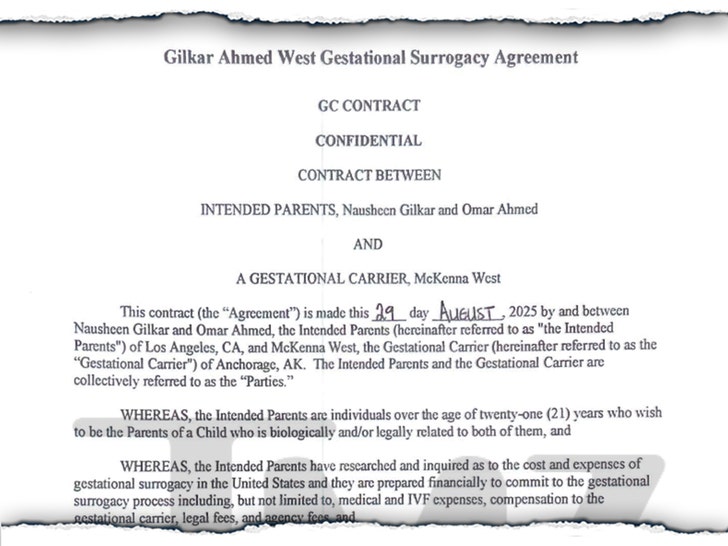
The contentious legal saga surrounding surrogate McKenna West and biological parents Nausheen Gilkar and Omar Ahmed has intensified, with the California couple alleging West is attempting to secure child support for their critically ill infant, known as "Rumi" by his biological parents and "Gabriel" by West. West vehemently denies these claims, asserting that her focus remains solely on ensuring the newborn receives the "life-sustaining care he needs" and that the allegations stem from a "mistakenly circulated" document. This latest development adds another complex layer to a dispute that has already garnered significant national attention, pitting deeply personal moral convictions against contractual obligations and the intricate landscape of modern surrogacy law.

The conflict, which first came to public light earlier this year, centers on a surrogacy agreement initially established between West and the couple, Gilkar and Ahmed, who sought to expand their family through gestational surrogacy. Under the terms of their contract, West was to carry an embryo created from Gilkar and Ahmed’s genetic material. The journey, however, took an unforeseen and heartbreaking turn when medical screenings during the pregnancy revealed the fetus had a severe heart defect. Following this diagnosis, Gilkar and Ahmed, exercising a clause reportedly within their surrogacy agreement, requested West to terminate the pregnancy.
McKenna West, a mother of two herself, refused to comply with the abortion request, citing profound personal and moral objections to ending the pregnancy. Her decision set the stage for a dramatic legal and ethical confrontation. To circumvent potential legal challenges in California, where the biological parents reside and where the initial contract was likely subject, West made the difficult decision to relocate to Texas to give birth. Texas, like many states, has specific laws regarding parental rights and the enforceability of surrogacy contracts, particularly when disputes arise concerning medical decisions like abortion. Her move underscored the desperate measures she felt compelled to take to protect the life of the child she was carrying.

The baby was born in Texas in mid-August 2026, marking the end of the physical gestation but the beginning of an even more intense legal battle for custody and care. Following the birth, West publicly expressed her desire to retain custody of the infant, whom she calls Gabriel. Simultaneously, Nausheen Gilkar and Omar Ahmed, who refer to their son as Rumi, have maintained their intention to raise the child, despite their earlier request for termination. They assert that they are prepared to navigate his complex health issues and provide the necessary medical support.
The recent court filings by Gilkar and Ahmed introduce a critical new dimension to the ongoing custody dispute. In these documents, the couple alleges that McKenna West is now seeking financial support from them in the form of child support, in addition to her legal fees. They claim that West’s legal counsel had made such requests. The biological parents’ filing highlights what they perceive as West’s precarious financial situation, describing her as an "unwed, unemployed mother of two small children with no health insurance." They further point to her active online fundraising efforts, suggesting these facts are being used to bolster her argument for receiving financial assistance. Their argument posits that given their stable, married status and stated commitment to their son’s care, they are in a far better position to provide for Rumi than West, especially considering the child’s critical medical needs.

McKenna West, through her legal representatives, has swiftly and emphatically denied these allegations. Her legal team asserts that the claims of seeking child support are based on a "never-filed, mistakenly circulated, and quickly retracted initial draft" of a legal document. They contend that this preliminary draft, which was never formally submitted to the court, did not, in fact, contain any explicit request for child support. Instead, West’s counsel clarifies that her current legal actions are focused on securing "temporary orders from the court to ensure the child receives the life-sustaining care he needs." This clarification suggests West is seeking court intervention to mandate or facilitate specific medical treatments for the infant, potentially with the aim of establishing her suitability as a primary caregiver who is committed to the child’s welfare.
This case has illuminated the profound ethical and legal complexities inherent in modern reproductive technologies, particularly gestational surrogacy. Surrogacy agreements, while designed to provide clarity and legal protection for all parties, often struggle to anticipate every unforeseen circumstance, especially medical complications and deeply held moral divergences. In the United States, surrogacy laws vary significantly by state, with some states offering comprehensive legal frameworks that recognize and enforce surrogacy contracts, while others have more restrictive or ambiguous statutes. California, where Gilkar and Ahmed reside, is generally considered surrogacy-friendly, with established legal mechanisms for intended parents to be recognized as legal parents from birth. Texas, while also allowing surrogacy, has different nuances that may have played a role in West’s decision to deliver there.
The legal battle will likely hinge on the "best interests of the child" standard, a cornerstone of family law in custody disputes. Courts are mandated to evaluate all factors influencing a child’s welfare, including parental capacity, financial stability, commitment to medical needs, and the overall environment. Gilkar and Ahmed’s legal strategy appears to be built around demonstrating their superior capacity to provide for Rumi, contrasting their resources with West’s disclosed financial situation. Their earlier request for abortion, however, could be a complicating factor in demonstrating their unconditional commitment to the child’s best interests from the outset. Conversely, West’s refusal to abort and her subsequent actions to ensure the baby’s birth, despite the medical challenges, will likely be presented as evidence of her profound dedication to the child’s life and well-being.
The baby’s severe heart defect necessitates ongoing, specialized medical care, which is inherently costly. This financial burden underscores the importance of the child support allegations. While West denies seeking support, her online fundraising efforts, which have reportedly drawn thousands of donations, indicate a significant need for financial assistance to care for a child with such complex medical requirements. The question of who bears the financial responsibility for a child born under such contentious circumstances, particularly when medical needs are paramount, is a central issue that the courts will need to address. This case forces a re-examination of how surrogacy contracts handle situations where intended parents withdraw their commitment due to medical issues, and what financial or custodial responsibilities may then fall to the surrogate or be apportioned by the courts.

The public discourse surrounding the McKenna West case has been intense, sparking debates on reproductive rights, the sanctity of life, contractual obligations, and the definition of parenthood in the context of assisted reproduction. The case serves as a poignant reminder of the personal stakes involved in surrogacy, where legal agreements intersect with deeply human emotions and ethical considerations. Regardless of the outcome, this legal battle is poised to have significant implications for the future of surrogacy law, potentially influencing how contracts are drafted, how disputes over medical decisions are resolved, and how parental rights and responsibilities are assigned when intentions diverge.
As the legal proceedings continue, all parties face immense scrutiny and emotional strain. The ultimate decision from the courts will not only determine the legal parentage and custody of the infant but will also set a precedent for future surrogacy disputes, particularly those involving medical complications and the highly sensitive issue of abortion. The focus, as McKenna West insists, must ultimately return to the vulnerable infant at the heart of this complex legal and ethical quandary, ensuring he receives the best possible care as his future hangs in the balance.


 Yuyun Lusiyani
 Joko Widodo
 Jia Lissa
 Pevita Pearce