
 Jia Lissa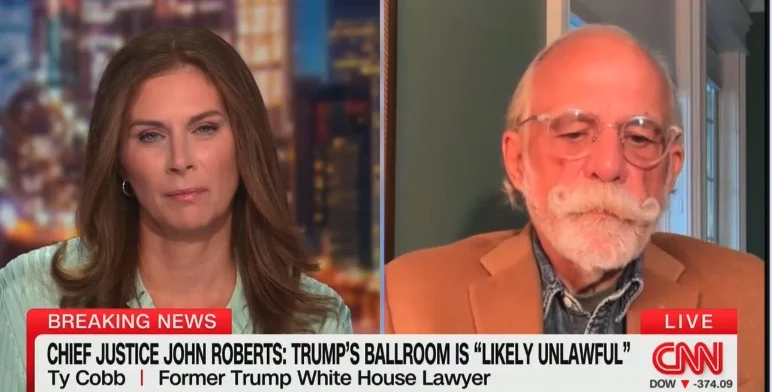
The United States Supreme Court issued a pivotal 5-4 ruling on Monday, allowing the continuation of a massive and controversial construction project at the White House. The decision effectively clears the way for the completion of a new, 90,000-square-foot ballroom, a project personally overseen by President Donald Trump. This development follows a period of intense legal scrutiny and public debate regarding the preservation of the executive mansion’s historic architecture. The court’s order lifted a previous injunction issued by a lower court, which had temporarily halted the work following a lawsuit by the National Trust for Historic Preservation.
The majority opinion focused primarily on the legal concept of standing, concluding that the National Trust for Historic Preservation did not have the requisite legal grounds to challenge the administration’s actions in federal court. However, the ruling was notable for a sharp dissent penned by Chief Justice John Roberts, who broke ranks with the conservative majority to join the court’s three liberal justices. Roberts’ dissent highlighted a profound concern regarding the separation of powers and the erosion of legislative authority over federal property.
The Supreme Court Decision and the Standing Doctrine
The legal battle centered on whether a private non-profit organization could sue to stop the demolition and reconstruction of a portion of the White House. The National Trust for Historic Preservation argued that the demolition of the East Wing to make way for the new ballroom violated federal preservation laws and bypassed congressional oversight. In the 5-4 decision, the Supreme Court did not rule on the merits of the construction’s legality but rather on the procedural threshold of "standing."
The majority held that the plaintiff failed to demonstrate a concrete, particularized injury that would allow them to bring the suit. By dismissing the case on these grounds, the court effectively allowed the $300 million project to proceed without addressing the underlying questions of whether the president has the unilateral authority to alter the historic structure of the White House.
Chief Justice John Roberts, in a rare alignment with Justices Sonia Sotomayor, Elena Kagan, and Ketanji Brown Jackson, argued that the case deserved a full hearing on the merits. In his dissent, Roberts characterized the White House as more than just an office or a residence, describing it as an "iconic American building whose symbolism and history are wrapped up in its architecture." He further warned that the administration’s actions constituted a "likely infringement of the Legislature’s power of the purse and authority to regulate federal property in the District of Columbia."
Ty Cobb’s Criticism and the Aesthetic Transformation
Following the court’s announcement, former White House lawyer Ty Cobb expressed sharp disapproval of the ongoing renovations. Cobb, who served as special counsel during the early years of the Trump administration, provided his perspective during an appearance on CNN’s "OutFront." His remarks focused on the aesthetic and cultural shift the building is undergoing, specifically referencing the "goldification" of the historic interiors and the massive scale of the new ballroom.
Cobb remarked that the White House was traditionally a "beautiful setting and a historic setting," but argued that it is being transformed into a "combination of a whorehouse and Las Vegas." He lamented the "golden paving" of the structure, describing the current state of the renovations as "tragic." Cobb’s critique reflects a broader concern among some former officials and historians that the dignified, neoclassical character of the White House is being supplanted by a more opulent and grandiose style favored by the current president.
The term "goldification" has been used by critics to describe the President’s preference for gold-leaf accents, ornate drapery, and high-contrast decor, which stands in contrast to the more understated renovations of previous administrations. Cobb’s comments suggest that for those who have spent significant time within the building’s walls, the changes feel like a departure from the "iconic symbolism" mentioned by Chief Justice Roberts.
Project Specifications and Architectural Conflict
The ballroom project has been a source of internal and external friction since its inception. The structure is designed to be approximately 90,000 square feet, a size that would significantly alter the footprint of the White House complex. For comparison, the entire existing White House residence and wings encompass roughly 55,000 square feet. This means the new ballroom alone would be nearly double the size of the original historic building.
The project led to a public falling out between the President and the initial architect, James McCrery II. McCrery reportedly expressed concerns that the sheer scale of the ballroom would "dwarf" the original White House, ruining the architectural balance of the site. In December, the President fired McCrery following disagreements over the design and size. The estimated cost of the project is $300 million, a figure that has raised questions in Congress regarding the source of the funding and whether it was properly appropriated for such a purpose.
Historical Context of White House Renovations
The White House has undergone numerous renovations since its completion in 1800, but most have focused on structural integrity or modernized functionality rather than massive expansion.
- The Truman Reconstruction (1948–1952): Perhaps the most significant renovation in history, the Truman-era project was born out of necessity. The building was literally falling apart. The interior was completely gutted, a steel frame was installed, and the historic rooms were meticulously reconstructed within the original stone shell.
- The Kennedy Restoration (1961–1963): Led by First Lady Jacqueline Kennedy, this effort focused on historical authenticity. She established the Fine Arts Committee for the White House and worked to bring period-accurate furniture and art back to the mansion, leading to the creation of the White House Historical Association.
- The West Wing Expansion (1902): Theodore Roosevelt oversaw the construction of the West Wing to separate the president’s workspace from the family’s living quarters. While it was a significant addition, it was designed to complement the existing architecture.
The current ballroom project is viewed by historians as a departure from these precedents because it involves the permanent removal of the East Wing and a massive increase in the building’s total square footage for ceremonial rather than functional or structural reasons.
Timeline of the Ballroom Controversy
The progression of the ballroom project has been marked by several key milestones:
- Early 2023: The administration announces plans for a major new event space at the White House to accommodate larger state dinners and summits.
- Late 2023: Demolition of the East Wing begins. Preservation groups immediately voice concerns regarding the destruction of the historic structure.
- December 2023: President Trump fires lead architect James McCrery II over design disputes regarding the project’s scale.
- Spring 2024: The National Trust for Historic Preservation files a lawsuit in federal court, seeking an injunction to stop construction, citing violations of the National Historic Preservation Act.
- Summer 2024: A lower court issues a stay, halting construction while the legal merits are debated. The administration appeals the decision to the Supreme Court.
- August 2024: The Supreme Court rules 5-4 to lift the stay, allowing construction to resume immediately.
Constitutional Friction and Legislative Authority
The core of the legal debate, as highlighted by Chief Justice Roberts, is the "Power of the Purse." Under Article I, Section 9 of the U.S. Constitution, "No Money shall be drawn from the Treasury, but in Consequence of Appropriations made by Law." This ensures that the executive branch cannot spend federal funds without the explicit approval of Congress.
Critics and dissenting justices argue that the use of hundreds of millions of dollars for a private-style ballroom project—without a specific line-item appropriation from Congress—undermines this constitutional check. Furthermore, the District of Columbia’s federal property is typically subject to oversight by the Commission of Fine Arts and the National Capital Planning Commission. The administration’s ability to bypass these traditional review processes has set a legal precedent that may affect future management of federal landmarks.
Broader Implications and Future Outlook
The Supreme Court’s decision to allow the ballroom construction to proceed has significant implications for both the physical landscape of Washington D.C. and the legal landscape of executive power. Architecturally, the White House will likely emerge from this project with a vastly different profile, one that emphasizes modern grandeur over 18th-century proportions.
Legally, the ruling reinforces a high bar for "standing" in cases involving federal property and historic preservation. By making it difficult for third-party organizations to challenge executive decisions regarding federal buildings, the court has effectively expanded the president’s discretion over the management of the nation’s most historic sites.
As construction crews return to the site, the debate over the "goldification" of the White House is likely to continue. While supporters of the project argue that the nation needs a grander space to host world leaders and conduct the business of the state, critics like Ty Cobb and the dissenting justices remain concerned that the cost—both financial and symbolic—is too high. The finished ballroom will eventually stand as a permanent testament to the current administration’s vision for the executive mansion, even as the legal and aesthetic controversies surrounding it persist.



 Yuyun Lusiyani
 Pevita Pearce
 Eva Lovia
 Nana Wu
 Amara Maple