
 Yuyun Lusiyani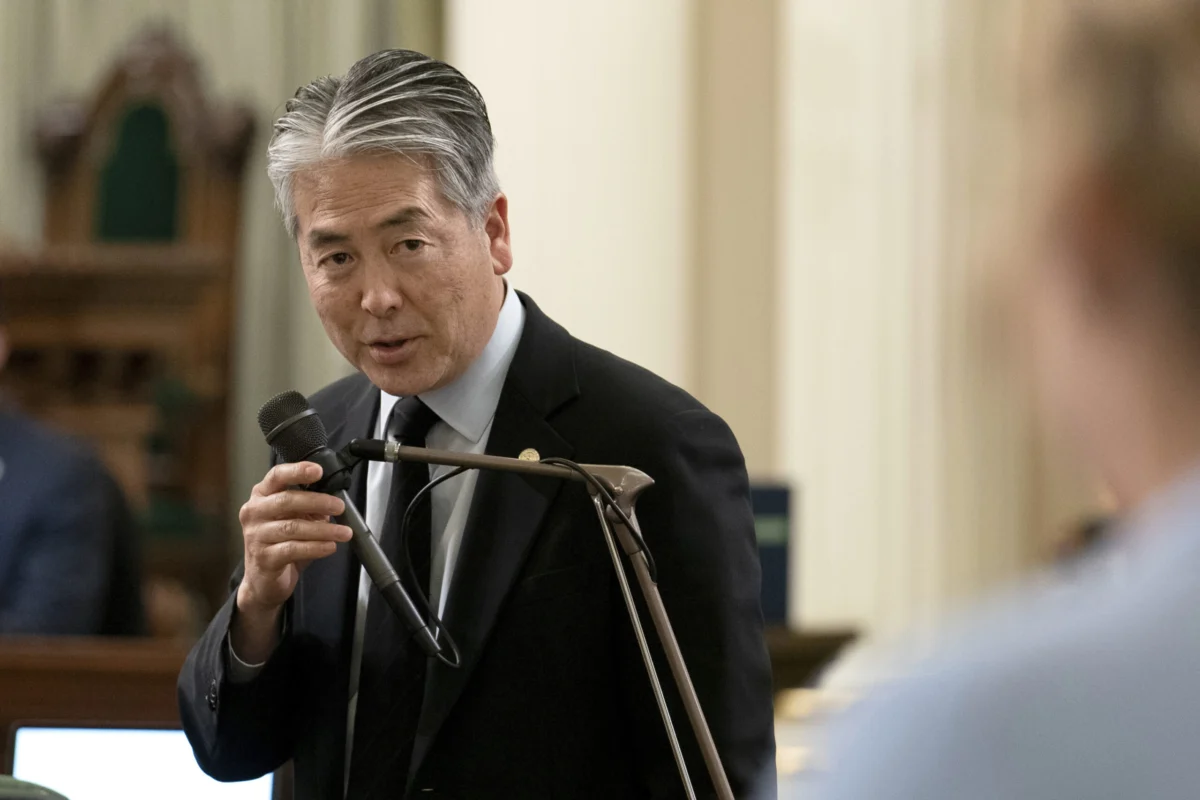
California lawmakers have unanimously passed pivotal legislation, Assembly Bill 1381 (AB 1381), designed to ensure that school administrators receive crucial information regarding past accusations of misconduct against prospective teachers during the hiring process. This legislative action represents a significant step towards bolstering child safety in schools, directly addressing systemic failures highlighted by recent investigative journalism that allowed educators with histories of serious misconduct to secure new positions.
The passage of AB 1381 comes on the heels of a revealing KQED-ProPublica investigation. The extensive report meticulously detailed how bureaucratic delays, inaction by state agencies, and a pervasive lack of transparency in reporting mechanisms created critical loopholes. These systemic deficiencies enabled numerous educators, previously reported to the state teacher licensing agency for sexual harassment or other forms of egregious misconduct, to subsequently gain employment in new school districts. The investigation specifically uncovered at least 14 instances where individuals were rehired by different schools even after their former employers had determined they had engaged in sexual harassment of students or other severe sexual misconduct. The findings underscored a perilous "pass the trash" phenomenon, where problematic educators could simply move from one school to another, often without their new employers being adequately informed of their past disciplinary issues.
Authored by Democratic Assemblymember Al Muratsuchi, AB 1381 aims to rectify these identified failings and prevent similar occurrences in the future. The bill is poised to add much-needed enforcement "teeth" to background check mandates that have been in place since 2025. Under the existing framework established by AB 2534, applicants for positions within public schools are required to provide a comprehensive list of every teaching position they have ever held. This requirement was further expanded this year through SB 848 to include teaching applicants for private schools. Furthermore, top school administrators are already mandated to contact applicants’ previous employers to ascertain if they had ever been reported to the state for credible or substantiated complaints of egregious misconduct.
However, the efficacy of this prior legislation has been severely hampered by its inherent reliance on voluntary compliance from schools and individual teachers, crucially lacking clear penalties for those who failed to adhere to the mandates. Muratsuchi’s bill directly addresses this critical enforcement gap. It explicitly empowers the state’s teacher licensing agency, the Commission on Teacher Credentialing (CTC), to impose disciplinary actions on teachers and administrators who do not comply with these vital background check requirements. Such disciplinary measures can range from issuing public reprimands to suspending or even revoking professional credentials.
"If there aren’t any penalties, there are no consequences," Muratsuchi stated in an interview with KQED and ProPublica following the legislation’s passage, underscoring the fundamental flaw in the previous system. "The bill makes sure that school districts prioritize this by putting in consequences for failing to do so." This statement highlights the legislative intent to shift from a system of recommendations to one of accountability, ensuring that the serious responsibility of vetting educators is met with commensurate repercussions for non-compliance.
The legislation now awaits the signature or veto of Governor Gavin Newsom, a Democrat, who has until September 30 to make a decision. A spokesperson for the Governor indicated that Newsom’s office typically refrains from commenting on bills awaiting his signature, maintaining the standard protocol for such legislative processes.
The Evolution of AB 1381: From Ambitious Database to Enhanced Enforcement
The version of AB 1381 that ultimately received unanimous legislative approval is markedly different from Assemblymember Muratsuchi’s initial proposal in June. The original bill was considerably more ambitious, seeking to establish a comprehensive, searchable database that would have allowed schools to readily access information on public school teaching applicants who had been reported to the state after being fired or resigning over misconduct claims. This initial proposal drew parallels to a similar database that California is set to launch by next summer for school support staff, such as bus drivers and janitors, which will include substantiated claims of egregious misconduct. However, public school teachers were conspicuously excluded from this existing database plan.
The broader national context for this legislative push includes efforts from the federal level. During the Trump administration, a national crackdown was announced this summer on how school districts handle accusations of sexual misconduct by teachers. The administration had specifically identified teachers’ unions as potential obstructions to legislative reforms aimed at protecting children, setting a backdrop for the debates in California.
In California, Muratsuchi’s database proposal for public school educators faced significant opposition from the state’s powerful teachers unions, including the California Federation of Teachers (CFT) and the California Teachers Association (CTA). These unions vociferously criticized the database concept, arguing it would infringe upon teachers’ privacy rights and subject them to potentially devastating employment consequences based on allegations that might later be proven unfounded. Their concerns centered on due process and the potential for a "scarlet letter" effect without full substantiation.
Adding to the pushback, the Commission on Teacher Credentialing (CTC), the state’s educator licensing agency, also raised serious concerns. The CTC warned that complying with the proposed legislation to include teachers in such a database would "require Commission staff to commit crimes" and expose the agency to significant liability. Their apprehension stemmed from existing state laws that strictly restrict the type and scope of information the CTC is legally permitted to share publicly, creating a clear conflict with the database’s intended functionality.
In response to this substantial opposition from both powerful unions and a key state agency, Assemblymember Muratsuchi made a strategic decision to amend the proposed bill, ultimately scrapping the controversial database idea. This significant revision allowed the revamped legislation to garner crucial support from the California Federation of Teachers, demonstrating a willingness to compromise to achieve the core objective of improved accountability. While the database would have offered a more direct and potentially efficient solution, the amended bill focuses on strengthening the enforcement of existing reporting requirements, leveraging the CTC’s disciplinary powers.
Systemic Gaps and the "Red Flag" Dilemma: The Matthew Shelton Case
Despite the advancements made by AB 1381, some school administrators contend that the legislation does not fully alleviate the administrative burden placed on school districts. They argue that the requirement to proactively reach out to every previous employer for any reports made to the state about a teacher applicant remains an arduous task, particularly for under-resourced districts.
Chris Calabrese, superintendent of Benicia Unified, a district serving 4,500 students in the San Francisco Bay Area, articulated this concern. "Many of us in this state have been faced with budget cuts and reduced staffing. We need a better system," Calabrese stated. He emphasized that a centralized, searchable database for employers to quickly check whether a teacher had ever been reported for misconduct would represent a far more efficient and effective method for vetting applicants. Such a system, he argued, would provide schools with immediate access to critical information, thereby enhancing student safety more directly.
The current system for flagging problematic educators has demonstrable flaws that AB 1381 seeks to mitigate. Presently, a "red flag" appears next to an educator’s name in the state’s public database of credentialed educators only after the licensing agency has formally disciplined the individual. A major impediment here is the protracted nature of the state disciplinary process, which typically takes at least one year to conclude, according to the CTC. This extended timeline creates a dangerous window during which educators who have been reported for serious misconduct can apply for and secure new teaching jobs without any immediate warning appearing on their public record for potential employers.
The tragic case of Matthew Shelton serves as a stark illustration of this systemic vulnerability. In 2023, Benicia Unified reported Shelton, a former elementary teacher, to the state after multiple students accused him of inappropriate touching. Shelton subsequently resigned from his position. Shockingly, merely weeks later, he was hired as an assistant principal at a nearby middle school in the West Contra Costa Unified School District. During this critical period, no "red flag" appeared next to his name in the state database, leaving his new employer unaware of the serious allegations.
It was not until the following year, after Shelton’s teaching license was suspended due to being charged with five felony counts of lewd acts on a Benicia student, that a "red flag" finally appeared. The severity of the situation has since escalated, with the number of alleged victims and charges growing. Shelton, whose license has since been revoked, has pleaded not guilty to all charges and is scheduled to go to trial in September. His attorney declined to comment, and Shelton did not respond to requests for comment. Superintendent Calabrese, who assumed his role last year, refrained from commenting on specific questions pertaining to Shelton’s case, citing the ongoing legal proceedings. The Shelton case powerfully underscores the urgency behind AB 1381 and the necessity of closing the information gap that allows accused educators to move between institutions undetected for extended periods.
Broader Implications and the Path Forward
The unanimous passage of AB 1381 signals a crucial legislative acknowledgement of the profound and often devastating impact of educator misconduct on students, families, and public trust in educational institutions. The issue of teacher misconduct is not isolated; studies and reports from organizations like the U.S. Department of Education indicate a persistent challenge in ensuring child safety across the nation. Incidents of sexual misconduct, harassment, and other forms of abuse by educators can lead to severe and long-lasting psychological trauma for victims, erode their sense of safety, and undermine their ability to thrive in academic environments. The societal cost extends to a pervasive erosion of trust in the very systems designed to protect children.
AB 1381 attempts to strike a delicate balance between several competing interests: the paramount need to protect children, the administrative efficiency required by schools, and the due process rights and privacy concerns of educators. By strengthening enforcement mechanisms rather than creating a public database, the bill seeks to address the immediate transparency failure without venturing into areas that raised significant legal and privacy objections. However, the ongoing debate about a centralized database versus reliance on inter-district communication highlights the persistent tension. While the unions successfully argued against the database on privacy grounds, many administrators, and implicitly, victims’ advocates, see it as the most effective tool for rapid and comprehensive information sharing.
The legislative journey of AB 1381 also underscores the critical role of investigative journalism in prompting policy change. The KQED-ProPublica investigation provided the factual bedrock and compelling narratives necessary to galvanize lawmakers into action, transforming abstract concerns into concrete legislative proposals. This dynamic illustrates how independent media can hold institutions accountable and advocate for vulnerable populations.
Looking ahead, Governor Newsom’s decision on AB 1381 will be closely watched. A signature would cement California’s commitment to enhancing accountability in teacher hiring. However, the underlying issues – the lengthy disciplinary process, the administrative burden on districts, and the desire for more streamlined information sharing – are likely to remain subjects of ongoing debate and potential future legislative efforts. Advocates for student safety will undoubtedly continue to push for the most robust systems possible, perhaps revisiting the database concept with new safeguards or exploring technological solutions that can accelerate the sharing of critical information while adhering to legal constraints.
The challenge remains to build a comprehensive, multi-faceted approach that not only punishes misconduct but proactively prevents it, ensuring that every child in California schools is in a safe and supportive learning environment. AB 1381 is a significant step, but it is one piece in a larger, evolving puzzle of safeguarding children and restoring public confidence in the education system.




 Joko Widodo
 admin
admin
 Nila Kartika Wati
 Jia Lissa
 Pevita Pearce