
 Jia Lissa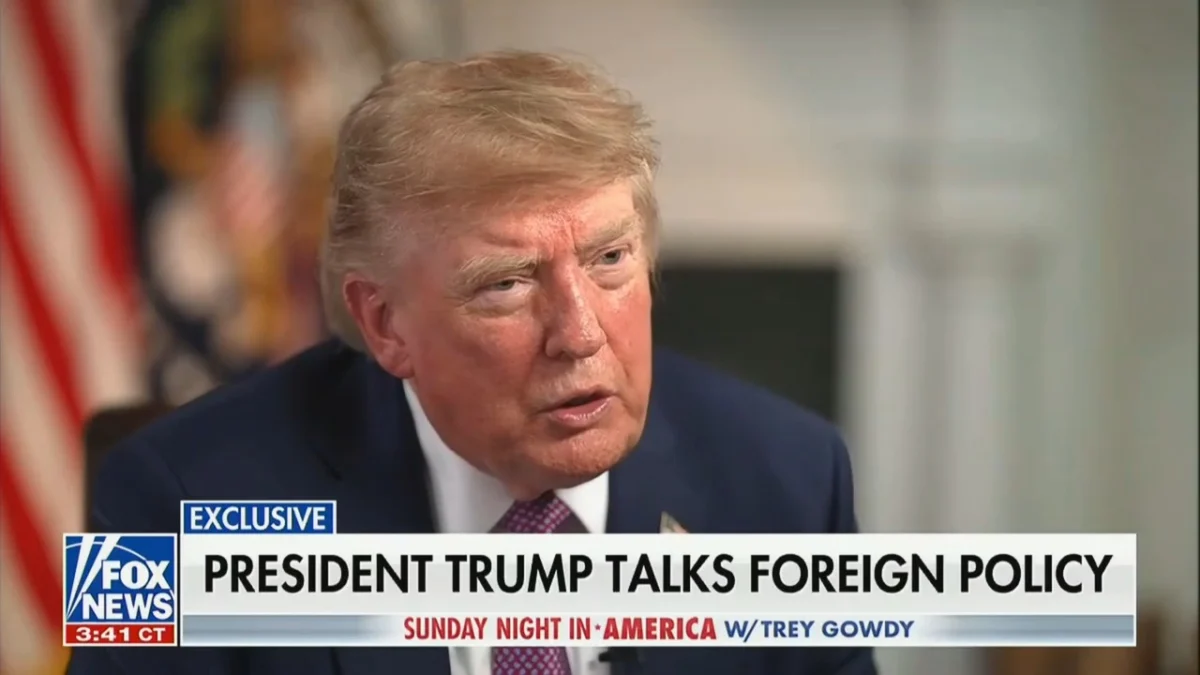
President Donald Trump has intensified his critique of longstanding United States security alliances, specifically targeting South Korea for its refusal to provide military assistance during recent escalations with Iran. In a comprehensive interview with Fox News host Trey Gowdy, the President questioned the fiscal sustainability of American foreign military aid and warned that the refusal of allies to participate in U.S.-led operations would have long-term consequences for bilateral relations. The remarks come amid a significant shift in U.S. Indo-Pacific strategy, characterized by the scaling back of joint military exercises and a renewed emphasis on transactional diplomacy.
During the Sunday broadcast, President Trump expressed frustration over what he described as a lack of reciprocity from nations that benefit from American military protection. He specifically highlighted the billions of dollars the United States allocates to support NATO and other strategic partners, arguing that the return on investment for the American taxpayer has been insufficient. The President’s comments centered on a specific request made to the South Korean government for assistance in the Strait of Hormuz and broader operations involving the Islamic Republic of Iran, a request that was ultimately declined by Seoul.
The Fox News Interview and the "Remember" Warning
In his conversation with Gowdy, President Trump recounted his personal outreach to South Korean leadership regarding the Iran conflict. He noted that while the United States maintains a massive military presence on the Korean Peninsula—citing a figure of approximately 40,000 soldiers—the South Korean government opted not to participate in the U.S. mission. "South Korea as an example," the President said. "We helped them, but when it came to helping us, I didn’t put on a heavy sell, but I just said, ‘Would you like to participate?’ and they all said, ‘No, thank you.’ And I said, ‘I’m going to remember that to myself.’"
The President’s rhetoric suggests a pivot toward a "pay-to-play" or transactional model of foreign policy. He argued that the U.S. should not be "a stupid person" by providing unconditional aid to countries that do not support American objectives in other theaters. By framing the alliance in financial terms, Trump indicated that future military support might be contingent on a partner’s willingness to share the burden of global security operations, particularly in volatile regions like the Middle East.
Scaling Back Military Exercises: The Pete Hegseth Directive
The President’s recent remarks provide critical context for his decision two weeks ago to order Defense Secretary Pete Hegseth to "substantially reduce" planned joint military exercises with South Korea. These exercises, which have historically served as a cornerstone of the U.S.-South Korea mutual defense treaty, are designed to maintain readiness against potential aggression from North Korea.
In announcing the reduction, Trump explicitly linked the decision to Seoul’s refusal to assist in the Iran conflict. While he characterized the two issues as "somewhat unrelated" in a social media post, his subsequent comments to Fox News suggest a direct correlation between South Korea’s diplomatic choices and the reduction of American military cooperation. The President further justified the reduction of drills by describing them as "totally inappropriate and hostile" toward North Korea. He cited his personal relationship with North Korean leader Kim Jong Un, whom he described as "unthreatening and respectful" during his tenure, as a primary reason for de-escalating military activity in the region.
Historical Context of the U.S.-South Korea Alliance
The relationship between the United States and the Republic of Korea (ROK) is rooted in the 1953 Mutual Defense Treaty, signed at the conclusion of the Korean War. For seven decades, this alliance has been anchored by the presence of United States Forces Korea (USFK). While the President mentioned a figure of 40,000 troops, official Department of Defense data typically places the number of stationed personnel at approximately 28,500, though this number fluctuates depending on rotational deployments and specific training cycles.
South Korea has historically been one of the United States’ most consistent partners, contributing troops to conflicts in Vietnam, Iraq, and Afghanistan. However, the domestic political climate in Seoul has often been divided regarding participation in Middle Eastern conflicts. South Korea relies heavily on the Middle East for its energy needs, and the government must balance its alliance with Washington against the need to maintain stable relations with oil-producing nations, including Iran.
The Financial Dimension: Special Measures Agreements (SMA)
A central theme of President Trump’s critique is the cost-sharing arrangement known as the Special Measures Agreement (SMA). Under the SMA, South Korea contributes to the non-personnel costs of the U.S. military presence, including labor costs for Korean employees, military construction, and logistics support.
In recent years, the negotiations over the SMA have become increasingly contentious. During his previous administration, Trump requested a five-fold increase in South Korea’s contribution, asking for approximately $5 billion annually. While a multi-year deal was eventually reached, the President’s recent comments suggest that he intends to revisit these financial arrangements. By stating that the U.S. is "going to make a lot of money" by reassessing its commitments, Trump is signaling a move toward a model where allies are expected to cover a larger share of the operational costs of American protection.
The Iran Conflict and Global Maritime Security
The specific request for help that South Korea declined likely pertains to the International Maritime Security Construct (IMSC) or "Operation Prosperity Guardian," initiatives aimed at protecting commercial shipping in the Strait of Hormuz and the Red Sea. Given that a significant portion of South Korea’s oil imports passes through these waterways, the U.S. viewed Seoul’s participation as both a logical and necessary contribution to global economic stability.
South Korea does maintain the "Cheonghae Unit," a naval task force that operates in the Gulf of Aden for anti-piracy missions. While the unit has occasionally coordinated with U.S.-led coalitions, Seoul has been hesitant to expand its mandate to include direct involvement in conflicts with the Iranian military, fearing retaliation against its tankers or diplomatic fallout.
Diplomatic Implications for the Indo-Pacific
The decision to scale back military exercises has significant implications for regional security in East Asia. Joint drills like "Freedom Shield" and "Ulchi Freedom Shield" are viewed by military analysts as essential for ensuring that U.S. and ROK forces can operate seamlessly in the event of a conflict with Pyongyang.
Critics of the President’s decision argue that reducing these exercises could undermine the "deterrence by denial" strategy that has maintained peace on the peninsula for decades. They suggest that North Korea may interpret the scaling back of drills as a sign of a fracturing alliance, potentially emboldening Kim Jong Un to conduct further missile tests or engage in provocative behavior. Conversely, proponents of the President’s approach argue that the drills are an unnecessary provocation and that reducing them opens a "diplomatic window" for future denuclearization talks.
Official Responses and Strategic Analysis
While the South Korean Ministry of National Defense has not issued a formal rebuttal to the President’s specific "remember that" comment, officials in Seoul have previously emphasized their "robust" contribution to the alliance. They often point to the fact that South Korea spends roughly 2.5% to 2.8% of its GDP on defense, a higher percentage than many NATO allies. Furthermore, South Korea funded the vast majority of the construction costs for Camp Humphreys, the largest overseas U.S. military base in the world, located in Pyeongtaek.
Strategic analysts suggest that the President’s rhetoric is intended to pressure allies ahead of future negotiations. By publicly shaming partners for perceived lack of support, the administration may be attempting to secure better terms in upcoming trade and defense cost-sharing talks. However, some foreign policy experts warn that this approach risks alienating key democratic partners and creating a power vacuum that could be filled by regional competitors like China.
Broader Impact on NATO and Global Alliances
The President’s remarks to Trey Gowdy extend beyond the Korean Peninsula. His mention of "billions and billions of dollars helping NATO" reflects a long-standing grievance regarding the 2% of GDP defense spending target for NATO members. By linking the South Korea situation to NATO, Trump is reinforcing a consistent message: the era of the United States acting as the "world’s policeman" without significant financial and operational support from its allies is coming to an end.
This shift toward a more isolationist or transactional foreign policy represents a departure from the post-WWII international order, which was built on the premise that American security is intrinsically linked to the stability and security of its democratic allies. As the administration moves forward with its "America First" agenda, the global community will be watching closely to see how these changes affect international security architectures and the reliability of U.S. defense guarantees.
Conclusion and Future Outlook
President Trump’s warning to South Korea serves as a clear indicator of the administration’s current priorities. The integration of financial costs into defense policy and the demand for reciprocal military support are now central tenets of U.S. diplomacy. As Defense Secretary Pete Hegseth works to implement the reduction in military exercises, the U.S.-South Korea alliance faces one of its most transformative periods in decades.
The coming months will likely see intense diplomatic maneuvering as Seoul seeks to reconcile its national interests with the demands of its most important security partner. Meanwhile, the President’s vow to "remember" the refusal of assistance suggests that the consequences of this diplomatic rift may manifest in future trade negotiations, defense agreements, and the broader strategic alignment of the United States in the Indo-Pacific region.


 Joko Widodo
 admin
admin
 Lina Irawan
 Yuyun Lusiyani
 Pevita Pearce