Yuyun Lusiyani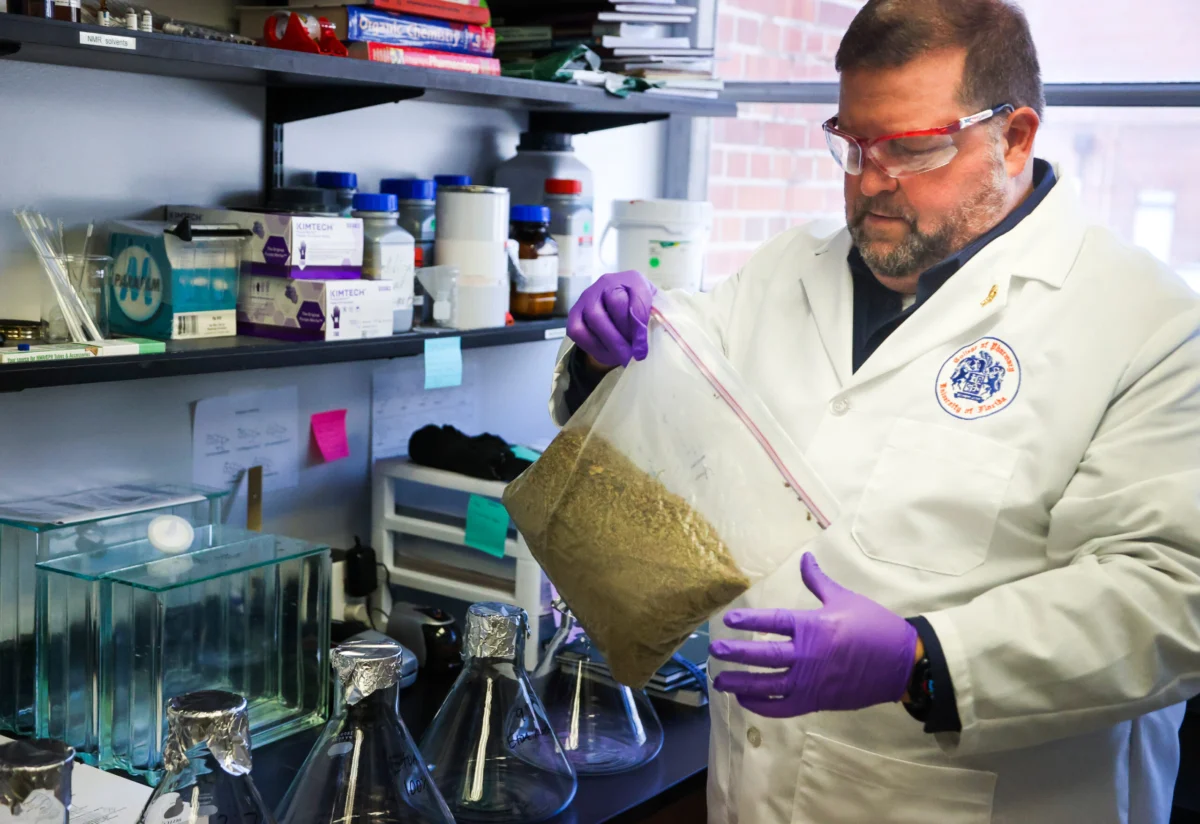
A prominent University of Florida scientist, Professor Christopher McCurdy, who has been a vocal advocate against the criminalization of kratom, a substance linked to a significant number of deaths and addiction cases globally, has consistently failed to disclose his long-standing financial connections to the American Kratom Association (AKA), the industry’s most influential lobbying group. This revelation, uncovered by ProPublica, casts a shadow over the objectivity of his expert testimony and published research in the heated debate surrounding kratom’s legal status.
McCurdy, a professor at the University of Florida, has benefited from travel reimbursements, substantial donations to his university’s foundation, and funding for an annual symposium dedicated to research on kratom’s potential medicinal properties—all provided by the AKA. Crucially, none of these financial ties have been transparently declared in his conflict of interest statements or within the numerous scientific papers he has authored or co-authored, raising serious questions about scientific integrity and public trust.
The Growing Kratom Controversy and Public Health Stakes
Kratom, derived from a tree native to Southeast Asia, is sold in various forms including powders, capsules, tablets, and energy drink-like shots. Its pharmacological profile is complex; in small doses, it acts as a stimulant, while in larger quantities, it exhibits opioid-like effects. Despite the Food and Drug Administration (FDA) explicitly prohibiting its marketing as a dietary supplement or food ingredient, kratom is widely advertised as a mood and energy enhancer, a pain reliever, and even an alternative to prescription opioids.
The push to maintain kratom’s legal status has intensified as more potent kratom derivatives flood the market, and evidence of the leaf’s health risks continues to mount. Alarming statistics underscore the severity of the public health concerns: the Centers for Disease Control and Prevention (CDC) reported that between 2020 and 2024, approximately 5,200 individuals in the United States died from drug overdoses involving kratom. Furthermore, calls to poison control centers related to kratom have surged by a staggering 1,200% over the past decade, indicating a rapid increase in adverse events.
A Powerful Lobby and its Key Advocate
The American Kratom Association, which positions itself as a champion for kratom consumers, has deployed considerable resources in an aggressive lobbying campaign. Spending an estimated $2.5 million annually, the AKA has waged pitched battles in state legislatures and on Capitol Hill, striving to ensure kratom products remain readily available in gas stations, smoke shops, and convenience stores across America. The organization’s funding primarily originates from kratom manufacturers and vendors, whose commercial interests are directly served by broad accessibility.
Central to the AKA’s strategy has been Professor McCurdy. Documents reveal the lobbying group’s repeated reliance on his scientific authority to persuade lawmakers that kratom is sufficiently safe for continued legality. He has been strategically deployed to key states contemplating outright bans or on the verge of overturning existing prohibitions. His efficacy in these efforts, particularly his success in fighting federal regulators, earned him a place in the AKA’s prestigious "Legacy Advocate Hall of Fame."
McCurdy’s Advocacy: Selective Emphasis and Undisclosed Links
ProPublica’s examination of McCurdy’s public appearances and scientific discourse over recent years indicates a pattern of highlighting kratom’s therapeutic potential while simultaneously downplaying its inherent risks. This approach stands in stark contrast to his own published research, which has documented severe withdrawal symptoms in newborns exposed to kratom in utero, as well as dependency and even fatalities among users. When confronted with the hazards, McCurdy has often dismissed concerns by drawing parallels to common substances, noting that even water can be lethal if consumed in excessive quantities. While advocating for accessibility, he does, however, support better manufacturing standards, clear labeling, and age restrictions for kratom products.
The lack of disclosure by McCurdy is particularly noteworthy given that other scientists who consult for or conduct research funded by the AKA openly acknowledge their relationship with the association. McCurdy, however, has cultivated a public image as an impartial authority in a highly charged debate, navigating the emotional chasm between individuals struggling with life-altering kratom addiction and those who claim to use it safely for pain relief or as an alternative to opioids.
Indeed, a significant portion of McCurdy’s research focuses on developing kratom’s dominant chemical compound into a pharmaceutical treatment for addiction. This research is substantially funded by the federal government, which has allocated an estimated $100 million in grants to his work. The legality of kratom is directly relevant to this research, as a federal ban could severely jeopardize or even halt such funding and development.

In response to ProPublica’s inquiries, McCurdy defended his engagement with policymakers, stating that "decisions about kratom should be informed by the best available science." He maintained that reimbursed travel expenses do not influence the "substance" of his presentations or his "scientific conclusions," asserting, "My views on kratom are based on more than two decades of scientific research. They are my own and are not dictated by the American Kratom Association or any other outside organization."
Chronology of Influence: From DEA Battles to Statehouse Victories
McCurdy’s involvement in opposing kratom criminalization dates back to at least 2018. That year, he collaborated with other scientists, including the AKA’s lead science consultant, to successfully lobby the Drug Enforcement Administration (DEA) against classifying kratom as a Schedule I narcotic. Such a designation, reserved for drugs with high abuse potential and no accepted medical purpose, would have effectively rendered kratom illegal. The scientists argued in a letter to federal regulators that this would "severely hinder" their ongoing research into potential therapeutic uses. McCurdy further elaborated in a paper that scheduling kratom would create new regulatory hurdles and "dissuade funders" from supporting its study. The effort to schedule kratom was ultimately halted during the first Trump administration, marking an early victory for the industry.
Following this federal triumph, the AKA shifted its focus to state-level efforts, aiming to explicitly legalize kratom through regulatory frameworks. McCurdy emerged as a pivotal figure in this ongoing campaign. Emails obtained by ProPublica through public records requests to the University of Florida illuminate his extensive involvement.
In 2023, at the AKA’s behest, McCurdy briefed the United Nations Commission on Narcotic Drugs, a body that regularly considers international drug regulation. While his 2023 briefing was conducted remotely, he traveled in person to Vienna for the annual meeting in 2025, with emails confirming that the lobbying group covered his hotel expenses.
The year 2024 saw McCurdy undertake several trips on behalf of the association. He planned an August trip to Indonesia, a nation contemplating a full ban on kratom, with the AKA allocating $8,700 for a first-class plane ticket. Although McCurdy ultimately canceled this trip, the association confirmed he retained the flight credit for future AKA-related travel. Later that September, he traveled to Washington, D.C., to dine with and brief members of Congress and their staff. During this session, he acknowledged that he could not declare kratom "entirely safe" but insisted it should remain accessible to the public for continued research, stating, "I want it to be accessible to everybody. Always have."
The following month, the AKA arranged McCurdy’s travel to Little Rock, Arkansas, where lawmakers were deliberating whether to reverse a 2016 kratom ban. There, he presented kratom dependence as comparable to caffeine dependence, likening withdrawal symptoms to merely missing a morning coffee. This assertion stands in stark contrast to accounts from kratom users describing severe, debilitating withdrawal symptoms that make quitting extremely difficult, and even McCurdy’s own deposition acknowledging some users’ inability to stop taking it. Despite his efforts, the lobbying in Arkansas was unsuccessful.
However, just a few months later, with McCurdy’s continued assistance, the AKA achieved its first success in overturning a state-level ban. Rhode Island Governor Dan McKee had initially vetoed a bill to legalize kratom, swayed by concerns from his top public health officials. The association then arranged travel for McCurdy and other scientists to Providence to brief these same health officials. When the legislature reconvened in 2025, the AKA’s bill passed, and Governor McKee signed it into law, notably without any public opposition from the state health officials this time.
Rhode Island Representative Michelle McGaw, a Democrat and pharmacist who opposed kratom legalization due to public health threats, expressed her frustration. She struggled to get her legislative colleagues to seriously consider data on kratom’s risks, lamenting, "It has been a struggle, particularly in light of having kratom lobbyists finding ways with their own research or data to counter that narrative or try to confuse the narrative."
The Scrutiny of Funding and Disclosure Standards
Mac Haddow, the AKA’s lead lobbyist, stated that his organization relies on scientists like McCurdy for accurate information but claims "no control" over their testimony to policymakers. "We think that science should dictate what the public policies are," he asserted. Regarding McCurdy’s non-disclosure of travel funding, Haddow contended that beneficiaries are not typically required to disclose travel-related payments and maintained that the association has never commissioned a study from McCurdy that would necessitate disclosure.
Instead of directly funding specific research projects, the AKA has channeled its support through donations to the University of Florida’s foundation. Its nonprofit arm, the Center for Plant Science and Health, has donated over $100,000 to the university. This funding also helps underwrite McCurdy’s annual kratom symposium, an event attended by approximately 100 scientists focused on promoting research into kratom’s therapeutic potential. McCurdy himself estimated to Georgia lawmakers this summer that his research has received approximately $1 million in industry donations via the foundation.

McCurdy had maintained a complete absence of industry ties on his published papers until 2025, when Virginia pharmacist Jennifer Brandt stepped forward. Brandt provided a medical journal publisher with email correspondence, obtained through public records laws, which revealed McCurdy’s connections to the association. As a result, the publication required McCurdy to append a correction to his paper, disclosing his work as an expert witness in court cases for both kratom companies and families pursuing wrongful death claims. However, this correction notably omitted any mention of his extensive work with kratom industry lobbyists.
Disclosure rules vary among scientific journals. Nonetheless, the International Committee of Medical Journal Editors (ICMJE), a body that recommends publishing standards, explicitly mandates the disclosure of reimbursed travel for research submissions. Ivan Oransky, executive director of the Center for Scientific Integrity, emphasized the critical importance of such information for assessing the validity of research. "It doesn’t mean you shouldn’t trust anything that’s funded by industry," Oransky clarified, "It’s part of knowing the whole picture."
Oransky further likened the practice of donating to a university foundation rather than directly funding research to a business using a shell company to obscure its true ownership. While such a donation might technically circumvent disclosure requirements for specific studies, he argued, "These things are technically legitimate but not intellectually honest. It’s obscuring what’s really happening."
The University of Florida’s own policy requires disclosure of travel exceeding $5,000 in a calendar year. McCurdy did not list any AKA-related travel in his university conflict of interest statements. The total value of the travel reimbursed by the AKA remains unclear, as neither McCurdy nor the association provided specifics. A university spokesperson stated that a review of McCurdy’s disclosures "found no indication of non-compliance" but did not confirm whether his travel expenses fell below the $5,000 threshold. In an email to a university colleague, McCurdy rationalized his engagement with policymakers for the AKA as "part of my work related expertise and education of the public and policy makers," which he believes does not necessitate disclosure.
The Emerging Division: Whole Leaf vs. Synthetics
Adding another layer of complexity to the debate, the AKA has recently shifted its stance to actively oppose the sale of certain new, highly potent kratom derivatives, such as MGM-15 (dihydro-7-hydroxymitragynine), MGM-16 (9-fluorodihydro-7-hydroxymitragynine), and MP (mitragynine pseudoindoxyl). These compounds have been described as significantly more potent than morphine. McCurdy has played a key role in this effort, drawing a stark distinction between "whole-leaf kratom"—which typically encompasses the products sold by the association’s funding vendors—and these novel synthetic derivatives.
This summer, McCurdy warned a committee of Georgia lawmakers that these derivative products carry a high potential for abuse and are responsible for deaths in his state. "These are the things that are really scary to me," he stated. "These synthetics are far from kratom, they are derived from kratom, but they are not kratom at all." The DEA has even cited McCurdy’s research in its recent notices seeking temporary classification of some derivatives as Schedule I drugs, explicitly specifying that this classification does not apply to "botanical kratom products," the very substances McCurdy has consistently sought to protect from scheduling.
However, this distinction raises further questions, as McCurdy’s own research indicates that whole-leaf kratom—the natural product and its extracts—has also been implicated in cases of dependence and death. In 2022, he co-authored a review of medical literature that identified cardiovascular, neurological, and psychiatric adverse events associated with kratom use, highlighting an "urgent" concern regarding babies experiencing withdrawal after in-utero exposure. Furthermore, a 2025 paper co-written by McCurdy, analyzing kratom-related deaths in Florida from 2020 to 2021 (a period preceding the widespread emergence of the more dangerous derivatives), concluded that dozens of individuals "died of kratom (mitragynine) exposures alone."
When addressing policymakers, McCurdy typically remains largely silent on these specific findings regarding the risks of whole-leaf kratom. He told ProPublica that he does not claim kratom "is without risk" and that his findings on its dangers "should be taken seriously." Yet, he argues, "At the same time, the existence of risk does not by itself answer the policy question of whether a substance should be prohibited." He concludes that his scientific assessment leads him to support "appropriate regulation, including manufacturing and labeling standards, age restrictions, and safeguards addressing products that present materially different risks." When pressed on the dangers, he consistently reverts to the argument that any substance, including caffeine and water, can be dangerous at a sufficient dose. "There is such a thing as water intoxication that can cause death, and does cause deaths every year," he told an Arkansas lawmaker in 2024. "But we don’t ever think about banning water or making it illegal. It’s an essential part of life."
Broader Implications for Scientific Integrity and Public Policy
The revelations surrounding Professor McCurdy’s undisclosed financial ties to the kratom industry ignite a critical discussion about scientific integrity, transparency in public discourse, and the complex interplay between academic research, industry lobbying, and public health policy. The case underscores the challenges in regulating emerging substances with both perceived therapeutic benefits and documented risks, particularly when expert voices in the debate are simultaneously benefiting from the very industry they are influencing.
The lack of comprehensive disclosure, even if technically compliant with some university or journal rules, erodes public trust in scientific expertise and raises questions about the ethical responsibilities of researchers whose work directly impacts public policy. As the battle over kratom’s legal status continues, the need for clear, unbiased, and fully transparent scientific information becomes ever more paramount for policymakers and the public alike. The implications extend beyond kratom, serving as a stark reminder of the potential for financial interests to subtly shape the scientific narrative in high-stakes public health debates.



 admin
admin
 Lina Irawan
 Nana Wu
 Joko Widodo