Yuyun Lusiyani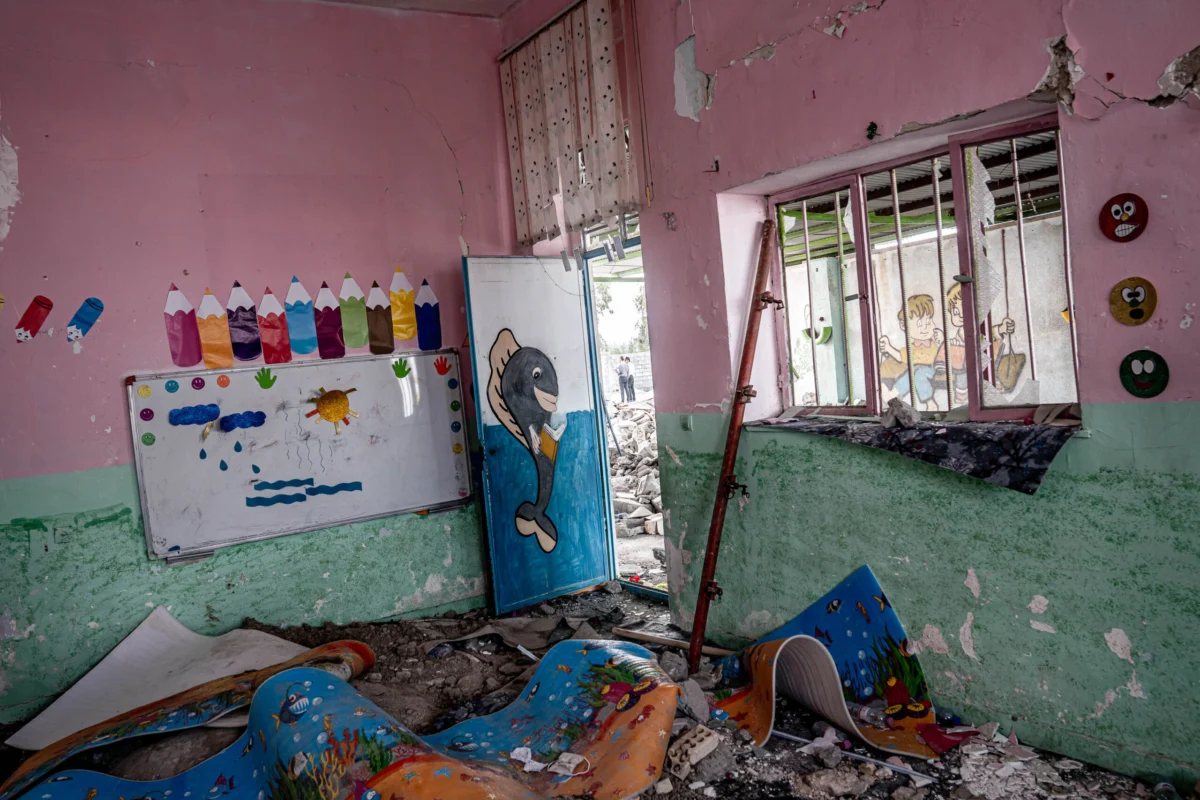
Shortly after assuming office last year, Defense Secretary Pete Hegseth initiated a significant policy shift, polling the nation’s top military commanders on their views regarding the Civilian Harm Mitigation and Response (CHMR) program. This initiative, designed to safeguard non-combatants during U.S. military operations, faced an existential threat under Hegseth, who reportedly viewed its focus on civilian security as "woke" and incompatible with his vision of "maximum lethality." However, in a rare display of unified dissent, every commander rebuffed the Secretary’s proposition, underscoring the program’s perceived operational indispensability.
The unpublicized poll from early 2025 revealed widespread top-level military support for CHMR, a relatively nascent program established in 2022 to address the profound and often counterproductive civilian tolls incurred during prolonged conflicts in Iraq, Afghanistan, and other theaters. CHMR, pronounced "chimmer," strategically embedded specialized personnel within major regional commands. Their mission was multifaceted: to cultivate a granular understanding of ground realities in conflict zones, inform decision-making for military strikes, and actively work to prevent or minimize civilian harm, thereby enhancing operational effectiveness and upholding international legal obligations.
Hegseth’s Mandate and Military Pushback
Upon his appointment, Secretary Hegseth swiftly signaled a departure from what he termed "politically correct and overbearing rules of engagement," vowing to transform the Defense Department into a "Department of War." His initial overture to military leaders in early 2025 presented three stark options for the CHMR program: a drastic 65% reduction in staff while maintaining a skeletal operational capacity, consolidating the effort into a small, centralized Washington-based office, or outright elimination.
The responses from the combatant commands were unequivocal. According to a memo reviewed by ProPublica, nine commanders opted for the first choice, demonstrating a clear preference to preserve the program as much as possible, even in a diminished state. Furthermore, the leaders of two critical commands—one overseeing the nation’s nuclear arsenal and another dedicated to confronting cyber threats—rejected all three proposed options, insisting on the maintenance of the full CHMR program.
Particularly vocal was U.S. Central Command (CENTCOM), based in Tampa, Florida, which directs military operations across the Middle East. CENTCOM leadership advocated strenuously to retain its full complement of 16 CHMR staff members. A memo from CENTCOM, also reviewed by ProPublica, explicitly warned that "eliminating or scaling back the effort would result in decreased efficiency of U.S. lethal operations due to an increased risk of target misidentification and reduced battlespace awareness." Retired Army Gen. Erik Kurilla, then head of CENTCOM, along with several other senior officers intimately involved in combat operations, directly appealed to Hegseth, emphasizing CHMR’s invaluable utility. However, as another retired general lamented, "that intent was overridden."
Despite the unanimous professional military advice, Hegseth proceeded to severely curtail the program. The effort was "gutted," leaving only a handful of personnel to carry out its complex mission and stripping it of nearly all its funding. This drastic reduction occurred even as the United States embarked on new military campaigns in Somalia, Yemen, and Iran. One official summarized Hegseth’s approach chillingly: "Bombs away!" These early exchanges solidified the perception that, under Hegseth’s stewardship, the civilian harm program had no viable future within his reimagined defense establishment.
The Genesis and Strategic Value of CHMR
The Civilian Harm Mitigation and Response program was formally established by the Pentagon in 2022, following years of escalating concern over civilian casualties in U.S. military operations. The program represented a significant evolution in military doctrine, recognizing that civilian harm not only carried profound moral and legal implications but also undermined long-term strategic objectives. Previous conflicts, particularly the "forever wars" in Iraq and Afghanistan, had demonstrated that civilian casualties could fuel insurgent recruitment, erode local support for U.S. and allied forces, and damage America’s international standing.
CHMR’s mandate encompassed several critical functions. Its personnel, often possessing specialized knowledge in cultural affairs, human geography, and open-source intelligence, worked to develop comprehensive "pictures of life on the ground." This involved gathering and analyzing data on civilian populations, infrastructure, daily routines, and potential vulnerabilities in areas of military operations. This intelligence was then integrated into targeting processes to help commanders distinguish between combatants and non-combatants, identify protected sites like schools and hospitals, and anticipate potential collateral damage.
The program also played a vital "red team" role, with dedicated staff often challenging proposed strikes and rigorously assessing potential collateral damage, pushing back on operations that carried an unacceptable risk to civilians. Furthermore, the Virginia-based Civilian Protection Center of Excellence served as a hub for training, data collection, and research, institutionalizing best practices across the services and ensuring that lessons learned from past operations were integrated into future planning. Military leaders, including Gen. Alexus Grynkewich, current head of European Command, had publicly championed the program, describing it as a "watershed" development in modern warfare. The sentiment among many career officers was that "operational effectiveness and harm mitigation are the same thing. They’re two sides of the same coin."
Consequences on the Battlefield: Rising Casualties and Global Outcry

The immediate aftermath of CHMR’s dismantling saw a significant increase in civilian casualties, particularly in newly initiated U.S. military campaigns. The first major operation under Secretary Hegseth’s tenure, an air campaign in Yemen in the spring of 2025, resulted in the deaths of 153 civilians and wounded 243 others. According to Airwars, a British watchdog group that meticulously tracks civilian harm from military operations, the majority of these deaths stemmed from just two strikes, placing them among the deadliest incidents acknowledged by the Pentagon in modern warfare. This grim toll was subsequently confirmed in the Pentagon’s own 2025 annual report for civilian casualties, a finding first reported by The Washington Post. At the time, Hegseth dismissed the criticisms, describing the Yemen operation as a "clear, limited mission executed with ruthlessness, full stop."
By the time the U.S. began its military actions in Iran the following year, the Pentagon’s civilian protection program had dwindled from nearly 200 dedicated personnel to approximately two dozen, some working only part-time. CENTCOM, which had previously asserted a minimum operational requirement of nine staffers, was left with a single individual to manage its entire civilian protection portfolio.
The consequences of this drastic reduction became tragically apparent on the first day of the U.S. and Israel’s war on Iran. A U.S. airstrike struck a school in Minab, a city strategically located near the Strait of Hormuz, killing over 100 children. The attack ignited immediate and widespread international outrage, drawing condemnation from humanitarian organizations, foreign governments, and global media. Images of the ruined classroom, once adorned with decorations for young children, now covered in debris, underscored the devastating human cost.
Congressional Scrutiny and Internal Pressure
The Minab school strike quickly became a flashpoint, prompting intense scrutiny from the U.S. Congress. Secretary Hegseth and Adm. Brad Cooper, the commander overseeing the Iran operation, were called to testify. While Hegseth maintained that the U.S. does not target civilians and pledged an investigation, early, unreleased reports suggested that outdated U.S. intelligence contributed to the tragic attack. Democratic senators and humanitarian groups immediately drew a direct line between the severe cuts to civilian protection personnel and the escalating number of civilian casualties, including the Minab tragedy.
In April, 11 senators addressed a letter to Secretary Hegseth, expressing their profound concern. The letter asserted that the Minab strike, along with other deadly attacks on civilians in Iran, reflected "the administration’s broader disregard for the strategic, legal, and moral imperative to minimize civilian harm," explicitly citing the dismantling of civilian harm reduction efforts. The senators warned, "This is a concerning pattern and raises questions about whether the administration is upholding international law and the laws of war." The Pentagon, when asked by ProPublica, declined to comment directly on the letter, stating it would "respond directly" to Congress.
The pressure to restore the program was not solely external. Within the military, the sentiment expressed during Hegseth’s initial poll persisted. While the Department of the Army, led by a civilian appointee, had initially agreed with the complete elimination of CHMR, the Joint Staff, representing the collective voice of the uniformed military leadership, disagreed. Correspondence reviewed by ProPublica indicated the Joint Staff’s opposition to the Army acting secretary’s February 2025 memo, which had deemed the program redundant and recommended its repeal by Congress.
A Tentative Reversal and Future Implications
As domestic and international pressure mounted, coupled with persistent internal advocacy from military leaders, the Defense Department appears to have initiated a significant policy reversal. In April, Elbridge Colby, the Defense Department’s under secretary of policy, circulated a follow-up memo to Secretary Hegseth concerning the civilian protection enterprise. This time, the proposal was singular and definitive: reboot the program. While the proposed revival envisioned a reduced staff of 70 full-time personnel, it represented a critical step back from the brink of total elimination.
Colby’s memo outlined that maintaining 35% of CHMR’s original capacity would specifically address crucial functions such as investigations into civilian harm incidents, mandated reports to Congress, and processing payments to victims. Critically, the same military commanders who had originally rebuffed Hegseth’s initial proposals for cuts enthusiastically endorsed this new move, according to several defense officials.
The proposed plan includes the reconstitution of civilian harm reduction staff within all regional commands. Furthermore, the Virginia-based Civilian Protection Center of Excellence, responsible for training, data, and research, is slated to be moved from under the Army’s purview to the Joint Staff. This strategic relocation, officials believe, will imbue the mission with greater institutional weight and foster enhanced collaboration with the Navy and Air Force, both frontline services in current U.S. military campaigns. "If not for the combatant commanders," one defense official observed, the program would be "dead."
The financial investment in harm mitigation efforts represents a minute fraction of the Defense Department’s colossal multi-billion-dollar budget. Before the cuts, the Center of Excellence operated on an annual budget of $7 million, with the total cross-command expenditure for all civilian security work estimated at around $80 million. The refashioned program is expected to operate on a smaller budget, yet its re-establishment acknowledges the undeniable strategic imperative.
Military leaders, having absorbed the hard-won lessons from the post-9/11 "forever wars," consistently affirm that robust harm mitigation is an indispensable asset on the battlefield. Civilian casualties, far from being mere collateral damage, demonstrably undermine U.S. objectives, alienate local populations, and provide potent propaganda tools for insurgent and extremist groups. Conversely, a commitment to protecting non-combatants enhances the legitimacy of U.S. operations, strengthens partnerships, and is crucial for achieving long-term stability and security objectives. The proposed partial revival of CHMR, therefore, marks a rare and significant reversal in an administration not typically known for tolerating dissent, highlighting the enduring tension between political directives and the operational realities and ethical responsibilities of military commanders.



 admin
admin
 Lina Irawan
 Nana Wu
 Joko Widodo