Yuyun Lusiyani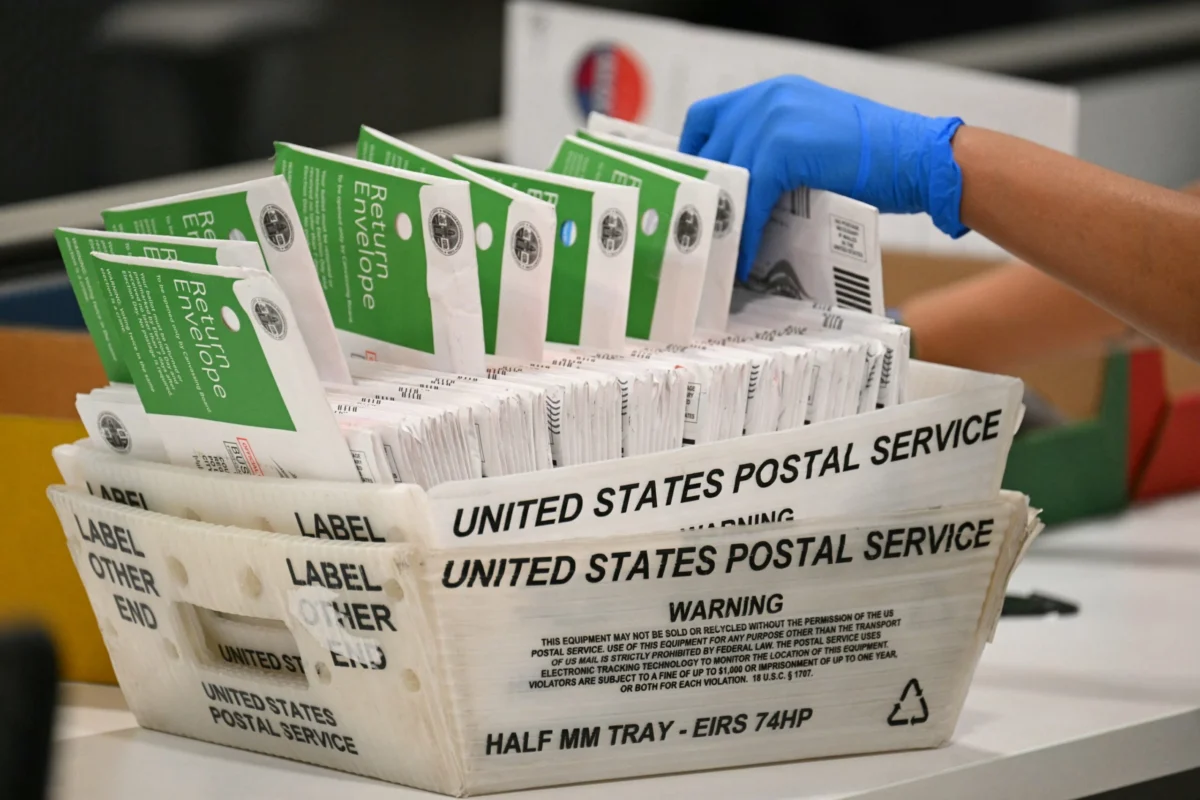
Top U.S. Postal Service (USPS) officials, tasked with drafting and implementing new regulations for mail voting, voiced significant concerns in internal discussions that the proposed rules could inadvertently delay or outright block ballots for substantial segments of eligible voters ahead of the upcoming midterm elections. Despite these reservations, the controversial new directives moved forward, a revelation brought to light by ProPublica’s investigation. This internal apprehension is compounded by a separate, detailed whistleblower disclosure filed with U.S. Senator Richard Blumenthal, which describes the entire process as "secretive, rushed, chaotic, and fundamentally flawed," warning of potential mass disenfranchisement.
Internal Dissent and Whistleblower Alarms
The discussions among senior USPS leadership, according to an individual familiar with the rulemaking process who spoke anonymously due to fear of reprisal, revolved heavily around the contentious nature of the task at hand. While the focus was ostensibly on complying with a presidential executive order while limiting negative impacts on voters, a recurring concern was the potential for invalidating entire batches of ballots if even a single voter within that batch could not be confirmed as eligible. Some participants in these meetings advocated for mitigation strategies, such as avoiding the rejection of entire batches. However, the whistleblower’s account to Senator Blumenthal indicates that the directive to reject entire batches containing just one unverified ballot ultimately prevailed.
"As presently designed, if even one bar code on one single ballot in a bulk-mailing of 10,000 ballots fails to properly scan during the verification process, the entire batch is rejected and sent back to the state — effectively stopping the ballots from being mailed to voters," the whistleblower stated in their disclosure. This alarming mechanism, if implemented, poses a significant threat to the timely and accurate delivery of mail-in ballots, particularly in high-volume jurisdictions.
The whistleblower further alleged that the administration continued to develop the new system despite two initial court injunctions, which, if true, would constitute a violation of judicial orders. The USPS had previously stated that it would adhere to these injunctions and refrain from implementing the rule for the 2026 election unless the injunctions were lifted. This claim raises serious questions about the agency’s compliance with legal mandates during the development phase.
The Presidential Mandate and Its Context
The genesis of these new regulations lies in a March executive order issued by President Donald Trump. This order directed the Postal Service to establish new rules aimed at "ensuring citizenship verification and integrity in federal elections." Specifically, it mandated that states provide the USPS with comprehensive lists of all voters eligible to receive mail ballots. The USPS would then be required to use these lists to verify and determine which ballots would be sent to voters.
USPS officials were tasked with meticulously crafting the operational details of this unprecedented system. This included the creation of a new digital portal for states to upload voter information and the development of sophisticated back-end software. This software would empower mail delivery sites and local post offices to track, and critically, potentially block ballots from entering the mail stream if they did not conform to the new verification protocols.
This executive order emerged within a broader national discourse surrounding election integrity, particularly amplified after the 2020 presidential election. While proponents argue such measures are vital to prevent voter fraud and ensure the security of elections, critics contend that they often create unnecessary barriers to voting, disproportionately affecting certain demographics, and are motivated by partisan aims. The push for more stringent mail-in voting rules has been a hallmark of the Trump administration’s approach to electoral reform.
Operational Challenges and Expert Warnings
The technical and logistical complexities inherent in this new system have drawn widespread skepticism from election officials and printing experts. At a mid-August National Association of Election Officials conference in Kansas City, Missouri, election clerks directly conveyed their concerns to USPS officials, ProPublica learned. A vivid example was presented involving Maricopa County, Arizona, which routinely dispatches over 2 million ballots in its initial mailing. USPS officials reportedly confirmed that a single ballot with a faulty barcode or inaccurate voter information within such a massive mailing could indeed delay the entire batch.
Jeff Ellington, CEO of Runbeck Election Services, a company that prints ballots and envelopes for numerous counties, highlighted the profound practical challenges. He explained that designing envelopes with clear, scannable barcodes is inherently difficult, and maintaining perfectly updated voter information across diverse state databases is an immense task. Ellington pointed out that many fundamental details remain unresolved, such as the required file format for uploading voter lists and whether states should provide mailing or residential addresses to the USPS. "These are trivial things that create massive problems," he stated, emphasizing the potential for chaos.
Furthermore, Ellington noted that most counties across the nation lack the specific types of barcodes necessary for the new system to function. Compounding this issue, the Postal Service has not provided local election officials with sufficient guidance or time to design new ballot envelopes and secure USPS approval within the extremely compressed timeframe before the midterms.
The whistleblower’s disclosure underscores these operational anxieties, expressing particular concern about the "significant operational problems" with the voter information portal and the complete absence of comprehensive system testing. While typical software systems acknowledge and account for a known error rate, the whistleblower alleges that the USPS has adopted an unrealistic "zero-percent failure policy" for the new mail ballot system, ignoring the inevitable occurrence of errors in such a complex operation. Both the whistleblower and the anonymous source familiar with the executive order’s implementation timeline estimate that a sophisticated tracking system of this nature would typically require at least nine months to develop. Yet, the whistleblower stated that staff began working on the system in mid-June and were given a mere matter of weeks to meet a September 1st deadline. The internal goal, according to the anonymous source, was to implement the system by the deadline or to demonstrate its infeasibility, a common approach for priority projects within the agency, albeit under highly constrained conditions. The whistleblower’s account vividly described staff confusion, inadequate direction, and a lack of proper communication, with several employees reportedly referring to the situation as a "shit show."
Legal Battles and Impending Deadlines
The controversial rules have predictably triggered a wave of lawsuits from voting rights organizations, state officials, and Democratic political groups. A federal court has already issued a temporary injunction, blocking the implementation of the new requirements for states. The legal merits of the new rule are widely expected to reach the Supreme Court for a definitive ruling before the November election.
Even if the Supreme Court were to permit the plan to move forward, election officials and experts largely agree that the new system could not realistically be ready in time for this election cycle. This is particularly critical given that ballots for military personnel and overseas citizens, protected under federal law, must be dispatched this month. Any delay or complication in this process could disenfranchise a significant number of service members and expatriates.
The reliance on mail voting has surged in recent years, especially during the 2020 pandemic-affected election, when over 40% of voters cast their ballots by mail, up from less than 25% in 2016. This increased reliance underscores the profound potential impact of any changes to mail-in ballot processing.
Official Responses and Political Accusations
In court, the Postal Service has staunchly defended its final rule, asserting that it harbors no intention of seizing control over election administration. The agency maintained that the rule "need not and should not prevent a single voter from voting by mail." In a statement provided to ProPublica, a USPS spokesperson indicated that the agency is carefully reviewing the whistleblower’s concerns. The spokesperson affirmed that USPS has dedicated months to developing its system in compliance with court orders and plans to issue instructions to election officials shortly. "Regardless of political party or perspective, we share a common goal: ensuring that Americans can have confidence that their election mail will be handled securely and delivered reliably," the spokesperson said.
Lauren Bis, a White House spokesperson, echoed this defense in a statement to ProPublica. She contended that the process of building the software for the new mail ballot checks "is neither complex nor unique for USPS since the Postal Service regularly uses bulk mailing and intelligent mail barcodes for a wide variety of large customers." Bis concluded by stating, "Under President Trump, the federal government is working to ensure safe, transparent, and honest elections."
Senator Blumenthal, the Connecticut Democrat who received the whistleblower disclosure, has demanded detailed information about the plan from the Postmaster General. During a press call, he characterized the new USPS rule as putting "all mail voters at risk," and leveled an accusation that the administration is "hellbent on changing the framework of casting ballots in this country, clearly for political reasons."
Broader Implications for Election Integrity and Voter Access
The confluence of internal USPS concerns, a detailed whistleblower account, expert warnings, and ongoing legal battles paints a picture of significant uncertainty and potential disruption for the upcoming midterm elections. The prospect of mass ballot rejections due to minor technical errors, coupled with a severely truncated development and testing timeline, raises profound questions about voter access and the integrity of the electoral process.
The "zero-percent failure policy" alleged by the whistleblower stands in stark contrast to the reality of large-scale data processing and physical mail handling, where minor imperfections are inevitable. The potential for a single unverified ballot to halt an entire batch of tens of thousands or even millions of ballots could lead to widespread delays, confusion, and ultimately, disenfranchisement, particularly given the tight deadlines for ballot return and processing.
The dispute also highlights the delicate balance between ensuring election security and facilitating voter participation. While concerns about election integrity are legitimate, critics argue that the methods chosen for reform must be carefully vetted, adequately tested, and transparently implemented to avoid unintended consequences that could undermine public confidence rather than bolster it. With the Supreme Court’s decision pending and ballots for military and overseas voters already due to be sent out, the nation faces a critical juncture regarding the future of mail-in voting and the administration of its federal elections. The outcome of this contentious policy will undoubtedly have lasting implications for American democracy.



 admin
admin
 Lina Irawan
 Nana Wu
 Joko Widodo