
 Ana Megawati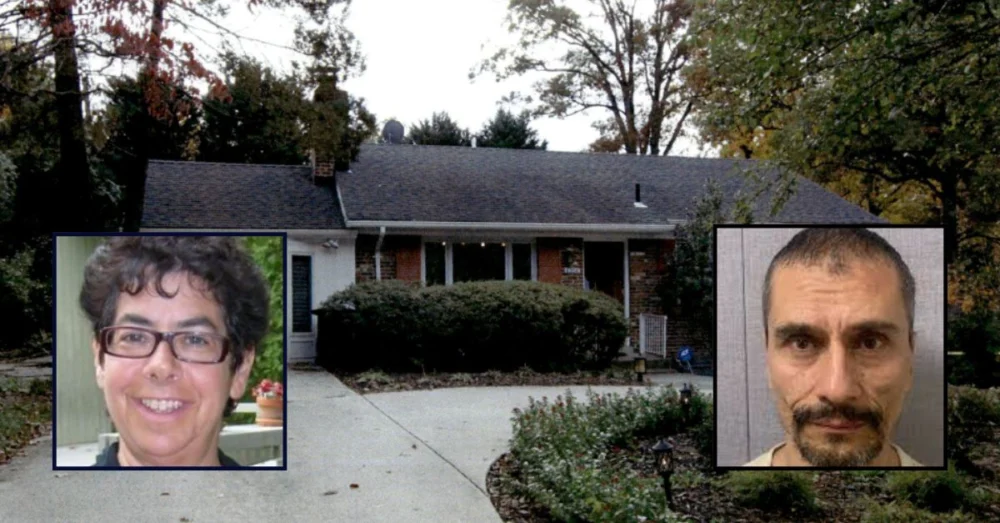
A harrowing saga of betrayal, financial exploitation, and a decade-long international manhunt culminated this week as Jorge Rueda Landeros, 56, was sentenced to 25 years in prison for the 2010 murder of Sue Ann Marcum, a beloved 52-year-old accounting professor at American University. The sentencing, handed down on Tuesday by the Montgomery County State Attorney’s Office, brings a measure of closure to a case that spanned over 13 years, during which Landeros fled the country and assumed a new identity to evade justice. A jury found Landeros guilty of second-degree murder in October, marking the end of a protracted legal battle that underscored the relentless pursuit of justice by law enforcement across international borders.
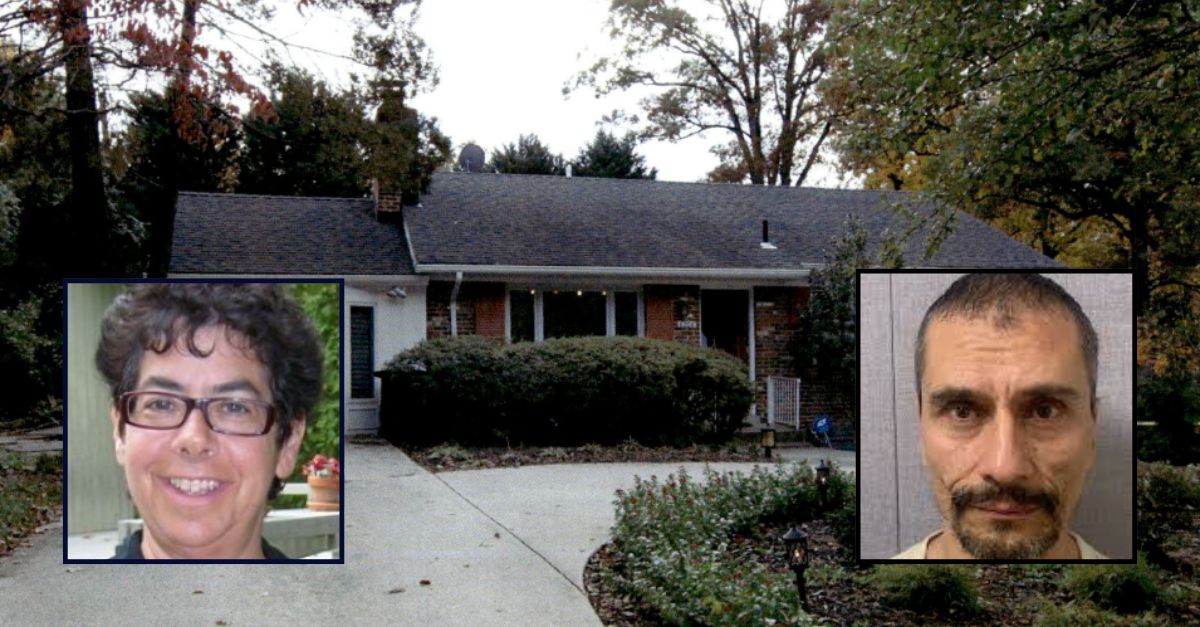
The tragic events unfolded in the upscale community of Bethesda, Maryland, where Marcum was found dead in her home, the victim of a brutal strangulation and beating. What initially appeared to be a staged burglary quickly unraveled to reveal a sinister plot driven by financial motives and a deeply personal betrayal. Landeros, who had served as Marcum’s Spanish teacher and yoga instructor, had cultivated a romantic relationship with her, ultimately exploiting her trust for a significant financial gain that would ultimately cost Marcum her life.
The Victim: A Life of Dedication and Trust Betrayed
Sue Ann Marcum was more than just a college professor; she was a pillar of the academic community at American University. As the director of the master’s in accounting program, her dedication to her students and her field was widely recognized. Her obituary highlighted her consistent excellence, noting that she was honored as "professor of the year" for three consecutive years—a testament to her pedagogical skill and profound impact on countless students. Colleagues and students alike remembered her as an engaging, supportive, and brilliant educator who poured her energy into her work and her relationships. Her professional success and warm demeanor made her an admired figure, but also, tragically, a vulnerable target for exploitation.
Marcum’s long-time friend, Larry March, reflected on her life and aspirations, noting that she had recently moved into a new home and was seemingly embarking on a new chapter. "She was kind of starting her life over again," March stated, lamenting that her life was "snuffed away from the Earth" just as she sought a fresh start. This sentiment underscores the profound sense of loss felt by those who knew her, emphasizing the cruel interruption of a life filled with promise and positive contributions. The narrative of her life, cut short by an act of extreme violence stemming from a breach of trust, painted a poignant picture for the court and the public.
A Relationship Sours: Financial Exploitation and Mounting Tension
The relationship between Marcum and Landeros began within the professional spheres of language and wellness instruction, evolving into a romantic entanglement. This personal connection paved the way for a perilous financial arrangement. Marcum, trusting Landeros, entered into an investment deal with him. However, this investment was not what it seemed. Over time, Marcum became increasingly suspicious and disillusioned with the arrangement, realizing she was being defrauded.
Evidence presented during the investigation and trial revealed the extent of Landeros’s financial manipulation. Marcum had invested a staggering sum of approximately $300,000, for which she received nothing in return. Of this substantial amount, Landeros personally pocketed around $250,000, enriching himself at her expense. The depth of her distress was vividly captured in an email Marcum sent to Landeros in October 2008, two years before her murder. "The vision of you sitting at the end of my kitchen table telling me you have no remorse for spending the money keeps appearing in my head now that I know that the amount was $50,000; it is physically playing havoc with my body," she wrote. This message offered a chilling glimpse into the emotional and physical toll the financial betrayal was taking on her, underscoring her realization of Landeros’s deceit and his apparent lack of contrition.
Further complicating the financial exploitation, investigators uncovered a critical detail: Landeros had made himself the sole beneficiary of Marcum’s $500,000 life insurance policy. This revelation solidified the prosecution’s theory of a premeditated crime driven by greed, presenting a clear and compelling motive for murder. The combination of the substantial cash siphoned from Marcum and the half-million-dollar life insurance policy painted a stark picture of Landeros’s calculated avarice, setting the stage for the tragic culmination of their relationship.
The Crime Scene and the Initial Investigation: A Staged Burglary
On October 25, 2010, the serenity of Marcum’s Bethesda home on the 6200 block of Massachusetts Avenue was shattered when her body was discovered. She had been brutally strangled and beaten, clear signs of a violent struggle. The initial scene suggested a home invasion, with investigators noting that entry appeared to have been gained through a rear window and several items of value were reported stolen. These details initially pointed towards a random act of violence or a robbery gone wrong.
However, experienced detectives from the Montgomery County Police Department quickly began to question the narrative. Seasoned investigators often look for inconsistencies in crime scenes, and in this case, certain elements suggested the burglary was staged. The manner of entry, the specific items taken or left behind, and the overall presentation of the scene led detectives to suspect that the perpetrator was someone known to Marcum, rather than a random intruder. This critical re-evaluation shifted the focus of the investigation dramatically, moving from a broad search for an unknown assailant to a concentrated effort to identify individuals within Marcum’s personal and professional circles who might have a motive. This methodical approach, characteristic of skilled police work in complex homicide investigations, proved crucial in unraveling the true nature of the crime.
The Breakthrough: DNA Evidence and the Pursuit of a Fugitive
The turning point in the investigation came with the meticulous collection and analysis of forensic evidence. Detectives recovered DNA belonging to an individual other than Marcum at the crime scene. This crucial piece of evidence became the linchpin of the case, holding the potential to identify the killer. Simultaneously, investigators delved into Marcum’s digital life, meticulously reviewing her emails and other communications. It was through this digital forensic work that her complex and troubling relationship with Jorge Rueda Landeros came to light.
Further investigation into Landeros’s background revealed a pattern of regular travel between the U.S. and his native Mexico. Crucially, just days before Marcum’s murder, Landeros had crossed the U.S. border. During one of his routine border crossings, U.S. Border Patrol agents had obtained a cheek swab for a DNA sample from Landeros. This routine procedure, often conducted for various law enforcement databases or identification purposes, would prove to be an invaluable stroke of fortune for the cold case.
In April 2011, approximately six months after Marcum’s murder, the scientific breakthrough arrived. Authorities confirmed that the unknown DNA found at the crime scene matched the DNA sample obtained from Landeros by Border Patrol. With this irrefutable forensic link, an arrest warrant was swiftly issued for Jorge Rueda Landeros. However, by the time the warrant was secured, Landeros had already vanished. He had fled across the border into Mexico, effectively disappearing into the vastness of another country and assuming a new identity to escape justice. The case, though solved in terms of perpetrator identification, now entered a prolonged phase of international fugitive apprehension. The challenges of tracking individuals who deliberately alter their identities and live off the grid in foreign countries are immense, often requiring extensive resources, diplomatic cooperation, and years of patient investigative work.
A Decades-Long Manhunt and Eventual Capture
The disappearance of Jorge Rueda Landeros initiated an 11-year international manhunt, a testament to the perseverance of law enforcement agencies. Tracking a fugitive who has actively taken steps to erase their past and create a new life in another country is an arduous task, fraught with legal and logistical complexities. It requires sustained effort, collaboration between federal and international agencies, and often, a stroke of luck or a critical piece of intelligence.
Throughout this period, Montgomery County Police, in conjunction with federal partners such as the FBI and international authorities, continued to pursue leads. The case remained open, a constant reminder of the justice yet to be served for Sue Ann Marcum. The passage of time often dims memories and scatters witnesses, making cold cases particularly challenging. Yet, the commitment to bringing Landeros to justice never wavered. Details surrounding Landeros’s life as a fugitive remain largely undisclosed, but the fact that he was eventually located, arrested, and extradited back to Maryland speaks volumes about the dedication of the investigators. His capture marked a significant victory for the principle that distance and time cannot indefinitely shield perpetrators from the consequences of their actions.
Trial, Conviction, and Sentencing: Justice Served
Following his apprehension and successful extradition, Jorge Rueda Landeros finally faced justice in a Montgomery County courtroom. His trial, a culmination of over a decade of investigative work, spanned nine days in October. The prosecution meticulously presented the overwhelming evidence, including the DNA match, the financial motive, Marcum’s revealing emails, and the circumstances surrounding her death. The defense, presumably, attempted to challenge the evidence or the interpretation of events, but the jury ultimately found the prosecution’s case compelling. After careful deliberation, the jury returned a verdict of guilty on the charge of second-degree murder.
The sentencing hearing on Tuesday, December 5, 2023, brought the legal proceedings to a close. Judge John Maloney sentenced Landeros to 25 years behind bars. This sentence, reflecting the gravity of the crime and the calculated nature of the murder, provides a definitive legal consequence for Landeros’s actions. While no sentence can ever fully restore a life lost, it represents the judicial system’s affirmation of justice for Sue Ann Marcum and her family. The second-degree murder conviction signifies that Landeros acted with malice aforethought but perhaps without the specific intent to kill that defines first-degree murder, or that the killing occurred during the commission of another felony, such as robbery. The 25-year term is a substantial penalty, acknowledging the premeditated financial exploitation and the brutal act of violence that followed.
Family’s Relief and Reflection on a Long Journey
For Sue Ann Marcum’s family, the sentencing marked a poignant and long-awaited moment of closure. Her brother, Alan Marcum, spoke publicly, expressing profound gratitude to all involved in the arduous pursuit of justice. He noted the emotional timing of the sentencing, occurring on what would have been his sister’s birthday. "Today, we’re standing here with the person who murdered her sentenced to 25 years thanks to the work of the Montgomery County police, the State’s Attorneys, and I’m very grateful for the work that they did, and appreciative for the care and attention that the jury paid and that the judge gave us throughout this case," he stated. His words underscored the immense relief felt by the family after more than 13 years of waiting, grieving, and hoping for accountability.
The sentiments expressed by Alan Marcum and Larry March highlight the enduring pain and the long shadow cast by such a crime. The fact that the family had to endure over a decade with the killer at large, living under a new identity, adds another layer of suffering to their loss. The finality of the court’s decision, therefore, is not merely a legal outcome but a crucial step in their healing process, allowing them to finally grieve without the burden of an unpunished perpetrator.
Broader Implications: The Long Arm of Justice and Vigilance Against Exploitation
The resolution of Sue Ann Marcum’s murder case carries several broader implications. Firstly, it serves as a powerful testament to the unwavering commitment of law enforcement to pursue justice, no matter how long it takes or how far a perpetrator flees. The successful apprehension and extradition of an international fugitive after 11 years sends a clear message that borders and assumed identities do not offer permanent sanctuary from accountability for violent crimes. This case exemplifies the intricate network of international cooperation required to bring such individuals to justice, involving complex legal and diplomatic efforts.
Secondly, the case casts a stark light on the dangers of financial exploitation within personal relationships. Marcum’s story is a tragic reminder that trust, especially when intertwined with significant financial dealings, can be dangerously abused. It underscores the importance of vigilance, even with those we hold dear, when large sums of money are involved. Financial crimes, particularly those that escalate to violence, highlight a pervasive vulnerability that individuals can face when their trust is betrayed by those closest to them.
Finally, the resolution offers a glimmer of hope for families of victims in other cold cases. It demonstrates that with persistent investigative work, advancements in forensic science like DNA analysis, and dedicated judicial processes, even the most challenging cases can eventually find resolution. While the pain of loss remains, the knowledge that justice has been served can provide a crucial measure of peace and affirmation for those left behind. The Sue Ann Marcum case will stand as a significant example of how patience, expertise, and cross-border collaboration can ultimately ensure that the long arm of justice prevails.




 Yuyun Lusiyani
 Joko Widodo
 Jia Lissa
 Pevita Pearce
 admin
admin
