
 Yuyun Lusiyani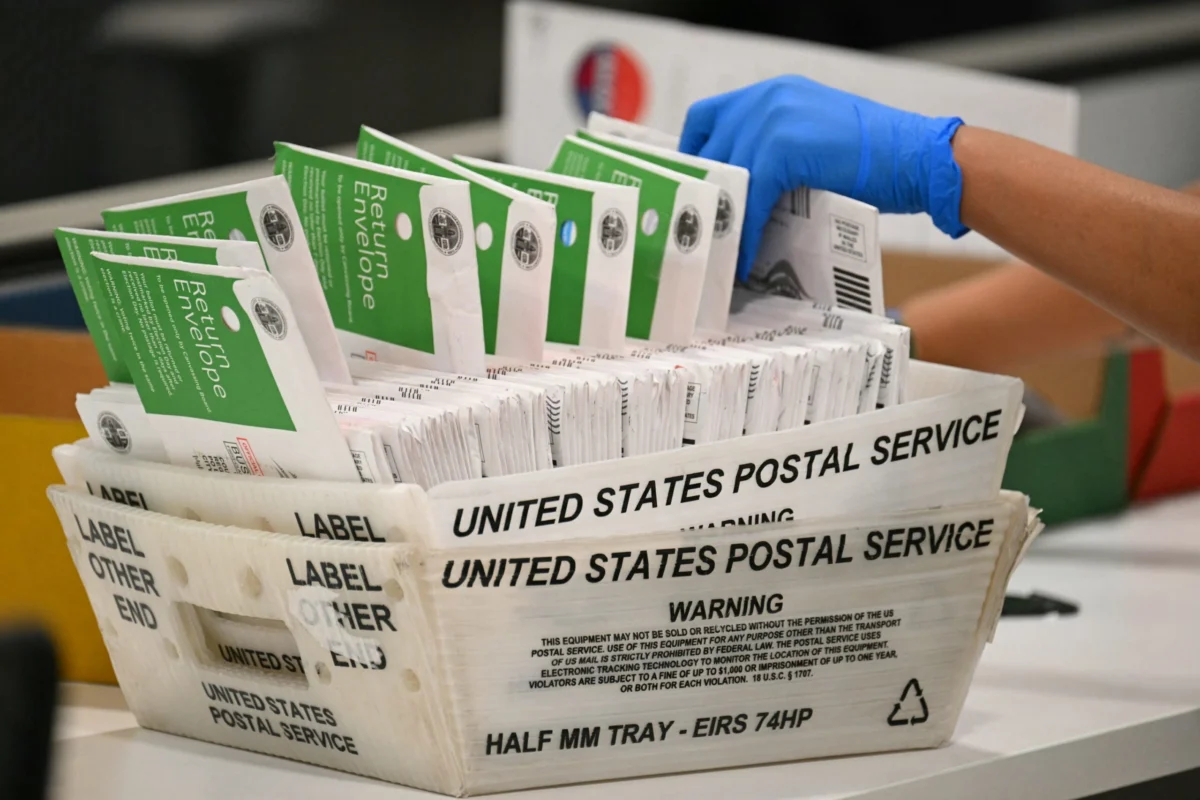
A newly revealed audit from the U.S. Postal Service’s Office of Inspector General (OIG) has exposed critical deficiencies in how some USPS facilities managed ballots during this year’s primary elections, prompting serious concerns among election experts about the agency’s capacity to handle the potentially unprecedented demands of the upcoming November general election. The findings, detailed in an audit dated September 4 but not previously publicized, highlight systemic issues including inadequate staff training, flawed ballot tracking, and errors leading to delays and incorrect postmarks, all of which could jeopardize the timely and accurate processing of millions of votes. This comes at a pivotal moment, as the U.S. Supreme Court deliberates on new, expansive rules proposed by the Postal Service to regulate mail voting, rules that critics warn could further strain the agency and disenfranchise eligible voters.
Deep Dive into Audit Findings: Procedural Gaps and Risks
The OIG’s comprehensive review, which spanned 14 processing facilities and 73 delivery units across eight states, uncovered a range of operational shortcomings despite the Postal Service’s overall claim of delivering nearly 99% of tracked ballots to election officials on time during the primaries. While this high success rate offers some reassurance, the audit underscores that "instances of non-compliance were low relative to overall volume," yet the "presence of similar procedural gaps across multiple facilities indicates a need for improved understanding and increased enforcement of Postal Service policies among its employees." These gaps, the report states, increase "the risk that Election and Political Mail is not handled, documented, monitored, and reported in accordance with Postal Service policy."
Specific issues identified include a stark lack of election-related training materials, which were absent in approximately 30% (22 of 73) of delivery units observed. Consequently, many local management personnel and employees demonstrated unfamiliarity with essential requirements for processing election mail. Crucially, the audit found that in 10 of 82 facilities, management was unaware of the correct postmarking procedures for ballots. This is a critical deficiency, as 14 states and Washington, D.C., count ballots only if they are postmarked by Election Day. Misunderstanding when a ballot should be postmarked – whether upon receipt at a processing facility or retail counter, or later when dispatched to election offices – directly jeopardizes a voter’s franchise. Furthermore, at five of nine mail processing facilities examined, retail clerks were found using hand stamps with inaccurate dates, leading to errors such as 56 ballots in Pennsylvania being incorrectly postmarked on the state’s primary election day.
Beyond postmarking, tracking and timely dispatch were also problematic. In 13 of 82 facilities, Postal Service workers failed to complete proper procedures to ensure election mail had been sent out from delivery units daily. A notable incident occurred at a Harrisburg, Pennsylvania, processing plant, where 108 ballots were inadvertently grouped with regular mail, necessitating an expedited transfer to Pittsburgh on election morning to ensure they would be counted. Such incidents, while seemingly isolated, collectively illustrate systemic vulnerabilities that could amplify significantly under the heightened volume and scrutiny of a general election.
The Broader Context: Mail-in Voting and the 2020 Election Landscape
The audit’s release comes amid an unprecedented surge in interest and reliance on mail-in voting, largely driven by the public health crisis of the (inferred) COVID-19 pandemic. Many states expanded absentee and mail-in voting options to ensure safe participation in the electoral process, transforming the U.S. Postal Service into an even more central player in American democracy. This increased reliance, however, also brought the agency into the political spotlight, with the administration at the time raising questions about the security and integrity of mail voting.
Against this backdrop, the Postal Service was already grappling with pre-existing challenges, including financial instability, operational overhauls, and staffing concerns. The sudden, exponential increase in election mail volume, coupled with the political polarization surrounding the issue, placed immense pressure on an agency historically tasked with the non-partisan delivery of critical communications. The audit serves as a stark reminder of the intricate logistics and robust procedural adherence required to manage election mail effectively, particularly when the stakes are as high as a presidential election.
Executive Order and Supreme Court Scrutiny: A Looming Decision
Adding another layer of complexity, the audit findings surfaced as the Supreme Court considers the legality and implementation of a March executive order signed by President Donald Trump. This order aimed to introduce new federal regulations for mail voting, including requirements for states to provide USPS with comprehensive lists of all eligible voters for mail ballots. In turn, the Postal Service would be mandated to use these lists to determine which ballots are sent to voters.
This executive order sparked immediate and widespread controversy. Critics, including top Postal Service employees and a whistleblower who filed a disclosure with U.S. Senator Richard Blumenthal (D-Conn.), expressed profound concerns that the proposed system, untested and potentially flawed in its design, could disenfranchise vast segments of eligible voters. ProPublica, reporting on these concerns, highlighted the severe operational challenges and the risk of excluding legitimate voters due to bureaucratic hurdles or data inaccuracies. The Supreme Court’s decision on whether to allow these rules to proceed holds significant weight, as their implementation could either streamline or severely complicate the mail-in voting process just weeks before the general election.
Stakeholder Reactions: Warnings and Affirmations
The audit’s revelations have elicited strong reactions from various stakeholders, reinforcing pre-existing concerns about the Postal Service’s readiness. Election experts were quick to emphasize the audit’s significance, urging the Supreme Court to consider its findings as it weighs the executive order. David Becker, executive director of the Center for Election Innovation and Research and a former Justice Department civil rights lawyer, stated unequivocally that the audit confirms USPS has "a long way to go to meet its core obligations of delivering election mail in a timely manner." Becker further criticized the administration and USPS, asserting their incapacity "to successfully meet vast and radical new responsibilities under the president’s executive order."
The American Postal Workers Union (APWU), representing postal workers, echoed these sentiments. In a brief filed with the Supreme Court, the union articulated that implementing the new rules would be impractical, posing a "significant risk of wide swaths of Americans not being able to vote by mail." This stance from the very workers on the front lines underscores the operational difficulties and potential for chaos that could arise from hastily imposed, untested regulations.
State election officials also voiced their apprehension. Even if the Supreme Court were to permit the new rules to advance, many officials warned that the requirements would be impossible to meet for the November election, given that mail ballots were already beginning to be sent out at the time of these discussions. Chelsey Wininger, executive director of the Democratic Association of Secretaries of State, characterized the audit as evidence that the Postal Service "struggles to implement even basic changes to postal process consistently," thereby bolstering opposition to any new rules introduced so close to an election. These collective statements highlight a broad consensus among those directly involved in election administration and mail delivery: the proposed changes carry substantial risks.
USPS Response and Path Forward: Acknowledgment and Commitment
In its official response included with the OIG audit, the Postal Service acknowledged the findings while simultaneously emphasizing its overall strong performance. The agency stated, "while we acknowledge that we can always reinforce and amplify our internal processes and procedures (and will continue to do so between now and November) — overall ballot mail performance is strong." USPS recognized instances where employees did not adhere to policies and procedures but categorized some errors, such as New Jersey ballots being mistakenly delivered to Tennessee, as "isolated incidents."
Crucially, the Postal Service agreed with nearly all of the OIG’s recommendations aimed at mitigating future problems. These recommendations likely include enhanced training programs, clearer guidelines for postmarking, and improved tracking protocols. However, the agency notably disagreed with one recommendation: to promptly notify customers impacted by new regional transportation plans. This point of disagreement could be significant, as changes in transportation logistics without adequate public notification could lead to confusion and delays for voters relying on the mail. The Postal Service did not immediately provide further comment when requested following the audit’s release.
Operational Failures in Detail: Training, Postmarking, and Tracking
The audit meticulously detailed the specific operational failures that, while not widespread enough to undermine the vast majority of primary ballots, represented critical vulnerabilities. The absence of election-related training materials at nearly a third of delivery units meant that many employees lacked clear, standardized instructions for handling a category of mail that requires extraordinary precision and timeliness. This void directly contributed to local management and employees being unfamiliar with crucial requirements for processing election mail, indicating a systemic failure in information dissemination and employee education.
The postmarking discrepancies were particularly concerning given their direct impact on ballot validity. In jurisdictions where a postmark by Election Day is mandatory, errors in applying the correct date, or even a lack of awareness among management about proper postmarking protocols, could lead to the rejection of otherwise valid ballots. The instances of incorrect hand stamps, such as the 56 ballots in Pennsylvania, demonstrate that even seemingly minor procedural lapses can have significant consequences for individual voters.
Furthermore, failures in tracking and dispatching election mail underscored potential points of failure in the logistical chain. The incident in Harrisburg, where 108 ballots were mixed with regular mail, illustrates how a lack of diligence in ensuring election mail is properly identified and expedited can result in critical delays. While the Postal Service managed to correct this particular error, the audit suggests that such oversights are not entirely isolated, pointing to a need for more rigorous daily checks and oversight mechanisms.
Implications for the November Election and Public Trust
The findings of this audit arrive at a critical juncture for American democracy. With an unprecedented number of voters expected to cast ballots by mail in the November election, the operational integrity of the Postal Service is paramount. The identified deficiencies, even if numerically small in the context of primary elections, raise serious questions about the agency’s capacity to scale up its operations and enforce policies effectively under the immense pressure of a general election. The risk of even a small percentage of ballots being delayed, misprocessed, or incorrectly postmarked could have significant implications for election outcomes, particularly in closely contested races.
Beyond the logistical challenges, the audit also touches upon the crucial issue of public confidence. In an environment already charged with political skepticism regarding election integrity, any reported failures in ballot handling by the USPS can erode trust in the electoral process. For an agency that prides itself on its role in facilitating democracy, maintaining impeccable standards in election mail is not just an operational requirement but a civic imperative. The Postal Service’s commitment to reinforce and amplify its internal processes between the audit and the November election is a positive step, but the scale of the challenge, coupled with the ongoing legal and political debates, underscores the fragility of the system and the need for continuous vigilance. The outcome of the Supreme Court’s deliberation and the USPS’s ability to implement its improvements will profoundly shape the narrative and reality of mail-in voting in the upcoming election and potentially beyond.




 Joko Widodo
 Jia Lissa
 Pevita Pearce
 admin
admin