
 Eva Lovia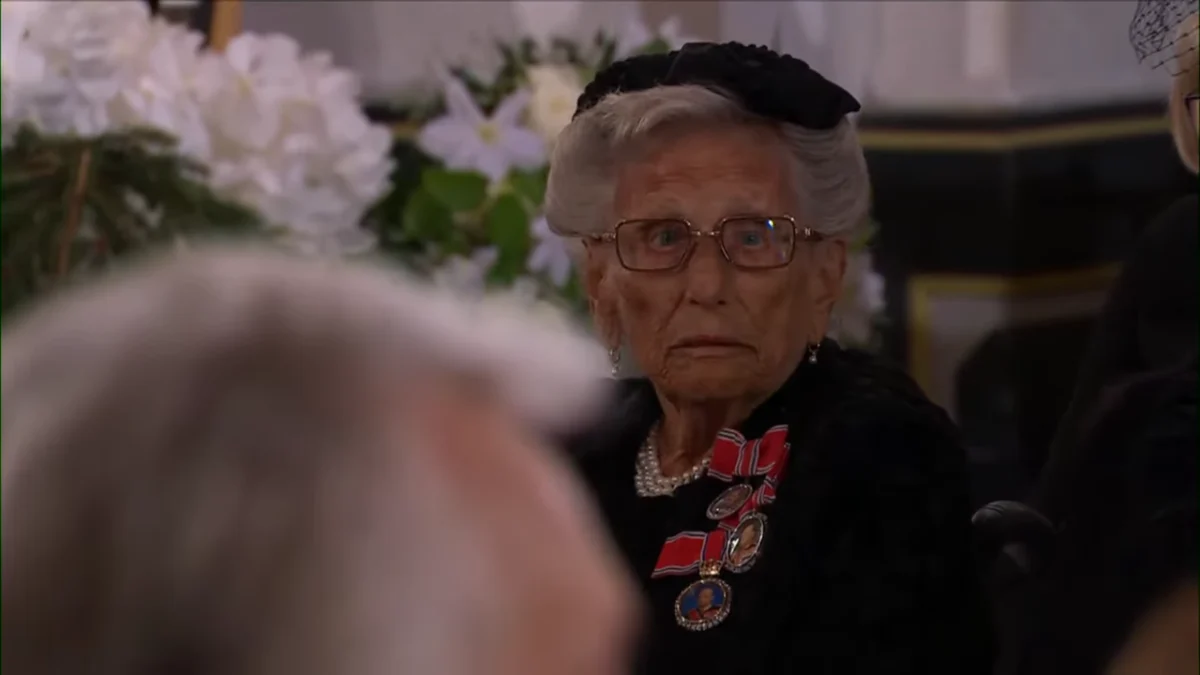
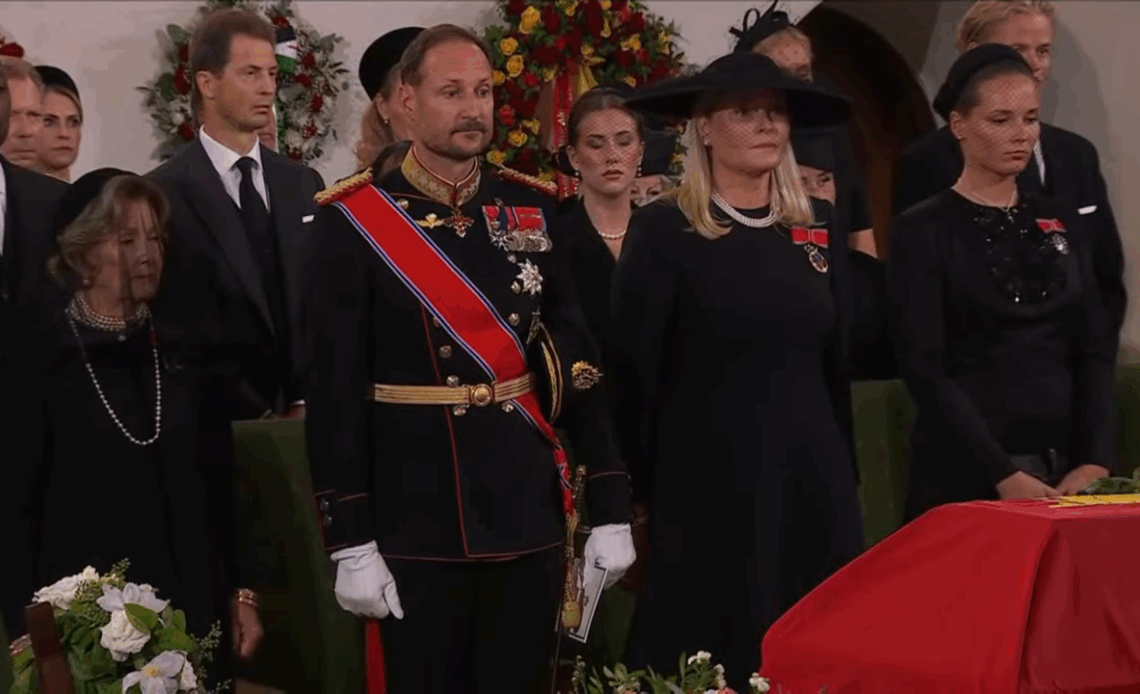
The solemn occasion of King Harald V’s funeral in Oslo today was marked by a poignant display of familial tribute, as the women of the Norwegian Royal Family each wore the Royal Family Order of King Harald V. This significant honour, a personal gift bestowed by the monarch upon the female members of his family, served as a visible testament to their enduring connection and the late King’s legacy. Queen Sonja, Queen Mette-Marit, Crown Princess Ingrid Alexandra, Princess Märtha Louise, and Princess Astrid were all adorned with this distinguished insignia, a tradition deeply rooted in European monarchies.
A Symbol of Familial Bond and Royal Tradition
The Royal Family Order of King Harald V, as observed during the funeral ceremonies, features a striking portrait of the late monarch captured at the time of his accession. This central image is meticulously framed by diamonds, lending an air of regal splendour, and is suspended from a distinctive red ribbon, accented by narrow blue and white stripes. This specific design is unique to each reigning monarch, with the portrait reflecting their image during their early reign. The Order itself is more than just an adornment; it represents a personal recognition from the sovereign and signifies a deep bond within the royal household.
The tradition of awarding a Royal Family Order is a long-standing practice across many European monarchies. Historically, it emerged as a means to bestow honours upon female members of royal families who, unlike their male counterparts, traditionally did not receive military honours or public appointments in the same capacity. These Orders are typically awarded at the monarch’s discretion, often in recognition of personal service and dedication to the Crown and the nation. For the women of the Norwegian Royal Family, wearing the Order at such a significant moment underscores their roles as pillars of the monarchy and their profound personal relationship with the late King.
A Tapestry of Royal Lineage and Honour
The presence of Princess Astrid, King Harald’s sister, wearing her own Royal Family Orders, further illuminated the continuity of this tradition. Princess Astrid is known to proudly wear all the Royal Family Orders she has received throughout her life, including those bestowed by her father, King Olav V, and her grandfather, King Haakon VI. This practice highlights the intergenerational nature of these honours and the enduring legacy of Norwegian royalty. Her attire at the funeral was a silent narrative of her lineage and her deep connection to the monarchs who have shaped Norway’s history.
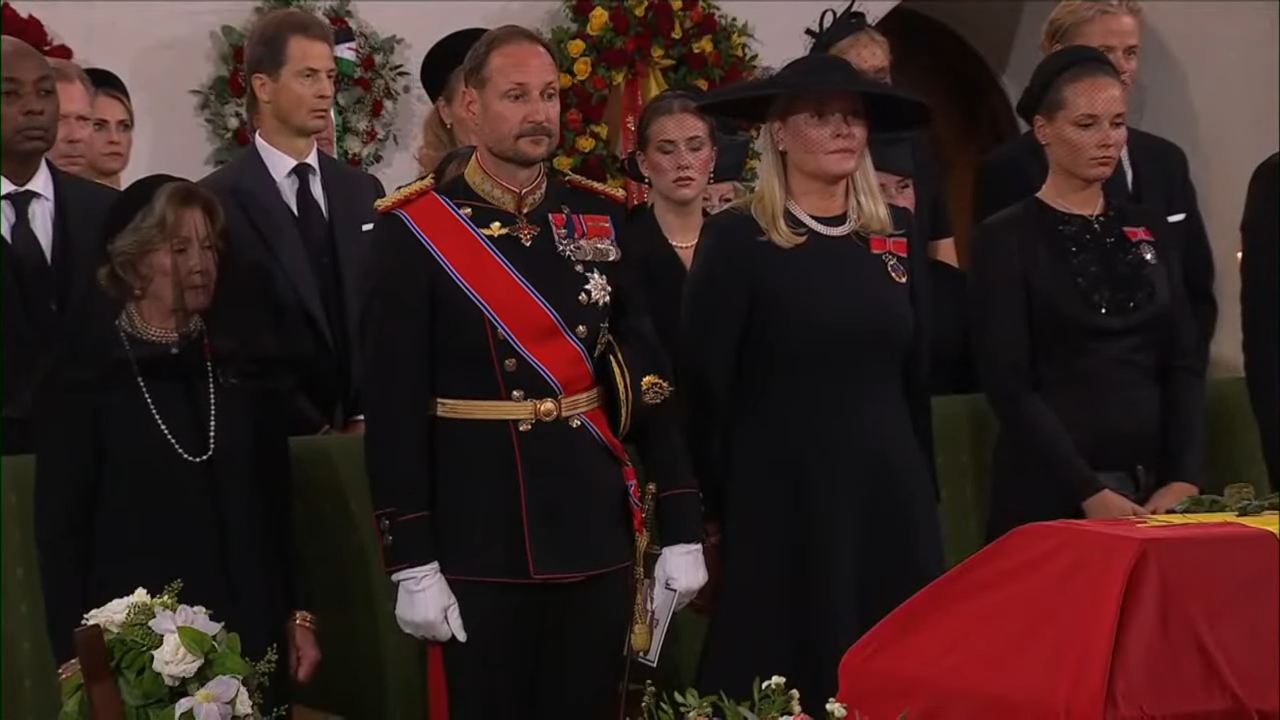
Similarly, King Harald’s late sister, Princess Ragnhild, had also been a recipient of her brother’s Royal Family Order prior to her passing in 2012. This inclusion, even in absence, speaks to the comprehensive recognition extended by King Harald to the women of his family. The Royal Family Order is not merely a decorative item; it is a tangible symbol of affection, respect, and the unique responsibilities held by royal women within their respective realms.
The Life and Reign of King Harald V
King Harald V, who passed away at the age of 89 on August 28th, was a beloved and respected figurehead for Norway. His reign, which began in 1991 upon the death of his father, King Olav V, was marked by a steadfast dedication to his constitutional duties and a genuine connection with the Norwegian people. He navigated Norway through significant periods of change, including economic shifts and evolving social landscapes, always maintaining a sense of continuity and stability.
Born Crown Prince Harald in 1937, he spent his formative years during World War II, experiencing exile in Sweden and the United States with his mother and sisters. This early experience of displacement undoubtedly shaped his understanding of the world and his commitment to his nation. He ascended the throne at a time when Norway was experiencing a period of prosperity and international engagement. Throughout his reign, he was a visible and active monarch, undertaking numerous state visits, engaging with citizens across the country, and championing various causes, particularly in the fields of sports and environmental protection. His informal approach and relatable demeanour earned him widespread affection.
Funeral Rites and National Mourning
The funeral ceremonies for King Harald V were held today in Oslo, a deeply solemn event that brought together the nation and international dignitaries to pay their final respects. The main ceremonies commenced at Oslo Cathedral, a historic and architecturally significant landmark that has served as the traditional site for royal coronations and funerals for centuries. This grand setting provided a solemn backdrop for the national farewell to their monarch.
Following the public ceremonies at the Cathedral, a more intimate funeral service was held at Akershus Castle Church. This smaller service was reserved for members of the royal family, distinguished royal guests, and key representatives of the Norwegian government, judiciary, and international leadership, including the Presidents of Finland and Iceland. This layered approach to the funeral arrangements allowed for both public commemoration and private mourning for those closest to the King. The proceedings were broadcast nationally and internationally, allowing millions to witness the solemn tribute to a much-loved sovereign.
International Tributes and Expressions of Condolence
The passing of King Harald V has resonated across the globe, prompting widespread expressions of condolence from heads of state and royal houses. Leaders from across Europe and beyond have acknowledged his significant contributions to his nation and his role as a unifying figure. The presence of foreign dignitaries at the funeral ceremonies served as a testament to the respect and admiration King Harald commanded on the international stage. These tributes underscore the broader impact of his reign and the loss felt not only by Norway but by the wider European community of nations.
The Role of the Royal Family Order in Monarchy
The Royal Family Order, while a personal honour, plays a significant role in the symbolic architecture of monarchies. It serves as a visual representation of the monarch’s authority and their ability to confer personal favour and recognition. For the female recipients, it signifies their inclusion within the innermost circle of the royal family and their importance to the continuity of the dynasty.
The practice of wearing multiple Royal Family Orders, as exemplified by Princess Astrid, highlights a fascinating aspect of royal protocol and personal history. Each Order represents a distinct period and a specific sovereign, creating a personal narrative worn visibly by the individual. This tradition allows for the commemoration of past reigns and the recognition of continued familial ties across generations. In a world where traditions are constantly evolving, the enduring presence of such symbolic honours within royal families speaks to their significance in maintaining a sense of history, identity, and continuity.
The Succession and Future of the Norwegian Monarchy
With the passing of King Harald V, the mantle of leadership has now passed to his son, Crown Prince Haakon, who will reign as King Haakon VII. The transition of power within a constitutional monarchy is a critical juncture, and the Norwegian Royal Family has a well-established precedent for smooth successions. Crown Prince Haakon, alongside his wife Crown Princess Mette-Marit, has been actively involved in royal duties for many years, preparing them for this significant responsibility.
The presence of Crown Princess Mette-Marit and the future Queen, Crown Princess Ingrid Alexandra, at the funeral, each wearing their Royal Family Orders, also signals the continuation of this tradition into the next generation. Crown Princess Ingrid Alexandra, as the elder of King Harald’s grandchildren and heir to the throne after her father, will undoubtedly play an increasingly prominent role in the years to come. The Royal Family Order, therefore, will continue to be a symbol of recognition and continuity for future Queens and Princesses of Norway, linking them to the rich history and enduring legacy of their royal predecessors, including the late King Harald V. The ceremonies today were not just a farewell, but also a symbolic passing of the torch, emphasizing the enduring strength and continuity of the Norwegian Royal Family.




 Yuyun Lusiyani
 Joko Widodo
 Jia Lissa
 Pevita Pearce
 admin
admin
