
 Jia Lissa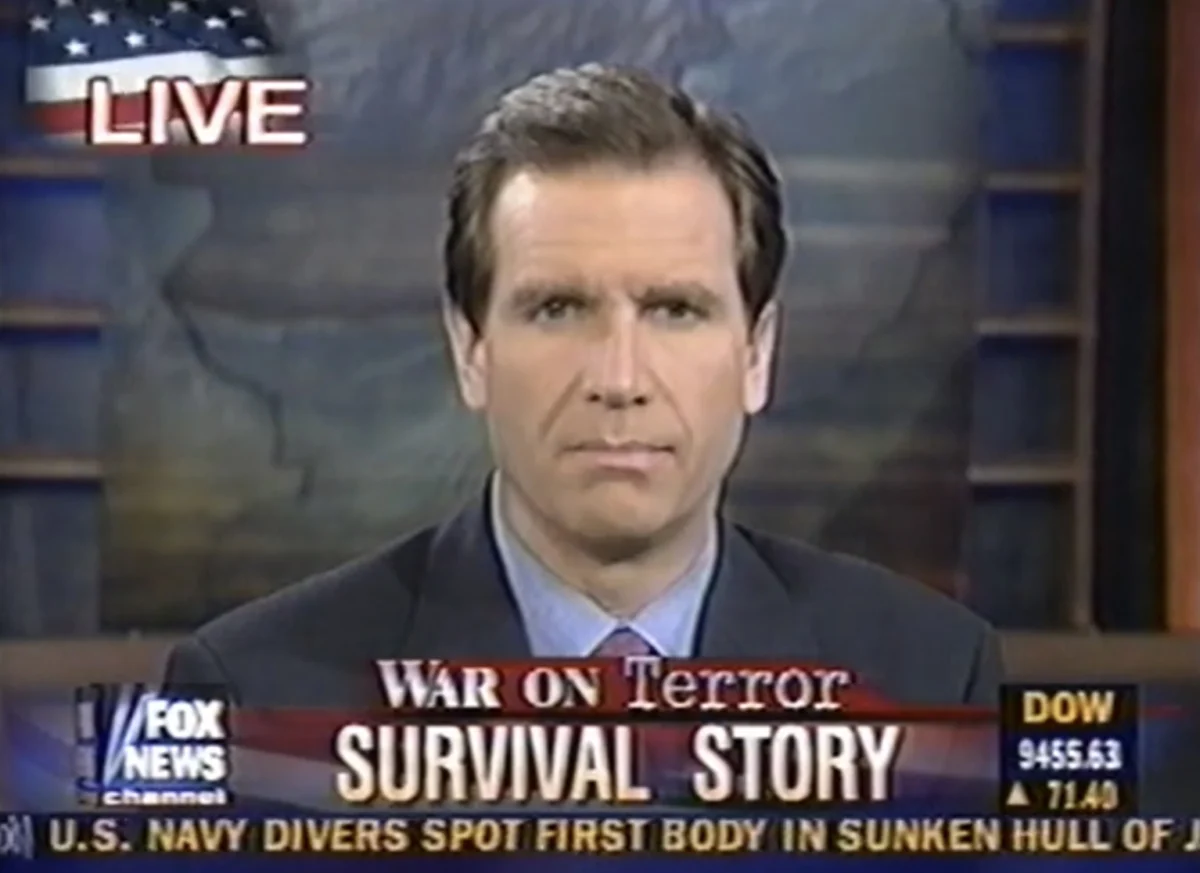
After approximately eight hours of continuous live broadcasting, Fox News anchor Jon Scott finally exited the studio and began his walk toward Grand Central Terminal at approximately 5:30 p.m. on September 11, 2001. The scene outside the News Corporation building on Sixth Avenue was a jarring departure from the usual midtown Manhattan rush. The avenue, typically a cacophony of yellow cabs and pedestrians, was utterly deserted. Under a clear, late-afternoon sun, Scott stood in the center of the thoroughfare and looked downtown. Three miles away, thick plumes of black smoke continued to rise from the footprint of the World Trade Center, marking the site where the twin towers had stood only hours earlier.
Scott eventually reached Grand Central and boarded a northbound train to leave the island. During the commute, he observed a fellow passenger borrow a cellphone from another traveler. The man dialed his home, and when his wife answered, he uttered two words that resonated with the collective relief and trauma of a city: “I’m alive.” Twenty-five years later, Scott, now the veteran anchor of the FOX Report, recalls that moment with profound clarity. He noted that under normal circumstances, such a call would be mundane—a request for dinner plans or a reminder about dry cleaning. On that day, however, the simple confirmation of existence was the only message that mattered.
The Morning of September 11: From Routine to Catastrophe
The events of September 11, 2001, began as a standard news day for the staff at Fox News. Jon Scott, who was part of the original team that launched the network in 1996, had reported to work expecting to lead a broadcast focused on lifestyle segments, including a book interview and a musical performance. The transition from a routine morning to a national emergency happened in an instant.
As Scott entered the studio, he received an urgent communication from his producer: a plane had struck 1 World Trade Center (the North Tower). At 8:46 a.m., American Airlines Flight 11 had impacted the building between floors 93 and 99. In the initial moments, the nature of the event was unclear. Like many journalists across the country, Scott found the information difficult to process. The human brain, he later reflected, struggles to categorize experiences for which there is no precedent.
Early reports from various outlets suggested that a small, private aircraft might have accidentally veered off course. Scott, who was in the process of earning his pilot’s license at the time, utilized his knowledge of aviation to analyze the footage. He found the "small plane" theory difficult to reconcile with the massive, gaping hole and the intensity of the smoke visible on the television monitors.
A Chronology of the Attacks
To understand the magnitude of the broadcast Scott anchored, it is necessary to review the rapid succession of events that defined that morning:
- 8:46 a.m.: American Airlines Flight 11 crashes into the North Tower of the World Trade Center.
- 9:03 a.m.: United Airlines Flight 175 strikes the South Tower (2 World Trade Center), visible on live television.
- 9:37 a.m.: American Airlines Flight 77 crashes into the western facade of the Pentagon in Arlington, Virginia.
- 9:59 a.m.: The South Tower of the World Trade Center collapses in less than 10 seconds.
- 10:03 a.m.: United Airlines Flight 93 crashes in a field near Shanksville, Pennsylvania, after passengers and crew fought back against hijackers.
- 10:28 a.m.: The North Tower of the World Trade Center collapses.
As Scott watched the second jet, United Airlines Flight 175, enter the frame of a WABC-TV helicopter feed, he initially thought the director was playing a delayed replay of the first impact. However, as the camera panned, the reality became clear: both towers were burning. At that moment, the narrative shifted from a tragic accident to a coordinated terrorist attack.
Professionalism Amidst Emotional Turmoil
One of the most significant challenges for news anchors on September 11 was maintaining a professional demeanor while processing the same shock as their audience. Scott recalls a moment shortly after the second impact when a floor director in the studio began to cry audibly. The sight of a colleague breaking down nearly compromised his own resolve.
Scott made a conscious decision to suppress his emotions to ensure the clear communication of facts. He reasoned that an emotional breakdown on air would provide no benefit to a public desperate for information and stability. This dedication to objective reporting was bolstered by his previous experience as a correspondent for NBC’s Dateline, where he had reported on the 1993 World Trade Center bombing. That prior assignment had given him a unique understanding of the complex’s layout and its history as a target for terrorism.
During the broadcast, Scott was among the first journalists to mention Osama bin Laden as a potential suspect. While he immediately worried that he had speculated too early, his instincts were based on his knowledge of the 1993 bombing and the rising threat of Al-Qaeda throughout the late 1990s. Years later, an Air Force flight nurse informed Scott that military leaders watching the coverage had been surprised by how quickly the anchor had identified the likely perpetrator, asking, "How did he know?"
Supporting Data: The Human and Economic Cost
The scale of the tragedy that Scott reported on that day is reflected in the staggering statistics that emerged in the months and years following the attacks. The loss of life remains the most significant metric of the day’s horror:
- Total Casualties: 2,977 people were killed in the attacks, excluding the 19 hijackers. This included 2,753 in New York, 184 at the Pentagon, and 40 in Pennsylvania.
- First Responders: The death toll included 343 firefighters, 23 New York City police officers, and 37 Port Authority officers.
- Economic Impact: The estimated cost of the damage to the World Trade Center site and surrounding infrastructure was roughly $60 billion. The total economic loss to the city of New York in the subsequent months was estimated at $123 billion.
- Aviation Industry: Following the attacks, the U.S. airspace was closed for several days. In the fourth quarter of 2001 alone, U.S. airlines reported a combined loss of over $2 billion.
For journalists like Scott, these numbers were not just data points; they represented the families and neighbors of the community in which they lived and worked.
The Lingering Psychological Impact on the City
The trauma of September 11 created a state of heightened anxiety in New York City that persisted for years. Scott noted that the "rawness" of the event changed how he and his colleagues reacted to subsequent breaking news.
A primary example occurred just two months later, on November 12, 2001, when American Airlines Flight 587 crashed in the Belle Harbor neighborhood of Queens shortly after takeoff from JFK International Airport. When Scott received the call from his superiors stating, "Looks like they’ve hit us again," he experienced a visceral physical reaction. Although the crash was eventually determined to be the result of pilot error and structural failure rather than terrorism, the immediate assumption of an attack highlighted the collective PTSD of the city’s residents and media professionals.
Broader Implications and Journalistic Legacy
Twenty-five years later, the media landscape has evolved significantly, but the role of the "original" cable news anchors remains a point of historical continuity. Jon Scott is one of the few broadcasters who remains at the same network where he served as a primary witness to the 2001 attacks. His experience underscores the evolution of cable news from a burgeoning industry into a primary source of real-time national discourse.
The events of 9/11 also fundamentally altered journalistic protocols regarding live coverage of mass-casualty events. The ethical considerations of what to show on screen—and how to describe it—were forged in the fires of that Tuesday morning. For Scott, the legacy of that day is found not just in the geopolitical shifts that followed, but in the quiet, human moments that occurred when the cameras were turned off.
The image of a deserted Sixth Avenue and the sound of a stranger’s voice on a train remain the most enduring memories for the man who spent eight hours describing the end of an era to millions of viewers. As Scott reflects on the quarter-century mark, those memories serve as a reminder of the resilience of the city and the heavy responsibility of those tasked with telling its story. The simple phrase "I’m alive" remains the most powerful headline of the day, a testament to the human spirit in the face of unprecedented catastrophe.




 Yuyun Lusiyani
 Joko Widodo
 Pevita Pearce
 admin
admin
