
 Jia Lissa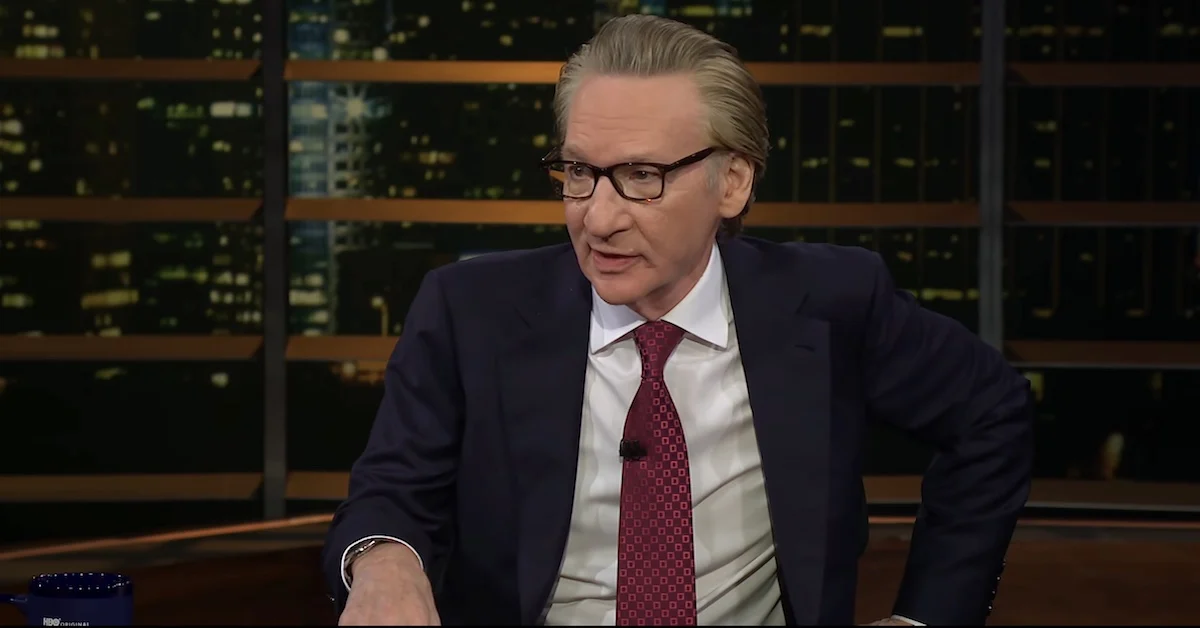
HBO host Bill Maher utilized the latest broadcast of his program Real Time to deliver a bifurcated critique of the American political landscape, addressing both the Republican base’s allegiance to former President Donald Trump and what he characterized as the moral cowardice of the Democratic Party regarding international conflict. During the Friday evening broadcast, Maher positioned himself as a rare bridge between polarized factions, claiming to possess a unique "standing" with conservative viewers while simultaneously lambasting their continued support for the MAGA movement. The episode, which centered largely on the upcoming midterm elections, served as a platform for Maher to challenge the fundamental strategies of both major parties, weaving together contemporary economic concerns with long-standing grievances regarding political rhetoric and international relations.
The Critique of the MAGA Movement and Economic Populism
Maher’s address to the Republican base was framed as a direct appeal to those who view him as a respectful, if ideologically opposed, interlocutor. He noted that many conservatives approach him with the sentiment that, while he is not "on their team," he does not dismiss them with the same perceived elitism found in other media circles. However, Maher leveraged this perceived rapport to deliver a blunt assessment of the current state of the Republican Party, which he described as being under the influence of a "cult" personality.
Central to his criticism were the recent economic promises made by Donald Trump, specifically a pledge to provide $5,000 checks to Americans should Republicans secure victory in the midterm elections. Maher dismissed these promises as a "fantasy," drawing parallels to other proposed economic shifts such as massive tariff implementations and drastic spending cuts spearheaded by the Department of Government Efficiency (DOGE).
From a factual standpoint, economic analysts have frequently questioned the viability of direct cash transfers on such a scale without significant inflationary consequences or a massive increase in the national deficit. According to data from the Congressional Budget Office (CBO), the U.S. federal deficit is already projected to remain high over the next decade; adding multi-trillion-dollar stimulus programs or direct payments would require a fundamental restructuring of the federal budget. Maher argued that the "con" of such promises is repetitive, questioning why the electorate continues to applaud proposals that lack a clear legislative or fiscal path to reality.
The Democratic Party and the "Moral Confusion" Over Gaza
While Maher was scathing in his assessment of the Republican base, he saved equally sharp criticism for Democratic leadership and the progressive wing of the party. He specifically targeted the rhetoric surrounding the conflict in Gaza, accusing Democratic politicians of "moral confusion" and "cowardice." This segment of the show saw Maher doubling down on one of the most controversial moments of his career: his 2001 remark following the September 11 terrorist attacks.
In 2001, Maher was famously ousted from his ABC show, Politically Incorrect, after arguing that the 9/11 terrorists could not be described as "cowards" because they remained with the planes as they struck their targets. On Friday, Maher revisited this assertion, stating that while the terrorists were not cowards, the same could not be said for modern Democratic politicians. He argued that the party’s failure to take a more definitive stand in support of Israel—and its internal divisions over accusations of "genocide" in Gaza—represents a failure of political courage.
The internal rift within the Democratic Party is well-documented. Recent polling from the Pew Research Center indicates a significant generational and ideological divide among Democrats regarding the Israel-Palestine conflict. Younger voters and the progressive wing are increasingly critical of the Biden administration’s support for the Israeli military offensive, while establishment Democrats maintain a more traditional pro-Israel stance. Maher’s comments reflect a broader frustration among centrist and liberal hawks who believe the party is drifting toward a foreign policy stance that he views as morally ambiguous or politically motivated by fear of the "woke" electorate.
Historical Context: From Politically Incorrect to Real Time
To understand the weight of Maher’s recent comments, it is necessary to examine the chronology of his career as a political commentator. Maher has long occupied a space that defies simple partisan categorization.

- 1993–2002: Maher hosted Politically Incorrect, first on Comedy Central and then on ABC. The show was known for its diverse panels and Maher’s willingness to challenge liberal orthodoxy.
- September 2001: Following the 9/11 attacks, Maher’s comments regarding the definition of "cowardice" led to a massive advertiser boycott and the eventual cancellation of his show in 2002.
- 2003–Present: Maher launched Real Time on HBO, a platform that afforded him greater creative freedom and no reliance on traditional advertisers. Over the last two decades, he has transitioned from being a fierce critic of the George W. Bush administration and organized religion to becoming a vocal critic of "cancel culture" and progressive "wokeness."
This evolution has allowed Maher to maintain a viewership that includes a significant minority of Republicans and independents who feel alienated by mainstream liberal media. His recent comments are an extension of this long-term strategy: maintaining his credentials as a critic of the right while asserting that the left has lost its way.
Economic Analysis of Midterm Pledges
The "DOGE" cuts and tariff discussions mentioned by Maher refer to a broader Republican platform aimed at dismantling the federal bureaucracy and protecting domestic industry. However, the feasibility of these measures remains a point of intense debate.
- Tariffs: While the Trump administration argues that tariffs protect American jobs, many economists point to data showing that these costs are often passed on to American consumers, effectively acting as a regressive tax.
- DOGE (Department of Government Efficiency): The concept of a department dedicated to slashing government waste is a perennial campaign staple. However, historical attempts at massive government downsizing, such as the Grace Commission in the 1980s, have often struggled to implement recommendations due to the entrenched nature of federal spending on entitlements (Social Security and Medicare) and defense, which together make up the vast majority of the budget.
Maher’s skepticism of the $5,000 check promise is rooted in the reality that such a program would cost approximately $1.25 trillion (assuming 250 million eligible adults), a sum that would likely require either massive borrowing or unprecedented cuts to existing social safety nets—cuts that are generally unpopular with the very voters the promise is intended to attract.
Broader Impact and Sociopolitical Implications
Maher’s "equal opportunity offender" approach highlights a growing trend in American media where traditional partisan lines are becoming blurred by populist rhetoric. By calling the MAGA movement a "cult" and the Democratic leadership "cowards," Maher is tapping into a sentiment of profound dissatisfaction with the institutional status quo.
The implications for the upcoming midterm elections are significant. If Maher is correct in his assertion that the election will be a "referendum" on Donald Trump’s job performance and character, then the Democrats’ strategy of focusing on the former president’s legal and personal controversies may prove effective. However, Maher’s critique of Democratic "cowardice" suggests that the party risks losing its base or failing to project a sense of strength and moral clarity, which could suppress turnout or drive moderate voters toward third-party candidates or stay-at-home apathy.
Furthermore, Maher’s willingness to revisit his 9/11 comments suggests a calculated attempt to frame the current political moment as one of "moral confusion." By comparing the "bravery" of terrorists (in a purely technical, non-moral sense) to the "cowardice" of politicians, he is attempting to shock his audience into a realization about the perceived lack of conviction in modern governance.
Conclusion and Future Outlook
As the midterm elections approach, the rhetoric on Real Time serves as a microcosm of the broader American debate. Maher’s dual critique serves as a reminder that the electorate is not a monolith and that there is a significant appetite for commentary that challenges both the "con man" tactics of populist movements and the "moral confusion" of established political parties.
While Maher’s blunt language—calling voters "not that bright" and politicians "cowards"—may alienate some, it reinforces his brand as a truth-teller who is unburdened by the need for partisan approval. Whether his "standing" with conservatives will hold after such a direct attack on their loyalty to the MAGA movement remains to be seen, but his role as a provocative voice in the media landscape continues to be defined by his refusal to adhere to the standard scripts of modern political discourse. The coming months will determine if Maher’s prediction—that the Democrats "have this one in the bag" due to the referendum nature of the election—holds true, or if the economic promises and cultural grievances of the right will overcome the critiques of the "equal opportunity offender."




 Yuyun Lusiyani
 Joko Widodo
 Eva Lovia
 Pevita Pearce
 admin
admin
 Lina Irawan