
 Jia Lissa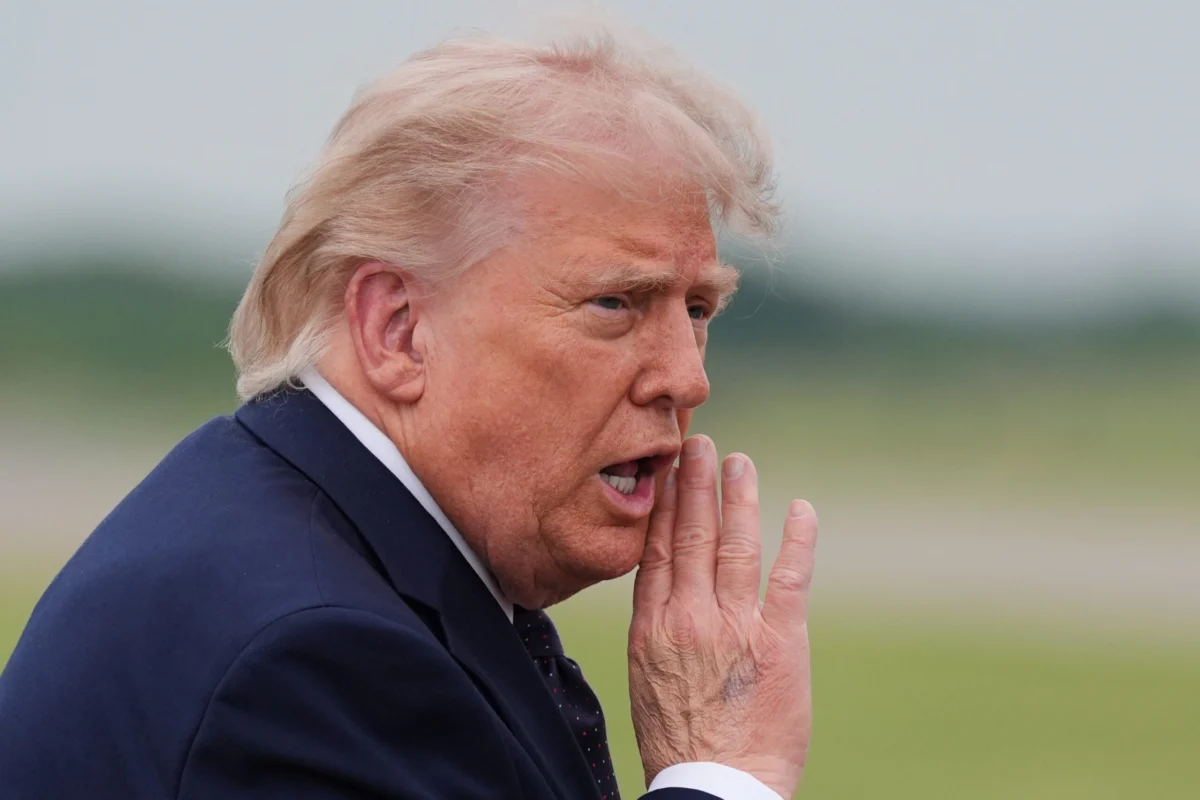
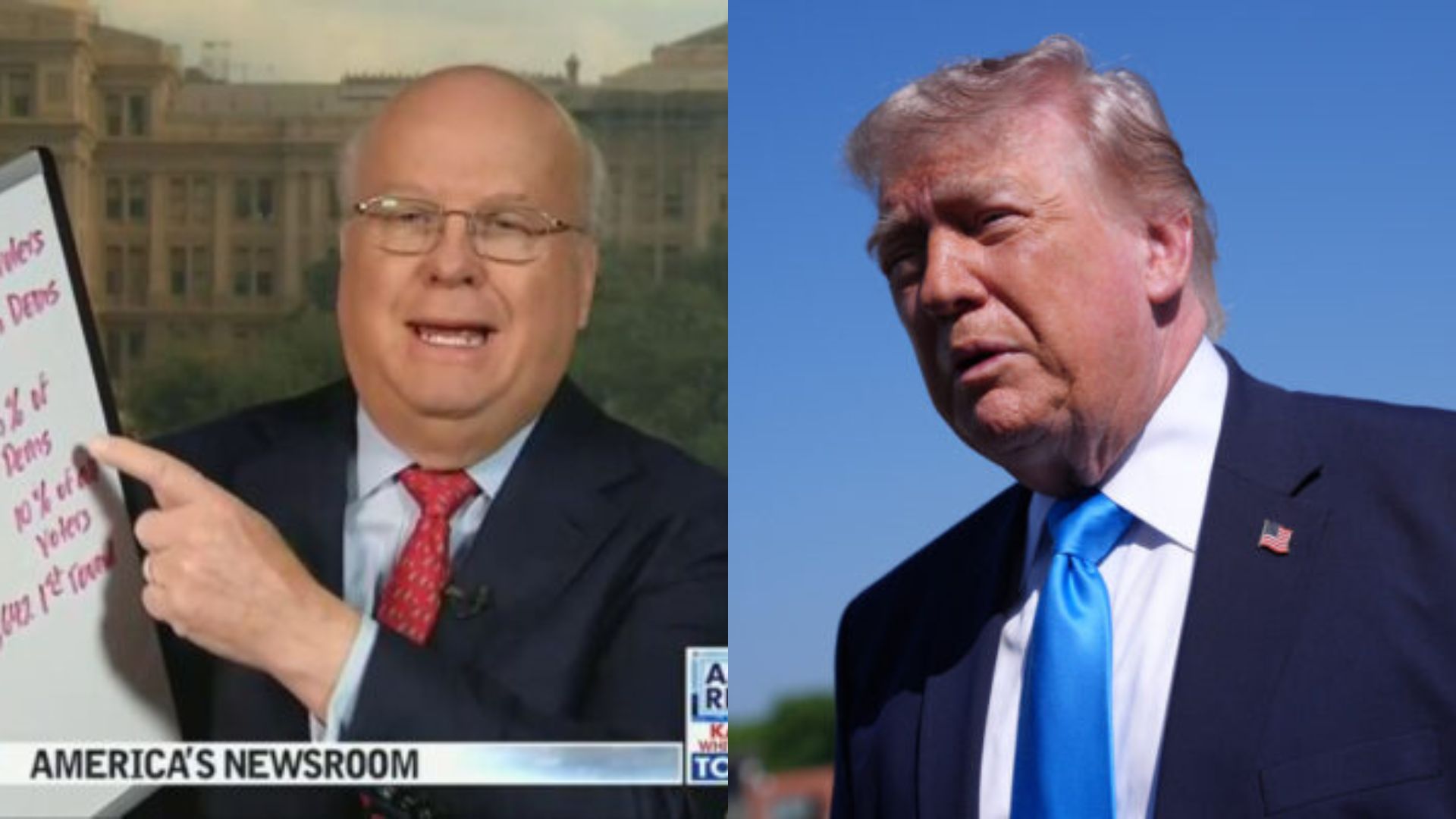
The long-standing ideological and personal rift between former President Donald Trump and veteran Republican strategist Karl Rove escalated significantly on Monday following reports that Rove intended to cross party lines in an upcoming Texas election. The confrontation was ignited by a report from the Texas Tribune detailing Rove’s decision to withhold support from a Republican candidate he characterized as a "bigot," opting instead to vote for a Democratic challenger. Trump, utilizing his Truth Social platform, issued a blistering critique of Rove, labeling him a "stone cold loser" and a "RINO" (Republican In Name Only), while accusing him of suffering from "Trump Derangement Syndrome." This latest exchange highlights the deepening fractures within the Republican Party as it grapples with internal disagreements over candidate quality, rhetoric, and the future direction of the conservative movement.
The immediate catalyst for the friction was Rove’s private declaration during a member-only lunch that he would not support Bo French, the Republican nominee for the Texas Railroad Commission. Rove’s decision was reportedly spurred by a social media post made by French on Sunday, which featured a photograph of a diverse group of students at a University of Texas at Austin athletic event. French’s caption, which suggested that the presence of South Asian students was a "problem" that was "far worse than anyone imagined," drew swift and severe condemnation from both sides of the political aisle. Rove, known as the "architect" of George W. Bush’s successful presidential campaigns, informed attendees that French’s comments were unacceptable and that he would instead cast his vote for the Democratic nominee, Jon Rosenthal.
The Rhetorical Escalation on Truth Social
In his response, Donald Trump framed Rove’s decision not as a principled stand against intolerance, but as a symptom of a decade-long professional grudge. Trump asserted that Rove has been consistently incorrect in his political prognostications and detrimental to the Republican Party’s interests. "Karl Rove is so bad for the Republican Party, and completely wrong so often," Trump wrote. He further questioned why major conservative media outlets, such as Fox News and the Wall Street Journal, continue to provide Rove with a platform. Trump’s assertion that he has spent ten years "beating back" the policies and people Rove championed underscores the fundamental shift in the GOP from the neoconservative era of the early 2000s to the contemporary populist movement led by Trump.
The term "Trump Derangement Syndrome," utilized by the former president in his missive, has become a standard rhetorical tool within the MAGA movement to dismiss criticism from establishment figures. By framing Rove’s opposition to Bo French as an extension of an anti-Trump bias, the former president effectively aligned himself with the embattled Texas candidate, even as other prominent Texas Republicans moved to distance themselves from French’s remarks.
Bo French and the University of Texas Controversy
The controversy surrounding Bo French began with a post on X (formerly Twitter) that targeted the demographic makeup of the University of Texas at Austin (UT Austin). French shared a photo of students—many of whom appeared to be of South Asian descent—and wrote: "I heard UT graduation this year looked like this. I didn’t believe it. The problem is now obviously far worse than anyone imagined." The post was widely interpreted as a critique of the university’s diversity and an expression of xenophobia, specifically targeting the legal immigrant and citizen populations that contribute to the university’s academic community.
The backlash was not limited to Democratic circles. Senator John Cornyn, a senior Republican from Texas, issued a stern public rebuke of French. Cornyn questioned whether other Republican officials would have the fortitude to condemn "intolerance and racism" or if they would allow such rhetoric to become "normalized." Cornyn warned that the failure to address such bigotry is "how great political parties self-destruct." The internal pressure on French highlights a significant concern for Texas Republicans: the state’s rapidly changing demographics.
Demographic Shifts and Political Strategy in Texas
The strategic implications of French’s remarks are significant given the demographic trends in the Lone Star State. Texas has seen a substantial increase in its Asian American and Pacific Islander (AAPI) population over the last decade. According to U.S. Census Bureau data, the Asian population in Texas grew by approximately 64% between 2010 and 2020, making it one of the fastest-growing demographic groups in the state. In major metropolitan hubs like Houston, Austin, and Dallas, the AAPI community represents a vital voting bloc and a major component of the economic and educational landscape.
Political analysts suggest that rhetoric perceived as hostile toward South Asian or immigrant communities could jeopardize Republican efforts to maintain control over statewide offices in an increasingly competitive environment. While Texas remains a Republican stronghold, the margins in statewide races have narrowed in recent cycles. For a strategist like Rove, who has long advocated for an "inclusive" Republicanism to ensure long-term viability, French’s comments represent a liability that transcends a single election.
Karl Rove: A History of Party Loyalty and Rare Defections
Karl Rove’s decision to vote for a Democrat is a rare occurrence in a career defined by fierce Republican partisanship. Rove told attendees at the Houston event that the last time he supported a Democrat was in 1994, when he voted for Texas Lieutenant Governor Bob Bullock during his reelection bid. Bullock was a legendary figure in Texas politics, known for his ability to work across the aisle, particularly with then-Governor George W. Bush.
Rove’s career is inextricably linked to the rise of the Bush dynasty. As the chief strategist for George W. Bush, Rove was credited with engineering a political machine that successfully navigated the 2000 and 2004 presidential elections. His strategy focused on mobilizing the base while making strategic inroads with minority voters—a philosophy that stands in stark contrast to the rhetoric currently being utilized by candidates like French. By choosing to support Jon Rosenthal, Rove is signaling that there are boundaries of decorum and inclusivity that, when crossed, supersede party loyalty.
The Role of the Texas Railroad Commission
While the name suggests a focus on transportation, the Texas Railroad Commission is actually the state’s primary regulatory body for the oil and natural gas industry. It is one of the most powerful regulatory agencies in the United States, given Texas’s status as a global energy leader. The commission oversees pipeline safety, gas utilities, and the drilling and production of fossil fuels.
The race for a seat on the commission usually revolves around energy policy, environmental regulation, and economic development. However, the controversy surrounding Bo French has shifted the focus toward cultural and social issues. Jon Rosenthal, the Democratic candidate whom Rove intends to support, currently serves in the Texas House of Representatives. Rosenthal has centered his campaign on modernization, transparency, and environmental protection within the energy sector. Rove’s endorsement, even if framed as a protest vote against French, provides Rosenthal with a unique opportunity to appeal to moderate and traditional Republicans who are disillusioned with the current direction of the state party.
Internal GOP Friction and the 2026 Outlook
The public spat between Trump and Rove is emblematic of a broader struggle for the soul of the Republican Party. On one side is the populist wing, which prioritizes aggressive rhetoric and a "burn-the-ships" approach to the political establishment. On the other side is the traditionalist wing, represented by figures like Rove and Cornyn, who emphasize institutional stability, demographic outreach, and a more conventional conservative platform.
This friction comes at a time when the GOP is looking toward the 2026 midterm elections and the subsequent presidential cycle. The ability of the party to unify its various factions will be critical. Trump’s continued dominance over the party’s grassroots base ensures that his "RINO" labels carry significant weight, often leading to primary challenges for those who deviate from his preferred line. However, as evidenced by Rove’s defection and Cornyn’s warning, the establishment wing remains willing to push back when they believe the party’s brand is being irreparably damaged by extremist rhetoric.
Conclusion and Implications
The confrontation over the Texas Railroad Commission race serves as a microcosm of the current American political landscape. It features a clash between old-guard strategy and new-wave populism, set against a backdrop of shifting demographics and the pervasive influence of social media. Donald Trump’s aggressive response to Karl Rove reaffirms his role as the party’s ultimate arbiter of loyalty, while Rove’s willingness to break a thirty-year streak of Republican voting underscores the depth of the concern regarding the party’s current rhetorical trajectory.
As the election cycle progresses, the impact of Bo French’s comments and the subsequent fallout will be closely watched. Whether this incident remains an isolated dispute or serves as a harbinger of a larger realignment within the Texas GOP will depend on how other party leaders and the electorate at large respond to the "bigot" label leveled by Rove. For now, the exchange serves as a reminder that even in a highly polarized era, the definitions of "Republican" and "conservative" remain contested ground.




 Yuyun Lusiyani
 Joko Widodo
 Eva Lovia
 Pevita Pearce
 admin
admin
 Lina Irawan