
 admin
admin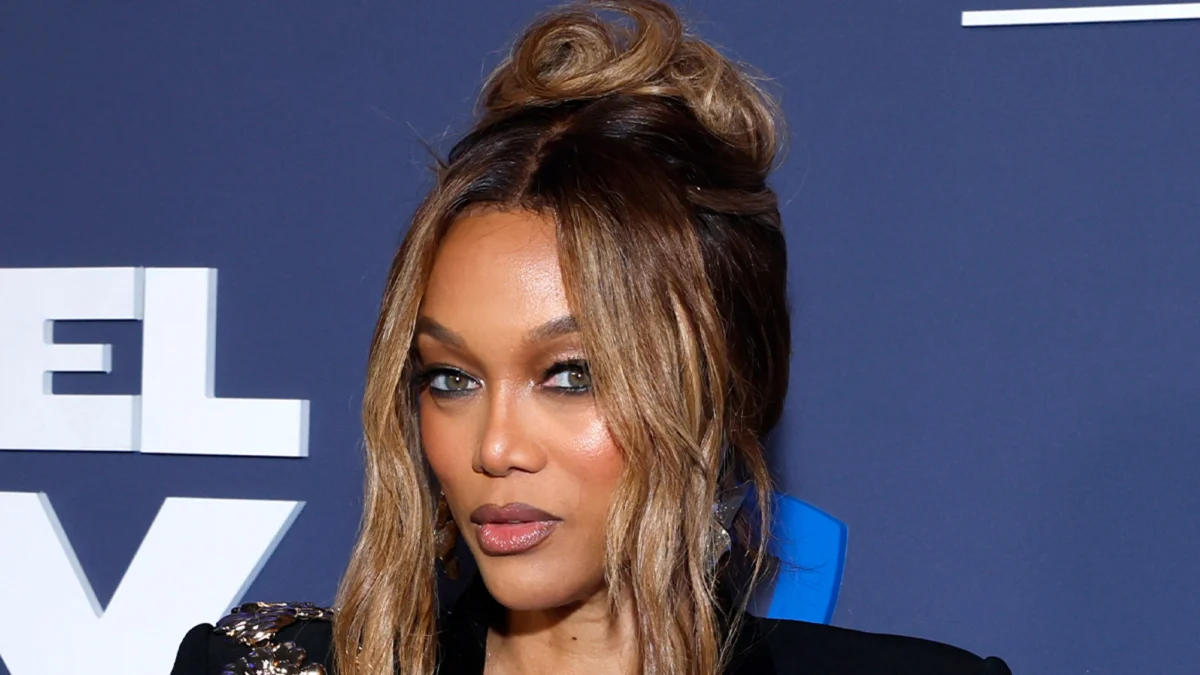
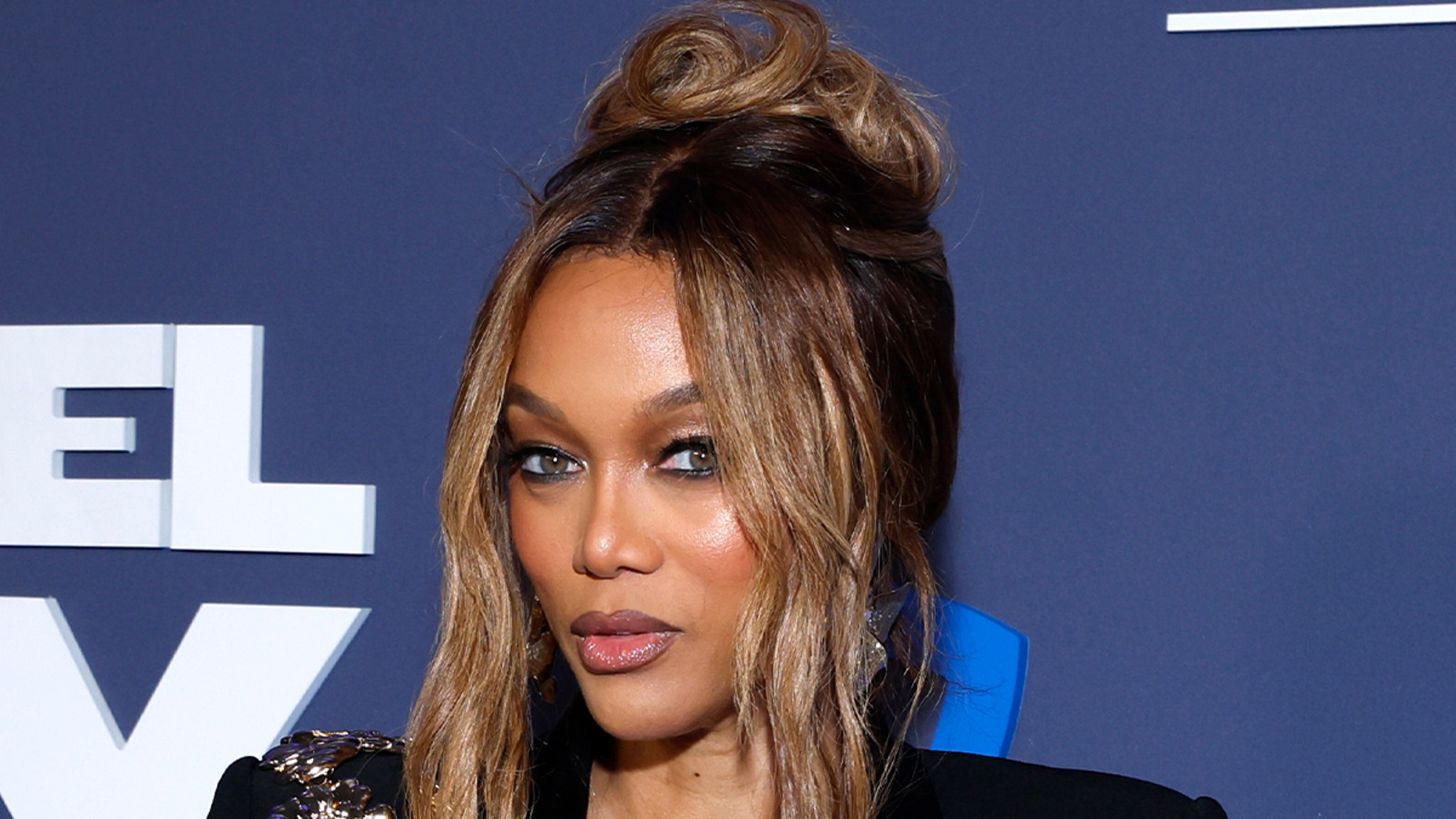
The legal battle initiated by supermodel and media mogul Tyra Banks to obtain extensive unaired footage and internal communications related to a documentary about "America’s Next Top Model" (ANTM) has escalated significantly, with Netflix and the documentary’s producers staunchly opposing her comprehensive discovery requests. The contentious dispute centers on Banks’ assertion that the final cut of the documentary selectively edited interviews, particularly those featuring her former ANTM colleagues Miss J Alexander and Jay Manuel, leading to a defamatory portrayal of her role and conduct during the show’s long run.
Background to the Documentary and ANTM’s Shifting Legacy
"America’s Next Top Model," created by Tyra Banks, premiered in 2003 and quickly became a global phenomenon, revolutionizing reality television and launching the careers of numerous models. For over two decades, the show captivated audiences with its blend of high fashion, dramatic challenges, and mentorship from Banks, Miss J Alexander, Jay Manuel, and other industry experts. Banks served as the executive producer and head judge for 22 of its 24 cycles, cementing her image as a powerful figure in the fashion world.
However, in recent years, ANTM has faced increasing retrospective scrutiny, particularly with the rise of social media platforms where clips from past seasons have gone viral, sparking debates and criticism over the show’s controversial challenges, Banks’s past remarks, and the overall psychological impact on contestants. Critics have re-evaluated episodes through a contemporary lens, questioning some of the show’s practices regarding body image, racial sensitivity, and contestant welfare. This cultural re-assessment created fertile ground for documentary filmmakers to explore the show’s legacy, often through the perspectives of former participants and crew.
The specific documentary at the heart of this legal skirmish, though its official title has not been widely publicized in the context of this lawsuit, reportedly delved into these contentious aspects, featuring interviews with key figures who were integral to ANTM’s production and on-screen presence. It is this critical re-examination, culminating in the documentary’s release, that allegedly prompted Banks’s legal team to action, claiming the narrative presented was unfairly skewed and damaged her reputation.
The Genesis of the Legal Battle
Tyra Banks’ legal team initiated the lawsuit, alleging defamation against the documentary’s producers and, by extension, potentially Netflix, which distributed the project. Banks contends that the final version of the documentary, by selectively choosing soundbites and editing interviews, particularly those given by her long-time collaborators Miss J Alexander and Jay Manuel, presented a distorted and malicious account of her character and professional conduct during her tenure on ANTM. Her primary objective in the current discovery phase is to secure the unedited, raw footage of these interviews, arguing that only by examining the full context can the alleged selective editing and its defamatory intent be proven.
The concept of defamation in legal terms involves the publication of a false statement of fact that harms the reputation of another. For a public figure like Tyra Banks, the legal standard is even higher; she must not only prove the statements were false and damaging but also that they were made with "actual malice"—meaning the producers either knew the statements were false or acted with reckless disregard for their truth or falsity. Obtaining the raw footage, Banks believes, is crucial to demonstrating this actual malice by showing what was intentionally omitted or highlighted to create a particular, allegedly false, narrative.
Producers and Netflix Dig in Their Heels
In a recent development detailed in court documents obtained by TMZ on September 15, 2026, both Netflix and the documentary producers have vehemently opposed Banks’s extensive discovery demands. Their resistance is multifaceted, challenging not only the scope of her requests but also the very premise that such broad discovery is warranted at this nascent stage of litigation.
The producers argue that Banks’s demands far exceed the typical bounds of targeted discovery, which is generally meant to uncover specific evidence directly relevant to the claims in dispute. Her requests, they contend, are an overly broad "fishing expedition" designed to scrutinize every aspect of the documentary’s creation rather than focusing on specific instances of alleged defamation. They maintain that granting such sweeping access would infringe upon their editorial independence and potentially set a dangerous precedent for documentary filmmaking, where subjects could routinely demand raw footage and internal communications.
Netflix, as the distributor, has also expressed significant concerns, particularly regarding Banks’s request for their internal viewership data related to the documentary. This data, which includes metrics on how many people watched the film, completion rates, and audience demographics, is highly proprietary and considered confidential business information by the streaming giant. While Banks’s legal team might argue that viewership data is essential to quantify the reach and thus the damage of the alleged defamation, Netflix counters that it is irrelevant to the core question of whether defamation occurred and would compromise their competitive position. They argue that the data is not discoverable under the current legal framework for proving defamation.
Beyond the raw interview footage of Miss J Alexander and Jay Manuel, Banks’s demands also encompass all internal communications about her, every draft script, all story notes, and deposition testimony from filmmakers, editors, and other personnel involved in the production and review of the documentary. The producers and Netflix collectively assert that these items are not "the type of targeted discovery allowed to prove her claims," emphasizing that such broad requests are disproportionate and unduly burdensome, especially in the early phases of litigation where the precise defamatory statements and the evidence directly countering them should be the focus.
A Chronology of ANTM and the Legal Fallout
- May 20, 2003: "America’s Next Top Model" premieres on UPN (later The CW), created by Tyra Banks.
- 2003-2015: ANTM enjoys widespread popularity, running for 22 cycles on The CW. Banks serves as host and executive producer.
- 2016-2018: ANTM moves to VH1 for two additional cycles (23 & 24), with Banks returning as host for Cycle 24.
- Late 2010s – Early 2020s: Clips from ANTM go viral on social media platforms, sparking a public re-evaluation of the show’s controversial moments and Banks’s conduct.
- Early 2020s: Reports surface about a documentary in production, reportedly exploring the controversial aspects and legacy of ANTM, featuring interviews with former cast and crew, including Miss J Alexander and Jay Manuel.
- Undisclosed Date (Prior to Lawsuit): The "America’s Next Top Model" documentary is released, presumably on Netflix.
- Undisclosed Date (Prior to Sept. 2026): Tyra Banks files a defamation lawsuit against the documentary producers and potentially Netflix, alleging selective editing of interviews led to a false and damaging portrayal.
- September 15, 2026: Court documents reveal Netflix and the documentary producers are actively opposing Banks’s broad discovery requests for raw footage, internal communications, and viewership data.
Broader Implications for Reality TV and Documentary Filmmaking
This escalating legal battle holds significant implications not just for Tyra Banks but for the broader entertainment industry, particularly in the realm of reality television and documentary filmmaking. The dispute highlights the growing tension between a subject’s right to protect their reputation and a filmmaker’s right to editorial independence and artistic expression.
The "post-show reckoning" phenomenon, where former contestants, employees, or subjects of reality TV shows come forward years later with criticisms or allegations of misconduct, has become increasingly common. Documentaries exploring these narratives often provide a platform for these voices, sometimes contrasting sharply with the sanitized or curated versions presented during the show’s original run. If Banks were to successfully compel the release of all raw footage and internal communications, it could create a chilling effect on future documentary projects, making producers more hesitant to tackle sensitive subjects or to allow interviewees to speak freely without fear of extensive post-production legal challenges from powerful figures.
Conversely, if the court sides with Banks, it could establish a precedent that subjects of documentaries, especially public figures alleging defamation, have a stronger right to access the underlying materials to prove their claims. This could lead to more transparency in documentary production but also increased litigation and higher production costs as filmmakers grapple with potential discovery demands.
Legal Analysis and Expert Commentary
Legal experts suggest that Tyra Banks faces a substantial challenge in proving defamation, particularly the "actual malice" standard required for public figures. While selective editing can be a component of a defamation claim, proving it was done with malicious intent is difficult. The producers’ argument that Banks’s requests are "way too broad" and not "targeted discovery" is a common and often successful defense in such disputes. Courts are generally reluctant to order the release of extensive raw footage and internal communications unless a compelling case can be made for their direct relevance to specific, clearly articulated defamatory statements.
The request for Netflix’s internal viewership data is particularly contentious. While it might be argued to quantify damages, courts typically focus on the truth or falsity of the statements themselves. Disclosing proprietary business data like viewership metrics is a sensitive issue for streaming platforms, and they are likely to fight hard to protect it, citing competitive harm and the lack of direct relevance to the core defamation claim.
The court will ultimately need to balance the plaintiff’s right to gather evidence against the defendants’ right to protect their creative process, proprietary information, and avoid undue burden. This often involves a meticulous review of the alleged defamatory statements in the documentary and a determination of whether the requested discovery is narrowly tailored to those specific claims.
What Lies Ahead
The immediate next steps in this legal saga will involve judicial intervention. The court will likely hold hearings to consider the arguments from both Tyra Banks’s legal team and the counsel representing Netflix and the documentary producers regarding the scope of discovery. The judge will have to rule on the motion to compel discovery, potentially ordering a more limited release of materials, denying the requests outright, or even compelling a substantial portion of what Banks seeks.
Should the court deny Banks’s requests, it could significantly weaken her defamation case, making it harder to prove her claims without the contextual evidence she believes is contained in the unaired footage. Conversely, if the court sides with her, it could open the door to a more protracted and costly legal battle, potentially leading to a settlement or a full trial.
Regardless of the outcome, this high-stakes legal confrontation underscores the complex challenges arising from the intersection of celebrity, media scrutiny, and the evolving landscape of digital content distribution. It will undoubtedly be closely watched by those in Hollywood and beyond, as its resolution could help shape the future of accountability in reality television and the boundaries of documentary storytelling.




 Yuyun Lusiyani
 Joko Widodo
 Eva Lovia
 Pevita Pearce

 Lina Irawan