
 Pevita Pearce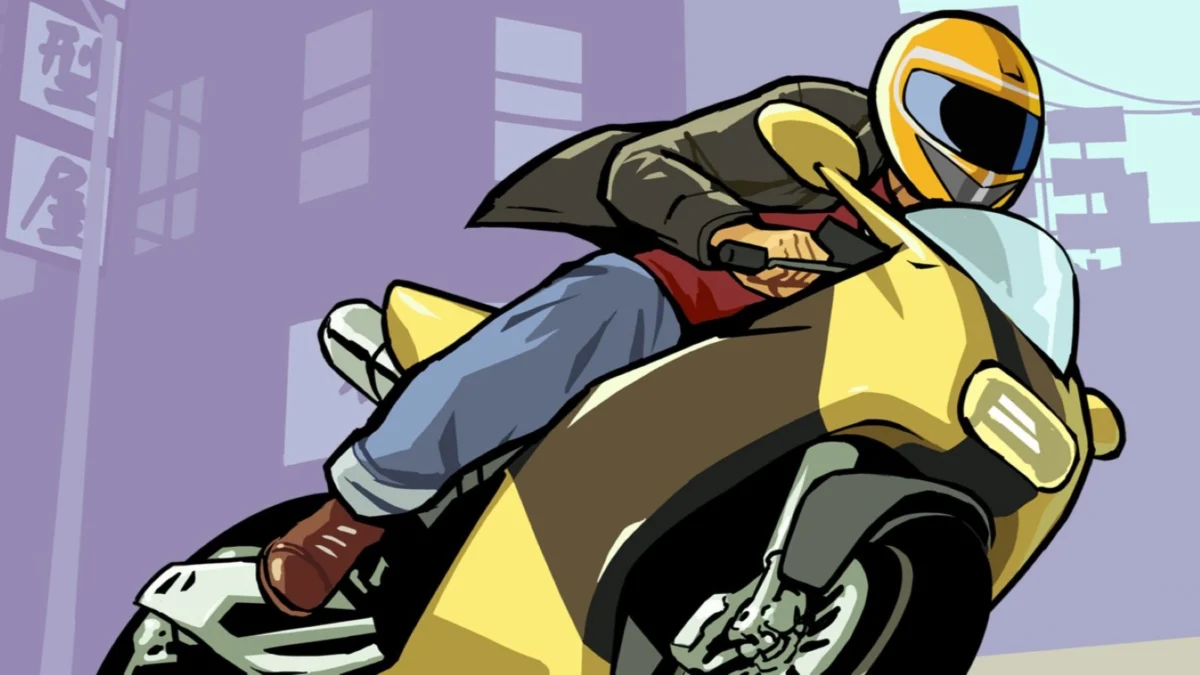
The historical trajectory of the Grand Theft Auto franchise is defined by its satirical and often brutal depiction of American urban life, but new revelations from a former high-ranking developer suggest that the series almost took a radical turn toward the Far East. Obbe Vermeij, the former technical director at Rockstar North, has provided an unprecedented look into "GTA: Tokyo," a project that reached advanced stages of conceptualization before being ultimately shelved. The proposed title was not merely a fleeting idea discussed in passing; it represented a strategic attempt by Rockstar Games to localize its brand for the Japanese market and experiment with a development model that had previously seen success with other titles in the company’s portfolio.
According to Vermeij, the Tokyo project was part of a broader internal discussion at Rockstar’s New York headquarters regarding the potential for international expansion. While the series had briefly visited London in the late 1990s with two expansion packs for the original top-down game, the 3D era—ushered in by the monumental success of Grand Theft Auto III—was almost entirely focused on fictionalized versions of New York City, Miami, and Los Angeles. However, during the mid-2000s, the studio actively considered diversifying its settings to include major global hubs such as Rio de Janeiro, Moscow, Istanbul, and Paris. Among these, Tokyo was the most seriously considered, reaching a point where specific gameplay mechanics and a unique development structure were being outlined.
The Bully Blueprint and the Japanese Partnership
One of the most significant revelations from Vermeij involves the intended production model for GTA: Tokyo. Rather than tasking the core team at Rockstar North in Edinburgh with the project, Rockstar New York planned to replicate the development strategy used for "Bully." That title was developed by Rockstar Vancouver, a studio formerly known as Barking Dog Studios, which Take-Two Interactive had acquired in 2002. Under this arrangement, Rockstar North provided the Vancouver team with the necessary technology, engine code, and technical support, but allowed the satellite studio to handle the creative and local development independently.
For GTA: Tokyo, the intention was to partner with an established Japanese development house. The logic was twofold: first, a local studio would be better equipped to capture the nuances of Japanese culture, architecture, and social dynamics; second, it would allow Rockstar North to remain focused on the mainline "Grand Theft Auto" entries. Vermeij noted that while Rockstar North was aware of these plans, the developers in Scotland had no direct contact with the proposed Japanese team. The collaboration ultimately fell through because the necessary legal and business frameworks never solidified. "The contracts were never signed," Vermeij explained, marking the end of what could have been a transformative chapter for the franchise.
Samurai Swords and the Evolution of Combat
A primary hook for the Tokyo setting was a shift in combat focus. While firearms have always been the centerpiece of the GTA experience, the Tokyo spin-off was designed to elevate melee combat to a central pillar of gameplay. Specifically, Vermeij revealed that samurai swords were intended to play a major role in the player’s arsenal. This move would have differentiated the game from the contemporary Liberty City or Vice City experiences, leaning into the cinematic tropes of Japanese action cinema and the aesthetic of the Yakuza.

Interestingly, Vermeij clarified that the presence of the Yakuza in Grand Theft Auto III was not a precursor or a "tease" for a Tokyo-based game. Instead, the Yakuza faction was simply a legacy element carried over from the first two 2D games. The interest in Tokyo was driven by a desire to crack the Japanese market, where Western games—including GTA—had historically struggled to achieve the blockbuster status they enjoyed in Europe and North America. By developing a game locally, Rockstar hoped to create a product that resonated with Japanese consumers before exporting it back to Western audiences.
A Chronology of International Ambitions
The timeline of Rockstar’s international interests reveals a period of intense creative exploration following the release of GTA III in 2001. As the studio grew in both wealth and influence, the "Big Five" international locations became a recurring topic of conversation within the office.
- Early 2000s: Conceptualization of GTA: Tokyo begins. Rockstar co-founder Sam Houser and producer Leslie Benzies are directly involved in high-level discussions.
- 2002-2004: Rockstar North developers frequently discuss Rio de Janeiro, Moscow, and Istanbul as potential settings. Vermeij recalls "drunken brainstorms" where the team would envision the unique criminal underworlds of these cities.
- Mid-2000s: The "Bully" model is successfully implemented with Rockstar Vancouver, providing a template for how a Tokyo spin-off could work.
- Pre-Production Phase: Tokyo emerges as the frontrunner for an international title, but the failure to finalize contracts with a Japanese partner halts progress.
- The Pivot: Rockstar ultimately decides to double down on American settings, leading to the development of GTA IV (Liberty City) and GTA V (Los Santos).
The American Parody Trap
Despite the creative allure of cities like Tokyo or Paris, the studio eventually hit a philosophical wall that has kept the series rooted in the United States for two decades. Vermeij argues that Rockstar is effectively "stuck" in America because the country’s culture is uniquely suited for the brand’s specific style of satire. American culture is exported globally through film, music, and social media, making its tropes, politics, and urban landscapes instantly recognizable to players in every corner of the world.
Furthermore, the "exaggerated" nature of American life allows Rockstar to create a parody that is both recognizable and extreme. Replicating this effect in a city like Tokyo or Moscow presents a significant challenge: the satire might not translate well to a global audience, or the studio might fail to capture the cultural nuances required to make the parody land effectively. There is also the risk of cultural insensitivity or simply missing the mark on what makes those specific cities "tick" in a criminal context.
Financial Risks and the $2 Billion Reality
Beyond the creative challenges, the sheer scale of modern game development has made international spin-offs a nearly impossible financial risk. Vermeij estimates that a modern Grand Theft Auto project, such as the upcoming GTA VI, requires an investment that can soar toward $2 billion when accounting for development, marketing, and long-term support.
When the series was in the GTA III and Vice City era, development cycles were shorter and budgets were a fraction of what they are today. In that environment, a "Bully-sized" spin-off in Tokyo was a manageable gamble. In the current AAA landscape, where a single mistake can jeopardize the stability of a multi-billion dollar corporation, Rockstar prefers to stick to the "sure thing"—familiar American locales that have a proven track record of generating record-breaking revenue.

This financial conservatism is reflected in the upcoming GTA VI, which returns to the neon-soaked streets of Vice City and the surrounding state of Leonida. While fans have long clamored for a return to London or a leap to a new continent, the data suggests that the American setting is the most vital component of the GTA "formula."
Broader Impact and the Future of the Franchise
The revelation of the scrapped Tokyo project offers a rare glimpse into the "what if" history of gaming. Had the contracts been signed and the Japanese studio been secured, the Grand Theft Auto franchise might today be a global anthology series rather than a singular American satire. The inclusion of samurai swords and a focus on Japanese street-racing culture—an area Vermeij believed would have been a highlight of a Tokyo setting—could have influenced the mechanics of the mainline series in significant ways.
While GTA: Tokyo remains a ghost of the past, its influence can be seen in other titles. The "Yakuza" series (now known as Like a Dragon) by SEGA eventually filled the void for a high-quality, open-world crime drama set in Japan, albeit with a very different tone and mechanical focus than what Rockstar likely intended.
For Rockstar Games, the focus remains squarely on the future. With GTA VI scheduled for release in late 2026, the studio is betting everything on its ability to once again redefine the open-world genre within the borders of its fictionalized America. Recent leaks indicating that Liberty City was at one point planned as an expansion for GTA Online further reinforce the idea that the studio is more interested in expanding its existing American universe than venturing into unknown international waters.
Ultimately, the story of GTA: Tokyo is a testament to the complexities of global game development. It highlights the delicate balance between creative ambition and the harsh realities of business, cultural translation, and financial risk. As the industry moves toward even larger budgets and longer development cycles, the dream of a globetrotting Grand Theft Auto seems further away than ever, leaving the samurai swords and neon streets of a Rockstar-developed Tokyo as a fascinating footnote in the annals of gaming history.




 Yuyun Lusiyani
 Joko Widodo
 Eva Lovia
 admin
admin
 Lina Irawan