
 Pevita Pearce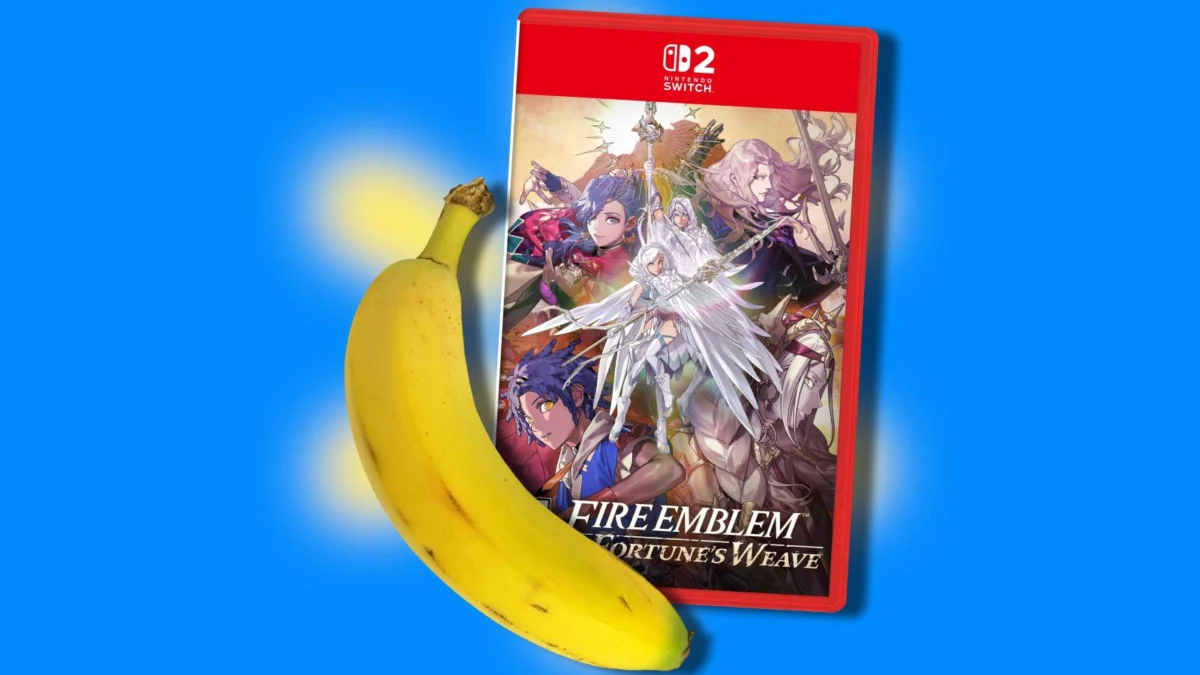
The launch of Fire Emblem: Fortune’s Weave for the Nintendo Switch 2 has been met with significant critical acclaim, but the discourse surrounding its release has taken an unexpected turn toward the produce aisle. As consumers navigate the transition to a higher $79.99 standard price point for next-generation software, a segment of the gaming community has identified a peculiar technical workaround within Walmart’s e-commerce platform. By adding a single banana to their digital shopping carts, customers have successfully triggered promotional discounts that reduce the cost of the high-profile tactical RPG by approximately 25 percent.
This phenomenon, which has quickly gained traction across social media platforms and deal-sharing communities, highlights the complexities of modern retail algorithms and the lengths to which consumers will go to mitigate the rising costs of interactive entertainment. The "banana exploit" has become a focal point for discussion among Nintendo enthusiasts, serving as both a practical method for savings and a humorous commentary on the state of digital storefronts in the early days of the Switch 2 era.
The Mechanics of the Discount and the Discovery of the Workaround
The primary driver of the discount is the application of Walmart-specific promotional codes, most notably "FAST30" and "SAVE3X." Under normal circumstances, these codes are intended for first-time users of Walmart’s pickup and delivery services or for specific grocery-related promotions. However, the physical edition of Fire Emblem: Fortune’s Weave, priced at $79.99, appeared to be eligible for these discounts only under specific, seemingly arbitrary conditions.
The discovery of the "banana method" is largely attributed to the influential deal hunter known as Wario64, who frequently monitors retail price drops and promotional errors. On the day of the game’s launch, reports began to surface that the promo codes were yielding inconsistent results. While some shoppers were able to apply the $20 discount without issue, many others encountered error messages stating their cart did not meet the criteria for the promotion, despite the game exceeding the typical $35 or $50 minimum purchase requirements for such codes.
Through iterative testing by the community on platforms like Reddit’s r/switch2 and various Discord servers, a solution emerged. Users discovered that by adding a single banana—typically priced at approximately $0.20 to $0.25 at Walmart—the system’s backend would re-evaluate the cart’s contents. This addition frequently "unlocked" the ability to apply the FAST30 code, bringing the total price of the $80 game down to roughly $60.
Chronology of the Exploit and Community Adoption
The timeline of the event suggests a rapid escalation from a niche observation to a widespread consumer trend.
On the morning of the game’s release, early adopters noticed that Walmart’s listing for Fire Emblem: Fortune’s Weave was categorized in a way that occasionally excluded it from general site-wide promotions. At approximately 10:00 AM ET, the first reports of the FAST30 code working on Switch 2 titles began to circulate.
By mid-afternoon, the success rate of the code began to fluctuate. It was at this juncture that Wario64 and several Reddit users suggested that the system was prioritizing "Grocery" or "Pickup & Delivery" orders. The instruction to "add a banana" was initially proposed as a joke or a low-cost way to test if the cart required a grocery item to trigger the grocery-specific discount code. To the surprise of many, the tactic worked.
By the evening hours, the "banana exploit" had reached a fever pitch. Screenshots of order confirmations featuring the $79.99 game and a $0.21 banana, followed by a $20.00 promotional deduction, became viral content within the gaming community. Some users reported even more complex maneuvers, such as switching the order from "shipping" to "store pickup" after adding the fruit, or removing the banana from the cart at the final stage of checkout while the discount remained active.
Technical Analysis: Why the Banana Affects the Checkout System
Retail analysts and e-commerce experts suggest that this glitch is likely rooted in the way Walmart’s internal database categorizes inventory. Walmart operates two distinct fulfillment tracks: one for general merchandise (shipped via standard carriers) and one for "Pickup & Delivery" (fulfilled by local stores, primarily for groceries and household essentials).
Promotional codes like FAST30 are often hard-coded to require at least one item from the "Pickup & Delivery" inventory pool. While Fire Emblem: Fortune’s Weave is available for store pickup, it may be tagged primarily as general merchandise in the system’s logic. By adding a banana—an item that exists exclusively within the grocery/local delivery ecosystem—the consumer effectively forces the entire shopping cart to be processed through the "Pickup & Delivery" engine. Once the engine recognizes a "valid" grocery item, it authorizes the application of the associated discount code to the entire balance of the cart, including the $79.99 game.
This interaction reveals a lack of "containerization" in the promo code logic, where the discount is applied to the order total rather than being restricted to specific eligible items within that order. As long as the "trigger" item is present, the high-value item benefits from the reduction.
Impact on Local Inventory and Retail Operations
While the exploit provided a boon for budget-conscious gamers, it created an unintended and surreal side effect for Walmart’s physical locations. In several metropolitan areas, users reported that bananas were appearing as "Out of Stock" on the Walmart app and website.
While it is unlikely that the gaming community consumed the entirety of Walmart’s national banana supply, the surge in individual "single banana" orders placed for pickup caused localized logistical hurdles. Store associates tasked with fulfilling "Pickup & Delivery" orders were reportedly faced with a high volume of single-item produce picks paired with a single high-value electronic item.
On social media, some Walmart employees expressed confusion over the trend. One unverified report from a fulfillment associate noted that their store had seen a 400% increase in single-banana orders in a four-hour window, leading to a temporary suspension of produce pickup as staff struggled to keep up with the micro-orders.
The Broader Context: $80 Gaming and Consumer Resistance
The "banana exploit" is more than a technical curiosity; it is a symptom of the broader economic shift in the gaming industry. With the launch of the Nintendo Switch 2, several publishers have followed the trend set by Sony and Microsoft in raising the MSRP of "AAA" titles from $69.99 to $79.99.
Fire Emblem: Fortune’s Weave is one of the first major Nintendo-published titles to hit this new price ceiling. Analysts suggest that the enthusiasm for the Walmart exploit is directly tied to consumer resistance toward the $80 price point. A $20 discount brings the game down to $60, which was the standard price for the preceding two decades of gaming.
"What we are seeing is a creative form of consumer arbitrage," says financial analyst Marcus Thorne. "Gamers are highly motivated to find value. When the perceived value of a product is challenged by a price hike, any technical loophole becomes a tool for the market to correct itself back to a price the consumer is comfortable with."
Official Responses and Potential Repercussions
As of this writing, Walmart has not issued a formal statement regarding the "banana exploit" or the specific functionality of the FAST30 and SAVE3X codes. Historically, large retailers tend to patch these types of e-commerce loopholes quietly rather than acknowledging them publicly.
There is a precedent for retailers canceling orders that utilize "glitch" pricing. However, because the discount in this instance is tied to a legitimate (if unintended) application of a valid promo code, many orders have already been fulfilled and picked up by customers. Unlike a price mistake where a game is accidentally listed for $0.00, the use of a promo code on an eligible-looking cart often falls into a "gray area" of retail policy that is harder for the company to claw back once the transaction is complete.
Nintendo, the publisher of Fire Emblem: Fortune’s Weave, is also unlikely to comment, as the issue pertains strictly to a third-party retailer’s checkout system and does not impact the wholesale price Nintendo receives for the software.
Future Implications for E-commerce and Deal Hunting
The Fire Emblem banana incident will likely serve as a case study for e-commerce developers. It highlights the need for more robust "category-specific" validation in promotional engines. For consumers, it reinforces the value of community-driven information sharing.
As the holiday shopping season approaches and more Switch 2 titles are released, it is expected that retailers will tighten the restrictions on these codes. Shoppers are already looking for the next "banana"—the next low-cost item that might trigger a significant discount on high-ticket electronics. Whether it be a single clove of garlic, a pack of gum, or a paper clip, the "filler item" strategy has solidified its place in the modern gamer’s toolkit.
For now, the legend of the Fire Emblem banana persists as a testament to the ingenuity of the gaming community. It remains a rare instance where the worlds of high-stakes fantasy warfare and grocery shopping converged, providing a much-needed discount to thousands of players during a period of rising costs in the digital age. Regardless of whether Walmart closes the loophole, the event has been etched into the history of the Switch 2’s launch window as one of its most bizarre and memorable episodes.




 Yuyun Lusiyani
 Joko Widodo
 Eva Lovia
 admin
admin
 Lina Irawan