
 Pevita Pearce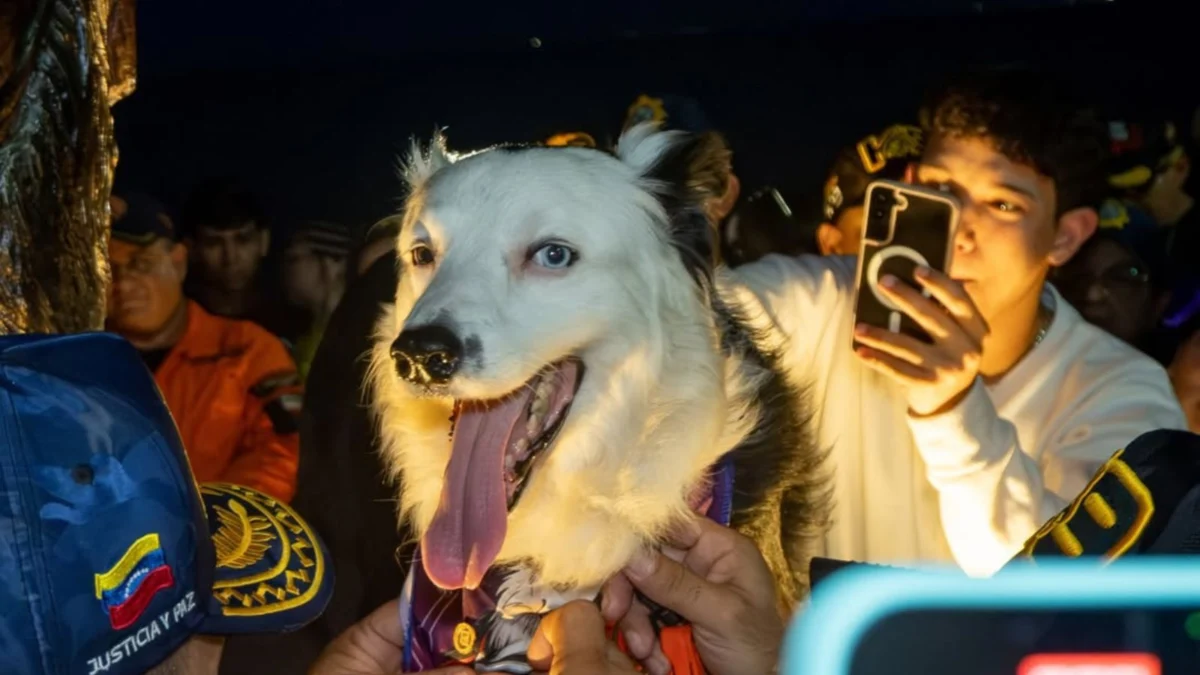
The city of Maracaibo has officially immortalized Tsunami, a Border Collie whose tireless efforts in search and rescue operations have made him a national symbol of resilience, by unveiling a bronze statue in his honor at the Vereda del Lago park. The ceremony, which drew high-ranking municipal officials, civil defense volunteers, and members of the public, served as both a tribute to the canine’s years of service and a formal announcement of his retirement from active duty. Recognized as the "face of the country’s earthquake response," Tsunami’s likeness now stands as a permanent fixture in one of Venezuela’s most prominent public spaces, bearing a plaque that designates him as "Guardián de la esperanza," or the Guardian of Hope.
The unveiling ceremony was led by Mayor Giancarlo Di Martino, who emphasized the profound impact Tsunami has had on the nation’s emergency response capabilities. During the proceedings, the Mayor awarded the retired search and rescue dog several of the city’s highest honors, including the Honor Button of Merit, the Medal of Valor, and the official insignia of the Maracaibo Fire Department. These accolades are typically reserved for human first responders, highlighting the exceptional nature of Tsunami’s contributions to public safety. Mayor Di Martino described Tsunami as "a true hero" whose presence on the front lines of disasters provided not only tactical assistance in locating survivors but also a much-needed morale boost for a nation grappling with the aftermath of natural catastrophes.
A Legacy of Service and the K-SAR ECID Unit
Tsunami’s career has been managed by the K-SAR ECID (K-9 Search and Rescue) unit, a specialized division dedicated to training and deploying canines for disaster response. The unit confirmed that the statue’s unveiling coincides with Tsunami’s transition into retirement, marking the end of a storied career that saw the Border Collie deployed to some of the most challenging disaster zones in recent history. In a statement released via social media, the K-SAR ECID unit noted that Tsunami is retiring "at the top of his game," having proven his courage and physical stamina in the field until his final mission.
The role of a search and rescue dog in Venezuela is particularly critical given the country’s geographical vulnerability to seismic activity and landslides. Tsunami, distinguished by his striking heterochromia—possessing one blue eye and one brown eye—is one of only a handful of certified search and rescue dogs in the country. The scarcity of such highly trained animals underscores the value of Tsunami’s service. His handler, Jorge Beens, who has worked alongside Tsunami throughout his career, was present at the ceremony to witness the tribute. Beens has frequently spoken about the rigorous training and the deep bond required to perform high-stakes search operations, where the dog’s olfactory precision often succeeds where mechanical sensors fail.
Chronology of Heroism: From Mudslides to Global Disasters
Tsunami’s reputation as a premier rescue asset was solidified through a series of high-profile deployments over the last several years. His service record reflects a commitment to both domestic and international humanitarian efforts, demonstrating the versatility of the K-SAR unit.
In 2022, Tsunami was deployed to the site of the devastating mudslides in Las Tejerías and El Castaño. These events, triggered by intense seasonal rains, resulted in significant loss of life and property as torrents of mud and debris swept through residential areas. Tsunami’s ability to navigate unstable terrain and detect human scents beneath meters of mud was instrumental in the recovery efforts during those weeks.
In early 2023, Tsunami’s expertise was called upon on an international scale following the catastrophic 7.8 magnitude earthquake that struck Turkey and Syria. As part of a Venezuelan contingent sent to assist in the global relief effort, Tsunami worked in freezing temperatures and hazardous conditions, searching through the wreckage of collapsed high-rise buildings. His participation in this mission brought international attention to Venezuela’s K-9 search capabilities and earned him respect from international rescue teams.
However, it was his performance during the double earthquakes in northern Venezuela on June 24, 2024, that cemented his status as a national icon. The region was struck by two powerful tremors, measuring 7.2 and 7.5 on the Richter scale, occurring just 39 seconds apart. The rapid succession of the quakes caused extensive structural damage and trapped numerous residents under rubble. Tsunami and Jorge Beens were among the first on the scene. Footage of the Border Collie meticulously navigating jagged concrete and twisted metal went viral, providing a visual narrative of the rescue operations. Tsunami is credited with assisting in the location of dozens of individuals who were trapped in the debris, directly contributing to the high number of successful extractions in the hours following the quakes.
Technical Analysis of Canine Search and Rescue in Disaster Zones
The effectiveness of dogs like Tsunami in disaster zones is rooted in biological advantages that modern technology has yet to fully replicate. A search and rescue dog’s sense of smell is estimated to be between 10,000 and 100,000 times more acute than that of a human. In the context of a collapsed building, these dogs are trained to filter out "background" scents—such as food, animals, or deceased remains—to focus specifically on the scent of live human respiration and perspiration.
Data from international search and rescue organizations suggest that a single trained dog can search an area of collapsed rubble in a fraction of the time it would take a human team using acoustic sensors or cameras. In the June 24 Venezuela earthquakes, the speed of deployment was a decisive factor in the "golden hour" of survival. Tsunami’s ability to pinpoint the exact location of survivors allowed engineering teams to focus their excavation efforts, reducing the risk of further collapses and increasing the likelihood of live rescues.
The choice of a Border Collie for this role is also significant. While German Shepherds and Labrador Retrievers are common in K-9 units, Border Collies are prized for their high intelligence, agility, and "work drive." Their lighter frame allows them to traverse fragile debris that might shift under the weight of a larger dog or a human rescuer. Tsunami’s career serves as a case study in the efficacy of the breed in urban search and rescue (USAR) environments.
Official Responses and Public Impact
The ceremony in Maracaibo was not merely a local event but a moment of national reflection. Officials from the national civil protection agency, Protección Civil, noted that Tsunami’s career has highlighted the need for increased investment in canine units. The visibility of Tsunami’s work has reportedly led to an uptick in interest for volunteer search and rescue training across Venezuela.
Mayor Di Martino’s decision to place the statue in Vereda del Lago park was intentional. As one of the largest urban parks in the city, it serves as a hub for families and youth. "By placing Tsunami here, we are ensuring that future generations understand the values of service, bravery, and the bond between humans and animals," the Mayor stated during the unveiling.
The public reaction has been overwhelmingly positive, with many citizens expressing gratitude on social media. For a population that has endured significant economic and social challenges, Tsunami represents a unifying figure—a "hero without a political agenda," as one local commentator described him. The image of the dog with heterochromatic eyes has become a symbol of hope, often appearing in murals and digital tributes across the country.
Broader Implications for Disaster Preparedness
Tsunami’s retirement marks a transition point for Venezuela’s disaster response infrastructure. While the statue serves as a memorial to his past achievements, it also serves as a reminder of the ongoing need for prepared and equipped rescue units. The K-SAR ECID unit has indicated that they are currently training a new generation of dogs to fill the void left by Tsunami’s departure. However, the expertise gained through Tsunami’s decade of service is not easily replaced.
The integration of K-9 units into national disaster protocols is a growing trend worldwide, and Tsunami’s success has provided Venezuela with a blueprint for domestic training programs. Analysts suggest that the international recognition Tsunami received, including coverage by Al Jazeera and Forbes, has helped elevate the professional standing of Venezuelan emergency services on the global stage.
As Tsunami moves into a quiet life with his handler, Jorge Beens, his bronze counterpart in Maracaibo will continue to look out over the lake. The "Guardian of Hope" remains a testament to the lives saved in the ruins of Las Tejerías, the collapsed streets of Turkey, and the earthquake-stricken neighborhoods of northern Venezuela. His career stands as a definitive example of how specialized training, combined with the innate abilities of a dedicated animal, can make the difference between life and death in the wake of nature’s most violent events.




 Yuyun Lusiyani
 Joko Widodo
 Eva Lovia
 admin
admin
 Lina Irawan