
 Eva Lovia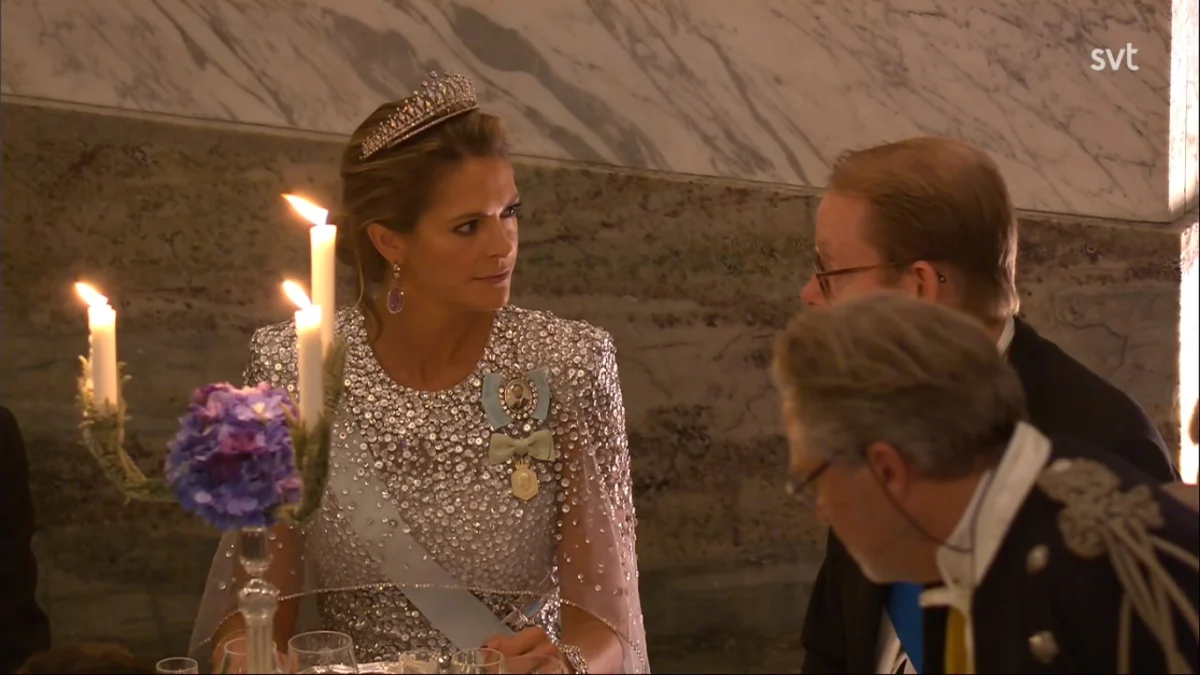
On September 15, 2023, King Carl XVI Gustaf of Sweden made history as the first Swedish monarch to celebrate a Golden Jubilee, marking 50 years on the throne. The momentous occasion was honored with a grand gala dinner, which not only celebrated the King’s enduring reign but also provided a dazzling display of royal heritage through the adornment of significant family jewels. Several royal women seized this opportunity to showcase their finest tiaras, with a select few choosing to re-wear the very headpieces that graced them on their wedding days, weaving a narrative of continuity and tradition through generations of European royalty.
A Legacy of Sparkle: Wedding Tiaras Take Center Stage
The gala dinner, held in honor of King Carl XVI Gustaf’s historic milestone, transcended a mere celebration of his reign. It served as a living testament to the enduring bonds within European royal families and the symbolic importance of heirlooms. The presence of several queens and princesses, each adorned in exquisite tiaras, transformed the event into a breathtaking exhibition of royal splendor. For some, it was a chance to debut a new piece or a cherished family heirloom; for others, it was a deeply personal moment, re-wearing the tiara that symbolized the beginning of their own royal unions. This practice of re-wearing wedding tiaras underscores a profound connection to personal history and a public acknowledgement of lineage, offering a visual narrative of marital unions that have shaped the present-day royal landscape.

Queen Anne-Marie of Greece: The Khedive of Egypt Tiara
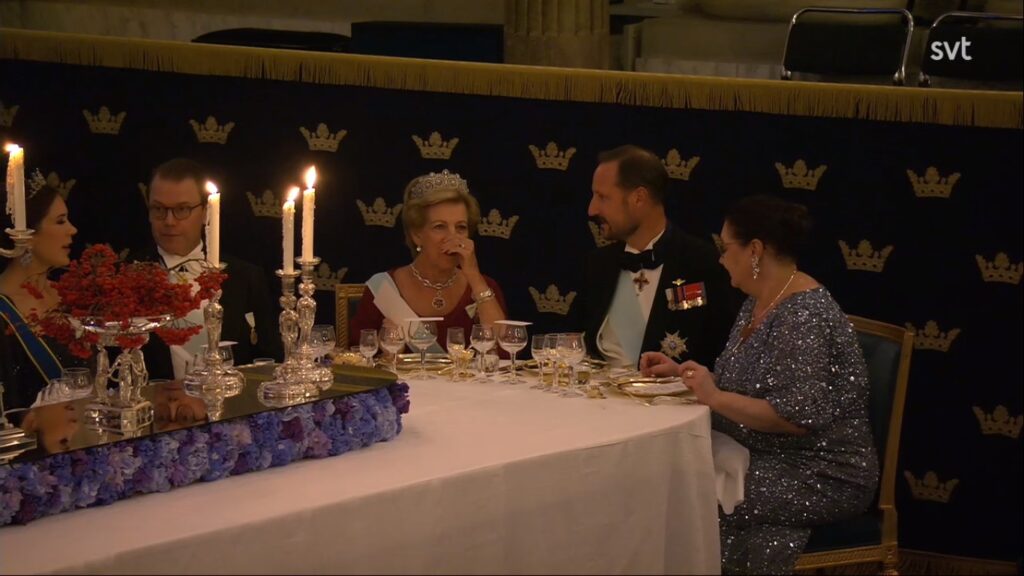
A standout piece among the glittering collection was the Khedive of Egypt Tiara, worn by Queen Anne-Marie of Greece. This magnificent Cartier creation, dating back to the early 20th century, is a laurel scroll tiara encrusted with diamonds. Its origins are deeply intertwined with royal romance and familial legacy, having been commissioned as a wedding gift for Queen Anne-Marie’s grandmother, Princess Margaret, by the last Khedive of Egypt.
The tiara’s journey through royal hands began when Princess Margaret’s daughter, Ingrid, inherited the piece upon her mother’s passing. Upon her marriage and subsequent move to Denmark in 1935, Queen Ingrid generously loaned out the Khedive of Egypt Tiara, thus igniting a cherished royal tradition. This esteemed headpiece has since been worn by numerous women within the Danish, Greek, and Sayn-Wittgenstein-Berleburg families on their wedding days, solidifying its status as a significant dynastic jewel.
A Royal Wedding Tradition: The Khedive of Egypt Tiara has been a part of several significant royal weddings, including those of Queen Margrethe of Denmark, Queen Anne-Marie of Greece, Princess Benedikte of Denmark, Princess Alexandra of Sayn-Wittgenstein-Berleburg, Princess Nathalie of Sayn-Wittgenstein-Berleburg, and Princess Alexia of Greece and Denmark. Queen Anne-Marie herself wore the tiara on her wedding day to King Constantine II of the Hellenes on September 18, 1964, at the tender age of 18. She famously paired it with an antique lace veil that had been used at Princess Margaret’s wedding in 1905, a veil that has since become a traditional element for many brides in the family. Following the death of her mother, Queen Ingrid, in 2000, Queen Anne-Marie inherited the Khedive of Egypt Tiara, further cementing its personal significance to her lineage.

Queen Mary of Denmark: A Bespoke Wedding Gift
Queen Mary of Denmark, then Crown Princess, received a deeply personal and unique wedding present from Queen Margrethe II and Prince Henrik: her very own diamond tiara. This bespoke piece was presented to her on the occasion of her marriage to Crown Prince Frederik on May 14, 2004.
The precise origins of this tiara have remained a closely guarded secret by the Danish Royal House, underscoring its intimate nature as a personal gift rather than a loan from the royal collection. The tiara itself is characterized by its delicate design, featuring motifs of hearts and fleurs-de-lis meticulously set on a slender band. A testament to its versatility and enduring appeal, the tiara can be ingeniously transformed into a necklace, a feature Queen Mary has utilized on several occasions. In 2011, the tiara underwent a subtle yet significant alteration by renowned Danish jeweler Marianne Dulong. This refinement involved the addition of a row of pearls to its base and pearl toppers that could be affixed to its shorter elements, enhancing its aesthetic and allowing for further personalization.
Princess Sofia of Sweden: A Surprise from the Throne
Princess Sofia of Sweden received a particularly thoughtful and secret wedding gift from King Carl XVI Gustaf and Queen Silvia on her wedding day, June 13, 2015: a tiara reportedly fashioned from one of Queen Silvia’s own necklaces. The creation of Princess Sofia’s tiara was executed in complete secrecy to ensure it remained a surprise for the then-new royal.
The tiara is elegantly designed with diamond palmettes and diamond spikes adorning a compact frame. Reports suggest that Queen Silvia had the tiara meticulously crafted in Thailand to prevent any pre-wedding leaks to the press, preserving the element of surprise for Princess Sofia.
A Versatile Heirloom: Since her wedding day, Princess Sofia’s tiara has demonstrated remarkable versatility. Initially worn with striking emerald attachments, Princess Sofia has since showcased its adaptability by incorporating other gemstones. She has famously swapped out the original jewels for pearls, diamonds, turquoises, and most recently, citrines, as debuted during the Golden Jubilee celebrations. This ability to customize the tiara with different precious stones allows it to complement various ensembles and occasions, making it a dynamic and cherished piece in her personal collection.
Princess Madeleine of Sweden: The Modern Fringe Tiara
Princess Madeleine of Sweden chose the Modern Fringe tiara for her wedding to Christopher O’Neill on June 8, 2013. Similar to Crown Princess Mary’s wedding tiara, the exact provenance of Princess Madeleine’s headpiece remains somewhat enigmatic. It first made its appearance within the Swedish Royal Family around 1986, leading to widespread speculation that it might have been a tenth wedding anniversary gift from King Carl XVI Gustaf to Queen Silvia.

A Personal Gift with an Unknown Origin: The Modern Fringe tiara is understood to be a personal gift to Queen Silvia and does not belong to the Swedish Royal Family’s official jewel foundation, which typically oversees the maintenance and ownership of the collection. The tiara’s distinctive design features stylized diamond elements that evoke floral motifs. It also possesses the remarkable ability to be converted into a necklace. Over the years, the Modern Fringe tiara became increasingly associated with Princess Madeleine. Subsequently, the Swedish Royal Court officially confirmed that the tiara had been gifted to her personally by her parents, King Carl XVI Gustaf and Queen Silvia, solidifying its place as a treasured heirloom within their immediate family.
The Golden Jubilee: A Symbol of Continuity and Legacy
King Carl XVI Gustaf’s Golden Jubilee was more than just a commemoration of his reign; it was a powerful demonstration of the enduring relevance of monarchy and the symbolic weight of inherited traditions. The re-emergence of these significant wedding tiaras, particularly those with a rich history and personal significance, served as a poignant reminder of the continuity of royal lineages and the intergenerational transmission of heritage. Each tiara, with its unique story and provenance, contributed to a collective narrative of royal marriages, familial bonds, and the ceremonial splendor that continues to define the institution of monarchy in the 21st century. The event provided a global audience with a glimpse into the treasured possessions that not only adorn the heads of queens and princesses but also carry the weight of history and the promise of future generations.




 Yuyun Lusiyani
 Joko Widodo
 Jia Lissa
 Pevita Pearce
 admin
admin
