
 Amara Maple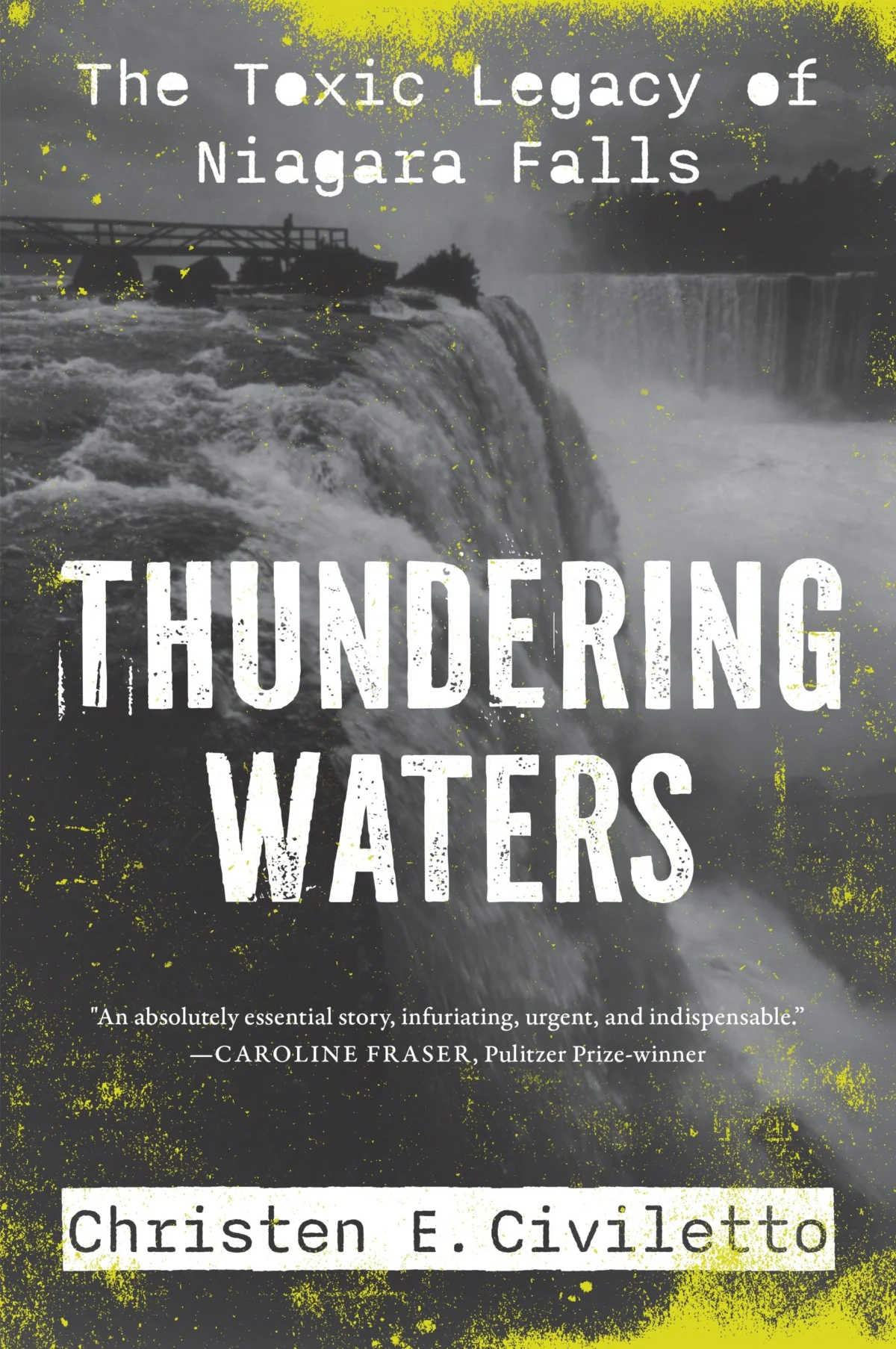
Every year, millions flock from around the world to Niagara Falls, New York, drawn by the majestic roar of its cataracts and the refreshing mist that permeates the air. This iconic natural wonder, however, masks a harrowing truth: the city of Niagara Falls is the epicenter of one of the most profound and devastating environmental desecrations in modern history, a saga meticulously documented in Christen Civiletto’s new book, Thundering Waters: The Toxic Legacy of Niagara Falls (Princeton University Press). Civiletto, a native of the beleaguered city, unveils a century-long narrative of corporate exploitation, indiscriminate pollution, and an ongoing public health crisis that continues to plague its residents.
The Unveiling of a Hidden Crisis
Civiletto’s book, described as potentially "the most harrowing corporate crime book of the year," exposes the astonishing story of exploitation and systemic abuse unfolding in the shadows of a global landmark. It delves into how major chemical corporations of the 20th century relentlessly laid waste to the region, transforming it from a burgeoning industrial hub into a landscape riddled with toxic and radioactive contaminants. The narrative is particularly poignant as it comes at a time when Niagara Falls is experiencing a significant "environmental awakening," driven by new discoveries, community activism, and official investigations.
A Personal Journey to Unearth Truth
Christen Civiletto’s journey to authorship is deeply personal, rooted in her lived experience in Niagara Falls. "I was born and raised in Niagara Falls, New York," Civiletto recounted in a recent interview with Corporate Crime Reporter on August 27, 2026. Her upbringing was marked by the normalization of pollution, toxic chemicals, and widespread discussions of cancer and chronic illnesses. Her first family home was situated beneath the plume of a Goodyear facility, an area now recognized for its "deadly plume of toxic waste." Later, her family moved to Cayuga Drive, near Cayuga Creek, which bordered the infamous Love Canal area. "I spent most of my growing up years playing in that creek and playing in the Love Canal area," she revealed, highlighting the pervasive presence of these contaminated sites in daily life.
Initially, Civiletto sought to escape her hometown, pursuing a law degree at Vanderbilt University and practicing intellectual property litigation at the prominent firm Powell Goldstein (now Bryan Cave) in Nashville. Yet, the persistent pull of her roots and an escalating pattern of illness among her family and friends ultimately drew her back. A personal cancer diagnosis at the age of 31, an age and type of cancer with no discernible risk factors, served as a stark wake-up call. "A friend of mine in Atlanta said to me – you talk a lot about cancer back home. And you know a lot of people with cancer. That’s odd. Here in Atlanta, we don’t know people who are publicly battling cancer," Civiletto recalled, underscoring the stark contrast in health realities.
Upon her return to Niagara County, the city’s visible decay and the alarming prevalence of severe illnesses became undeniable. Her ten-year high school reunion underscored the tragedy, revealing an unsettling number of classmates already lost to cancer. The diagnosis of her father with an exceedingly rare soft tissue spindle sarcoma, a cancer linked to ionizing radiation exposure, further propelled her into a relentless quest for answers.
The Genesis of Devastation: Industrial Boom and Reckless Dumping
Niagara Falls’ unique hydrological power, epitomized by its mighty cataracts, made it an irresistible magnet for early industrial development. In the late 19th and early 20th centuries, it became the birthplace of the commercial electro-chemical industry, harnessing the immense energy to fuel manufacturing processes. Companies like Hooker Chemical, DuPont, Union Carbide, Goodyear, and Carborundum established vast operations, producing everything from abrasives to plastics and various chemicals. While these industries brought jobs and economic prosperity, they also generated an unprecedented volume of toxic and radioactive waste.
For decades, these corporations engaged in egregious waste disposal practices, dumping, burying, venting, incinerating, and piling millions of tons of hazardous materials across the surrounding farmlands, rivers, meadows, and vacant lots. This era of unchecked industrialization, driven by a lack of environmental regulation and corporate disregard, laid the groundwork for the catastrophe that would unfold. Civiletto’s research revealed the shocking scale of this practice: "Our waste went anywhere and everywhere it could go. That became what I zeroed in on. It was quite shocking to me." This included not only designated dump sites but also informal arrangements where farmers were paid to allow dumping on their properties, creating countless undocumented contamination zones. These "toxic traffickers" further exacerbated the problem, operating with little oversight and often leaving behind sloppy, poorly maintained sites that would later become Superfund locations.
Love Canal and Beyond: A Web of Contamination
While Love Canal remains the most infamous symbol of Niagara Falls’ toxic legacy, Civiletto’s research revealed a far broader and more pervasive problem. She grew up aware of Love Canal, even having friends whose lives were disrupted by its evacuations in the late 1970s. However, her extensive investigation, which began in 2006, uncovered a staggering 89 other hazardous waste sites in the immediate Niagara Falls area. This revelation was a profound shock, underscoring the systemic nature of the environmental devastation.
Her personal investigation into her father’s rare cancer led her to Carborundum, where both her father and grandfather had worked for decades. Unbeknownst to them, parts of Carborundum’s operations had been secretly converted for the Manhattan Project, involving steps in the uranium refining process. This clandestine work exposed employees to ionizing radiation, a fact that only came to light years later. While her grandmother successfully filed a claim through the Atomic Workers Act, her father’s claim was denied, leading to a 17-year battle with the Department of Labor. This personal fight highlighted the complex and often obscure connections between industrial history, national security, and individual health crises.
The Struggle for Justice: Litigation and Obstacles
Civiletto’s research into the widespread contamination eventually led her to direct legal action. In 2011, she received a call from a family living across from Love Canal who had discovered chemicals surfacing in their basement. Their child suffered from ultra-rare chromosomal difficulties, including clubbed feet and a heart defect—a cluster of ailments that strongly suggested environmental causation. This call ignited 14 years of litigation, representing over 1,500 residents in the Love Canal area.
Despite the compelling evidence and the sheer number of affected individuals, the legal battle proved arduous. The cases faced significant hurdles, including the stringent Daubert standard for expert testimony, which requires scientific evidence to be proven reliable before it can be presented in court. The litigation bounced between federal and state courts, subjected to numerous appeals, and ultimately never progressed beyond the motion to dismiss stage. All 18 cases, encompassing hundreds of residents, were dismissed on legal technicalities three years ago. "Our attorney team did not appeal those decisions, for a variety of reasons," Civiletto noted, adding that while the official legal avenues were exhausted, "The interviews, testing data still exist. People still have their stories and test results. I’m encouraging people now to speak up." The dismissal of these cases served as a catalyst for Civiletto to complete her book, driven by a profound desire for the truth to be known and for the tragedy of Niagara Falls to serve as a cautionary tale.
An Environmental Awakening: Recent Developments and Community Mobilization
The narrative of Niagara Falls is far from over; in fact, the summer of 2026 marked a significant "environmental awakening." Several convergent events triggered this resurgence of awareness and activism. Civiletto’s book release and subsequent public interviews brought the long-suppressed story to a wider audience. Concurrently, a YouTube documentary titled "America’s Most Embarrassing Border City" garnered attention by highlighting the city’s dire state regarding illness and crime. An article linking the poor mental health of Niagara Falls teens to environmental exposure, noting that Niagara County’s suicide rate is nearly double the state average, further intensified public concern, leading to a discussion conference hosted by the Pulitzer Center.

The most alarming recent developments involved the discovery of new contamination. In July 2026, chemicals began surfacing near the 102nd Street dump, a site much larger than Love Canal and directly connected to it, sparking widespread alarm and citizen-led online documentation. Simultaneously, radiological scans conducted by the EPA and DEC in 2023 and 2024, initially identifying 800,000 "points of interest," began to narrow down to residences in 2025. By June 2026, families started receiving letters indicating radioactivity detected at their homes, leading to a full-blown crisis. Civiletto was among the first to accompany engineers into these homes, confirming both external and internal radioactivity before official agency testing.
A contentious issue arose when the EPA and DEC initially required property owners to sign access forms that included a waiver of all liability claims. Public outcry, amplified by Civiletto and community activists, forced the agencies to remove the waiver. As of late August 2026, a multi-agency effort is underway, inspecting homes one by one, resulting in the relocation of four families and ongoing identification of radioactive properties.
Another critical incident occurred in July 2026, when a family in Love Canal, unaware of the area’s history, began excavating for a pool and unearthed industrial wastes—cylinders, cores, ash, and stained soil. Their viral TikTok videos brought the Love Canal disaster back into the public consciousness with renewed urgency. Testing confirmed chemical exceedances inside and outside the home, drawing comprehensive media coverage. These events have catalyzed unprecedented citizen involvement, leading to the formation of activist groups and a unified demand for action. "We have young people who are absolutely angry about what they have inherited in Niagara Falls," Civiletto observed, characterizing the current climate as a powerful "re-awakening."
The Lingering Question: Can Niagara Falls Be Restored?
The profound scale of contamination raises a critical question: can Niagara Falls ever be truly cleaned up to be safe for human habitation? Civiletto grapples with this complex issue. "My first instinct is to agree with you. These are toxic wastes in the bedrock and in hard to reach places. I don’t know that we can ever fully address them," she conceded, echoing the sentiment of many who advocate for drastic measures, such as designating the area a national park, acknowledging its beauty while recognizing its unsuitability for human residence.
However, she also offers a glimmer of hope: "with the right amount of money, there is the potential to clean up Niagara Falls so that it will be a safe place for people to live. It would require a massive overhaul." This overhaul would entail either the removal of deeply buried and barricaded wastes or their rendering inert through advanced bioremediation technologies. While the current technology for such a monumental task may not exist, Civiletto posits that future innovations might offer a path towards restoration. The economic and logistical challenges, however, are immense, making a complete remediation a distant and uncertain prospect.
Accountability and Impunity: A Systemic Failure
A particularly galling aspect of Niagara Falls’ toxic legacy is the glaring lack of accountability for the corporations responsible. "Criminally, never," Civiletto stated unequivocally when asked if these companies had faced criminal prosecution. This absence of criminal charges, despite decades of widespread and deadly pollution, is "unacceptable."
On the civil side, accountability has been minimal. The Daubert standard, coupled with the complex procedural hurdles of multi-jurisdictional litigation, created an almost insurmountable barrier for victims seeking justice. Civiletto’s own 14-year Love Canal case, which never reached the deposition stage, exemplifies these challenges. While an earlier Love Canal litigation in 1978 did result in a civil settlement, subsequent efforts have largely failed, leaving many victims uncompensated and without redress. The reported quote from the late ex-wife of Occidental Chemical chair Armand Hammer – "It causes him no pain to see the suffering of others" – chillingly encapsulates the perceived corporate indifference that has characterized this tragic saga.
The Human Cost: Health Disparities and Generational Burden
The true cost of this environmental negligence is borne by the people of Niagara Falls. The statistics are stark: life expectancy in Niagara Falls city is demonstrably lower than in the broader Niagara County, and a staggering 71% of Black residents in Niagara Falls die prematurely. The metropolitan Buffalo area, which includes Niagara Falls, holds the grim distinction of having the highest cancer rate in the country.
The human impact extends beyond statistics. Civiletto shared a poignant anecdote from a recent community meeting attended by over 160 people: "The speaker asked everyone who had cancer in their immediate family to raise their hand – and I think every single hand was raised, even the security guards." This powerful visual underscores the pervasive nature of the health crisis, affecting virtually every family. The long-term effects also manifest in severe mental health challenges, particularly among the youth, with the county’s suicide rate nearly double the state average—a devastating intergenerational consequence of living in a compromised environment.
Overcoming Apathy: From Normalization to Activism
For decades, the residents of Niagara Falls did not collectively rise up against the chemical companies, a phenomenon Civiletto explored with her mother and through numerous interviews. The primary reason, her mother explained, was a sense of normalization. "It seemed normal to us. That is what we knew – seeing these chemicals, seeing pollution." This was coupled with a pervasive sense of futility: "There was this sense that it was everywhere and what can you do?" Even today, Civiletto encounters individuals with critical information who hesitate to come forward, believing "it’s everywhere, what can you do, no one will believe me anyway."
Another significant factor was the economic dependency. "Those factories put food on our table and that is something you should be grateful for," older residents would often tell her. This gratitude, however, obscured the devastating generational impacts and the heavy price paid in terms of health and well-being. Farmers, some accepting payments to allow dumping, and others like one individual Civiletto interviewed, patrolling their land with a shotgun to deter "toxic traffickers," illustrate the complex and often desperate circumstances that led to the widespread contamination. The fear of job loss, the normalization of pollution, and a feeling of powerlessness combined to suppress organized resistance for many years.
Looking Ahead: Challenges and Hope
The recent environmental awakening in Niagara Falls marks a pivotal shift. The confluence of Civiletto’s book, media attention, new scientific discoveries of radioactivity, and grassroots activism has shattered the long-standing apathy. "I don’t think we will ever go back to what it was before," Civiletto asserted, indicating a newfound collective resolve.
The challenges ahead are monumental: determining the full extent of contamination, securing adequate funding for comprehensive cleanup, developing effective remediation technologies, and holding powerful corporations accountable for past harms. The struggle for justice in Niagara Falls is a stark reminder of the long-term consequences of unchecked industrial practices and the enduring fight for environmental justice. As residents mobilize, demanding action and transparency, the world watches to see if this iconic city can finally begin to heal from its profound and painful toxic legacy.


 Yuyun Lusiyani
 Ana Megawati
 Joko Widodo
 Eva Lovia
 Jia Lissa
 Pevita Pearce