
 Jia Lissa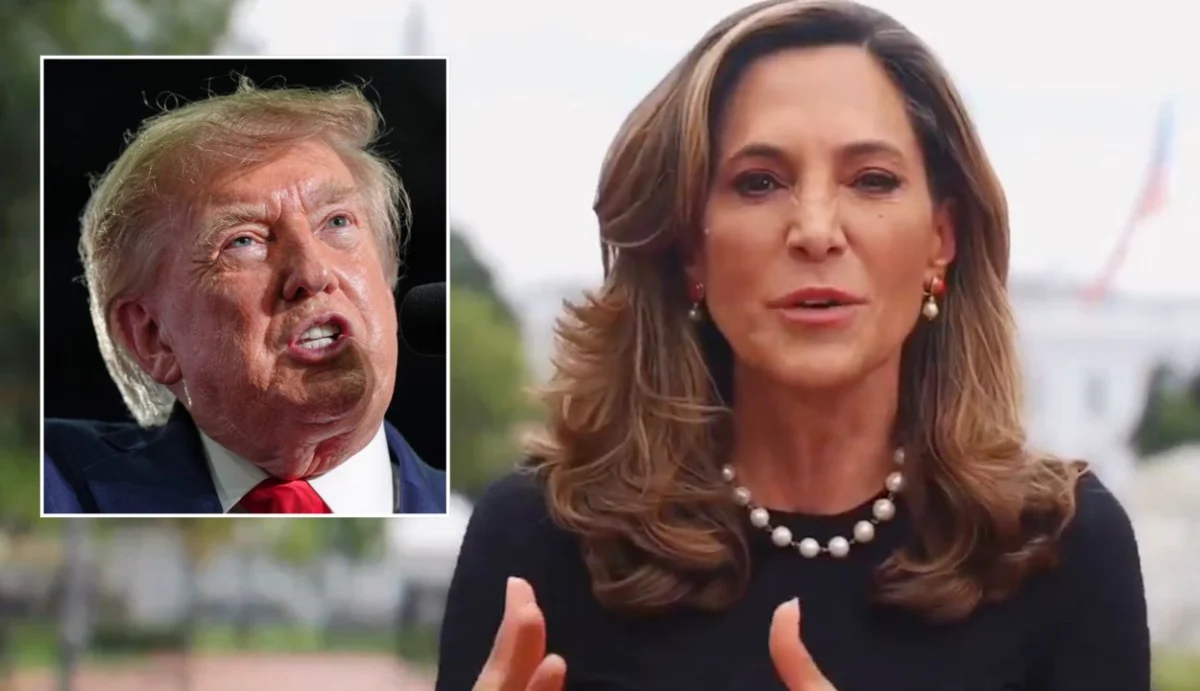
The political landscape of South Florida has been thrust into a state of internal party turmoil as President Donald Trump intensified his public campaign against Representative Maria Elvira Salazar (R-FL). Over the weekend of September 26, 2026, the president utilized his Truth Social platform to amplify a series of scathing criticisms directed at the congresswoman, effectively signaling a breakdown in the relationship between the White House and one of the most prominent Hispanic Republicans in Congress. This escalation follows the release of a controversial campaign advertisement by Salazar, which political analysts have described as one of the most direct internal challenges to the president’s influence since the 2024 election.
The friction reached a boiling point late Saturday evening when President Trump shared a succession of posts from his supporters that called for Salazar’s removal from office. The shared content was unambiguous in its intent. One post explicitly stated, "We need a NEW Republican to replace Salazar," while another suggested that the congresswoman had fundamentally miscalculated her standing within the party, noting, "I guess she misread the tea leaves." A third post shared by the president went as far as to express regret over past support, with a user claiming, "I should have voted for the guy who primaried her." By amplifying these sentiments, the president has effectively withdrawn his mantle of protection from Salazar, leaving her vulnerable as she faces a difficult reelection bid.
The Catalyst: The "Betrayal" Advertisement
The origin of this public rift is a viral campaign advertisement released by the Salazar campaign earlier this month. In the video, which quickly moved beyond Florida airwaves to garner national attention, Salazar took the unprecedented step of accusing President Trump of having "betrayed" the Hispanic community. While the ad was interpreted by some as a strategic move to appeal to moderate and independent voters in a swing-heavy district, it was viewed within the Trump inner circle as an unforgivable act of disloyalty.
In the advertisement, Salazar focused on specific policy areas where she argued the administration had failed to deliver on promises made to Latino families, particularly regarding immigration reform and economic stability in urban corridors. The rhetoric was a sharp departure from the standard Republican platform of the last two years, which has largely sought to align with the president’s "America First" agenda. By using the word "betrayed," Salazar struck a nerve with a president who prizes personal loyalty above almost all other political virtues.
Conflicting Narratives and Private Frustrations
The public display of animosity on Truth Social stands in stark contrast to the narrative Maria Elvira Salazar attempted to project just days prior. During an appearance on CBS’s Face the Nation, Salazar sought to downplay reports of a fractured relationship. She told moderator Margaret Brennan that she and the president had engaged in a "very good conversation" following the release of the ad. Salazar characterized the president’s demeanor as "gentlemanly," "courteous," and "receptive," suggesting that the two had reached an understanding regarding her need to represent the specific interests of her Miami-based district.
However, investigative reporting from the Wall Street Journal told a different story. According to sources close to the White House, Trump was privately "fuming" over the advertisement. The report suggested that while the president may have maintained a polite veneer during their phone call, he viewed the ad as a calculated betrayal designed to distance her from his brand while still benefiting from the Republican infrastructure. The subsequent flurry of social media activity on Saturday night appeared to validate the Wall Street Journal’s reporting, providing a public confirmation of the president’s true sentiments.
The High Stakes of Florida’s 27th District
The timing of this intra-party conflict is particularly perilous for the Republican Party’s efforts to maintain its House majority. Salazar is currently locked in a high-stakes reelection battle against Democrat Elliot Rodriguez. Florida’s 27th Congressional District, which encompasses parts of Miami and its suburbs, is a complex demographic tapestry. While Donald Trump carried the district by approximately 15 percentage points during the 2024 presidential election, the district has historically been a "purple" area that can swing based on candidate quality and local issues.

Data from recent surveys indicates that the race is a statistical dead heat. Two major polls conducted in the early weeks of September 2026 show Salazar and Rodriguez within the margin of error, with a significant portion of the electorate remaining undecided. Political strategists note that in a race this close, any erosion of the base could be catastrophic. If Trump’s "warpath" results in his core supporters in Miami-Dade County staying home or writing in a different candidate, Salazar’s path to victory becomes increasingly narrow.
2026 Polling Snapshot: FL-27
- Survey A (Non-partisan): Salazar 46%, Rodriguez 45%, Undecided 9%
- Survey B (Internal): Salazar 47%, Rodriguez 46%, Undecided 7%
- District Lean (2024): Trump +15
- Voter Demographics: 70% Hispanic/Latino, 18% White (Non-Hispanic), 6% Black.
A Pattern of Presidential Retribution
President Trump’s decision to target a sitting member of his own party is not an isolated incident but rather a continuation of a long-standing political strategy. Throughout his tenure in the political spotlight, Trump has frequently used his platform to "purge" those he deems insufficiently loyal. This pattern was most famously observed during the 2022 midterms, where he successfully campaigned against several of the House Republicans who voted for his impeachment.
In the case of Salazar, the president appears to be applying a similar pressure campaign. By sharing posts that mention her past primary challengers, Trump is signaling to the GOP donor class and local activists that he is open to a change in leadership for the district. This creates a difficult environment for the National Republican Congressional Committee (NRCC), which must balance its mandate to protect incumbents with the reality of a base that follows the president’s lead.
The Hispanic Vote: A Battle for the Narrative
At the heart of this dispute is a fundamental disagreement over how to maintain the Republican Party’s recent gains with Hispanic voters. In 2024, Trump saw record-breaking support from Latino men and South Florida’s Cuban and Venezuelan communities. Salazar’s supporters argue that her "independent" streak is exactly what is needed to keep these voters in the Republican fold, as it demonstrates that the party is not a monolith and can accommodate diverse viewpoints.
Conversely, the Trump camp views his 2024 performance as a mandate for his specific brand of populism. From their perspective, Salazar’s ad was not a strategic necessity but a rejection of the very movement that helped her win her seat in the first place. The tension highlights a broader debate within the GOP: whether to continue the "big tent" approach in swing districts or to demand total ideological alignment with the "MAGA" movement.
Timeline of the Salazar-Trump Conflict
- September 10, 2026: Salazar releases the "Betrayal" ad on digital platforms and local Miami television.
- September 15, 2026: The ad goes viral, sparking debate on national cable news outlets regarding a potential GOP rift.
- September 20, 2026: Salazar appears on Face the Nation, claiming a "very good" and "courteous" call with Trump.
- September 26, 2026 (Morning): The Wall Street Journal reports that Trump is privately "panicking" about midterm prospects and is angry with Salazar.
- September 26, 2026 (Evening): Trump shares multiple posts on Truth Social calling for Salazar’s ouster.
Broader Implications for the 2026 Midterms
The "war" against Salazar could have significant implications for the GOP’s broader midterm strategy. If Salazar loses her seat to Elliot Rodriguez, it will likely be analyzed as a self-inflicted wound by the president. However, if Salazar manages to win despite the president’s attacks, it could signal a waning of Trump’s influence over moderate Republican voters in suburban districts.
Furthermore, this conflict serves as a warning to other Republican incumbents who might be considering distancing themselves from the president as the election nears. The message from the Truth Social posts is clear: any public criticism of the president will be met with a swift and aggressive counter-response, regardless of the candidate’s electoral vulnerability.
As the November election approaches, all eyes will be on Miami-Dade County. The outcome of the race in Florida’s 27th District will not only determine a seat in Congress but will also serve as a definitive litmus test for the power of presidential endorsements—and the consequences of presidential enmity—in the modern Republican Party. For Maria Elvira Salazar, the challenge is now two-fold: she must fend off a well-funded Democratic challenger while simultaneously navigating a "warpath" laid out by the leader of her own party.




 Yuyun Lusiyani
 Joko Widodo
 Eva Lovia
 Pevita Pearce
 admin
admin
 Lina Irawan