
 Jia Lissa
President Donald J. Trump intensified his ongoing confrontation with the national press corps this week, utilizing his social media platform to question the fundamental necessity of providing journalists access to the White House. The escalation comes in the immediate wake of a federal court ruling that ordered the administration to restore press credentials to three major news organizations. The president’s rhetoric, characterized by a series of early morning posts on Truth Social, suggests a deepening resolve to circumvent traditional media structures in favor of alternative, ideologically aligned outlets.
The latest friction point in this long-standing dispute centered on the White House television pool duties for the president’s scheduled trip to Tennessee. On Friday evening, the administration took the unprecedented step of removing CNN from its designated slot in the press pool for the weekend. In a move that signaled a stark departure from established protocol, the administration installed LindellTV—a media outlet owned by MyPillow CEO and prominent Trump supporter Mike Lindell—on Air Force One in CNN’s place. This substitution occurred despite a temporary restraining order issued by U.S. District Judge Timothy Kelly, which mandated that the administration lift its ban on CNN, MS NOW, and Politico for a minimum of 14 days.
The Escalation of Anti-Media Rhetoric
By Saturday morning, President Trump appeared to directly challenge the judicial branch’s authority regarding White House access. Writing to his followers, the president characterized mainstream media organizations as "perpetrators of FAKE NEWS" and questioned why they should be permitted within what he described as the "sacred" confines of the White House. He cited his 2024 election victory as a mandate to overhaul media relations, claiming that nearly 100% of the coverage regarding his administration remains negative.
In a subsequent post, the president asserted that the presence of these organizations has resulted in a "tremendous cost" to the country, concluding with the emphatic statement that such outlets "SHOULD NOT BE ALLOWED IN THE WHITE HOUSE." These comments mark a significant hardening of the administration’s stance, transitioning from occasional critiques of specific reporting to a broader challenge against the institutional presence of independent media within the executive branch.
Chronology of the Conflict: From Tarmac to Courtroom
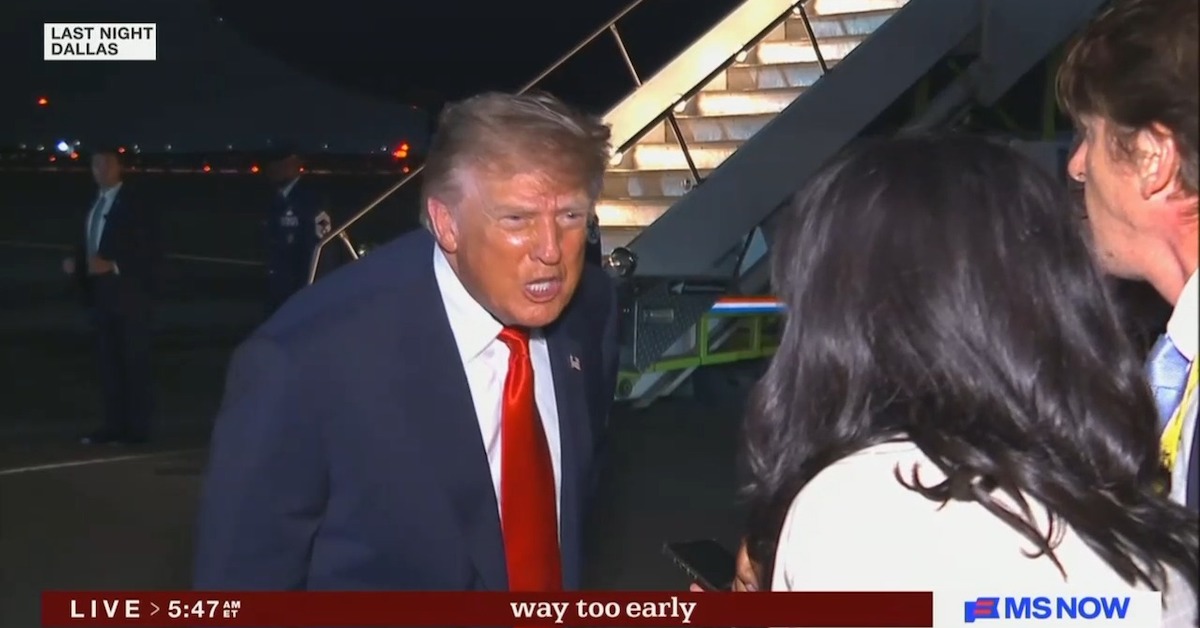
The current crisis began in earnest on September 10, when the president engaged in a heated exchange with a reporter on a Dallas tarmac. However, the situation reached a breaking point on September 18, when the White House officially declared CNN, MS NOW, and Politico as persona non grata. The administration’s justification for the ban centered on allegations of unprofessionalism and "biased" reporting, though critics argued the move was a direct violation of the First Amendment.
In response, the three news organizations formed a legal coalition and filed suit against the administration. The legal challenge sought an immediate injunction to restore their access, citing the 2018 precedent of CNN v. Trump, in which a court ruled that the White House could not arbitrarily revoke press credentials without due process.
The tension was further highlighted during the United Nations General Assembly earlier this week. When the president encountered CNN’s Kaitlan Collins, he expressed audible surprise and hostility toward her presence. Despite Collins explaining that the United Nations, rather than the White House, had granted her access to the event, the president insisted that the network "shouldn’t be here covering me." This exchange was later cited in legal filings as evidence of the president’s personal animus toward specific journalists and outlets.
Judicial Intervention and the Temporary Restraining Order
Judge Timothy Kelly, a jurist appointed by Trump during his first term, presided over the initial hearing regarding the press ban. On Friday, Judge Kelly issued a temporary restraining order (TRO), ruling that the administration had likely violated the journalists’ Fifth Amendment rights to due process. The judge noted that the White House had failed to provide a clear, standardized set of rules for press conduct or a formal process for challenging the revocation of credentials.
The TRO was intended to serve as a 14-day "cooling-off" period, during which the administration was legally required to restore full access to the banned outlets while the court considered the broader constitutional arguments. However, the decision to boot CNN from the Air Force One pool just hours after the ruling suggests the administration is testing the limits of judicial oversight. Legal experts suggest that if the administration continues to ignore the spirit of the TRO, it could face charges of contempt of court.
The Network Boycott and the Impact on Public Information
The administration’s actions have triggered a rare show of solidarity among major news organizations. Following the initial ban, representatives from ABC, CBS, NBC, and even segments of Fox News participated in an effective boycott of White House television pool duties. The pool system is a critical component of White House coverage; it involves a small group of journalists who record and share footage and reports with the broader media community, ensuring that the president is never without independent oversight.
This boycott resulted in a period of limited media coverage of the president’s activities, including during the historic state visit of Chinese President Xi Jinping. During several high-profile meetings between the two world leaders, independent American journalists were notably absent. In their place, Chinese state-run media outlets, such as CCTV and Xinhua, were granted prominent access.
The optics of Chinese state media enjoying greater access to the U.S. President than independent American outlets drew sharp criticism from former government officials and press freedom advocates. Critics argued that the absence of a domestic press pool allowed foreign propaganda outlets to control the narrative of the diplomatic summit, potentially undermining American interests and values on the global stage.
Data and Historical Context of Press Access
The current administration’s relationship with the press represents a statistical anomaly compared to previous presidencies. Data from the White House Correspondents’ Association (WHCA) indicates that the frequency of formal, open-press briefings has declined significantly, replaced largely by "chopper talk" (impromptu Q&A sessions near the presidential helicopter) and social media pronouncements.
Historically, the White House press pass—often referred to as a "hard pass"—has been viewed as a tool for transparency. While every administration has had contentious relationships with certain reporters, the systematic exclusion of multiple major networks is a 21st-century phenomenon. In 2018, the Trump administration’s attempt to revoke Jim Acosta’s credentials was successfully challenged in court, establishing that the "sacred" nature of the White House does not exempt it from constitutional requirements of fairness and due process.
The inclusion of LindellTV in the press pool further complicates the landscape. Unlike traditional news organizations that adhere to established journalistic ethics and objectivity standards, LindellTV is an overtly partisan platform. The substitution of a pool member with a political ally marks a shift toward a "state-media" model, where access is granted based on loyalty rather than journalistic function.
Official Responses and Stakeholder Reactions
The White House Press Office has defended its actions, stating that it has the "inherent authority" to determine who enters the building and who travels on government aircraft. A spokesperson for the administration argued that the "so-called ‘pool’ system is a relic of an era that no longer exists" and that the president has the right to speak to outlets that "treat him fairly."
Conversely, the White House Correspondents’ Association issued a blistering statement: "The decision to ignore a federal court order and replace a legitimate news organization with a political ally on Air Force One is an affront to the First Amendment. The pool system exists to ensure the American people have an independent eye on their government. It is not a reward to be handed out to friends or a punishment to be used against critics."
CNN also released a brief statement following the Friday night incident: "We are disappointed that the White House has chosen to ignore Judge Kelly’s order. We will continue to pursue our legal rights to ensure that our reporters can do their jobs without fear of government retaliation."
Analysis of Broader Implications
The standoff between the executive and judicial branches over media access has profound implications for the American democratic system. If the administration successfully ignores or bypasses the court’s restraining order, it could set a precedent that executive power over the White House grounds supersedes constitutional protections for the press.
Furthermore, the fragmentation of the White House press corps could lead to a permanent "two-tier" system of media access. In this scenario, access would be partitioned based on an outlet’s political leanings, effectively ending the era of the unified press pool. Such a shift would likely deepen national polarization, as different segments of the public would receive radically different versions of presidential actions based on which media outlets were allowed in the room.
The conflict also raises questions about the future of the "pool" itself. If networks continue to boycott in solidarity, the president may continue to rely on alternative outlets like LindellTV or Newsmax to provide "official" footage. This would centralize the administration’s control over its own image, reducing the opportunities for adversarial questioning and independent fact-checking that have been staples of American political life for decades.
As the 14-day window of the temporary restraining order continues, all eyes remain on the D.C. District Court. The legal battle is no longer just about the credentials of a few journalists; it has evolved into a fundamental test of the balance of power between the presidency, the judiciary, and the Fourth Estate. For now, the "blackout" of traditional media at the White House appears likely to persist as the administration explores new ways to redefine the rules of political engagement.


 Yuyun Lusiyani
 Joko Widodo
 Eva Lovia
 Pevita Pearce
 admin
admin