
 Eva Lovia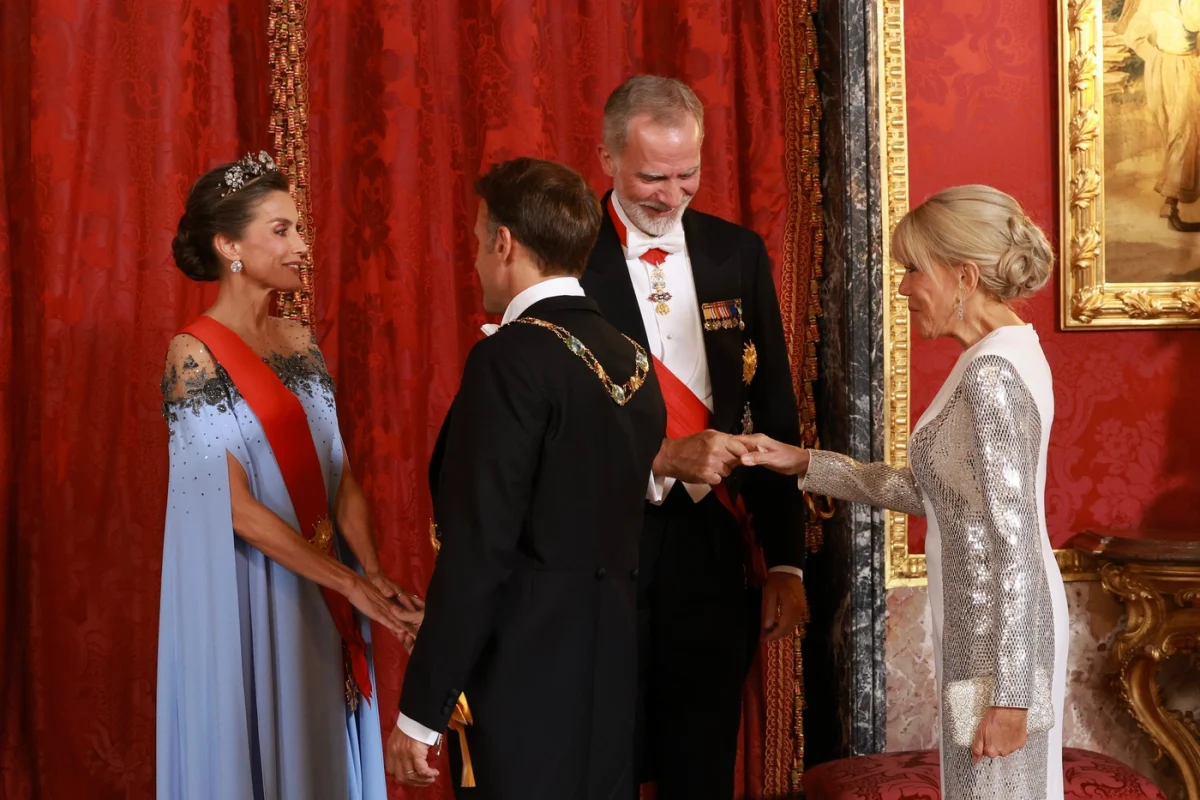
Queen Letizia of Spain graced a glittering State Dinner in Madrid, hosted alongside King Felipe VI, by selecting a cherished piece from the Spanish Crown Jewels: the "Floral" tiara. This elegant diadem, a symbol of both royal tradition and personal significance for the Queen, was worn in honor of French President Emmanuel Macron and his wife, Brigitte Macron, during their official two-day state visit to Spain. The event underscored the enduring diplomatic and cultural ties between the two nations, with a particular focus on economic collaboration and shared heritage.
A Symbol of Royal Legacy and Personal Preference
The choice of the "Floral" tiara by Queen Letizia was not merely a matter of sartorial elegance; it represented a deliberate nod to the historical lineage of the Spanish monarchy and Queen Letizia’s own evolving style. The tiara, named for its intricate design featuring a series of diamond-crafted flowers, boasts a rich provenance dating back to the 19th century. It was originally commissioned as a wedding gift from King Alfonso XII to his bride, Maria Christina of Austria. This piece, therefore, carries the weight of centuries of royal matrimony and succession within the Spanish royal family.
Following its initial presentation, the tiara experienced a period of separation from the Crown in the early 20th century. However, it was later reacquired by General Francisco Franco, a pivotal figure in 20th-century Spanish history, and subsequently gifted as a wedding present to Princess Sophia of Greece upon her marriage to Juan Carlos of Spain. Princess Sophia, who ascended to the throne as Queen Sophia alongside King Juan Carlos after Franco’s death in 1975, wore the tiara on numerous significant occasions. Queen Letizia’s selection of this historically imbued jewel connects her reign to these prominent female figures in Spanish royal history, emphasizing continuity and the enduring significance of the Crown.
For Queen Letizia, the "Floral" tiara has held particular resonance in the earlier years of her marriage to King Felipe VI. Its relatively understated yet exquisitely crafted design has made it a favored choice for significant diplomatic events, allowing it to complement rather than overshadow her ensembles. This particular outing marked a notable reunion with the diadem, signifying its continued importance in her royal repertoire.
Navigating Diplomatic Nuances: Tiara Protocol and Republicanism
The decision for Queen Letizia to wear a tiara during the State Dinner also presented an interesting diplomatic consideration, given that France is a republic. Traditionally, when hosting heads of state from republican nations, royal families may opt for more subdued jewelry or, in some instances, forgo tiaras altogether to respect the differing forms of government. This practice is often observed to avoid any perception of ostentation or to maintain a delicate balance of protocol.
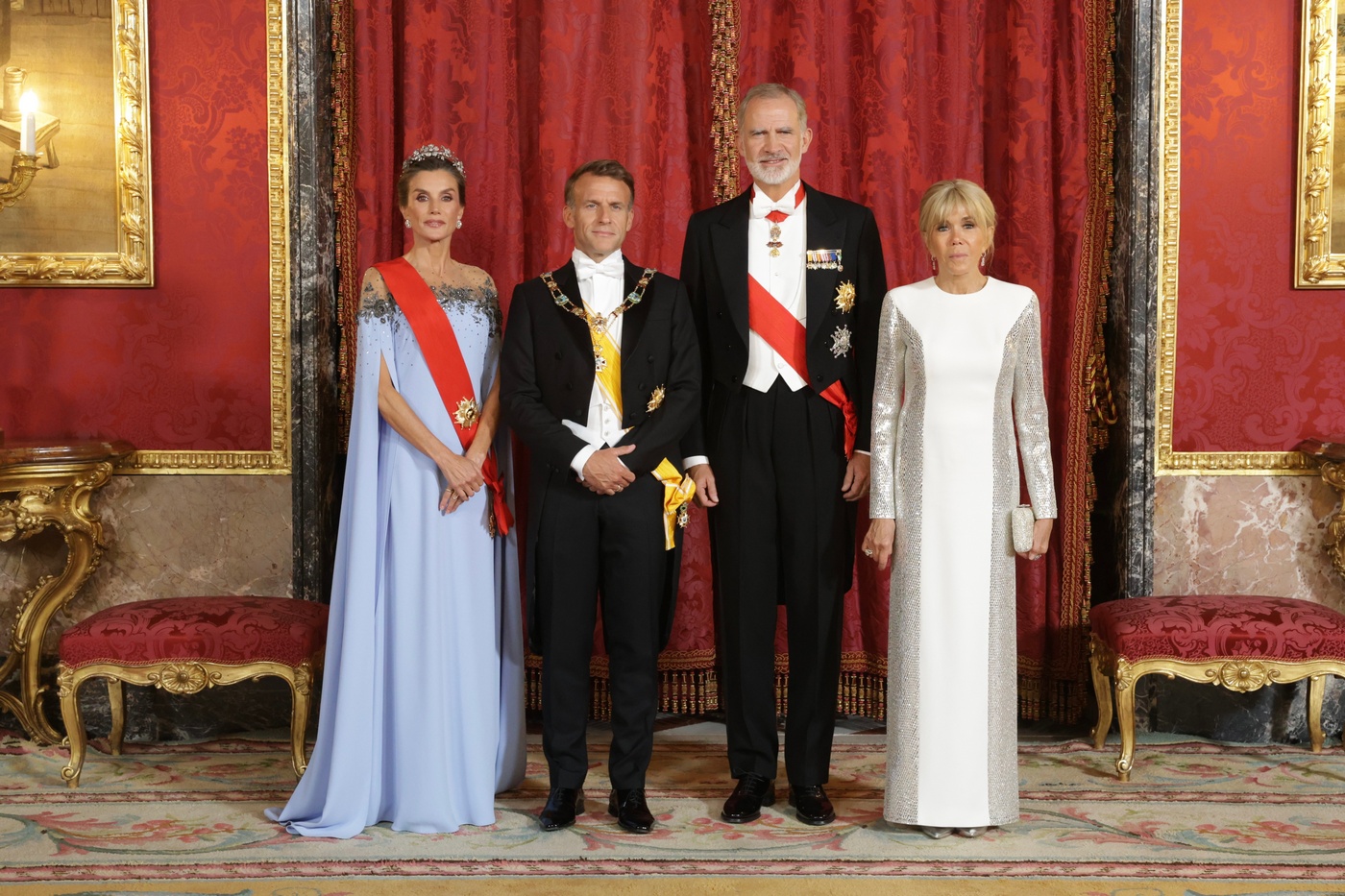
This sensitivity was evident in previous high-profile state visits. For instance, when President Macron visited the United Kingdom, neither Queen Camilla nor King Charles III wore tiaras. Similarly, Queen Letizia herself did not wear a tiara during her state visit to France with King Felipe VI. Historically, Queen Elizabeth II, while a staunch advocate for tradition, did wear tiaras on her state visits to France, a choice that was largely seen as a reflection of her long-standing and deeply personal approach to royal diplomacy.
In this context, Queen Letizia’s choice of the "Floral" tiara can be interpreted as a calculated yet graceful gesture. While a tiara inherently signifies royalty, the selection of a piece with a rich historical narrative and a delicate floral design aimed to strike a balance. It conveyed respect for the occasion and the guests while remaining true to the traditions of the Spanish monarchy. This decision likely aimed to project an image of sophisticated diplomacy, acknowledging the republican status of France while celebrating the strong bilateral relationship between the two nations. The underlying message conveyed was one of mutual respect and shared values, transcending political systems.
A Showcase of Spanish Fashion and Economic Ties
Beyond the symbolic significance of the tiara, Queen Letizia’s attire for the State Dinner was a deliberate and celebrated statement of support for Spanish fashion. She chose a breathtaking pale blue evening gown by the renowned Spanish designer Carolina Herrera. The gown featured a sheer, sequin-embellished bodice, elegant cape-style sleeves, and dramatic embroidery, creating a visually stunning and sophisticated silhouette. This selection immediately garnered widespread praise from the Spanish press, which lauded Queen Letizia’s commitment to championing national designers on such a prominent international stage.
This emphasis on Spanish artistry extended beyond the State Dinner. Earlier in the day, during official engagements with President Macron, Queen Letizia had also showcased the talent of another distinguished Spanish fashion house, Pertegaz, further solidifying her role as a cultural ambassador for Spain’s creative industries. By consistently highlighting Spanish designers, Queen Letizia not only enhances her own image but also provides invaluable exposure and prestige to the nation’s fashion sector, fostering economic growth and international recognition.
Deepening Bilateral Relations: A Focus on Economic and Cultural Exchange
The State Banquet was a central event within a comprehensive two-day state visit by President Macron and his wife, aimed at strengthening the already robust relationship between Spain and France. The discussions and engagements throughout the visit revolved around key areas of mutual interest, including economic cooperation, technological innovation, cultural exchange, and security. Both leaders emphasized the shared challenges and opportunities facing Europe and reiterated their commitment to collaborative solutions.
During the State Banquet, King Felipe VI and President Macron delivered speeches that underscored the profound historical connections and contemporary partnerships between their nations. Their addresses highlighted the shared democratic values, the importance of a united Europe, and the mutual benefits derived from close economic ties. Spain and France are significant trading partners, with substantial cross-border investment and a high volume of bilateral trade in sectors ranging from automotive and aerospace to tourism and agriculture. The visit served as a platform to explore avenues for further collaboration, particularly in emerging sectors like renewable energy and digital transformation.
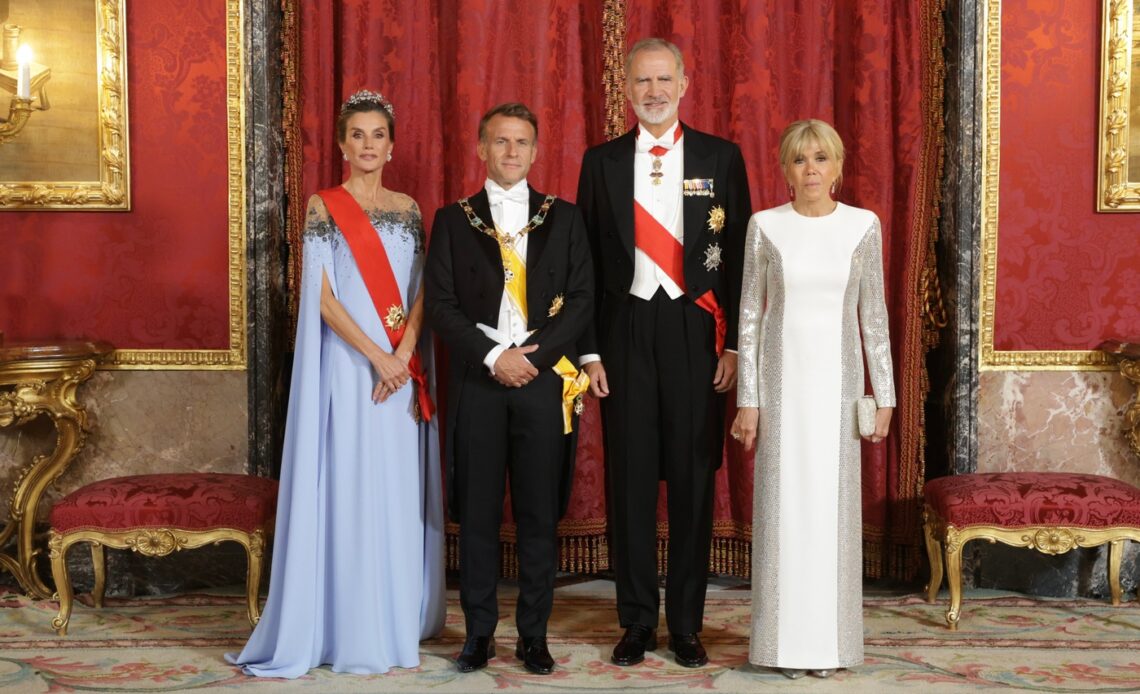
The presence of President Macron, a key figure in European politics, in Madrid underscored Spain’s active role within the European Union and its commitment to fostering strong alliances with its continental neighbors. The visit provided an opportunity to align perspectives on various European policy issues, including economic recovery, climate change, and geopolitical stability.
A Legacy of Royal Jewels and Diplomatic Significance
The "Floral" tiara’s journey through Spanish royal history offers a fascinating lens through which to understand the continuity and evolution of the Spanish monarchy. From its origins as a wedding gift to King Alfonso XII and Queen Maria Christina, through its reacquisition and subsequent presentation to Queen Sophia, to its current status as a cherished piece worn by Queen Letizia, the tiara has been a silent witness to pivotal moments in Spain’s history. Each wearer has imbued the jewel with their own significance, contributing to its enduring legacy.
Queen Letizia’s consistent and thoughtful use of the Spanish Crown Jewels, particularly tiaras with historical depth, plays a crucial role in projecting an image of stability and tradition. Her ability to blend historical heirlooms with contemporary fashion choices demonstrates a modern approach to monarchy, one that respects the past while embracing the present. The "Floral" tiara, with its delicate beauty and rich history, perfectly encapsulates this dual approach.
The strategic selection of jewelry for state visits is a subtle yet powerful form of diplomatic communication. It can convey messages of respect, alliance, and national identity. In the case of the State Dinner for President Macron, Queen Letizia’s choice of the "Floral" tiara, coupled with her impeccable selection of Spanish couture, served to reinforce Spain’s cultural heritage and its commitment to strong European partnerships. This nuanced approach to royal representation, balancing tradition with modern diplomatic sensitivities, continues to define Queen Letizia’s influential role on the international stage. The success of the visit and the positive reception of Queen Letizia’s sartorial and jeweled choices underscore the enduring power of diplomatic engagement and the symbolic weight carried by royal regalia in shaping international perceptions.




 Yuyun Lusiyani
 Joko Widodo
 Pevita Pearce
 admin
admin
 Lina Irawan