
 Pevita Pearce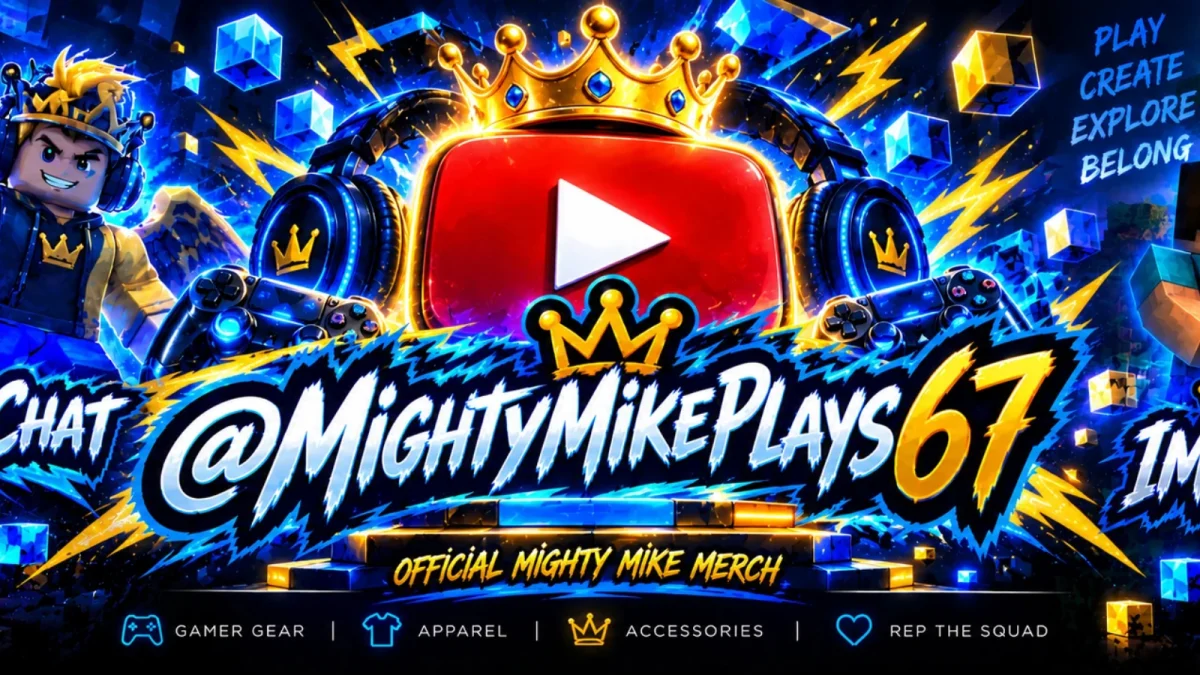
The digital creator landscape was recently upended by a series of revelations involving the "Mighty Mike Plays" YouTube channel, a platform centered on a nine-year-old Minecraft enthusiast and managed by his father, Dave. In a comprehensive one-hour video released on October 1, titled "Allow me to explain…", Dave addressed a cascade of controversies that have trailed the channel since mid-September. These issues range from a staggering $118,000 advertising debt to claims of professional termination, the use of artificial intelligence in merchandise design, and discrepancies regarding the family’s financial status. This clarification marks a significant pivot from the initial narrative that had captured the attention of millions and sparked a heated debate regarding transparency and ethics in the creator economy.
The Genesis of the $118,000 Advertising Debt
The saga began in mid-September when Dave went public with a claim that his nine-year-old son had inadvertently spent $118,000 on YouTube advertisements. According to the initial account, Dave had intended to spend a modest $20 to promote one of his son’s Minecraft videos. However, due to a series of alleged technical oversights and the connection of a company credit card to the account, the advertising campaign scaled exponentially.
Within the digital advertising ecosystem, specifically Google Ads (which powers YouTube promotions), automated bidding strategies can lead to rapid spending if daily limits are not strictly enforced or if the "maximize conversions" settings are applied to a broad audience. Dave claimed that the situation "spiraled out of control," leading to a debt that many in the community found difficult to comprehend. The story initially garnered sympathy, as it appeared to be a cautionary tale of a child gaining access to sensitive financial tools. However, the narrative quickly shifted as Dave began to link this financial burden to his personal livelihood.
Contradictions in Employment and Financial Hardship
In the wake of the advertising debt, Dave released content suggesting that his professional life was in jeopardy. He originally stated that he faced being fired from his job if the $118,000 was not repaid to his employer, as the funds had been drawn from a company credit card. This led to a perception that Dave was a middle-class employee facing financial ruin due to his son’s mistake.
In his October 1 clarification video, Dave addressed these claims by redefining what he meant by being "fired." He revealed that he is not a traditional employee but rather a business owner who controls approximately 12 different companies. He explained that the "firing" he referred to was actually the termination of a significant contract between one of his entities and a partner company.
"What happened in reality was that the contract between company A and company B just got terminated. Isn’t that the same thing?" Dave posited in the video. He further defended his initial phrasing, stating, "I own my own company, so what?… Just to clarify, yeah, I consider that being fired. If my company lost a contract with this important company, then how is that not being fired?"
This revelation caused significant friction within the YouTube community. Critics argued that there is a fundamental difference between an employee losing their sole source of income and a serial entrepreneur losing one contract among many. The distinction is particularly relevant given that Dave had previously suggested he might have to sell his family home to cover the debt.
Real Estate Disclosures and the Wealth Gap
The narrative of impending homelessness was further scrutinized by independent investigators and fellow YouTubers. Research into public records and digital footprints suggested that Dave’s financial situation was far more robust than his videos implied. Reports surfaced indicating that Dave owns at least two properties with a combined estimated value of approximately $4 million.
When confronted with these findings, Dave did not deny the property ownership but instead refocused the conversation on the stress of the situation. The discrepancy between a multi-millionaire business owner asking for community support and the reality of his assets has led to accusations of "pity-baiting"—a tactic where creators exaggerate personal struggles to elicit donations or sales from their audience.
The AI Merchandise Controversy and Financial Backlash
To alleviate the $118,000 debt, the Mighty Mike Plays channel launched a line of T-shirts. However, this move quickly backfired when viewers noticed that the designs were clearly generated by artificial intelligence (AI). The designs were criticized for being low-effort and lacking the personal touch expected from a "support" campaign.
In his recent explanation, Dave admitted that using AI was a mistake but defended the decision as a result of time pressure. He revealed that he spent $10,000 on the merchandise venture and felt forced to act quickly because third-party "bad actors" were already creating unofficial "Mighty Mike" memecoins and merchandise to profit from the viral story.
"That was not the move. I shouldn’t have used AI," Dave admitted. He noted that despite the backlash, roughly 100 people received shirts for free as part of his effort to manage the fallout. He emphasized that he never launched a GoFundMe or explicitly asked for handouts, though critics point out that selling overpriced AI-generated shirts to "save his job" carries a similar ethical weight.
Chronology of the Mighty Mike Plays Controversy
To understand the complexity of the situation, a timeline of events is essential:
- Mid-September: Dave announces that his son spent $118,000 on YouTube ads, claiming a $20 budget was bypassed.
- Late September: Dave claims he will be fired and may lose his house unless the money is repaid. He launches an AI-generated T-shirt line.
- Late September (Backlash Phase): The YouTube community identifies the merchandise as AI-generated. Investigative creators reveal Dave’s ownership of 12 companies and multi-million dollar real estate.
- September 30: Questions arise regarding the authenticity of "Mighty Mike," with some viewers suggesting the gameplay or the child himself may be AI-enhanced or scripted.
- October 1: Dave releases an hour-long video walking back the "fired" claims, admitting to owning multiple companies, and explaining the AI merchandise as a rushed response to "squatters" in his brand space.
Impact on the Child and "Coaching" Allegations
Beyond the financial and professional aspects of the drama, the role of the nine-year-old child at the center of the channel has come under scrutiny. Dave revealed in his latest video that he has had to "coach" his son on how to handle the sudden influx of attention and the subsequent negativity.
The child reportedly faced difficulties at school, where classmates told him he was not a "real YouTuber" because his views were "paid for" via the $118,000 ad spend. This highlights a growing concern in the digital age: the psychological impact on minors when their parents involve them in viral controversies or use them as the face of a brand.
Furthermore, some viewers have questioned the legitimacy of the Minecraft gameplay featured on the channel. Following a "bizarre gameplay change," rumors circulated that the content might be pre-recorded or AI-generated. Dave has vehemently denied these claims, asserting that his son is a real child who plays the game himself. However, the lack of transparency in previous stages of the story has made the audience more skeptical of these reassurances.
Broader Implications for the Creator Economy
The Mighty Mike Plays saga serves as a case study for several emerging issues in social media and digital marketing:
1. Platform Accountability and Ad Safety:
The incident raises questions about how Google Ads allows a child-managed account to accrue six-figure debts. While Dave’s story has changed, the technical possibility of such a spend exists. This highlights the need for more robust "kill switches" and verification processes for high-spend advertising accounts, particularly those linked to personal or small business cards.
2. The Ethics of "Crisis Content":
There is a growing trend of creators using personal crises—real or exaggerated—to drive engagement. When a creator presents a life-altering disaster to their audience, they enter an informal social contract of honesty. When that honesty is called into question, as it was with Dave’s "fired" claim, it can damage the trust of the entire platform.
3. The Role of AI in Creative Output:
The backlash against the AI-generated T-shirts demonstrates a growing "AI fatigue" among consumers. Audiences are increasingly sensitive to perceived "low-effort" content, especially when it is sold under the guise of a charitable or supportive cause.
4. Transparency in "Kid-Centric" Channels:
As "kid-fluencers" continue to dominate YouTube, the line between a hobby and a high-stakes business becomes blurred. The involvement of a father who owns 12 companies suggests that Mighty Mike Plays was always a sophisticated business venture rather than a simple family project. This level of professional management is often hidden from the audience to maintain an "authentic" and "relatable" image.
Conclusion and Current Status
As of early October, Dave has attempted to move past the controversy by providing what he describes as the "full truth." By walking back the claims of being fired and acknowledging his business holdings, he has attempted to mitigate the "scammer" label that had begun to circulate. However, the admission that he "didn’t handle everything in the right way" and "wasn’t looking for help" stands in contrast to the high-pressure sales tactics used during the initial T-shirt launch.
The Mighty Mike Plays channel remains active, but its reputation has been fundamentally altered. The story has transitioned from a viral anomaly of a child’s mistake to a complex narrative about entrepreneurial risk, digital transparency, and the murky ethics of modern content creation. Whether the channel can regain the trust of its audience—or if it will remain a cautionary tale for other creators—remains to be seen. For now, the $118,000 ad spend remains one of the most expensive and controversial marketing lessons in the history of the platform.




 Jia Lissa
 Yuyun Lusiyani
 Joko Widodo
 Eva Lovia
