
 Pevita Pearce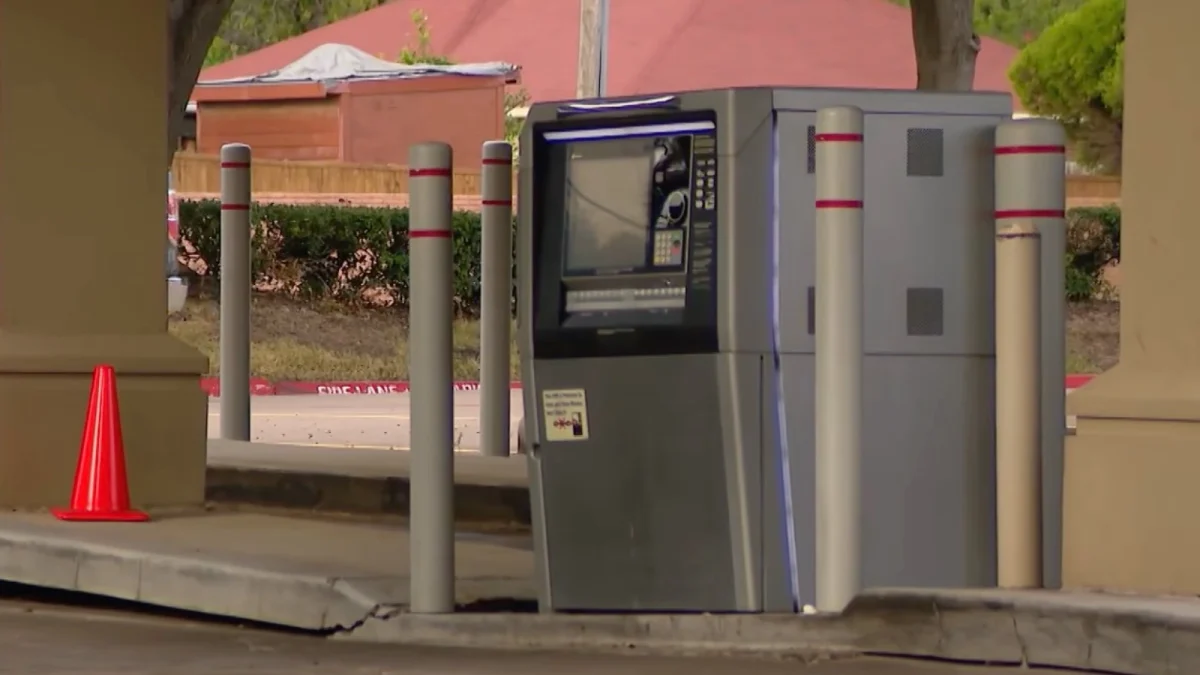
In an era where headlines are often dominated by reports of financial crime and economic hardship, a resident of Lewisville, Texas, has provided a stark counter-narrative through an extraordinary act of honesty. On August 3, a 37-year-old local barber, who has requested to remain anonymous to maintain his privacy, discovered a discarded bag containing $128,514 in cash and 19 checks resting on top of a Bank of America automated teller machine (ATM). Rather than succumbing to the life-altering temptation of the find, the man initiated a sequence of events that led to the safe recovery of the funds by law enforcement and the identification of a significant lapse in corporate security protocols.
The incident has drawn widespread attention not only for the substantial sum involved but also for the rarity of such a large amount of currency being recovered without any link to illicit activities. Law enforcement officials in the Dallas-Fort Worth suburb have characterized the event as a testament to individual integrity and a highly unusual occurrence in the annals of local policing.
Detailed Chronology of the Discovery
The event unfolded on the morning of Saturday, August 3, when the Lewisville resident visited a Bank of America branch to use the ATM. Upon approaching the machine, he noticed a heavy, nondescript bag sitting in plain view on top of the terminal. Upon closer inspection, the bag was found to contain a staggering amount of U.S. currency and a smaller secondary pouch holding nearly a score of checks.
The barber’s first instinct was to identify the rightful owner. Initial indicators on the packaging suggested a possible connection to a nearby Chick-fil-A franchise. Acting on this lead, the man took the bag to the restaurant and inquired with the management whether they had lost a significant deposit. After a brief internal review, the restaurant manager confirmed that all their deposits were accounted for and that the money did not belong to their establishment.
Realizing the gravity of the situation and the potential risks associated with possessing such a large sum of untraceable cash, the man contacted 911. Lewisville Police Department officers were dispatched to the scene, where they took custody of the bags. It was only after a formal tally at the police station that the full scale of the find was realized: the cash totaled exactly $128,514, a figure that matched a bank deposit slip found inside the bag.
Investigation and Corporate Security Failure
The subsequent investigation by the Lewisville Police Department focused on how such a significant amount of money could be left unattended in a public space. Detective Gina Miller, the lead investigator on the case, noted that the circumstances were remarkably mundane. The bag had not been hidden or dropped in a struggle; it appeared to have been simply forgotten by personnel tasked with servicing the ATM.
"The bag was just sitting there," Detective Miller stated during a press briefing. "It looked like it was just left there by accident. I’ve never had a case like this before, ever."
Police eventually traced the funds back to Bank of America. The investigation revealed that the money was being handled by Brink’s, a major global security and cash management firm contracted by the bank to service its ATM network. It was determined that workers servicing the machine on behalf of the vendor had inadvertently left the bag on top of the unit before departing the premises.
When contacted for a statement regarding the security breach and the recovery of the funds, a spokesperson for Brink’s declined to provide specific details. The company cited a long-standing policy of not commenting on matters involving law enforcement or internal security procedures, particularly those that could impact the safety of their employees. Bank of America has similarly remained quiet on the specifics of the incident, though the funds have since been returned to the institution.
The Rarity of "Clean" Found Money
Lewisville Police Chief Brook Rollins emphasized that while the department occasionally handles cases of lost property, the scale and nature of this discovery were unprecedented. In many instances where large sums of cash are found abandoned, there is a nexus to organized crime, drug trafficking, or money laundering. The fact that this money was documented, legitimate, and left behind due to human error makes the case a statistical anomaly.
"To find that kind of money, or that amount of money, is certainly rare," Chief Rollins said. "And then to not find it connected to any criminal activity is certainly unusual. It highlights the fact that there are a lot of good people out there that really do want to do the right thing."
The discovery of $128,514 represents more than double the median annual household income in the United States, which currently hovers around $75,000. For a local barber, the sum represented a potentially life-changing amount of capital. Law enforcement officials noted that the individual’s decision to involve the police immediately shielded him from potential legal complications that can arise when citizens find and keep large sums of money.
Legal Implications: Theft by Finding
The Lewisville incident serves as a practical case study in the legal concept of "theft by finding." Under Texas Penal Code Chapter 31, a person commits an offense if they unlawfully appropriate property with the intent to deprive the owner of it. While finding lost property is not a crime in itself, the failure to make a reasonable effort to return the property to its rightful owner can lead to criminal charges if the finder keeps the items.
In Texas, the severity of a theft charge is determined by the value of the property. Had the barber chosen to keep the $128,514, he could have faced a first-degree felony charge, which carries a potential sentence of five to 99 years in prison and a fine of up to $10,000. By turning the money over to the police, the resident not only acted ethically but also followed the prescribed legal route for handling mislaid or lost property.
Legal experts often distinguish between "lost" property (property the owner unintentionally parted with) and "mislaid" property (property the owner intentionally placed somewhere but then forgot). The bag on the ATM falls clearly into the category of mislaid property. In such cases, the owner of the premises—in this case, Bank of America—generally has a superior claim to the property over the finder, as they are in the best position to return it to the true owner.
Broader Context: The Psychology of Honesty
The Lewisville case mirrors other high-profile instances of returned currency that have sparked national conversations about civic duty. For example, a 2019 study published in the journal Science titled "Civic Honesty Around the Globe" involved researchers "losing" thousands of wallets in 40 countries to see how many would be returned. The study found a surprising correlation: the more money a wallet contained, the more likely people were to return it.
Researchers theorized that while keeping a small amount of money might be easily rationalized, keeping a large sum forces an individual to re-evaluate their self-image. To keep $128,000 would require the finder to view themselves as a "thief," a psychological hurdle that many are unwilling to cross. This "altruistic" behavior is often reinforced by community ties and the fear of legal repercussions, but it is primarily driven by an internal moral compass.
In Lewisville, a city with a population of approximately 130,000, the story has resonated deeply. The community has praised the barber for his selflessness, particularly given the economic pressures facing small business owners in the current inflationary environment.
Operational Implications for the Cash-in-Transit Industry
The incident also raises serious questions regarding the operational protocols of cash-in-transit (CIT) companies. Brink’s and its competitors operate under strict "dual-custody" rules, which typically require two employees to be present and verify every stage of a cash transfer. The fact that a bag containing over $128,000 could be left on a public ATM suggests a breakdown in these standard operating procedures.
Industry analysts suggest that such errors are often the result of "complacency born of routine." CIT messengers service dozens of ATMs daily, and the repetitive nature of the task can lead to mental lapses. However, the financial and reputational risks for the security firm are immense. Beyond the potential loss of the cash, such incidents can lead to the termination of lucrative contracts with major financial institutions like Bank of America.
Conclusion and Community Impact
The Lewisville Police Department has officially closed the case following the return of the funds to Bank of America. No charges are expected to be filed against the Brink’s employees involved, as the incident was ruled an accidental oversight rather than a criminal act.
As for the barber, he has returned to his daily routine, preferring to remain out of the spotlight despite his newfound status as a local hero. Chief Rollins noted that while this specific individual’s actions were exemplary, they represent a broader spirit of community cooperation that law enforcement relies upon.
"There are more people than just this one person who want to do the right thing," Rollins concluded. "But when it happens on this scale, it’s important to recognize it. It reinforces the trust we have in our citizens and serves as a reminder that integrity is still a fundamental value in our society."
The story remains a rare example of a high-stakes situation ending with the best possible outcome for all parties involved: the bank recovered its assets, the security firm avoided a permanent loss, and a Texas community found a reason to celebrate the quiet honesty of one of its own.




 Jia Lissa
 Yuyun Lusiyani
 Joko Widodo
 Eva Lovia
