
 Lina Irawan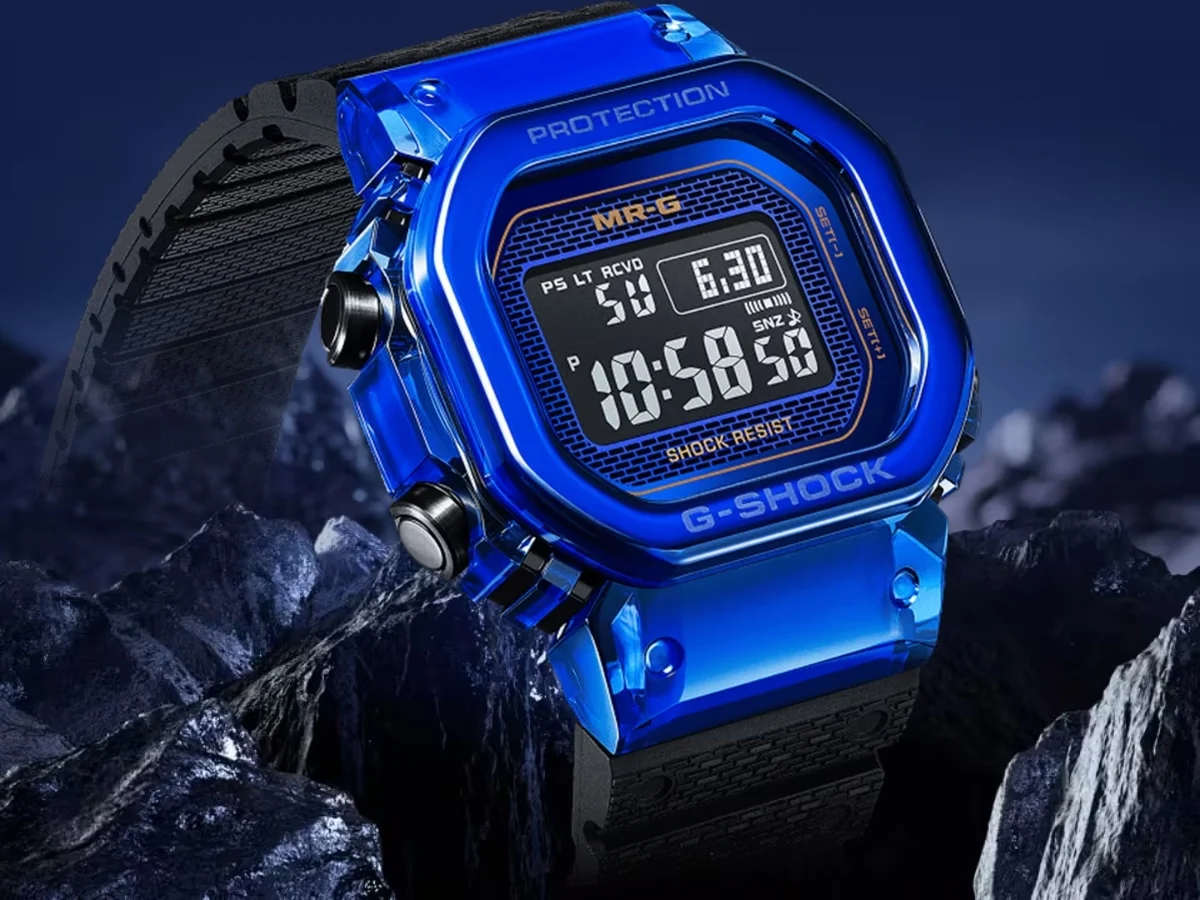
The Japanese watchmaking giant Casio has officially announced the release of the G-SHOCK MRG-D5000 Blue Sapphire, a timepiece that represents the pinnacle of the brand’s engineering capabilities and a significant leap into the ultra-luxury market. Priced at $80,000 USD (approximately $116,000 AUD), this release is limited to just 20 examples worldwide, with only six units allocated for the United States market. The watch is the culmination of nearly a decade of research and development, aiming to solve a fundamental paradox in horology: how to utilize the extreme hardness of sapphire crystal in a structure designed to withstand high-impact shocks. This release marks a historic moment for the MR-G line, Casio’s premier luxury division, by transforming a material traditionally used for dial protection into the primary defensive armor of the watch.
The Engineering Breakthrough of the Blue Rose Project
The development of the MRG-D5000 Blue Sapphire, internally referred to as the "Blue Rose Project," was driven by the desire to achieve the impossible. In the language of flowers, a blue rose symbolizes the unattainable or a miracle, a fitting moniker for a project that sought to make brittle sapphire crystal pass the rigorous shock-resistance tests synonymous with the G-SHOCK name. While sapphire is renowned for its scratch resistance—ranking a 9 on the Mohs scale of mineral hardness, second only to diamond—its crystalline structure is inherently brittle. In traditional watchmaking, a sharp blow to a sapphire case would typically result in shattering rather than deformation.
To overcome this, Casio engineers spent eight years refining a "Multi-Guard Structure." Rather than attempting to craft the bezel and case from a single, solid block of sapphire—which would be highly susceptible to cracking under stress—they deconstructed the exterior into a complex assembly of multiple components. This modular approach allows for microscopic movements between parts, effectively dissipating kinetic energy from impacts. The design draws heavy inspiration from Kigumi, the traditional Japanese art of timber-frame construction that utilizes interlocking joints without the need for nails or screws. By eliminating screw holes and other high-stress points in the sapphire components, Casio minimized the risk of fracture, finally meeting the brand’s internal "Triple 10" resistance standards.
A Chronology of Innovation: From Gold to Sapphire
The lineage of the MRG-D5000 Blue Sapphire can be traced back to the "Dream Project," an initiative led by Kikuo Ibe, the founding father of G-SHOCK. Ibe’s philosophy of "Never Give Up" has pushed the brand beyond its resin-based origins into the realms of metallurgy and advanced ceramics.
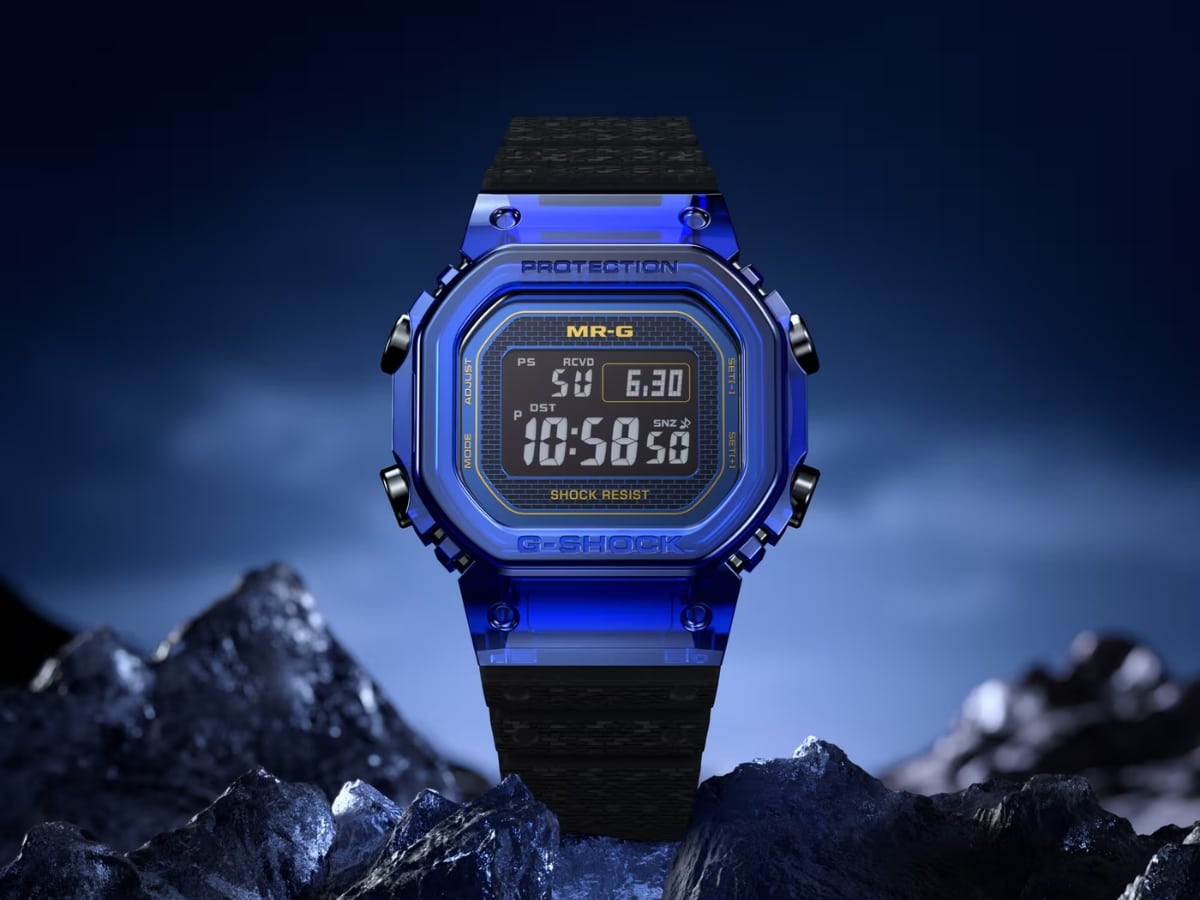
In 2018, to celebrate the 35th anniversary of G-SHOCK, Casio produced the G-D5000, a one-off "Dream Project" model crafted entirely from 18-karat solid gold. This proof-of-concept demonstrated that the iconic "square" silhouette of the original 1983 DW-5000C could be translated into precious metals while maintaining functional toughness. Following the success of the gold model, Casio unveiled a prototype of a sapphire-cased G-SHOCK at Baselworld 2018. However, the prototype failed to meet the necessary durability benchmarks for a commercial release.
Between 2018 and 2024, the engineering team at Casio’s Yamagata factory—the brand’s high-end production facility in Japan—worked to perfect the sapphire architecture. In 2022, they released the MRG-B5000, which utilized a multi-component titanium bezel. This served as the mechanical blueprint for the sapphire version, proving that the interlocking structure could be manufactured at scale. The 2024 release of the MRG-D5000 Blue Sapphire represents the final realization of that 2018 Baselworld vision.
Technical Specifications and Artisanal Details
The MRG-D5000 Blue Sapphire is not merely a feat of engineering; it is also a showcase of high-end finishing and traditional aesthetics. The watch maintains the classic "square" dimensions but elevates every surface with luxury materials.
Material Composition and Aesthetics
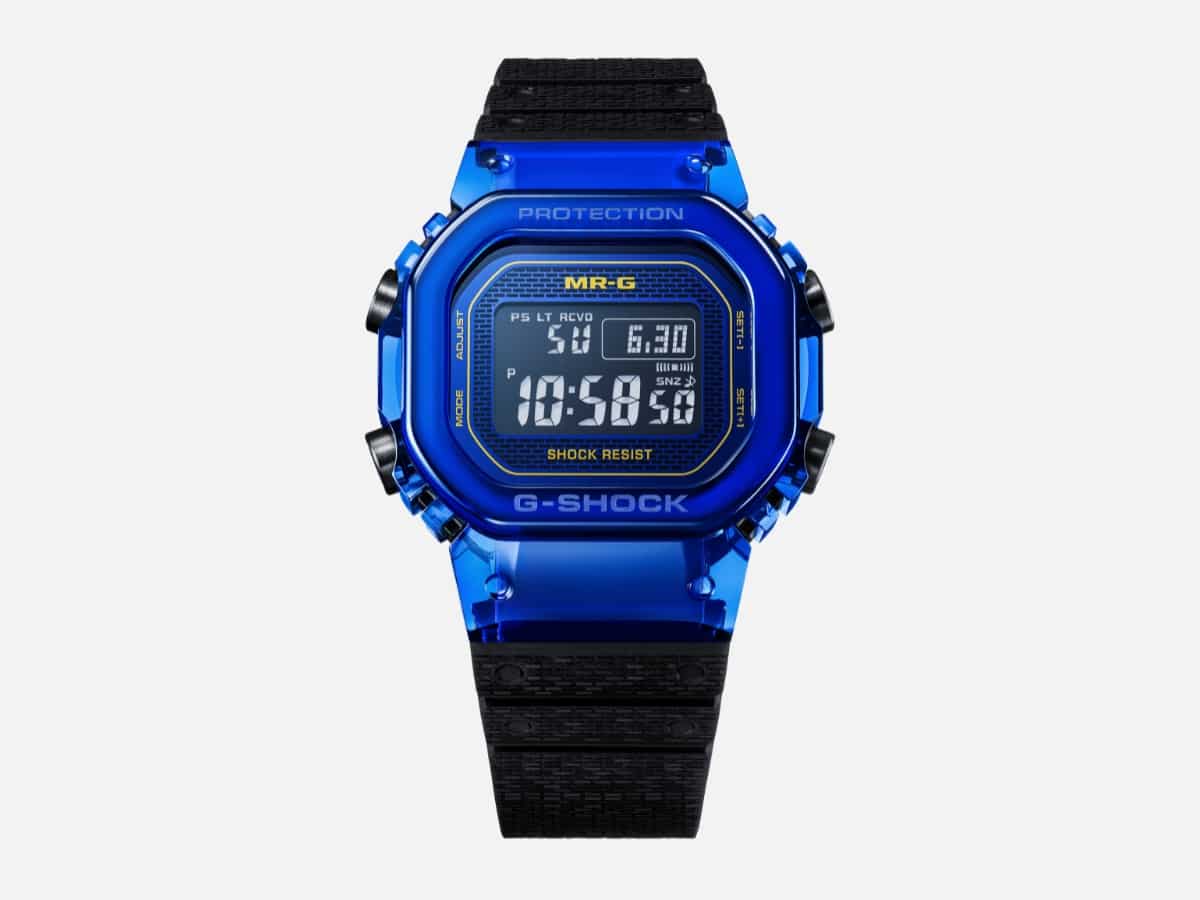
The bezel and outer case components are crafted from lab-grown blue sapphire, treated with a blue vapor deposition process to achieve a deep, consistent hue that interacts dynamically with light. Beneath the sapphire exterior lies a core case made of high-grade titanium, ensuring the internal electronics remain protected. The face of the watch features the signature G-SHOCK brick pattern, but with a significant upgrade: the "MR-G" logo, "SHOCK RESIST" badge, and other lettering are rendered in pure 24-karat gold.
Caseback and Movement
The screw-lock caseback is manufactured from Grade 5 titanium, featuring a secondary pane of blue sapphire crystal that allows a view of the internal structure. Each of the 20 pieces is individually numbered (e.g., 1/20) and bears the "DREAM PROJECT" inscription. Internally, the watch is powered by a high-specification quartz module featuring:

- Gallium Tough Solar: High-efficiency solar charging that can power the watch even under low-light conditions.
- Multi-Band 6: Atomic timekeeping that receives radio signals from six stations globally for pinpoint accuracy.
- Bluetooth Connectivity: Allowing for seamless synchronization with the Casio Watches smartphone app for world time settings and self-checking diagnostics.
Wearability and Resistance
Despite its jewel-like appearance, the watch remains a functional tool. It is equipped with a "Dura Soft" fluoro-rubber strap, which is more resistant to chemicals and temperature changes than standard resin, featuring a molded brick pattern and a titanium clasp. The timepiece is rated for 200 meters of water resistance, ensuring that its luxury status does not compromise its utility.
Market Positioning and Industry Implications
The $80,000 price tag places the MRG-D5000 Blue Sapphire in a rarefied segment of the watch market, competing directly with "Holy Trinity" brands like Patek Philippe and Audemars Piguet, as well as avant-garde independents like Richard Mille. While Casio is traditionally associated with accessible, mass-market digital watches, the MR-G line has spent the last decade steadily climbing the price ladder.
Industry analysts suggest that this release is less about volume sales and more about brand elevation. By proving it can master sapphire—a material that even top-tier Swiss manufacturers struggle to manipulate in complex geometries—Casio is asserting its dominance in material science. The extremely limited run of 20 pieces ensures that the watch will become a highly sought-after collector’s item, likely appreciating in value on the secondary market.
Furthermore, Casio has introduced two "companion" models to allow the broader public to participate in the sapphire aesthetic. The MRG-B5000SA-2, limited to 500 pieces, and the full-metal GMW-B5000SB-1A2 offer similar visual themes at significantly lower price points, though they lack the full sapphire case construction of the flagship model.
Official Stance and Production Philosophy
While Casio has not released a detailed statement regarding the specific buyers of the 20 units, the company has emphasized that the MRG-D5000 is a testament to the "Yamagata Quality." The Yamagata factory utilizes advanced robotics alongside "Medalist" craftsmen—artisans with decades of experience—to assemble the MR-G line.
A spokesperson for Casio noted that the development of the Blue Sapphire model required a complete reimagining of the assembly line, as the tolerances required for interlocking sapphire parts are significantly tighter than those for metal or resin. The company views the $1.6 million total valuation of the 20-piece collection as a reflection of the research costs and the sheer difficulty of the manufacturing process, where the failure rate of sapphire components during the cutting and polishing stages is notoriously high.
Conclusion: The Future of the G-SHOCK Legacy
The G-SHOCK MRG-D5000 Blue Sapphire is a polarizing yet undeniable achievement. It challenges the traditional definition of a "luxury watch" by combining the world’s most rugged digital platform with the delicacy and prestige of sapphire and gold. For Casio, it is the ultimate fulfillment of Kikuo Ibe’s 1983 mission to create a watch that never breaks, updated for an era where the brand’s followers include not just divers and soldiers, but high-net-worth horological connoisseurs.
As the watch industry continues to experiment with ceramic, carbon fiber, and sapphire, the MRG-D5000 stands as a benchmark for how these materials can be utilized for structural integrity rather than just ornamentation. Whether any of the 20 owners will actually subject their $80,000 investment to a "drop test" remains to be seen, but Casio’s decade of testing ensures that, should they choose to do so, the "Blue Rose" will likely survive.




 Yuyun Lusiyani
 Joko Widodo
 Eva Lovia
 Pevita Pearce
 admin
admin